Why Your Neck Turns Green From Necklace Chains and How to Stop It
Discover why your neck turns green from necklace chains. Learn the chemistry of copper oxidation, safe hypoallergenic alloys, and prevention tips.

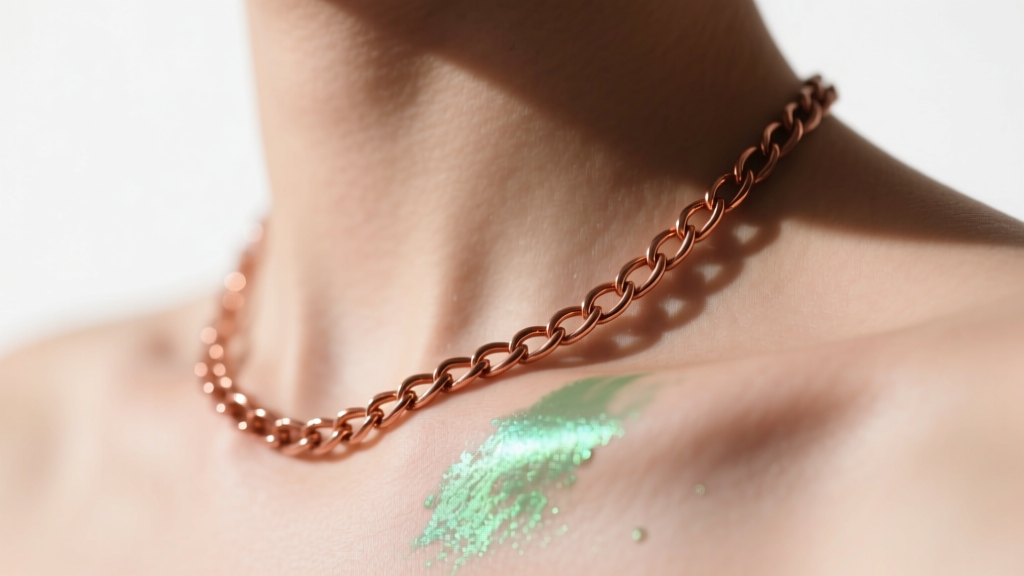
The Chemistry of Skin Discoloration: It Is Not Always an Allergy
When you notice that your neck turns green from necklace chains you wear daily, the immediate assumption is often that the jewelry is "fake" or that you are experiencing an allergic reaction. In reality, this discoloration is a predictable chemical reaction known as oxidation, primarily driven by the copper content in your jewelry's alloy. According to the Mayo Clinic, true metal allergies (like nickel sensitivity) present as contact dermatitis—characterized by redness, itching, and blistering. A green or black smudge, however, is simply a harmless chemical stain.
Human sweat is a complex electrolyte solution containing sodium chloride (salt), lactic acid, and urea. When the copper in your necklace interacts with the chloride ions in your sweat and the oxygen in the air, it undergoes a redox reaction. This produces copper(II) chloride (CuCl2), a compound that manifests as a vivid green powdery residue on the skin. If your skincare routine includes sulfur-based acne treatments or if you live in a highly polluted area, the copper may instead react with sulfur to form copper sulfide (CuS), which leaves a stark black ring around your neck.
Material Breakdown: What Causes the Green Ring?
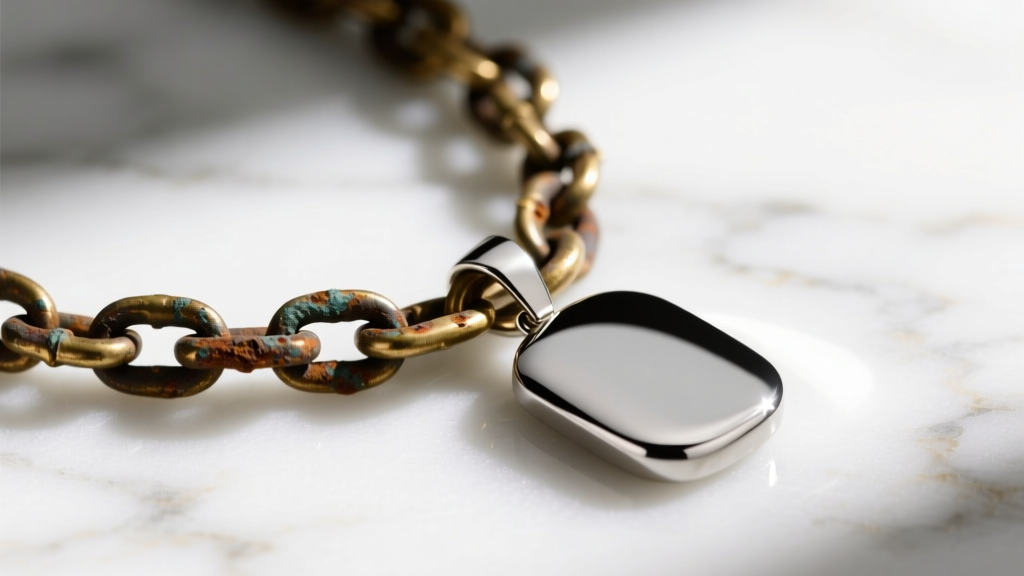
Pure gold and pure silver are highly unreactive, but they are also too soft for daily jewelry wear. To increase durability, metallurgists alloy them with base metals. It is these base metals—specifically copper, zinc, and nickel—that are the culprits behind skin staining. The Gemological Institute of America (GIA) notes that the karat system directly dictates how much of these reactive alloys are present in your jewelry.
| Metal / Alloy | Typical Composition | Oxidation Risk | Primary Culprit |
|---|---|---|---|
| Brass | 60-80% Copper, Zinc | Very High | Copper Chloride |
| Bronze | 88% Copper, 12% Tin | High | Copper Chloride / Sulfide |
| 10K Gold | 41.7% Gold, 58.3% Alloy | High | High Copper Content |
| 14K Gold | 58.3% Gold, 41.7% Alloy | Moderate | Copper/Silver Mix |
| Sterling Silver (925) | 92.5% Silver, 7.5% Copper | Low-Moderate | Copper Sulfide (Black/Green) |
| 18K Gold | 75% Gold, 25% Alloy | Very Low | Minimal Copper |
The High-Risk Metals: Brass, Bronze, and Low-Karat Gold
Fashion jewelry is frequently crafted from brass or bronze due to their low cost and excellent casting properties. However, because these alloys are predominantly copper, they will almost guarantee a green stain if worn against the skin during physical exertion or in high humidity. Similarly, 10K gold contains nearly 60% alloy metals. If the alloy mix is heavy on copper (common in rose gold), the likelihood of your skin turning green increases exponentially.
The "Sneaky" Culprits: Rhodium Plating Wear-Off
Many consumers are baffled when their expensive white gold necklace suddenly causes discoloration. White gold is naturally yellowish and is plated with rhodium (a platinum-group metal) to achieve a bright, silvery-white finish. Over time, the friction against your collarbone wears away this microscopic rhodium layer. Once the underlying 14K or 18K white gold alloy—which often contains copper and zinc for structural integrity—is exposed to your skin's pH, oxidation begins.
Hypoallergenic & Non-Reactive Alternatives
If you want to eliminate the risk of oxidation staining entirely, you must transition to metals that lack copper and nickel. Here are the industry standards for non-reactive jewelry:
- Implant-Grade Titanium (ASTM F136): Specifically Ti6Al4V ELI. This aerospace and medical-grade alloy contains zero copper or nickel. It is entirely biocompatible and will never oxidize or stain the skin, making it the ultimate choice for sensitive skin.
- Niobium: A highly unreactive transition metal that can be anodized to produce vibrant colors without using dyes or plating. It is completely safe for prolonged skin contact.
- Platinum 950: Composed of 95% pure platinum and 5% ruthenium or iridium. It is exceptionally dense, naturally white, and chemically inert against human sweat.
- 22K and 24K Gold: While too soft for intricate chain links, high-karat gold pendants lack the copper content required to create green stains.
Actionable Prevention & Restoration Framework
If you already own a beloved brass pendant or a 14K rose gold chain that you refuse to part with, you can intervene in the chemical reaction using physical barriers and environmental controls.
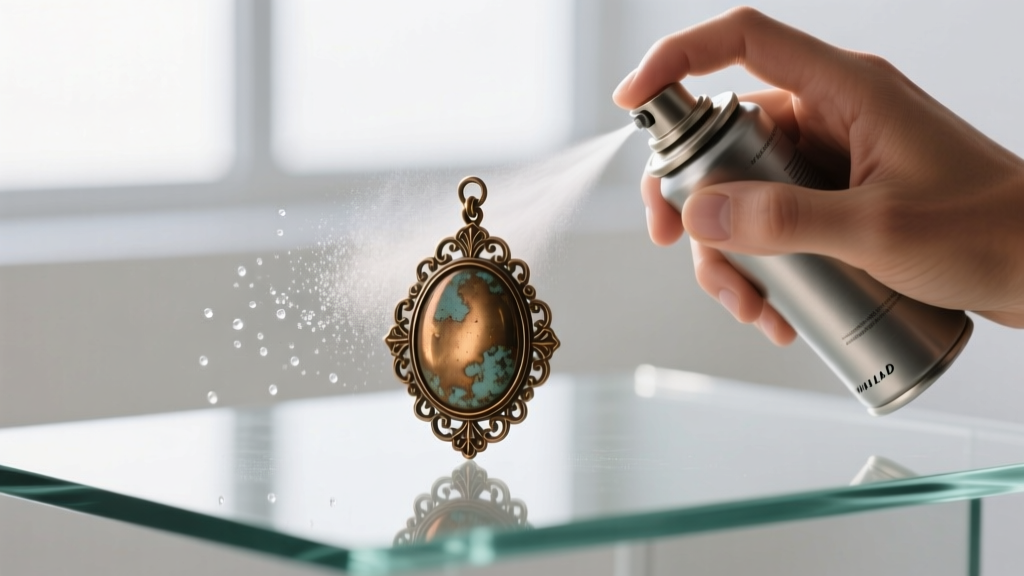
1. Nano-Ceramic Coatings vs. Clear Nail Polish
The internet is full of advice suggesting you paint the back of your necklace with clear nail polish. Do not do this. Nail polish contains harsh solvents (like toluene and formaldehyde) that can permanently cloud porous gemstones such as turquoise, opal, or pearls. Furthermore, nail polish becomes brittle and chips within days, leaving microscopic flakes against your skin.
"For long-term protection, use a cross-linked nano-ceramic jewelry coating (such as Jeweler's Skin or similar polymer sprays). These formulas cure into a flexible, invisible barrier that blocks sweat from reaching the copper alloy, lasting up to six months before requiring reapplication."
2. Environmental Controls and pH Management
Oxidation requires moisture and an acidic or chloride-rich environment. To minimize staining without altering the jewelry:
- The "Last On, First Off" Rule: Always put your necklace on after applying perfumes, lotions, and sunscreens. Many cosmetics contain sulfur compounds or alcohols that accelerate copper corrosion.
- Remove During High-Sweat Activities: Gym sessions, hot yoga, and swimming (especially in chlorinated pools) create an aggressive chemical bath for base metals.
- Wipe Down Post-Wear: Use a microfiber cloth to wipe the chain and pendant after taking it off. Removing the microscopic layer of sebum and sweat before it can react with the metal drastically reduces oxidation buildup.
3. Cleaning the Skin and the Metal
If your skin is already stained, the green mark is not permanent. Wash the area with warm water, mild soap, and a soft washcloth. For stubborn stains, a cotton pad soaked in rubbing alcohol will dissolve the copper salts instantly. To restore the necklace itself, use a specialized copper-brass polish or a sonic cleaner with a mild alkaline solution to strip the oxidized layer, returning the metal to its original luster before applying a nano-ceramic barrier.


