How to Stop Necklaces From Tangling: Material & Chain Guide
Learn how to stop necklaces from tangling by understanding metal friction, chain weaves, and material properties. Expert tips for tangle-free jewelry.

The Physics of Tangles: Why Material Matters
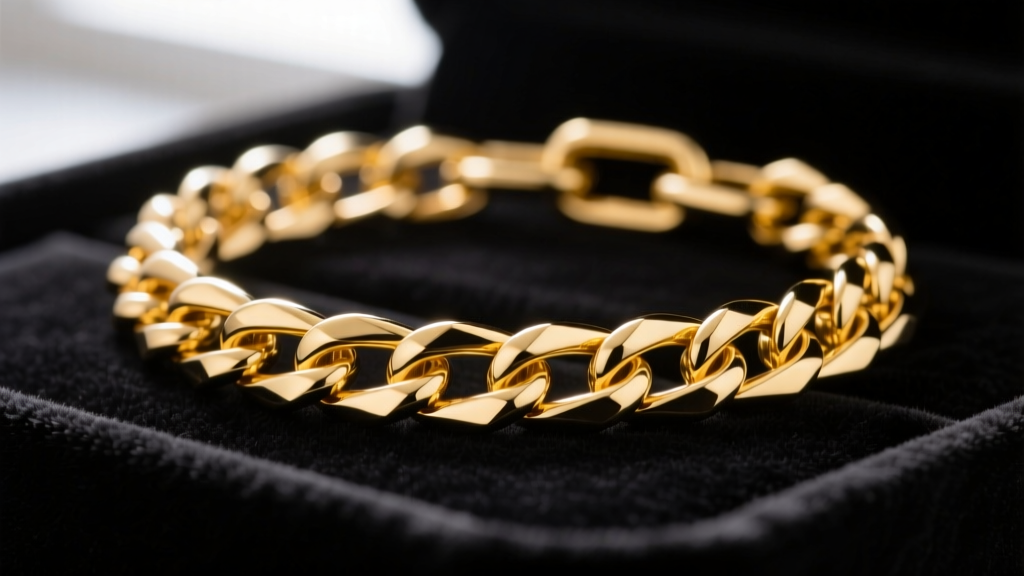
When you ask a jeweler how to stop necklaces from tangling, the conversation usually revolves around storage hacks or jewelry boxes. However, as a domain expert in jewelry materials and structural design, I can tell you that tangling is fundamentally a physics problem. Knot formation in chains and beaded strands is dictated by three material properties: the coefficient of friction (COF), surface porosity, and the triboelectric effect. By understanding the metallurgical and gemological properties of your jewelry, you can select pieces that physically resist knotting and apply material-specific interventions to keep your collection pristine.
A tangle requires three conditions: slack, friction, and rotational movement. While you cannot entirely eliminate rotational movement when wearing or storing a necklace, you can drastically manipulate friction and slack through deliberate material choices. According to metallurgical data referenced by Assay Office London, the surface finish and alloy composition of precious metals directly impact their microscopic drag. A high-polish platinum chain will glide over itself, whereas a matte-finished oxidized silver chain acts like microscopic velcro, catching on adjacent links the moment slack is introduced.
Chain Weave vs. Material: The Tangling Matrix
The geometric structure of a chain weave interacts directly with the metal's hardness and flexibility. A weave that is tangle-resistant in rigid titanium might be a knotting nightmare in soft 24k gold. Below is a structural matrix comparing popular chain weaves, their ideal material pairings, and their inherent tangling risks.
| Chain Weave | Optimal Material | Tangle Risk | Material Interaction & Mechanics |
|---|---|---|---|
| Box Chain | 14k/18k Gold, Sterling Silver | Very Low | Geometric interlocking prevents links from folding back on themselves. High polish maintains low COF. |
| Snake Chain | Platinum, Titanium, Steel | Low | Continuous surface eliminates gaps for snagging. Requires rigid metals; soft metals will kink and permanently deform. |
| Herringbone | 18k Yellow Gold | High | Flat, flush links create high surface-area friction. Highly prone to folding and kinking if the metal is too soft. |
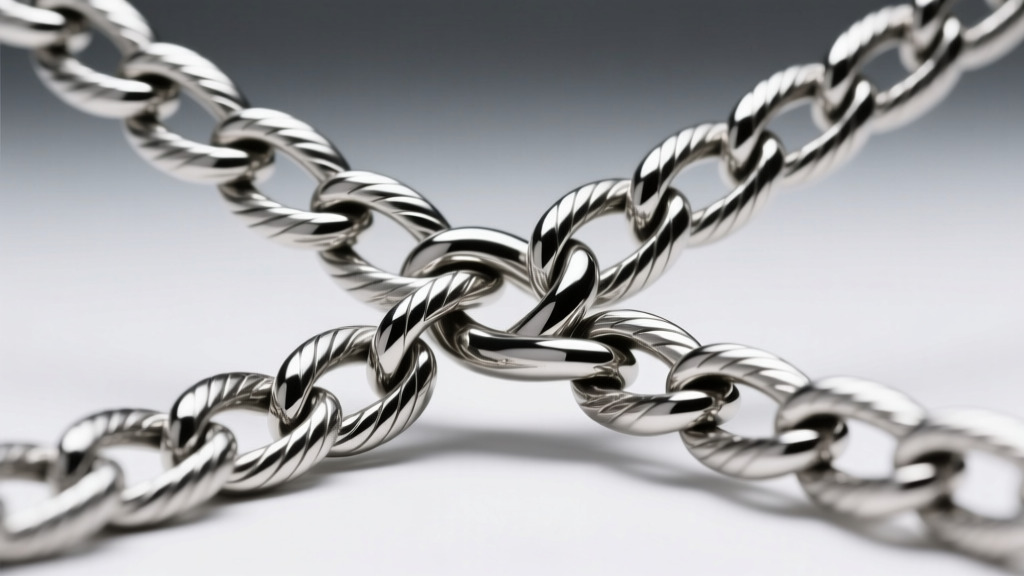
| Rope Chain | 10k/14k Gold, Brass | Medium-High | Twisted links create microscopic burrs over time. The spiral structure naturally encourages rotational knotting. |
| Bead/Ball Chain | Sterling Silver, Base Metals | Medium | Low surface contact between spheres reduces friction, but thin connecting wires (under 0.8mm) easily bend and snag. |
The Gauge Thickness Rule
Beyond the weave, the wire gauge is a critical, often overlooked factor. Chains with a thickness under 1.0mm (such as 0.8mm cable chains) are highly susceptible to knotting because their low mass cannot overcome the friction of a knot tightening. For daily wear, I strongly recommend selecting chains between 1.5mm and 2.2mm. This added mass acts as a natural deterrent to micro-knots, allowing gravity to pull minor twists out of the chain before they can cinch into a hard knot.
Metal Hardness and Micro-Snagging
The Vickers hardness (HV) of your necklace's metal dictates how well it maintains its smooth surface finish over time. When softer metals scratch, they develop microscopic burrs—tiny raised edges of displaced metal that act as hooks. These hooks catch on adjacent links, clothing fibers, and hair, initiating the tangling process.
- 24k Gold (HV ~25-30): Extremely soft. Scratches and burrs almost immediately. Highly prone to tangling and deformation. Best reserved for heavy, rigid pendants rather than delicate, flexible chains.
- 18k Gold (HV ~120-140): The sweet spot for luxury jewelry. Hard enough to maintain a high polish and resist micro-burrs, but malleable enough for intricate weaves like the Figaro or Cuban link.
- Platinum (HV ~110-130, but highly dense): While its Vickers hardness is similar to 18k gold, platinum's density and malleability mean that when it scratches, the metal is displaced rather than lost. This can create a patina that slightly increases surface friction over time, requiring occasional professional polishing to maintain tangle-resistant slip.
- Titanium & Tungsten Carbide (HV ~350+): Exceptionally hard and highly scratch-resistant. These metals maintain a near-perfect, low-friction surface indefinitely, making them superior choices for complex, multi-link weaves that would quickly degrade in softer metals.
Understanding these hardness scales allows you to match the metal to the lifestyle. If you are highly active and your jewelry experiences constant friction, opt for titanium or 14k gold to prevent the micro-burrs that lead to chronic tangling.
The Triboelectric Effect: Why Beaded Necklaces Knot
If you primarily wear gemstone or beaded necklaces, you are dealing with a completely different tangling mechanism: static electricity. The Gemological Institute of America (GIA) and materials scientists recognize that organic and synthetic gems interact with the triboelectric series. When lightweight beads rub against each other or against clothing, they exchange electrons, generating a static charge.
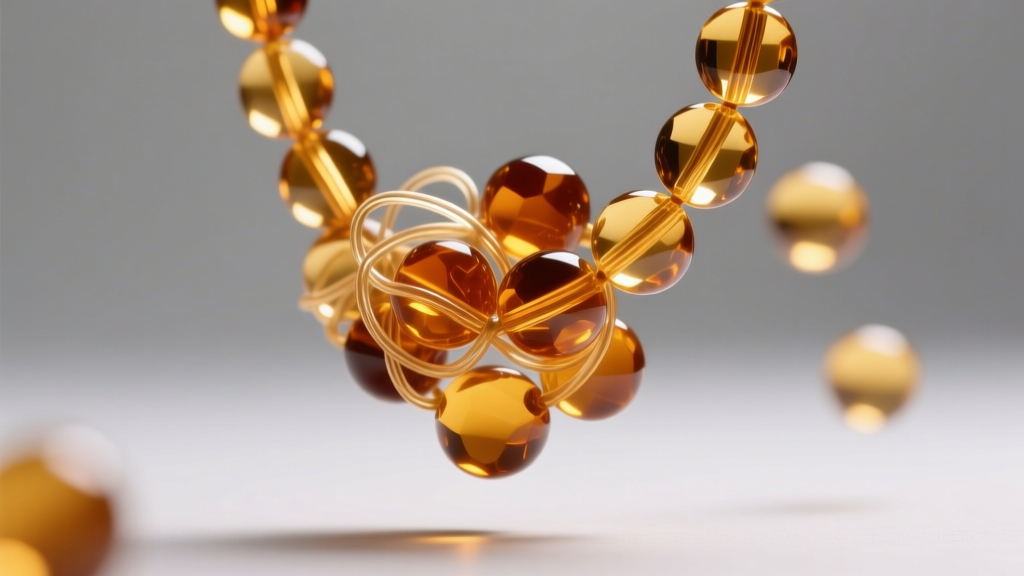
Materials like natural amber, copal, lightweight resins, and even some porous pearls are notorious for generating static cling. This electrostatic attraction literally pulls the strands together, wrapping them around one another in complex, multi-strand knots. To combat this, you must neutralize the charge. Avoid storing amber or resin bead necklaces in dry, climate-controlled safes without humidity control. A slightly elevated ambient humidity (around 40-50%) allows static charges to dissipate into the air naturally. For an immediate fix, lightly wiping the beads with an anti-static microfiber cloth or a barely damp cloth will neutralize the surface charge and stop the strands from magnetically attracting each other.
Weight Distribution and the "Plumb Bob" Effect
A necklace needs a certain amount of slack to tangle. By manipulating the weight distribution of the piece, you can eliminate the slack required for knot formation. This is known in jewelry design as the "plumb bob" effect. A heavier pendant acts as a gravitational anchor, keeping the chain taut against the chest and preventing the links from folding back over one another.
Expert Sizing Tip: For a standard 20-inch chain, the pendant should weigh a minimum of 4 to 5 grams to maintain adequate tension. If your pendant is under 2 grams, the chain will frequently flip, creating the exact rotational slack needed for a knot to form.
If you prefer minimalist, lightweight pendants (such as a 1.5mm solitaire diamond), you must compensate by increasing the weight of the chain itself. Pairing a delicate pendant with a slightly heavier, solid-rope or curb chain ensures that the overall mass of the necklace keeps it anchored and tangle-free.
Actionable Material Hacks to Prevent Tangling
Beyond selecting the right materials, you can apply specific, jeweler-approved treatments to your existing collection to alter their physical properties and reduce tangling.
1. Microcrystalline Wax Coatings
If you own a beautiful matte-finished or oxidized silver chain that constantly tangles due to its high surface friction, do not ruin the finish by polishing it. Instead, apply a microcrystalline wax, such as Renaissance Wax. Originally developed for museum conservation, this wax fills microscopic surface pores and drastically lowers the coefficient of friction without altering the visual texture or patina of the metal. A light buffing every six months will keep the links gliding smoothly past one another.
2. Clasp Upgrades for Tension Maintenance
The moment you unfasten a necklace, it enters its most vulnerable tangling state. Traditional lobster clasps require two hands and create immediate slack. Upgrade your most-worn pieces to neodymium magnetic clasps (like the Magnacatch). These clasps allow you to unfasten the necklace with a single, controlled pull, maintaining tension in the chain until the exact moment it is removed from your neck, drastically reducing the window of opportunity for knots to form.
3. Avoid the "Clear Nail Polish" Myth
A common internet hack suggests painting chain links with clear nail polish to smooth out friction. As a jewelry professional, I strongly advise against this. Nail polish contains solvents that can react with copper alloys in lower-karat golds and sterling silver, causing irreversible discoloration. Furthermore, as the polish chips, it creates sharp, jagged edges that will actually increase micro-snagging and make tangling significantly worse.
By shifting your perspective from simple storage solutions to a deeper understanding of material science, metal hardness, and structural geometry, you can permanently solve the problem of tangled jewelry. Choose your weaves wisely, respect the Vickers hardness of your metals, and use gravity to your advantage to maintain a flawless, tangle-free collection.


