Gold Gem Necklace Anatomy: Alloys, Settings, and Tensile Strength
Master the technical anatomy of a gold gem necklace. Explore alloy hardness, setting security by Mohs scale, and chain tensile strength metrics.

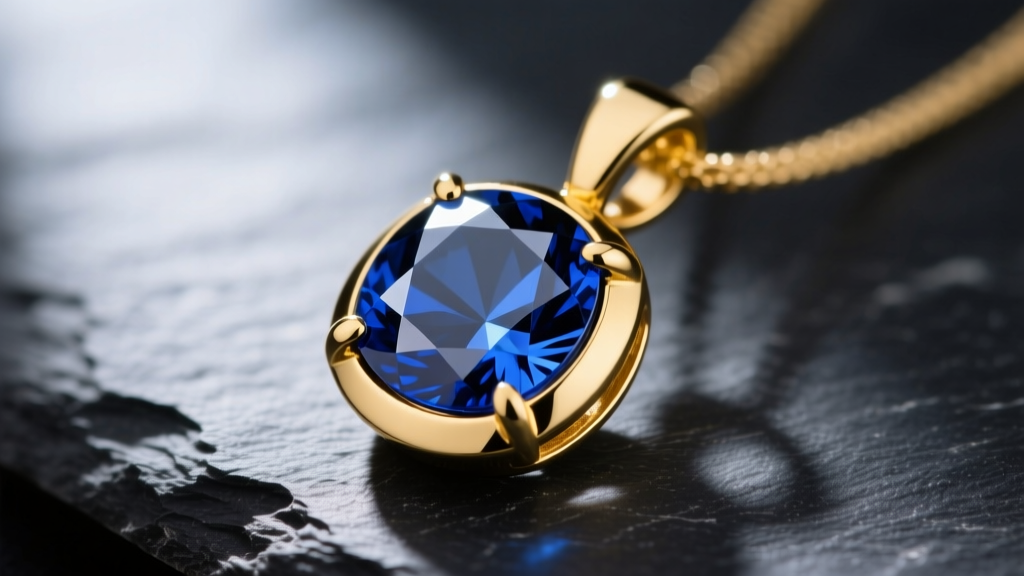
The Engineering Behind the Aesthetics
A high-quality gold gem necklace is not merely an ornamental object; it is a精密 (precision) engineered assembly of metallurgy, structural mechanics, and mineralogy. While consumers often focus on carat weight and gold color, the longevity of the piece depends entirely on the intersection of alloy hardness, setting geometry, and chain tensile strength. Understanding these technical specifications is critical for selecting a necklace that will survive decades of dynamic wear without catastrophic failure.
According to the Gemological Institute of America (GIA), gemstone durability is a combination of hardness, toughness, and stability. However, the metal holding the stone must possess complementary mechanical properties. This guide deconstructs the technical anatomy of gold gem necklaces, providing actionable metrics for evaluating structural integrity.
The Metallurgy of Gold Alloys and Vickers Hardness
Pure 24-karat gold is exceptionally malleable, possessing a Vickers Hardness (HV) of roughly 25. This makes it entirely unsuitable for securing gemstones, as the prongs or bezels would deform under minimal lateral pressure, leading to immediate stone loss. To achieve structural viability, gold is alloyed with metals like copper, silver, zinc, and palladium.
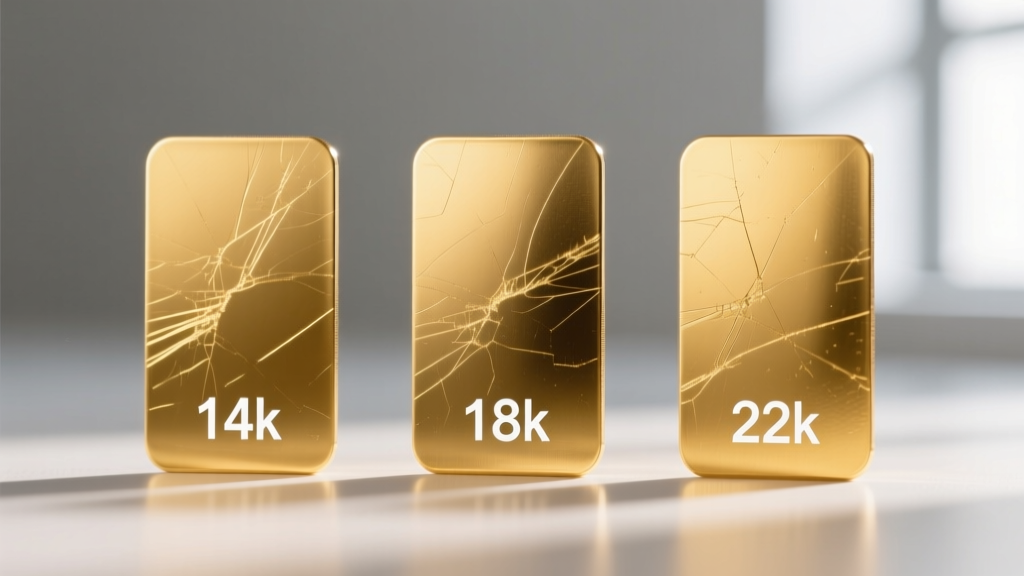
Alloy Composition and Hardness Metrics
- 14k Gold (58.5% Au): Yields a Vickers Hardness of 120–140 HV. The higher proportion of alloying metals provides superior tensile strength and resistance to work-hardening fatigue. This is the optimal choice for heavy pendants and high-impact daily wear.
- 18k Gold (75% Au): Yields a Vickers Hardness of 110–130 HV. While slightly softer than 14k, 18k gold offers superior malleability for intricate micro-pavé settings and maintains a richer, warmer hue. It requires more frequent prong maintenance.
- 22k Gold (91.6% Au): Yields a Vickers Hardness of 70–90 HV. Generally restricted to bezel settings or heavy, rigid collars. Prong settings in 22k gold are highly discouraged for any gemstone under 8 on the Mohs scale due to severe deformation risks.
The World Gold Council notes that the specific alloy mix (e.g., nickel vs. palladium in white gold) also dictates the metal's elastic limit. Palladium-based white gold alloys are more ductile and resist stress-fracturing better than brittle nickel-based alternatives, making them vastly superior for delicate prong work.
Setting Security vs. Gemstone Hardness
The choice of setting must be inversely proportional to the gemstone's vulnerability to cleavage and impact. A setting that is perfectly secure for a diamond can be destructive to an opal.
| Gemstone (Mohs Scale) | Toughness / Cleavage | Recommended Gold Setting | Technical Rationale |
|---|---|---|---|
| Diamond (10) | Good / Perfect cleavage | 4-Prong or 6-Prong | Maximizes light return; high hardness resists abrasion against gold prongs. |
| Sapphire (9) | Excellent / None | Prong or Half-Bezel | Exceptional toughness allows for secure prong pressure without chipping. |
| Emerald (7.5-8) | Good / Distinct cleavage | Full Bezel or V-Prong | Inherent inclusions (jardin) make edges brittle; bezel protects the girdle. |
| Tanzanite (6.5-7) | Fair / Perfect cleavage | Full Bezel | Highly susceptible to thermal shock and impact; prong pressure risks fracturing. |
| Opal (5.5-6.5) | Poor / None | Bezel with padded base | Low hardness and high water content require complete encapsulation and shock absorption. |
When evaluating prong thickness, standard commercial jewelry often uses 0.6mm wire, which is inadequate for long-term retention. For stones over 2 carats, a minimum prong wire gauge of 0.9mm to 1.2mm is required to withstand the lateral torque applied during accidental impacts.
Chain Tensile Strength and Clasp Failure Modes
The pendant is only as secure as the chain and clasp supporting it. Chain failure typically occurs not from static weight, but from dynamic shock loading—such as the necklace catching on a garment or being pulled abruptly.
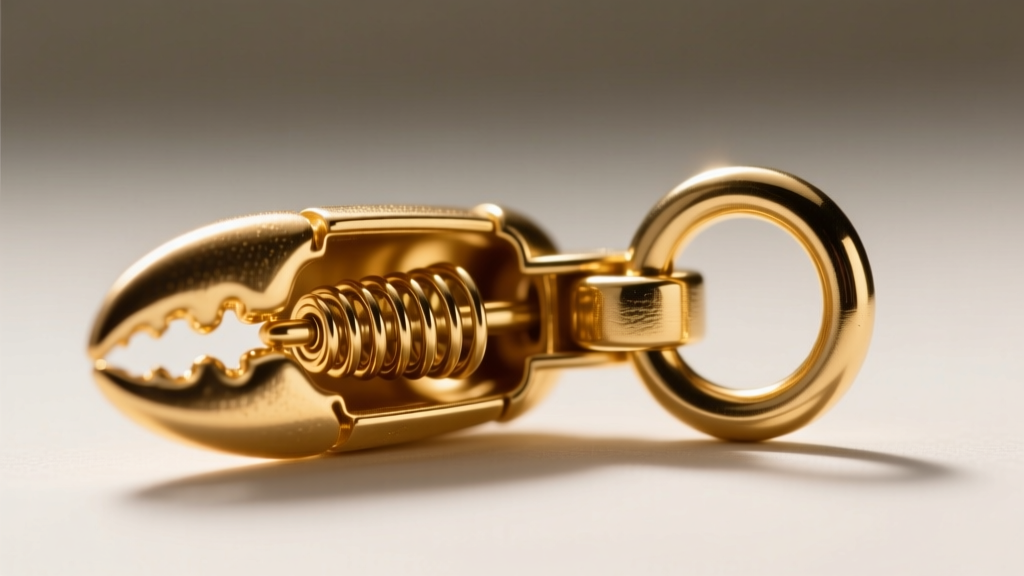
Evaluating Chain Architecture
Not all chain links distribute stress equally. The structural integrity of a gold chain is measured by its yield point—the exact pound-force (lbf) or Newton (N) required to permanently deform the link.
- Cable Chain (1.5mm): Static tensile strength of approximately 12–15 lbf. The circular links distribute stress evenly, but the thin wire cross-section makes it vulnerable to snapping under sudden dynamic loads.
- Curb Chain (2.0mm): Static tensile strength of 25–35 lbf. The flattened, interlocking links provide a broader surface area for stress distribution, significantly increasing resistance to lateral torque.
- Box Chain (1.2mm): Static tensile strength of 18–22 lbf. While visually robust, the sharp 90-degree internal corners of the square links create stress concentrators, making them prone to fatigue failure at the joints over time.
Clasp Mechanics and Fatigue
The spring ring clasp, ubiquitous in commercial jewelry, relies on a microscopic internal steel spring. Over time, the repeated compression of this spring leads to metal fatigue, resulting in a failure to close flush against the jump ring. Conversely, a solid-cast lobster clasp utilizes a thicker, external lever mechanism that is vastly superior for pendants exceeding 5 grams. Always ensure the jump ring connecting the clasp to the chain is soldered shut; an unsoldered jump ring will easily pry open under a 3 lbf lateral load.
Maintenance and Prong Wear Diagnostics
Gold is a relatively soft metal, and prongs endure constant micro-abrasion from clothing, skin oils, and environmental dust (which often contains microscopic quartz particles, hardness 7). To prevent catastrophic stone loss, conduct a bi-annual diagnostic inspection using a 10x triplet loupe.
Focus on the 'gallery' (the underside of the setting) and the prong tips. If a prong tip exhibits a flattened profile rather than a rounded, domed contour, the metal has worn past its safe retention threshold. A master jeweler will not simply push the worn metal back over the stone—a practice that work-hardens and weakens the gold—but will perform a 're-tipping' procedure, laser-welding new gold wire to the base of the prong to restore its original structural geometry and tensile grip.


