Expert Guide to Types of Clasps for Necklaces and Chain Gauges
Explore the mechanical and metallurgical types of clasps for necklaces. Learn how to match clasp strength, gauge, and alloy to your chain weight.

The Metallurgy and Mechanics of Necklace Security
When evaluating fine jewelry, collectors and artisans often fixate on gemstone clarity or chain weave complexity, overlooking the single most critical point of structural failure: the clasp. Understanding the various types of clasps for necklaces requires moving beyond basic aesthetics and diving into metallurgy, tensile strength, and dynamic load physics. A necklace is not a static object; it is subjected to continuous kinetic stress, shock loading when the wearer bends, and shear force at the connection points.
According to manufacturing standards outlined by Rio Grande's technical findings catalog, the failure rate of a necklace is inversely proportional to the correct pairing of chain gauge and clasp yield strength. For instance, an 18k gold alloy (75% pure gold) possesses a lower yield strength than a 14k gold alloy (58.5% pure gold) due to the higher copper and silver content in the latter. Therefore, a 14k gold clasp will inherently resist mechanical deformation and spring fatigue better than its 18k counterpart, making alloy selection just as vital as the clasp design itself.
Analyzing the Primary Types of Clasps for Necklaces
To properly spec a clasp for a bespoke chain or heavy pendant, we must dissect the mechanical advantages and inherent vulnerabilities of the most common closure systems used in modern bench jewelry.
Lobster Claw and Trigger Mechanisms
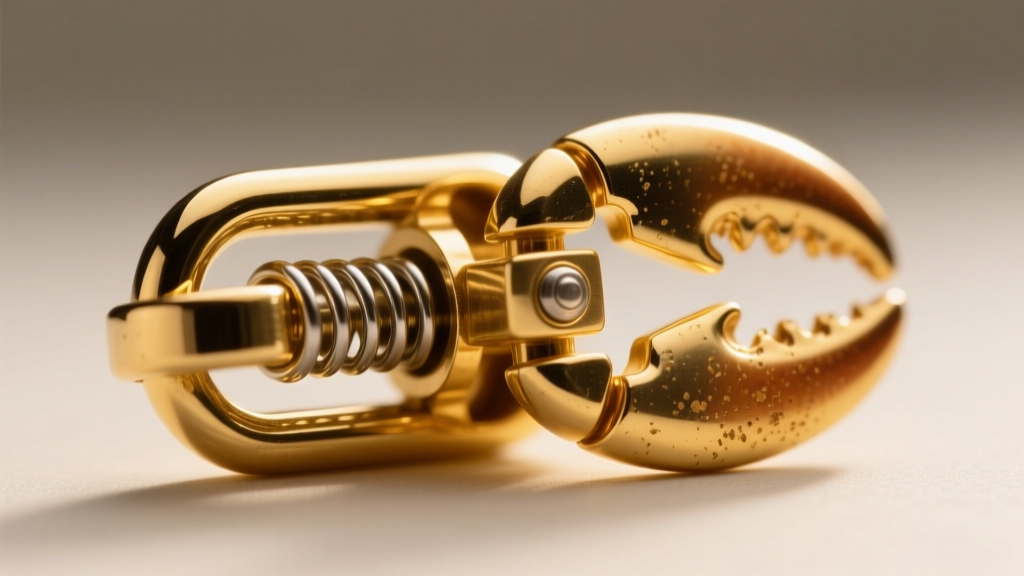
The lobster claw is the industry standard for medium-to-heavy chains (1.5mm to 4.0mm gauge). However, not all lobster clasps are manufactured equally. Cast lobster clasps, often found in mass-market commercial jewelry, suffer from microscopic porosity and brittle fracture points under sudden tensile loads. Expert bench jewelers exclusively specify die-struck lobster clasps. Die-striking compresses the metal grain structure, significantly increasing the tensile strength of the trigger lever and the main body. Furthermore, the internal spring in a high-quality lobster clasp should be constructed from a corrosion-resistant alloy, whereas cheaper variants use carbon steel springs that will oxidize and seize when exposed to ambient humidity and human perspiration.
Spring Ring Clasps and Coil Fatigue
Spring rings are ubiquitous for lightweight chains (0.8mm to 1.2mm gauge), such as cable or curb chains. The mechanism relies on a coiled internal spring pushing a sliding plunger. The primary failure mode of the spring ring is coil fatigue and plunger misalignment. Over time, the repeated retraction of the plunger work-hardens the internal spring, leading to a loss of tension. Additionally, the hollow outer shell of a spring ring is highly susceptible to crushing if the necklace is snagged, which permanently jams the sliding mechanism. For any chain exceeding 15 grams in total weight, the spring ring is mechanically inadequate and should be upgraded to a lobster or box clasp.
Toggle Clasps and Leverage Physics
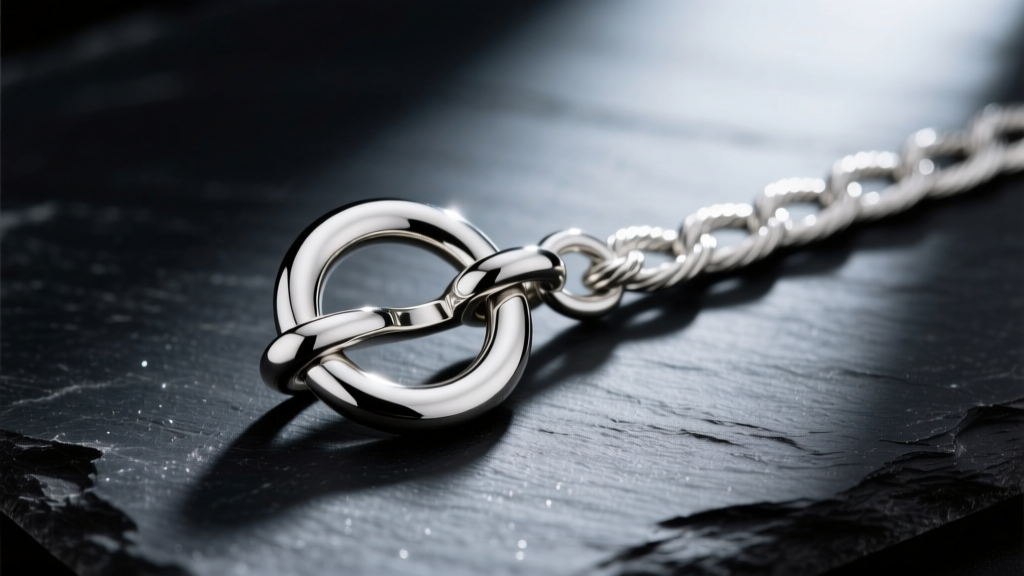
Toggle clasps operate on a completely different mechanical principle: leverage and geometric interference. A T-bar passes through a circular ring and rotates 90 degrees to lock. The security of a toggle clasp is dictated entirely by the ratio between the bar length and the inner diameter of the ring. The golden rule in jewelry engineering is the 1:3 ratio—the T-bar must be at least three times longer than the inner diameter of the ring. If the ratio is too small, dynamic movement and the weight of a heavy pendant can cause the bar to pivot and slip through the ring. Toggles are exceptional for heavy, large-gauge chains (like 5mm+ rope or Byzantine weaves) because they lack internal springs that can break, relying instead on solid metal geometry.
Box Clasps with Safety Catches
Box clasps are the premier choice for multi-strand necklaces and heavy tennis bracelets. They utilize a friction-fit mechanism where a V-shaped tongue (usually stamped from 20-gauge sheet metal) is compressed and inserted into a hollow box, expanding to lock into place. The primary vulnerability of the box clasp is the work-hardening of the V-tongue. After hundreds of compression cycles, the tongue loses its elasticity and fails to spring back, resulting in a loose fit. To mitigate catastrophic failure, high-end box clasps are always paired with one or two hinged safety catches (figure-eight wires) that lock over a pin on the opposing side, providing a redundant secondary security system.
Weight-to-Clasp Matching Matrix
Selecting the correct clasp requires calculating the static weight of the chain and the dynamic load of the pendant. The following matrix serves as a technical baseline for bench jewelers and designers.
| Chain Weight (Static) | Chain Gauge (Thickness) | Recommended Clasp Type | Minimum Clasp Wire/Body Thickness |
|---|---|---|---|
| Under 10g | 0.8mm - 1.2mm | Spring Ring (5mm - 7mm) | 0.6mm shell thickness |
| 10g - 25g | 1.5mm - 2.5mm | Die-Struck Lobster Claw | 1.2mm solid body |
| 25g - 60g | 3.0mm - 5.0mm | Heavy Toggle or Box Clasp | 2.0mm bar diameter / 18g tongue |
| 60g+ | 6.0mm+ | Custom Fabricated Box w/ Safeties | Custom cast/fabricated |
Ergonomics and Accessibility Alternatives
While mechanical security is paramount, ergonomics cannot be ignored, particularly for clients with rheumatoid arthritis, neuropathy, or long fingernails. Traditional lobster and spring ring clasps require precise pinch-force and bilateral dexterity. In these scenarios, magnetic clasps offer a highly functional alternative.
However, not all magnetic clasps are viable for fine jewelry. Cheap ceramic magnets lack the gauss rating required to hold a chain securely against the shock load of a dropped pendant. Expert fabricators utilize N52 grade Neodymium rare-earth magnets encased in 14k or 18k gold housings. An N52 neodymium magnet provides approximately 12 to 15 pounds of pull force, which is more than sufficient to secure chains up to 45 grams. To prevent the magnets from pulling apart laterally (shear force), premium magnetic clasps incorporate a micro-groove or tongue-and-groove channel that locks the two halves together geometrically, neutralizing lateral shear stress.
Jump Ring Integration and Soldering Protocols
The most robust clasp will fail if the jump ring connecting it to the chain is improperly integrated. The Gemological Institute of America (GIA) frequently notes in their manufacturing coursework that open, unsoldered jump rings are the leading cause of lost pendants and chains.
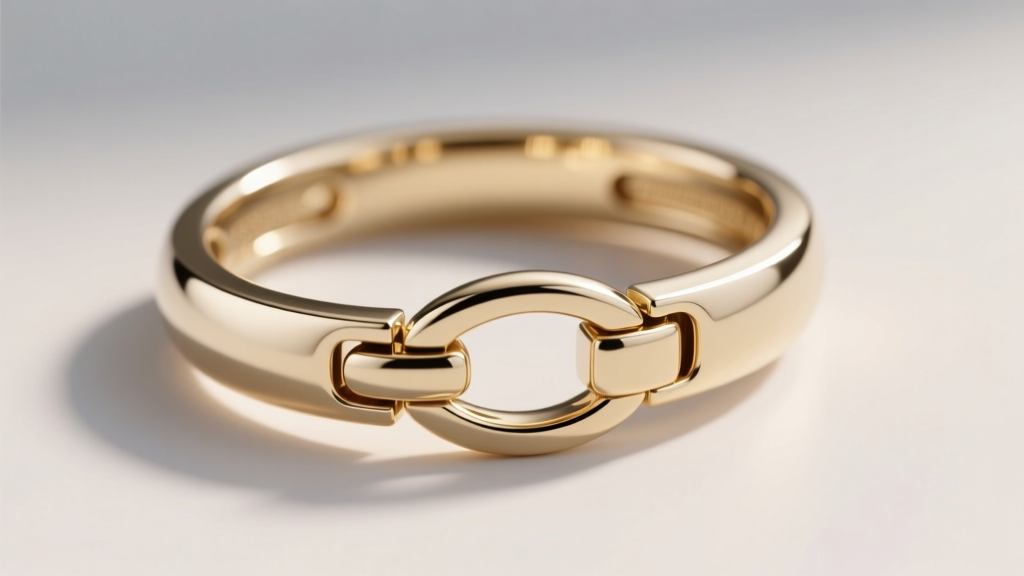
When attaching a clasp, bench jewelers must use flush-cut jump rings made from hard-drawn wire. The ring must be twisted open laterally, never pulled apart outward, to maintain its perfect circular geometry. For chains weighing over 20 grams, the jump ring must be soldered closed. Traditional torch soldering with hard or medium gold solder can anneal (soften) the surrounding chain links if heat is not carefully managed with a heat sink or cross-locking tweezers. Modern jewelry ateliers increasingly rely on laser welding to fuse the jump ring seam. Laser welding introduces highly localized heat, fusing the metal without altering the temper or hardness of the adjacent chain links or the internal springs of the clasp.
Troubleshooting Common Clasp Failures
- Trigger Lever Sticking: Usually caused by debris or oxidation in the lobster claw track. Clean in an ultrasonic bath with a mild ammonia-free solution; avoid oiling, as oils attract microscopic dust that creates an abrasive paste.
- Box Clasp Tongue Slipping: The V-tongue has work-hardened and flattened. Use a pair of flat-nose pliers to gently re-bend the V-shape, restoring the upward tension. If the metal cracks during bending, the tongue must be replaced.
- Toggle Bar Slipping: The chain is too short, preventing the bar from hanging parallel to the collarbone. Add a 10mm extension chain to allow gravity to properly seat the T-bar against the bottom of the ring.
Conclusion
Mastering the selection and integration of necklace clasps bridges the gap between jewelry design and mechanical engineering. By respecting the metallurgical properties of gold alloys, adhering to strict leverage ratios in toggle designs, and utilizing proper laser-welding protocols for jump rings, jewelers can ensure that their creations remain secure and functional for generations. The clasp is not merely an afterthought; it is the vital anchor of the entire piece.


