How to Style a Black Floral Necklace: A Step-by-Step Guide
Master the art of styling a black floral necklace. Follow our step-by-step guide on layering, neckline pairing, and caring for dark botanical jewels.

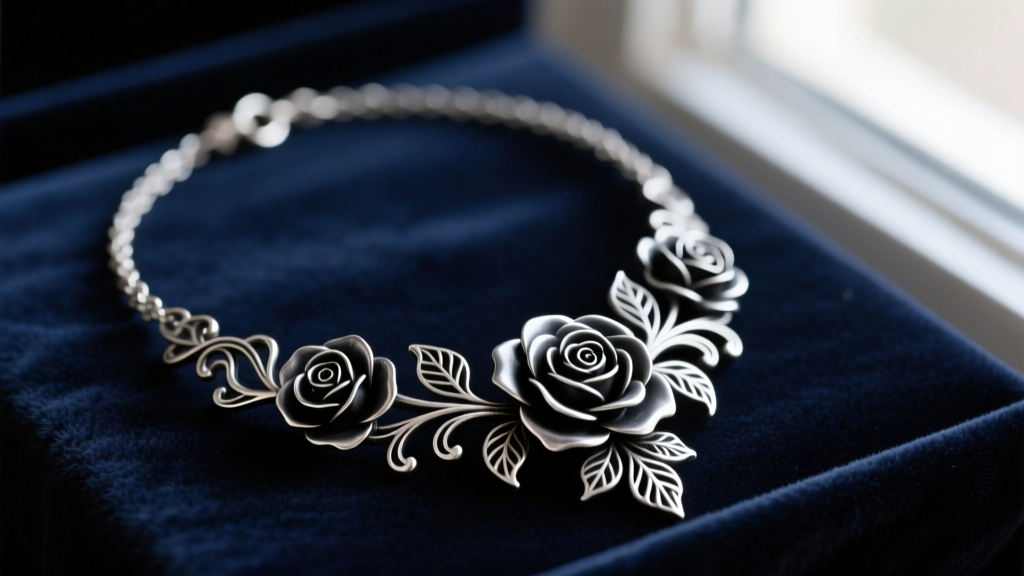
The Resurgence of Dark Botanicals
The black floral necklace has transcended its historical roots in Victorian mourning jewelry to become a cornerstone of modern dark academia, gothic romance, and avant-garde evening wear. Unlike traditional diamond or gold botanical motifs, a black floral necklace relies on texture, contrast, and shadow to make a statement. Whether crafted from carved black onyx, oxidized sterling silver, or intricate champlevé enamel, these pieces require a deliberate approach to styling. This step-by-step guide will walk you through the exact methodologies for pairing, layering, and preserving these dark botanical masterpieces, ensuring your jewelry performs flawlessly across every occasion.
Step 1: Identify Your Material and Structural Limits
Before you begin styling, you must understand the physical properties of your black floral necklace. The term "black floral" encompasses a wide array of materials, each with distinct vulnerabilities and price points. According to the Gemological Institute of America (GIA), materials like black onyx possess a Mohs hardness of 6.5 to 7, making them durable but susceptible to hard knocks along their cleavage planes. Conversely, vintage French jet and enamel are highly fragile.
| Material | Mohs Hardness | Average Price Range | Primary Vulnerability |
|---|---|---|---|
| Oxidized 925 Silver | 2.5 - 3.0 | $45 - $180 | Loss of intentional patina, deep scratching |
| Black Onyx (Carved) | 6.5 - 7.0 | $120 - $500+ | Thermal shock, chipping on impact |
| French Jet (Glass/Resin) | 5.0 - 6.0 | $200 - $800 (Vintage) | Melting, chemical solvent degradation |
| Champlevé Enamel | 5.0 - 6.0 | $90 - $350 | Micro-chipping, ultrasonic vibration |
Step 2: Match the Necklace to the Neckline Geometry
The most common failure in styling a black floral necklace is ignoring the geometry of the garment's neckline. The floral motif must act as a focal point, not compete with the fabric's structure.
The Sweetheart and Scoop Necklines
For sweetheart or scoop necks, opt for a choker or princess-length black floral necklace (14 to 16 inches). The floral pendant should rest exactly one inch above the fabric's hemline. If the necklace features a heavy oxidized silver rose motif, a 1.5mm box chain provides enough structural support to keep the pendant centered without twisting.
The V-Neck and Plunging Necklines
A V-neck demands a Y-drop or a 20-inch pendant chain. The vertical line of the black floral necklace should parallel the garment's plunge, elongating the torso. Avoid wide, multi-strand floral bib necklaces here, as they will visually clutter the chest and obscure the neckline's tailoring.
The Turtleneck and High Collar
High collars require an opera-length chain (28 to 32 inches). The black floral pendant must rest on the ribcage, well below the collarbone. This creates a striking contrast, especially when the floral motif is carved from reflective black onyx, which will catch ambient light against the matte fabric of a knit turtleneck.
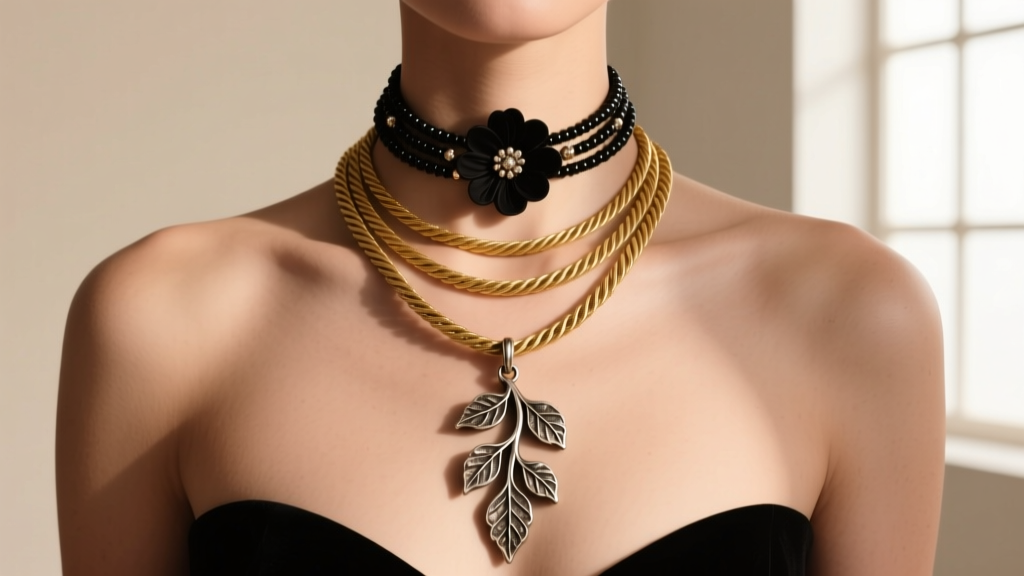
Step 3: Execute the 3-Chain Layering Formula
Layering a black floral necklace requires strict adherence to chain gauge and length differentials to prevent friction damage and tangling. Dark botanicals look best when contrasted with mixed metals or varying textures. Follow this exact three-chain formula for a balanced, high-fashion aesthetic:
- Chain 1 (The Anchor): A 14-inch, 1.2mm blackened silver snake chain. This sits tight to the collarbone and provides a dark base.
- Chain 2 (The Focal Point): Your 18-inch black floral necklace. Ensure the bail (the loop connecting the pendant to the chain) is wide enough to slide freely on a 2.0mm cable chain. This prevents the floral motif from flipping backward.
- Chain 3 (The Elongator): A 22-inch, 14k yellow gold lariat or delicate paperclip chain. The bright gold contrasts sharply with the black floral elements, highlighting the dark botanical details through color juxtaposition.
Expert Tip: Never layer chains of the exact same gauge and weave. A 1.5mm cable chain will aggressively friction-wear against another 1.5mm cable chain, eventually weakening the jump rings. Always vary the weave (e.g., cable, box, snake) and the thickness by at least 0.5mm.
Step 4: Adapt to the Occasion
The versatility of the black floral necklace lies in its ability to shift from daytime edge to evening elegance through simple hardware swaps.
Daytime: Dark Academia & Office Wear
During the day, keep the styling restrained. Pair a matte black enamel floral pendant with a crisp white button-down shirt. Leave the top two buttons undone to frame the piece. The stark monochrome contrast draws the eye without overwhelming a professional environment.
Evening: Gothic Romance & Formal Events
For evening wear, lean into opulence. Pair a vintage French jet black floral necklace with deep emerald, burgundy, or midnight blue silk. As noted by the Victoria and Albert Museum, historical jet jewelry was prized for its deep, lustrous shine when polished, making it an ideal companion for low-light, candlelit, or dimly lit evening venues where the faceted floral carvings can catch subtle reflections.
Step 5: Preservation and Cleaning Protocols
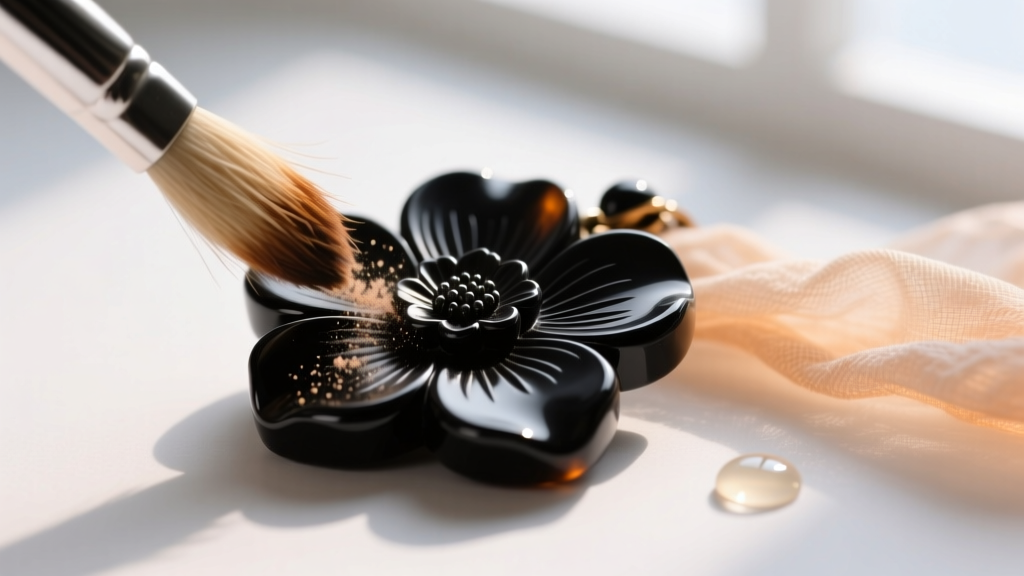
Improper cleaning is the leading cause of irreversible damage to dark botanical jewelry. The deep crevices of a floral motif trap skin oils, perfume residue, and environmental dust, but aggressive cleaning will ruin the piece.
What to Avoid at All Costs
Never place a black floral necklace in an ultrasonic cleaner. The high-frequency cavitation bubbles will shatter champlevé enamel, fracture internal faults in black onyx, and strip the intentional oxidation from sterling silver. Furthermore, avoid commercial silver dips containing thiourea; these chemicals will strip the blackened patina from the floral grooves, leaving the piece looking flat and unfinished.
The Correct Cleaning Methodology
- Prepare the Solution: Mix three drops of pH-neutral dish soap into a bowl of distilled water. Avoid tap water, as trace minerals can leave white deposits in the floral carvings.
- Agitate Gently: Submerge the necklace for no more than five minutes. Use a baby toothbrush (with ultra-soft bristles) to gently sweep along the edges of the floral petals. Do not scrub the center of gemstones.
- Dry Thoroughly: Pat dry with a lint-free microfiber cloth. Use a can of compressed air to blow water out of the deep crevices of the floral pendant to prevent hidden moisture from degrading the metal bail over time.
Restoring the Shadows: Re-Oxidation
If your oxidized sterling silver black floral necklace has been accidentally polished to a bright shine, you can restore the dark, moody patina at home using Liver of Sulfur (potassium sulfide). By diluting a pea-sized amount in warm water and briefly dipping the chain and pendant, the silver will rapidly oxidize back to black. You can then use a polishing cloth to gently buff only the high points of the floral petals, leaving the deep grooves pitch-black. This restores the three-dimensional relief that makes the black floral necklace such a captivating accessory.
"True elegance in dark jewelry lies not just in the absence of light, but in how the shadows are carved to reveal the botanical soul of the piece."
Final Thoughts on Sourcing
When shopping for a black floral necklace, always inspect the bail and the jump rings. Because dark pendants are often heavier due to the density of materials like onyx or solid oxidized silver, the connecting hardware must be soldered closed or feature a heavy-duty lobster clasp. Spring rings are generally insufficient for pendants exceeding 15 grams and will eventually fail, risking the loss of your treasured botanical jewel. By following these precise styling and care steps, your black floral necklace will remain a striking, enduring staple in your wardrobe for decades to come.


