How to Layer and Care for a Gold Sea Turtle Necklace
Learn how to expertly layer, style, and maintain your gold sea turtle necklace. Discover chain pairings, metal grades, and cleaning tips.

The Symbolism and Appeal of the Sea Turtle Motif
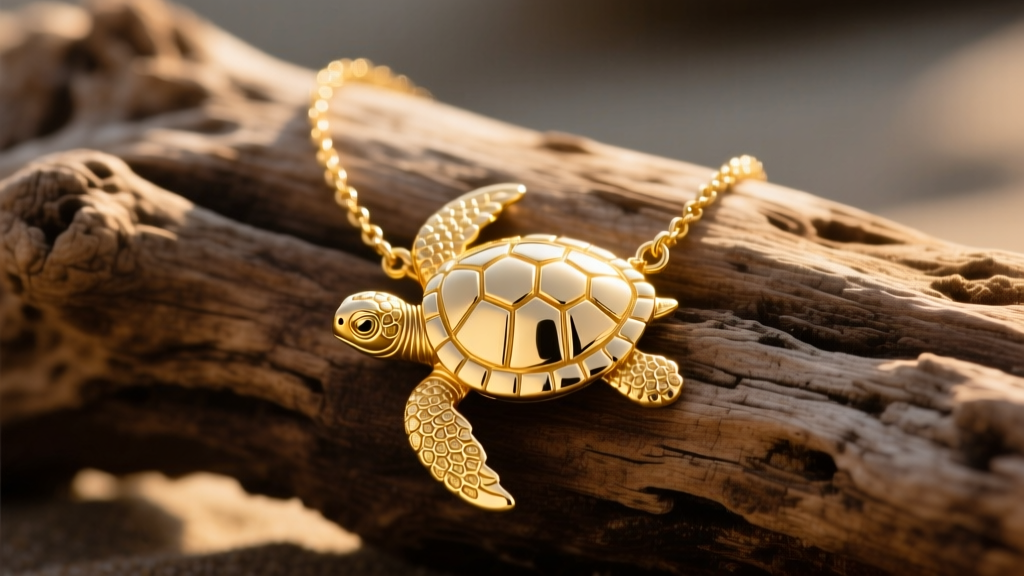
The sea turtle has long been revered in coastal cultures as a symbol of longevity, navigation, and a deep spiritual connection to the ocean. When translated into fine jewelry, a gold sea turtle necklace becomes more than just a decorative accessory; it serves as a personal talisman and a nod to marine conservation. However, owning a piece with such intricate anatomical details—from the hexagonal scutes on the carapace to the delicate flippers—requires specific knowledge regarding metal grades, chain pairings, and maintenance. This comprehensive guide will walk you through the exact steps to style, layer, and preserve your pendant so it retains its brilliance for decades.
Step 1: Selecting the Ideal Gold Purity and Casting Method
Before you begin styling, it is crucial to understand the physical properties of your pendant. The durability of your necklace depends heavily on the gold purity and the manufacturing technique used to create the turtle motif. According to the Gemological Institute of America (GIA), pure 24k gold is far too soft for intricate, everyday pendants, making alloyed gold the industry standard.
| Gold Purity | Composition | Durability | Best Application |
|---|---|---|---|
| 10k Gold | 41.7% Gold | Very High | Budget-friendly, high-wear daily pieces prone to impacts |
| 14k Gold | 58.5% Gold | High | Everyday gold sea turtle necklaces; balances rich color and strength |
| 18k Gold | 75.0% Gold | Moderate | Heirloom pieces with a deeper yellow hue, but softer shell details |
Lost-Wax Casting vs. Die-Striking
Most high-end 3D sea turtle pendants are created using lost-wax casting. This method allows for deep undercuts and realistic texture on the turtle's shell and skin. A cast 14k gold turtle pendant typically weighs between 1.5 and 3.5 grams, giving it enough weight to lay flat against the collarbone without flipping. Conversely, die-struck or stamped pendants are hollow or flat-backed, usually weighing under 1 gram. While lightweight, they lack the sculptural depth required for premium layering.
Step 2: Pairing the Pendant with the Perfect Chain
The bail—the loop at the top of the turtle's head or shell that connects to the chain—dictates your chain options. A standard cast turtle pendant features a bail with an inner diameter of roughly 3mm x 4mm. Selecting a chain that is too thick will cause excessive friction, eventually wearing through the bail.

- Cable Chain (1.0mm - 1.5mm): The classic choice. The uniform oval links provide a traditional nautical aesthetic that complements the organic shape of the turtle. Ensure the links are soldered to prevent snapping.
- Box Chain (1.2mm - 1.8mm): Offers a modern, geometric contrast to the organic turtle motif. Box chains are highly resistant to kinking, making them ideal for daily wear.
- Rope Chain (1.5mm - 2.0mm): The twisted links catch the light beautifully, mimicking the shimmer of water. However, ensure the rope chain's width does not exceed 2.0mm, or it will struggle to pass through the pendant's bail smoothly.
Step 3: The Step-by-Step Layering Framework
Layering a gold sea turtle necklace requires adherence to the "two-inch rule" to prevent the pendants from tangling and obscuring one another. The turtle should act as the focal point of the stack, typically occupying the middle tier.
Tier 1: The Anchor (14 to 16 inches)
Start with a minimalist chain sitting close to the base of the neck. A 15-inch 14k gold paperclip chain or a simple 4mm gold bead choker works perfectly. This tier frames the face and draws the eye downward without competing with the turtle's intricate details.
Tier 2: The Focal Point (18 inches)
This is where your gold sea turtle necklace resides. An 18-inch length allows the pendant to rest precisely on the upper sternum, making it visible over most crew necks, V-necks, and button-down shirts. If your turtle pendant features enamel accents or gemstone eyes, this tier ensures it catches the light optimally.
Tier 3: The Elongator (20 to 22 inches)
Finish the stack with a longer, heavier chain featuring a vertical element. A 20-inch gold bar necklace, a slender compass pendant, or a simple 2.5mm gold bead strand adds verticality. This tier balances the horizontal spread of the turtle's flippers, creating a visually harmonious triangle.
Step 4: Maintenance, Cleaning, and Environmental Protection
Because sea turtle jewelry is heavily associated with beach vacations and coastal living, it is frequently exposed to harsh environmental factors. Saltwater, chlorine, and chemical sunscreens can severely degrade the finish of your necklace if not managed properly.
Crucial Warning: Never wear your gold sea turtle necklace in chlorinated pools or hot tubs. Chlorine reacts with the copper and silver alloys in 14k and 18k gold, causing microscopic stress corrosion cracking. Over time, this will cause the turtle's delicate flippers and bail to snap off entirely.
The 5-Step Deep Cleaning Process
Sunscreen and body oils easily become trapped in the deep crevices of the turtle's carved shell. To restore the original luster, follow this routine recommended by Jewelers of America:
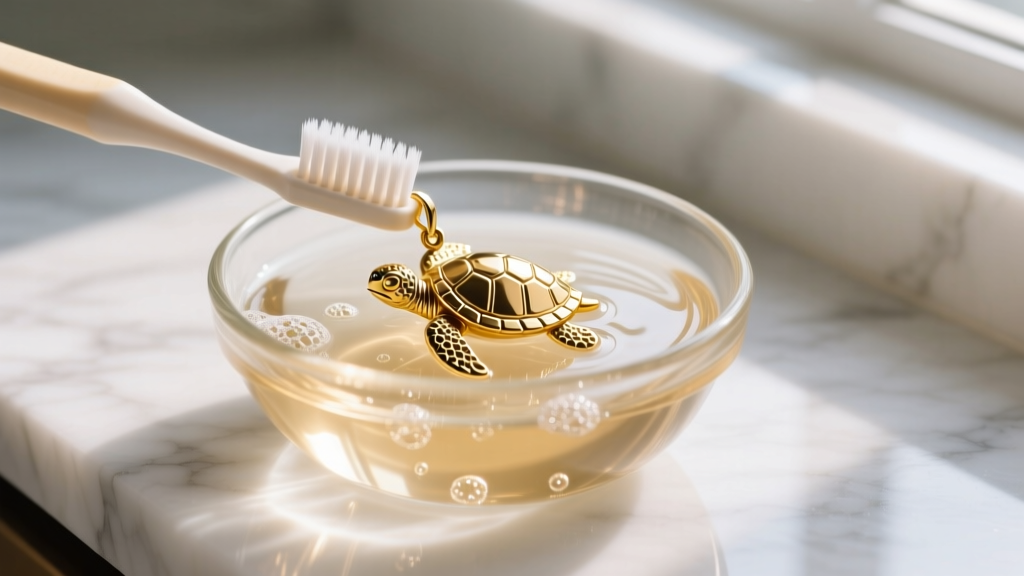
- Prepare the Solution: Fill a small glass bowl with warm (not hot) water and add three drops of mild, phosphate-free dish soap. Avoid harsh detergents or jewelry dips, which can strip the polish.
- Soak: Submerge the necklace and let it soak for 15 to 20 minutes to loosen trapped oils and sunscreen residue from the shell scutes.
- Agitate Gently: Using a soft-bristled baby toothbrush, gently brush the pendant. Use circular motions on the shell and light, sweeping strokes along the edges of the flippers to avoid bending them.
- Rinse: Rinse the necklace thoroughly under lukewarm running water. Ensure the drain is securely plugged to prevent accidental loss.
- Dry and Polish: Pat dry with a lint-free microfiber cloth. Do not use paper towels, as the wood fibers can cause micro-scratches on high-polish gold surfaces.
Troubleshooting Common Wear Issues
Even with meticulous care, mechanical wear can occur over years of use. Here is how to identify and resolve the most common issues associated with animal motif pendants:
Bail Thinning
The bail is the highest friction point on any necklace. Inspect the inside of the turtle's bail every six months using a jeweler's loupe. If the gold has worn down by more than 20%, take it to a professional jeweler to have a new soldered jump ring or reinforced bail attached before the pendant is lost.
Chain Tangling with the Flippers
If you are using a lightweight chain (under 1.0mm) with a heavier cast pendant, the chain is prone to slipping through the bail and tangling around the turtle's protruding flippers. Upgrading to a slightly stiffer 1.5mm box chain or adding a small 3mm gold spacer bead just above the bail will stabilize the pendant and prevent the chain from wrapping around the motif.
Final Thoughts on Coastal Elegance
A gold sea turtle necklace is a timeless investment that bridges the gap between casual coastal style and refined elegance. By carefully selecting the appropriate gold purity, respecting the mechanical limits of the bail, and adhering to a strict, gentle cleaning regimen, you ensure that your pendant remains a flawless tribute to the ocean. Whether worn as a solitary statement piece on a delicate 18-inch cable chain or integrated into a complex, multi-tiered layering stack, the sea turtle motif will continue to navigate your personal style with grace and resilience for years to come.


