How to Layer and Care for an Opal and Amethyst Necklace
Learn how to expertly layer, style, and clean your opal and amethyst necklace with our gemologist-approved step-by-step care and wear guide.

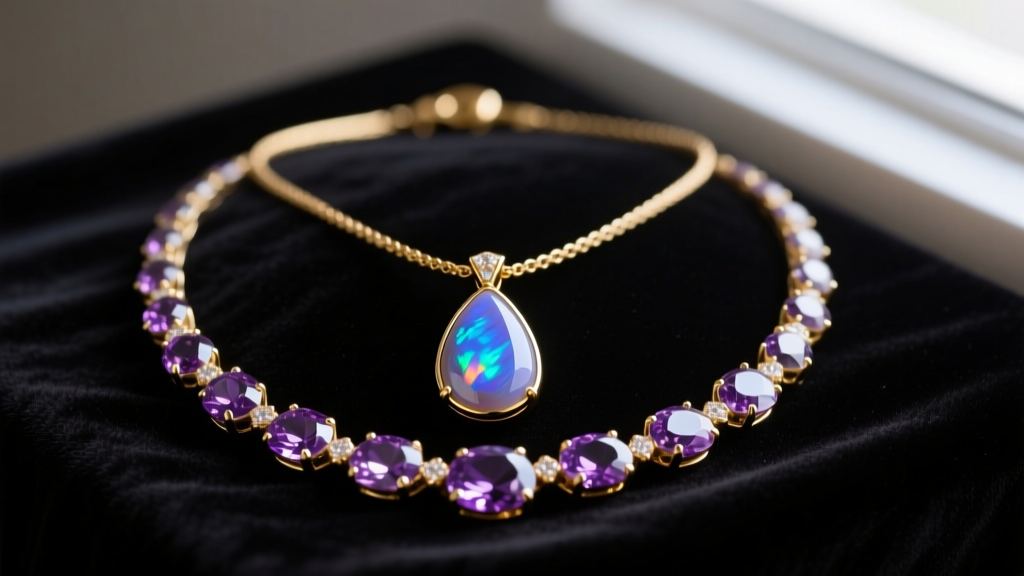
The Gemological Challenge: Pairing Opal and Amethyst
Designing or styling an opal and amethyst necklace is a masterclass in balancing contrasting gemological properties. While the visual synergy between the fiery, iridescent flashes of opal and the deep, regal purple of amethyst is undeniable, their physical characteristics require careful consideration. As a jewelry stylist, I always remind clients that wearing these two stones together is not just about color theory; it is about managing hardness, porosity, and environmental sensitivity.
Amethyst is a variety of quartz, ranking at a solid 7 on the Mohs hardness scale. Opal, conversely, is a hydrated amorphous form of silica, ranking much lower at 5.5 to 6.5. If an amethyst pendant and an opal pendant are placed on the same chain without fixed spacing, the harder amethyst will inevitably scratch the softer opal over time. Furthermore, while amethyst is relatively non-porous, many popular opals (specifically Ethiopian Welo opals) are hydrophane, meaning they absorb water, oils, and chemicals, which can temporarily or permanently alter their fire and transparency.
This guide will walk you through the exact steps to layer, style, and maintain your opal and amethyst necklaces safely, ensuring your jewelry remains pristine for decades.
Step-by-Step Guide to Layering Your Necklaces
Layering requires strategic placement to prevent the gemstones from tangling or colliding. We will use a three-chain system to create depth while protecting the stones.
Step 1: Establish the Base Chain (14 to 15 Inches)
Your foundational layer should sit close to the collarbone. For this layer, we recommend a 14-inch or 15-inch 14k gold-filled or solid 18k gold cable chain with a gauge of 1.2mm. Instead of a heavy pendant, opt for an amethyst station necklace—where tiny 3mm faceted amethyst beads are bezel-set at 2-inch intervals along the chain. This keeps the weight light and ensures the amethyst beads lay flat against the skin, providing a subtle purple sparkle without risking impact damage to your centerpieces.
Step 2: Position the Opal Pendant (18 to 20 Inches)
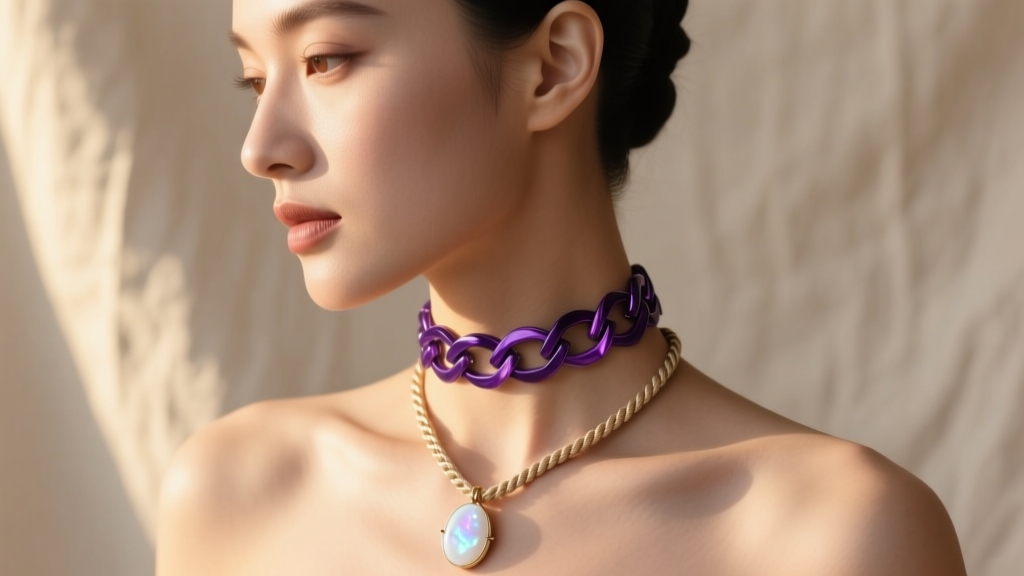
The opal should be the focal point of your layering stack. Drop down to an 18-inch or 20-inch 2.5mm rope chain. The thicker rope chain provides structural integrity, which is vital because opals are often cut en cabochon and set in heavier bezels to protect their delicate edges. Ensure the opal pendant features a fixed bail or a soldered jump ring so it cannot slide wildly across the chain. If you are pairing this with a secondary amethyst solitaire pendant on the same chain, use a chain with fixed silicone stoppers or soldered rings to keep the pendants exactly 3 inches apart.
Step 3: Add Metallic Textures (22 to 24 Inches)
To frame the opal and amethyst without introducing a third gemstone that might clash or cause further hardness conflicts, add a 22-inch or 24-inch matte-finished box chain (1.8mm gauge). The matte texture contrasts beautifully with the high-polish glass-like finish of the amethyst and the waxy-to-vitreous luster of the opal. Secure all chains with high-quality lobster clasps; avoid spring ring clasps, as their thin wire mechanisms frequently fail under the layered weight.
Crucial Care Protocols for Mixed-Gemstone Necklaces
Cleaning an opal and amethyst necklace requires a bifurcated approach. What is perfectly safe for amethyst can be catastrophic for certain opals. According to the Gemological Institute of America (GIA), ultrasonic cleaners and steamers should never be used on opals, as the high-frequency vibrations can cause internal fracturing, and the heat can dry out the stone's water content, leading to crazing (a network of fine cracks).
| Property | Amethyst (Quartz) | Ethiopian Opal (Hydrophane) | Australian Opal (Non-Porous) |
|---|---|---|---|
| Mohs Hardness | 7.0 | 5.5 - 6.5 | 5.5 - 6.5 |
| Porosity | Non-porous | Highly porous | Low / Non-porous |
| Ultrasonic Safe? | Usually Yes (if no inclusions) | Absolutely Not | No |
| UV / Heat Sensitivity | High (Prolonged UV fades color) | High (Heat causes cracking) | Moderate (Heat causes drying) |
| Ideal Cleaning Method | Warm soapy water, soft brush | Dry microfiber cloth only | Damp cloth, mild soap |
The Safe Cleaning Routine
To clean your layered set without damaging the opal, follow this strict protocol:
- Remove all necklaces and lay them flat on a clean, dry microfiber towel.
- For the Amethyst Chain: Mix three drops of pH-neutral dish soap (like Dawn) into a bowl of lukewarm distilled water. Dip a baby-soft toothbrush into the solution and gently brush the amethyst stones and the metal chain. Rinse under a gentle stream of distilled water and pat dry.
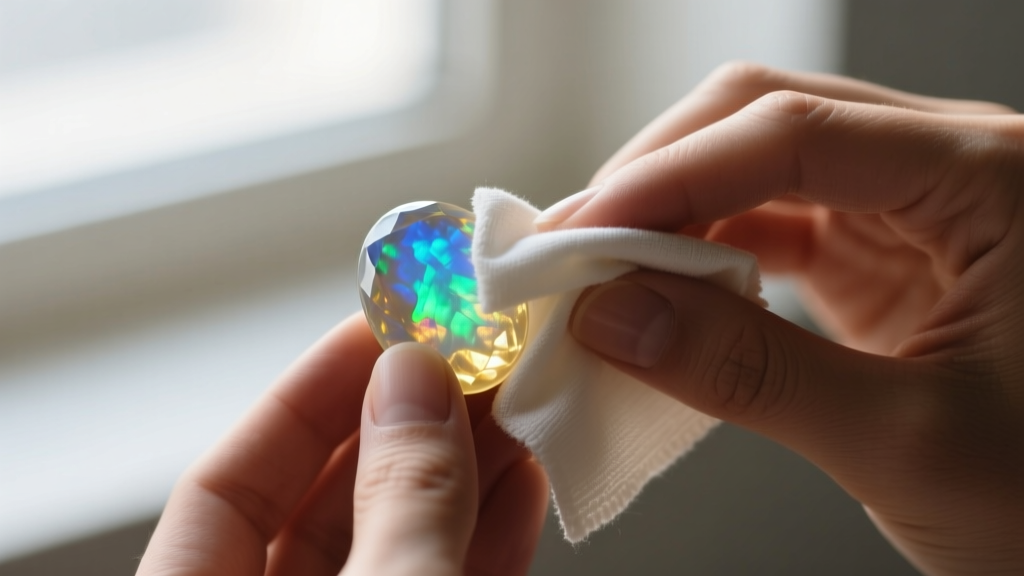
- For the Opal Chain: Do not submerge the chain if it features Ethiopian opal. Instead, lightly dampen a microfiber cloth with distilled water, wipe the gold chain carefully, and avoid touching the opal stone. Polish the opal gently with a completely dry, clean section of the microfiber cloth to remove skin oils.
"Never apply lotions, perfumes, or hairspray while wearing hydrophane opals. The stone will absorb the chemicals, which can permanently cloud the gem's internal fire and turn it a milky yellow."
Troubleshooting Common Opal and Amethyst Issues
Even with meticulous care, environmental factors can affect your gemstones. Here is how to troubleshoot the most common issues encountered with an opal and amethyst necklace stack.
Issue 1: The Ethiopian Opal Has Lost Its Fire and Turned Clear
The Cause: Hydrophane opals absorb water from humidity, sweat, or accidental splashes. When the water fills the microscopic silica spheres, the diffraction of light stops, and the stone loses its play-of-color, appearing transparent or milky.
The Fix: Do not panic, and never use a hairdryer or place it in direct sunlight to speed up the drying process. Rapid temperature changes will cause the opal to crack. Simply place the necklace in a dry, room-temperature environment (a jewelry box with a silica gel packet works perfectly) and wait 1 to 3 weeks. The water will naturally evaporate, and the fire will return.
Issue 2: The Amethyst Looks Cloudy or Scratched
The Cause: Amethyst can accumulate a film of hard water spots, soap scum, or body oils. Alternatively, if it was stored loosely with diamonds or sapphires, it may have acquired surface scratches.
The Fix: For soap scum, a 10-minute soak in a 50/50 mixture of distilled water and white vinegar will dissolve the buildup without harming the quartz. Rinse thoroughly. If the stone is physically scratched, it must be taken to a professional lapidary or jeweler to be re-polished; do not attempt to buff it at home with abrasive compounds.
Issue 3: The Amethyst Color is Fading
The Cause: As noted by GIA's amethyst care guidelines, prolonged exposure to intense direct sunlight or extreme heat can cause the purple color centers in amethyst to degrade, leading to a washed-out, grayish appearance.
The Fix: Unfortunately, UV fading in amethyst is permanent and cannot be reversed. To prevent this, never leave your necklace on a sunny windowsill or on the dashboard of a car. Store it in a dark, velvet-lined jewelry box when not in use.
Final Styling Thoughts for 2026 and Beyond
The opal and amethyst necklace combination remains a staple for those who appreciate mystical, celestial jewelry aesthetics. The contrast between the grounding, deep violet of the amethyst and the ethereal, light-catching play-of-color in the opal creates a dynamic visual anchor for any outfit. By respecting the distinct gemological boundaries of these two stones—keeping them physically separated on your neckline and adhering to strict, moisture-free cleaning protocols for the opal—you ensure that your layered stack remains as vibrant and structurally sound as the day you first clasped it.


