A Beginner's Guide to Wearing a Cross Necklace Daily
Learn the essentials of wearing a cross necklace. Discover chain pairings, metal grades, length guides, and styling tips for everyday elegance.

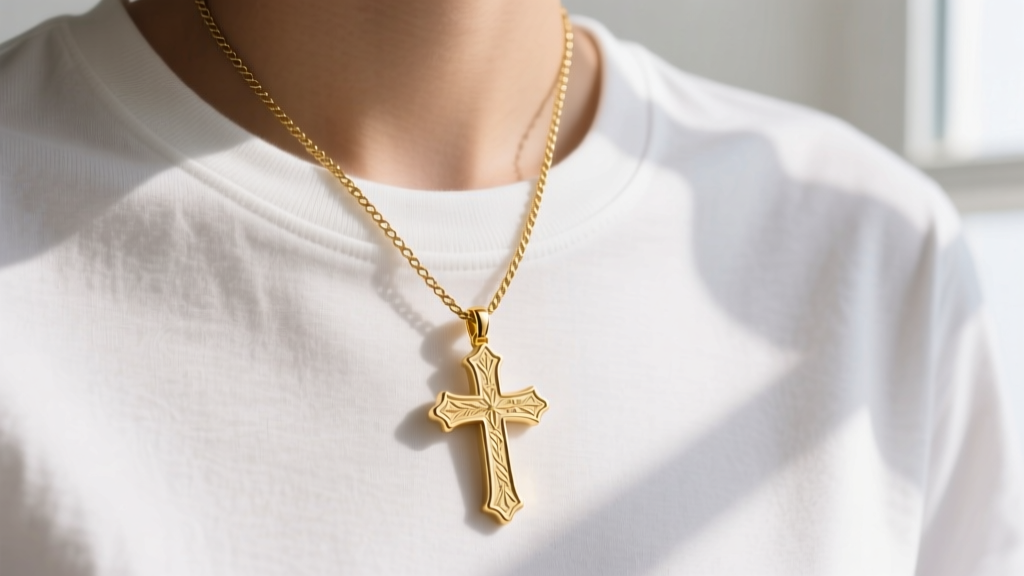
The Evolution of the Cross Pendant in Modern Style
When it comes to timeless jewelry, few pieces carry the historical weight and versatile appeal of the cross pendant. While traditionally rooted in religious expression, wearing a cross necklace has transcended its origins to become a global fashion staple. According to cultural historians at BBC Culture, the cross is arguably the most recognizable symbol in the world, and its integration into mainstream jewelry design speaks to its geometric balance and striking silhouette. For beginners, mastering the art of styling this iconic piece requires understanding metal durability, chain mechanics, and proportional layering.
Decoding Metal Grades for Everyday Durability
The most critical mistake beginners make when buying their first cross pendant is ignoring metal hardness. A necklace worn daily is subjected to friction, sweat, and accidental snags. You must choose a metal grade that aligns with your lifestyle. Below is a breakdown of the most common metals used for cross pendants, rated by their Vickers Hardness (HV) scale and daily wear viability.
| Metal Grade | Vickers Hardness (HV) | Tarnish Resistance | Best Use Case | Price Tier |
|---|---|---|---|---|
| 925 Sterling Silver | 60-70 HV | Low (Requires Rhodium Plating) | Budget-friendly, occasional wear | $ |
| 14k Yellow/White Gold | 120-140 HV | High | Best overall for daily, rugged wear | $$$ |
| 18k Yellow/White Gold | 80-100 HV | Very High | High-end luxury, careful daily wear | $$$$ |
| Platinum (950) | 40-50 HV (Malleable) | None (Develops Patina) | Heirloom pieces, hypoallergenic needs | $$$$$ |
While 18k gold offers a richer, deeper yellow hue, its higher pure gold content (75%) makes it softer and more prone to scratching. For a piece you intend to wear every single day, 14k gold (58.5% pure gold) is the undisputed champion. The alloy metals (like copper and zinc) increase the Vickers hardness, ensuring the arms of your cross pendant won't bend or warp if caught on a heavy sweater.
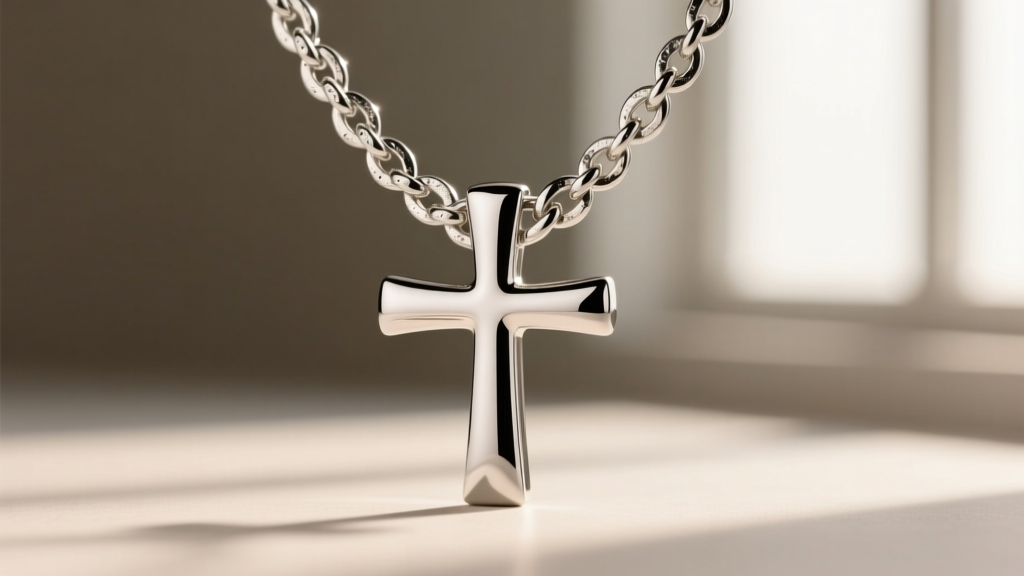
Chain Selection and the Bail-to-Link Ratio
A pendant is only as secure as the chain holding it, and the connection point—the bail—is where structural failures occur. The bail is the loop at the top of the cross that the chain threads through. When wearing a cross necklace, friction is your biggest enemy. If the chain is too thick for the bail, or the bail is too thin for the chain, microscopic metal dusting occurs, eventually wearing through the gold or silver.
The Golden Ratio of Jewelry Mechanics
According to metallurgical guidelines referenced by the Gemological Institute of America (GIA), you should always maintain a minimum clearance of 0.5mm to 1.0mm between the chain's thickness and the bail's inner diameter. If you choose a robust 2.5mm Figaro chain, your cross pendant's bail must have an inner opening of at least 3.5mm.
- Cable Chains: Classic and lightweight, but the uniform circular links are prone to stretching and snapping under sudden tension. Best for lightweight, minimalist crosses (under 3 grams).
- Box Chains: Woven square links offer excellent tensile strength and a modern, geometric look that pairs beautifully with sharp-edged crosses. However, if a single link bends, the chain can kink permanently.
- Rope Chains: Twisted links distribute tension evenly, making them incredibly durable for heavier, solid gold cross pendants. They also reflect light brilliantly, adding secondary sparkle to plain metal crosses.
Length Guide: Pairing with Necklines
The visual impact of your necklace changes drastically depending on where it rests on your sternum. Choosing the right length is not just about comfort; it is about framing your face and complementing your wardrobe's necklines.
- 16 Inches (Choker/Collar): Sits tightly at the base of the neck. Ideal for crew neck t-shirts, boat necks, and off-the-shoulder tops. This length works best with micro-crosses (10mm - 15mm) to avoid looking overly heavy.
- 18 Inches (Princess): The industry standard. It rests gracefully on the collarbone. This is the most versatile length for wearing a cross necklace, as it peeks out perfectly from unbuttoned collared shirts and complements V-necks without getting lost in the fabric.
- 20 to 22 Inches (Matinee): Falls just above the bust line. Perfect for layering over turtlenecks, hoodies, or streetwear. A larger, bolder cross (25mm+) is required here so the pendant doesn't look disproportionate to the longer chain.
- 24 to 30 Inches (Opera/Rope): Rests on the chest or stomach. Primarily used in streetwear and hip-hop fashion, often featuring diamond-iced or oversized statement crosses worn over the outside of garments.

Plain Metal vs. Diamond-Set Crosses
When selecting your pendant, you must decide between the understated elegance of plain metal and the brilliance of gemstone accents. Plain metal crosses rely entirely on their proportions, edge beveling, and surface finish (high-polish vs. brushed matte) to catch the eye. They are virtually indestructible and require zero maintenance beyond occasional wiping with a microfiber cloth.
Diamond-set crosses elevate the piece to fine jewelry status, but they introduce structural vulnerabilities. If you opt for diamonds, always choose a bezel setting or a shared-prong setting over traditional four-prong settings. Prongs can easily catch on lace, denim, or hair, potentially loosening the stones. Furthermore, ensure the diamonds are graded at least SI1 (Slightly Included) and G-H in color, as the small surface area of a cross pendant's arms will magnify any visible carbon inclusions or yellow tints.
Maintenance and Troubleshooting
To ensure your necklace lasts a lifetime, you must adopt a proactive maintenance routine. The most common point of failure for daily wearers is the clasp, specifically the spring-ring or lobster claw mechanism. Lotions, perfumes, and dead skin cells accumulate inside the clasp spring, causing it to stick or fail to close completely. Once a month, use a soft-bristled baby toothbrush and a drop of mild dish soap to gently scrub the clasp and the bail of your pendant.
Additionally, avoid wearing sterling silver or lower-karat gold crosses in chlorinated pools or hot tubs. Chlorine reacts violently with the alloy metals (like copper and zinc) in 10k and 14k gold, causing a phenomenon known as 'stress corrosion cracking,' which can cause the arms of your cross to literally snap off at the microscopic stress points. As noted by market analysts at Forbes Jewelry, proper care and storage in an anti-tarnish pouch can extend the life of your jewelry investments by decades.
Final Thoughts
Mastering the art of wearing a cross necklace is about balancing personal meaning with material science and aesthetic proportion. By selecting a durable metal like 14k gold, respecting the bail-to-chain ratio, and matching your chain length to your daily wardrobe, you transform a simple pendant into an enduring, everyday signature piece. Whether you prefer a microscopic 10mm gold cross on a delicate cable chain or a heavy, oxidized silver statement piece on a rope chain, the rules of proportion and metallurgy remain your best guides to effortless style.


