How to Style and Customize a Modern Military Necklace
Learn how to customize, layer, and style a modern military necklace. Expert tips on chain gauges, metal grades, and respectful everyday styling.

The Evolution of the Military Necklace in Modern Fashion
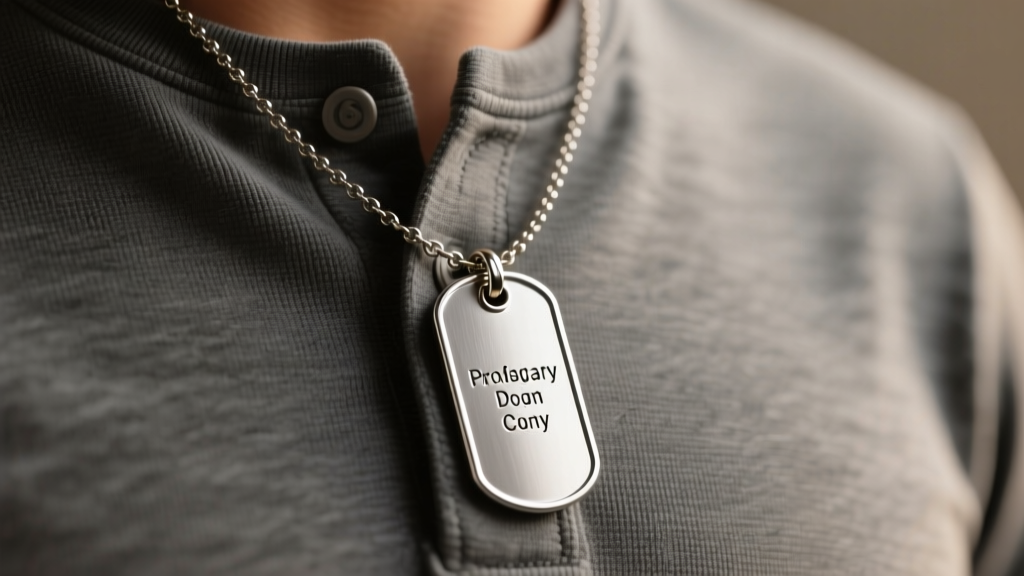
The military necklace, historically recognized as "dog tags," has transcended its origins as a vital piece of battlefield identification to become a cornerstone of modern streetwear, minimalist fashion, and utilitarian jewelry. Originally designed to provide critical medical and identification data for soldiers, the iconic rectangular pendant has been adopted by civilian fashion for its raw, industrial aesthetic. However, styling a military necklace in 2026 requires more than just throwing a standard ball chain over your head. Today's trends lean heavily into bespoke customization, mixed-metal layering, and high-grade metallurgy. Whether you are looking to honor a family legacy or simply appreciate the utilitarian design, this step-by-step guide will walk you through selecting, customizing, and styling a military necklace with precision, depth, and respect.
Step 1: Selecting the Right Blank and Metal Grade
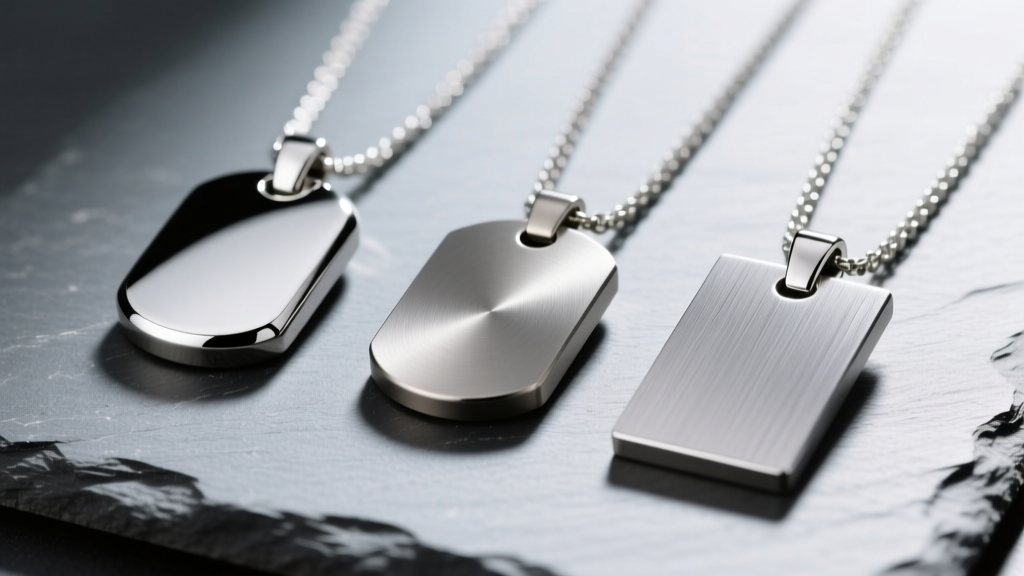
The foundation of any premium military necklace is the blank (the unengraved tag). Avoid cheap, mass-produced tags that bend easily or cause skin irritation. According to the GIA Gem Encyclopedia, understanding metal alloys is crucial for jewelry longevity and wearability. Here is a breakdown of the best materials for a modern military tag:
316L Surgical Stainless Steel
This is the gold standard for everyday military necklaces. Unlike standard 304 stainless steel, 316L contains 2-3% molybdenum, which drastically increases its resistance to chloride corrosion (meaning it won't rust from sweat or saltwater). It is highly durable, hypoallergenic, and takes a mirror polish or a matte brush finish beautifully.
Grade 5 Titanium (Ti-6Al-4V)
For those who prioritize lightweight comfort without sacrificing tensile strength, aerospace-grade titanium is the ultimate choice. It is roughly 45% lighter than steel and entirely immune to corrosion. Titanium blanks are more expensive and harder to hand-stamp, requiring specialized CNC routing or laser engraving, but they offer an unbeatable strength-to-weight ratio.
Sterling Silver (925)
If you are elevating the military necklace into a luxury accessory, solid 925 sterling silver provides a brilliant luster. However, silver is softer than steel and will scratch and tarnish over time, requiring regular polishing with a treated jeweler's cloth.
Gauge and Dimensions
Standard US military issue tags are roughly 2 inches by 1.125 inches. However, for modern civilian styling, a slightly scaled-down blank (1.75 inches by 1 inch) often drapes better and looks less costume-like. Crucially, pay attention to the thickness. Opt for a 12-gauge (2.05mm) or 14-gauge (1.6mm) blank. Anything thinner (like 16-gauge) will feel flimsy, bend under pressure, and produce a cheap, tinny sound when the tags strike each other.
Step 2: Choosing the Perfect Chain (Gauge & Length)
The chain dictates the drape, durability, and overall aesthetic of your military necklace. While the traditional ball chain is iconic, modern styling often incorporates alternative chain types to elevate the look. Below is a comparison chart to help you select the right hardware.
| Chain Type | Standard Gauge | Durability | Best For |
|---|---|---|---|
| Ball Chain (Bead) | 2.4mm - 3.0mm | Low to Medium | Authentic, vintage military aesthetics. Prone to snapping if yanked. |
| Cable Chain | 2.0mm - 3.5mm | High | Modern, minimalist looks. Excellent tensile strength and smooth drape. |
| Rope Chain | 2.5mm - 4.0mm | Very High | Streetwear and layering. Adds texture and catches the light beautifully. |
| Box Chain | 2.0mm - 3.0mm | Medium | Sleek, geometric aesthetics. Can pull chest hair if not sized correctly. |
Length Selection Guide
- 20 Inches: Sits right at the collarbone. Ideal for layering under other chains or wearing with high-neck garments.
- 24 Inches: The standard military length. Falls mid-chest, perfect for resting over a t-shirt or under an unbuttoned shirt.
- 27 to 30 Inches: Falls on the stomach. Best for oversized streetwear, hoodies, and wearing over heavy outerwear.
Step 3: Customization and Stamping Techniques
Customization is where a military necklace transitions from a generic accessory to a deeply personal artifact. The method you choose for engraving will dramatically alter the final tactile feel of the piece.
Hand Stamping vs. Laser Engraving
Hand stamping involves using hardened steel dies and a heavy mallet (preferably a 16oz brass-headed mallet to avoid marring the dies) to physically displace the metal. This creates deep, tactile indentations that you can feel with your thumb. It yields a rugged, imperfect, and highly authentic look. Laser engraving, on the other hand, uses concentrated light to burn the surface. It is incredibly precise, allowing for complex graphics, QR codes, or micro-typography, but it lacks the physical depth of hand stamping. For a modern, high-end finish, CNC routing offers the best of both worlds: deep, precise, geometric cuts with clean, sharp edges.
Typography and Layout
Traditional dog tags use a specific Mil-Spec sans-serif font, stamped in five lines (Name, Serial Number, Blood Type, Gas Mask Size, Religion). For civilian wear, adopt a minimalist approach. Consider stamping meaningful geographical coordinates, a significant date in Roman numerals, or a single word in a clean, modern sans-serif typeface. The negative space on the blank is just as important as the text.
Adding Rubber Silencers
The iconic metallic "clink" of dog tags can be disruptive in quiet environments. To solve this, add an edge silencer. These are typically made from nitrile rubber or silicone with a durometer rating of 40A to 50A, providing enough flexibility to stretch over the tag while dampening the sound of metal-on-metal impact. Choose a color that either blends with the metal (black or dark grey) or provides a deliberate, high-contrast pop (like neon orange or olive drab).
Step 4: Layering Your Military Necklace for Modern Style
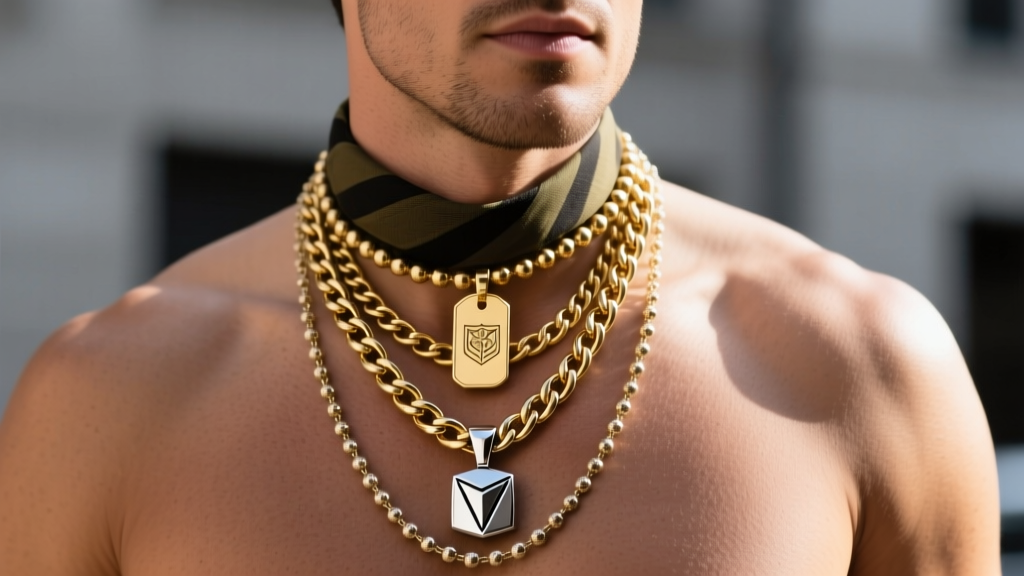
In 2026, wearing a single military necklace on a ball chain can sometimes look dated or overly costumey. The key to integrating it into a modern wardrobe is strategic layering. By mixing chain types, metals, and lengths, you create a curated, intentional stack.
The "Rule of Thirds" in Necklace Stacking
When layering, ensure there is a minimum of 2 to 4 inches of separation between each chain to prevent tangling and allow each piece to stand out. A highly effective stack involves three pieces:
- The Base (18-20 inches): A simple, medium-weight chain (like a 3mm gold or silver Cuban link) that sits near the collarbone.
- The Anchor (24 inches): Your custom military necklace on a cable or rope chain, falling mid-chest.
- The Accent (Optional): A small, delicate pendant or a signet ring on a thin chain, layered at 22 inches to bridge the gap.
Neckline Pairings
The military necklace thrives on contrast. Pair the industrial, utilitarian vibe of the steel tag with soft, textured fabrics. A 24-inch steel military tag layered over a dark charcoal waffle-knit henley or a heavyweight vintage cotton t-shirt creates a rugged, masculine silhouette. Avoid wearing it over formal dress shirts or business attire, as the casual nature of the tag clashes with the formality of the collar.
Respecting the Origins: Styling Etiquette
While the military necklace is a staple of fashion, it is vital to remember its origins as a tool for identifying fallen soldiers. The National Archives maintains extensive records on the history and significance of military identification. When customizing your piece, observe a few basic rules of respect:
- Avoid Stolen Valor Aesthetics: Do not engrave actual military serial numbers, official rank insignia, or replicate the exact tags of a real service member unless it is your own or a direct family heirloom.
- Steer Clear of Offensive Imagery: Keep the engravings personal, abstract, or typographic. Avoid using the tags to display profanity, offensive symbols, or edgy graphics that mock military service.
- Embrace Personal Storytelling: Use the space to tell your own story. Stamp your personal coordinates, a mantra, or the dates of significant life milestones. This honors the original purpose of the tag (identification and personal data) while keeping it firmly rooted in your own life.
"The best utilitarian jewelry doesn't just mimic a uniform; it takes the functional ethos of the original design and adapts it to tell a deeply personal, civilian story."
Conclusion
Styling a military necklace is an exercise in balancing rugged utility with modern refinement. By selecting a premium 12-gauge 316L stainless steel or titanium blank, choosing a durable cable or rope chain over the fragile ball chain, and utilizing deep CNC routing or hand-stamping for your customization, you elevate the piece from a cheap costume accessory to a lifelong staple. When layered thoughtfully and worn with respect for its origins, the military necklace remains one of the most versatile, meaningful, and enduring pendants in modern jewelry history.


