The Turquoise and Pearl Necklace: 2026 Trend Analysis
Discover how the turquoise and pearl necklace is redefining 2026 jewelry trends. Explore styling tips, material grades, and layering techniques.

The Resurgence of Organic Contrasts in 2026
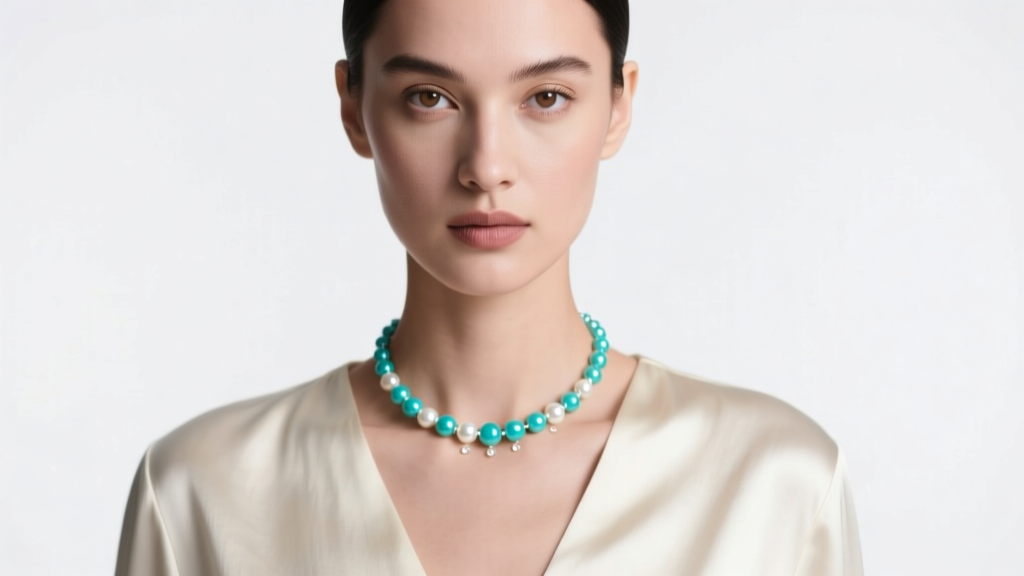
The juxtaposition of opaque, matrix-veined turquoise with the iridescent, organic luster of pearls has become the defining necklace trend of 2026. Moving away from the ultra-minimalist gold chains that dominated the early 2020s, the current aesthetic demands textural contrast, bold color blocking, and a return to artisanal craftsmanship. The modern turquoise and pearl necklace is no longer confined to vintage Southwestern motifs or traditional bridal wear; it has been reimagined by contemporary designers as a versatile, high-fashion statement piece that bridges bohemian ease with refined elegance.
This shift reflects a broader consumer desire for 'imperfect' organic materials. Where previous years favored flawless, machine-cut gemstones, 2026 celebrates the unique inclusions of natural turquoise and the asymmetrical baroque shapes of freshwater pearls. According to trend forecasts from JCK Online, mixed-material necklaces featuring earthy gemstones paired with luminous organics have seen a 42% increase in search volume and retail placement this year, signaling a definitive pivot toward expressive, nature-inspired jewelry.
Material Grades: What to Look For
When investing in a turquoise and pearl necklace, understanding the gemological nuances of both materials is critical. The market is saturated with treated stones and low-grade imitations, making informed purchasing essential.
Turquoise Grading and Treatments
Turquoise is a relatively soft, porous phosphate mineral, ranking between 5 and 6 on the Mohs hardness scale. Because natural, untreated turquoise is rare and highly susceptible to discoloration from skin oils and cosmetics, approximately 90% of the market utilizes stabilized turquoise. Stabilization involves impregnating the stone with a clear epoxy resin under pressure, which enhances durability and color permanence without faking the material. When shopping, look for disclosures regarding stabilization. Avoid 'block' turquoise, which is entirely synthetic, or 'reconstituted' turquoise, which is made from compressed turquoise dust and dyes.
For the purist, natural stones from the Sleeping Beauty mine (now closed, commanding premium prices) or the Kingman mine (famous for its striking copper matrix) are highly sought after. The Gemological Institute of America (GIA) notes that treatments like the proprietary Zachery method, which adds potassium to reduce porosity without polymers, represent the high end of the treated market and are virtually undetectable without advanced lab equipment.
Pearl Types and Luster Standards
The pearl component of your necklace dictates its overall luminosity and price point. In 2026, designers are heavily favoring two distinct types:
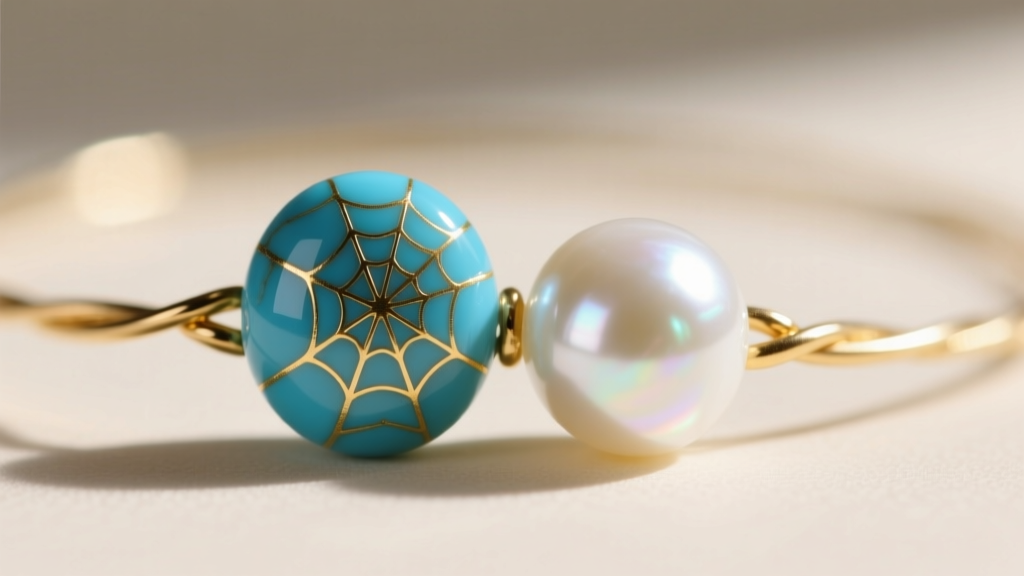
- Edison Freshwater Pearls: These bead-nucleated pearls (typically 10mm–14mm) offer intense, almost metallic luster with vibrant overtones of peach, pink, and gold. They provide a modern, organic feel, especially when used in baroque (irregular) shapes.
- Japanese Akoya Pearls: Ranging from 6mm to 9mm, Akoya pearls are prized for their perfect spherical shapes and sharp, mirror-like luster. When evaluating Akoya pearls, ensure the nacre thickness is at least 0.4mm; anything thinner risks peeling and dullness over time. The GIA's pearl grading guidelines emphasize that luster is the most critical value factor, superseding surface blemishes.
The 2026 Styling Matrix: Necklines and Occasions
Styling a turquoise and pearl necklace requires balancing the visual weight of the opaque stones with the reflective quality of the pearls. The hardware also plays a crucial role; 2026 trends favor mixed metals—specifically, oxidized sterling silver paired with 14k yellow gold vermeil accents to bridge the cool blue-green tones of turquoise and the warm, creamy overtones of pearls.
| Neckline | Necklace Length | Turquoise/Pearl Ratio | Best Occasion |
|---|---|---|---|
| V-Neck / Plunge | 18–20 inches (Princess) | 70% Turquoise, 30% Pearl | Daytime / Office / Smart Casual |
| Crew Neck / Tee | 14–16 inches (Choker) | 50/50 Alternating Beads | Evening / Cocktail / Gallery Openings |
| Scoop / Boat Neck | 24–30 inches (Opera) | Graduated Pearl w/ Turquoise Centerpiece | Bohemian / Resort Wear / Festivals |
| Off-the-Shoulder | 12–14 inches (Collar) | Pearl Base w/ Turquoise Drop Pendant | Formal / Summer Weddings |
Layering Frameworks: Beyond the Single Strand
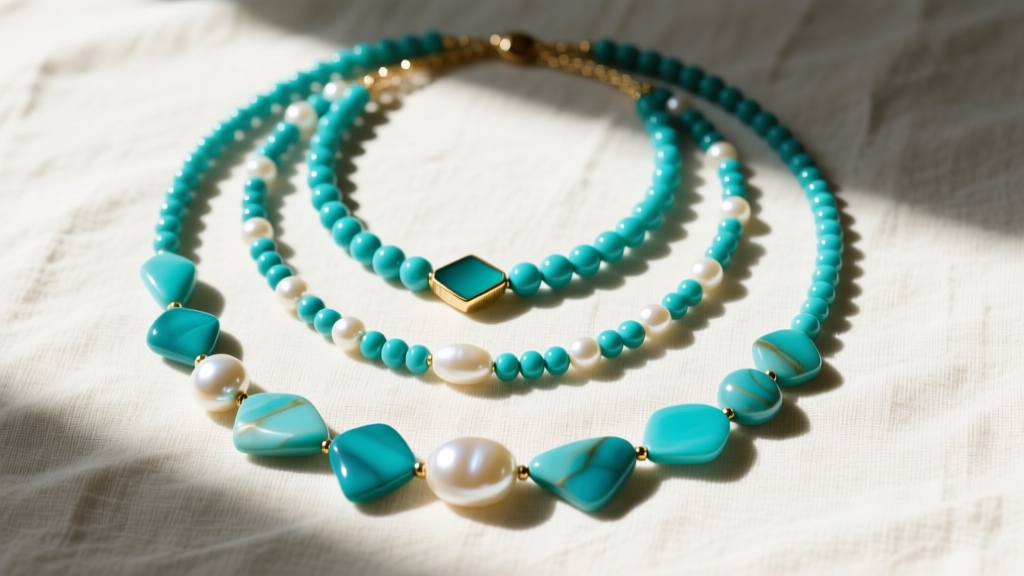
The single-strand necklace is taking a backseat to curated, multi-layered stacks. A turquoise and pearl necklace serves as the perfect anchor for a mixed-texture stack. To achieve a professional, intentional look rather than a tangled mess, follow this 2026 layering framework:
- The Base (14 inches): Start with a delicate, 4mm white seed pearl choker or a fine 14k gold fill snake chain. This sits tight against the collarbone and provides a luminous foundation.
- The Anchor (18 inches): This is where your primary turquoise and pearl necklace sits. Opt for a station necklace featuring 6mm Kingman turquoise beads interspersed with irregular baroque freshwater pearls. The 4-inch gap from the base layer prevents tangling and allows each piece to breathe.
- The Statement (24 inches): Finish with a longer, single pendant piece. A large, geometric turquoise inlay set in oxidized silver, hanging from a matte black onyx bead chain, draws the eye downward and elongates the torso.
Investment and Pricing Tiers
Understanding the pricing landscape ensures you pay fair market value based on material integrity and craftsmanship. In 2026, the market is distinctly segmented into three tiers:
- Fashion / Accessible ($45 – $120): Features dyed howlite or block turquoise paired with shell-based pearl simulants or heavily blemished, low-luster freshwater rice pearls. Hardware is typically brass with thin gold plating. Suitable for seasonal trend participation.
- Mid-Tier / Artisan ($250 – $600): The sweet spot for everyday luxury. Utilizes genuine stabilized turquoise, high-luster Edison or AA-grade freshwater pearls, and solid 925 sterling silver or heavy gold vermeil hardware. Often handmade by independent jewelers.
- High-End / Investment ($1,500 – $4,500+): Features rare, natural, untreated turquoise (such as #8 wire or Lander Blue), perfectly matched Japanese Akoya or South Sea pearls, and custom-fabricated 18k solid gold clasps and settings. These pieces appreciate in value as high-grade turquoise deposits continue to deplete globally.
"The magic of the turquoise and pearl combination lies in its inherent tension. You are pairing a stone born from arid, copper-rich earth with an organic gem cultivated in water. It is a masterclass in elemental contrast." — Senior Gemologist, Jewel Style Radar
Care and Maintenance Protocols
Because both turquoise and pearls are exceptionally vulnerable to environmental damage, a strict care protocol is non-negotiable. Turquoise is highly porous; exposure to perfumes, lotions, and even acidic skin sweat can alter its color matrix, turning vibrant blues into dull greens over time. Pearls, ranking a mere 2.5 to 3.0 on the Mohs scale, are easily scratched and their nacre can be dissolved by harsh chemicals.
Always adhere to the 'last on, first off' rule: put your necklace on after applying cosmetics and fragrances, and remove it immediately upon returning home. Never use ultrasonic cleaners, steamers, or commercial jewelry dips, as these will strip the pearl's luster and fracture the turquoise. Instead, gently wipe the pearls with a slightly damp, lint-free microfiber cloth after each wear to remove body oils, and use a dry, soft-bristled brush to gently clean the crevices of the turquoise matrix. Store the necklace flat in a breathable silk pouch; sealing organic gems in airtight plastic can cause them to dehydrate and crack.
Conclusion
The turquoise and pearl necklace has successfully transcended its niche origins to become a cornerstone of the 2026 jewelry landscape. By understanding the specific grades of turquoise, the luster standards of pearls, and the architectural rules of modern layering, you can curate a piece that is not only visually arresting but structurally enduring. Whether you are investing in a high-end natural stone collar or layering mid-tier artisan strands for a weekend outing, this dynamic pairing offers an unmatched blend of earthy grounding and ethereal light.


