How to Grade a Real Diamond Choker Necklace Like an Expert
Learn how to evaluate a real diamond choker necklace. We cover melee diamond grading, setting durability, clasp mechanics, and 2026 pricing metrics.

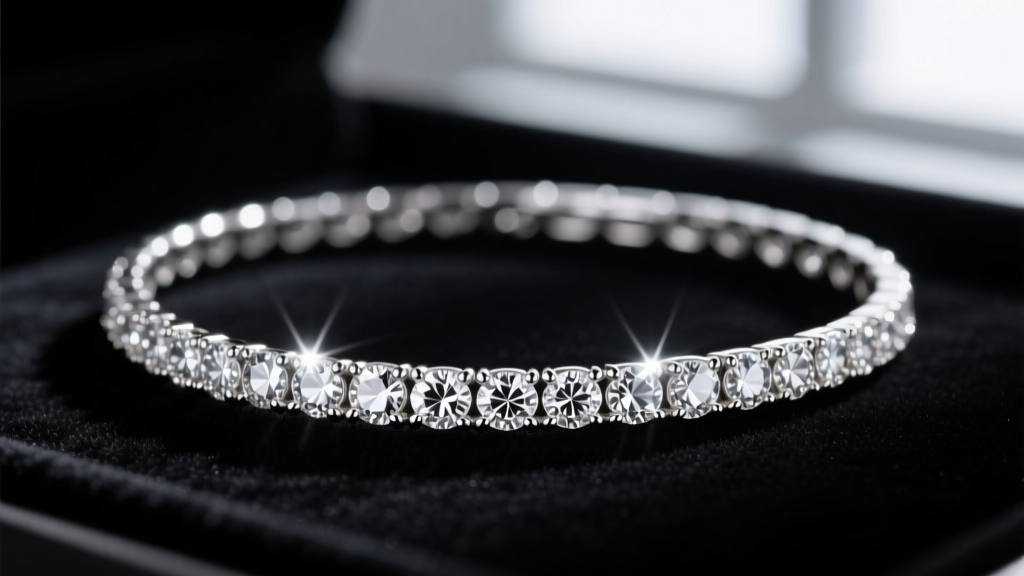
When investing in high-end jewelry, a real diamond choker necklace represents one of the most complex feats of gemological engineering and metallurgical design. Unlike a simple pendant chain, a choker requires seamless articulation, precise melee diamond sorting, and robust clasp mechanics to drape flawlessly against the collarbone. As of 2026, the market has experienced a massive influx of lab-grown melee diamonds, fundamentally shifting pricing dynamics and making expert verification more critical than ever.
This deep dive will equip you with the technical frameworks used by master jewelers and gemologists to evaluate the craftsmanship, material integrity, and true market value of a diamond choker.
The Anatomy of a High-End Diamond Choker
A true choker sits at the base of the neck, typically measuring between 14 and 16 inches in length. Because this area of the neck is highly mobile, the structural integrity of the metalwork is paramount. The defining characteristic of a luxury real diamond choker necklace is articulation. High-end pieces are constructed with hundreds of micro-hinged links or flexible mesh backing that allows the metal to behave like fabric.
Cheaply manufactured chokers rely on rigid, continuous channels that kink, bend, and eventually snap under the stress of daily wear. When inspecting a piece, lay it flat on a glass surface. It should pool smoothly into a perfect circle without any stiff, jutting segments. Furthermore, the metal backing should feature a 'comfort fit' domed interior to prevent the diamonds' culets (the pointed bottoms) from scratching the skin or catching on delicate fabrics.
Melee Diamond Quality: The 4Cs at Scale
The brilliance of a diamond choker relies entirely on melee diamonds—stones weighing under 0.15 carats each. A 10-carat Total Weight (TCW) choker may contain over 800 individual stones. Evaluating melee requires a different lens than evaluating a solitary center stone.
- Cut Quality (Full-Cut vs. Single-Cut): This is the most crucial metric. Single-cut melee features only 17 or 18 facets, resulting in a flat, glassy appearance. Full-cut melee features the standard 57 or 58 facets of a brilliant round diamond. A premium real diamond choker necklace will exclusively use full-cut melee to ensure maximum light return and scintillation across the entire piece.
- Color Matching: Mass-market chokers often use 'commercial white' (I-J color) melee, which appears visibly yellowish when set in white gold or platinum. Expert-grade chokers utilize 'fine white' (G-H color) melee, meticulously sorted by master graders to ensure a seamless, uniform color temperature from the clasp to the center drape.
- Clarity Gradients: According to the GIA Diamond Clarity Scale, melee is rarely graded individually due to the cost. However, top-tier manufacturers sort their melee into SI1-SI2 batches, ensuring no black carbon inclusions are visible to the naked eye, which would otherwise create 'dead spots' in the choker's continuous sparkle.
Setting Techniques and Metal Integrity
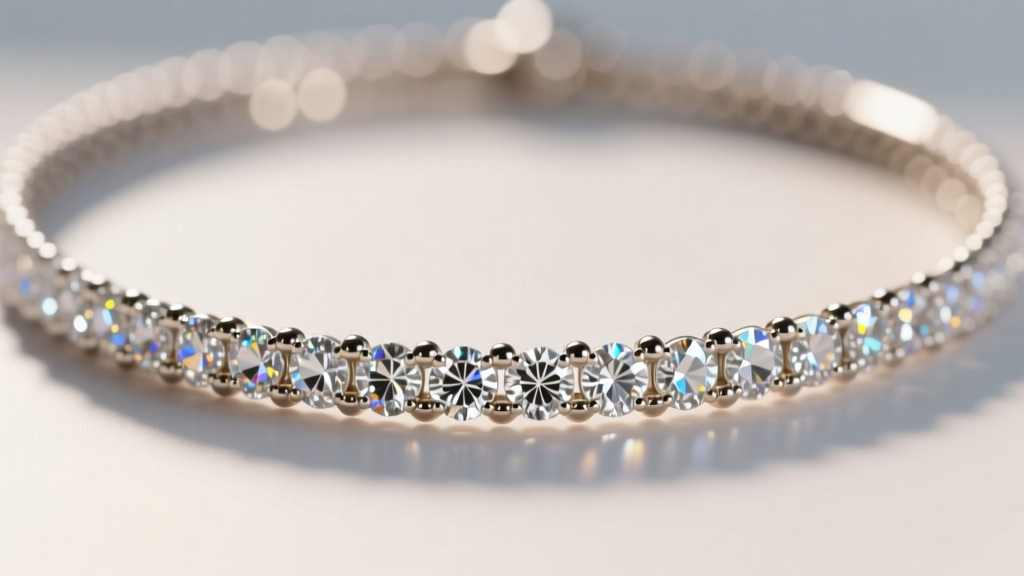
The setting method dictates both the visual impact and the long-term survivability of the necklace. The metal must securely hold hundreds of stones while maintaining flexibility.
Channel Setting: The Durability Champion
For flexible chokers, the channel setting is the industry gold standard. Two parallel metal walls suspend a continuous row of diamonds without individual prongs. This protects the girdles of the stones and prevents snagging on clothing. The engineering challenge lies in cutting the 'bearing' (the microscopic groove the girdle sits in) perfectly level; if the bearing is uneven, stones will rattle or fall out when the choker bends.
Pavé and Micro-Pavé: Maximum Brilliance
Pavé settings use tiny metal beads raised from the base metal to secure the stones, allowing more light to enter from the sides. While visually stunning and highly brilliant, micro-pavé on a choker is inherently more fragile. The constant flexing of the neck can cause metal fatigue in the micro-beads over time. If opting for a pavé real diamond choker necklace, ensure the base metal is at least 1.5mm thick and crafted from platinum or 18k gold, as 14k gold or silver lacks the tensile memory to withstand years of flexing without warping the bead settings.
Clasp Mechanics: The Hidden Failure Point
The clasp of a heavy diamond choker is under immense tensile stress. A standard lobster clasp or spring ring is entirely inadequate and poses a severe risk of catastrophic loss.
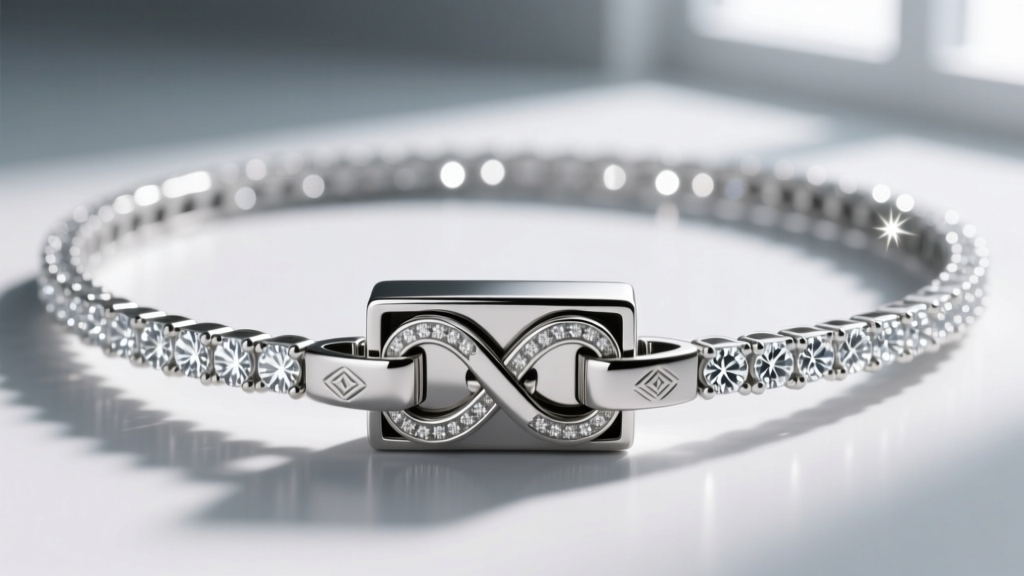
An expertly crafted choker utilizes a tongue-and-groove box clasp. The 'tongue' is a V-shaped piece of spring-tempered metal that compresses as it enters the box, snapping securely into place. Crucially, this must be paired with double figure-8 safety catches. These are secondary wire loops that snap over the pin of the clasp, ensuring that if the primary box mechanism fails or is accidentally depressed, the necklace remains secured to the wrist or neck. Additionally, the link immediately adjacent to the clasp must feature a specialized swivel or hinge to prevent the rigid clasp from acting as a lever and snapping the first link of the flexible chain.
2026 Market Pricing: Natural vs. Lab-Grown Melee
The jewelry landscape in 2026 is defined by the bifurcation of the melee market. Lab-grown diamonds have decimated the cost of synthetic melee, allowing for massive, high-carat chokers at a fraction of historical prices. However, natural, ethically sourced melee retains a distinct premium due to its rarity and the complex supply chain required to sort and match hundreds of earth-mined stones.
| Total Carat Weight (TCW) | Natural Melee (G-H, SI1) | Lab-Grown Melee (G-H, VS) |
|---|---|---|
| 5.00 - 8.00 ct | $12,000 - $22,000 | $3,500 - $6,000 |
| 10.00 - 15.00 ct | $28,000 - $55,000 | $7,500 - $12,000 |
| 20.00+ ct | $70,000 - $150,000+ | $15,000 - $25,000 |
Note: Pricing assumes full-cut melee set in 18k white gold or platinum. Intricate articulation and custom metalwork can add 20-30% to the base material cost.
Verification and Certification Protocols
Verifying the authenticity and origin of the diamonds in a choker presents a unique challenge. While the GIA Diamond Grading Reports are standard for center stones over 0.15 carats, individual melee stones are almost never certified due to the prohibitive cost and time involved.
Navigating Melee Certification Limitations
Instead of individual reports, reputable jewelers provide a Master Gemological Appraisal and a Supplier Warranty Certificate that guarantees the origin (natural vs. lab-grown) and the aggregate TCW of the piece. When purchasing a high-value natural real diamond choker necklace, insist on a secondary verification by an independent, certified gemologist appraiser (CGA). They will use advanced spectroscopy tools, such as the GIA iD100, to spot-check a randomized sample of the melee stones directly on the choker to ensure no lab-grown stones have been mixed into the natural parcel—a practice known as 'salting' that plagued the secondary market in the early 2020s.
Metal Hallmarks and Rhodium Maintenance
Finally, verify the metal integrity. If the choker is white gold, it is rhodium-plated. The friction against the skin at the back of the neck will wear this plating away within 12 to 18 months, revealing the yellowish tint of the underlying gold alloy. For a piece of this magnitude, many experts recommend opting for platinum. As noted by the GIA Diamond Color Scale guidelines regarding metal pairing, platinum's naturally white color and superior density make it the ultimate, maintenance-free anchor for a heavy, flexible diamond choker, ensuring the metal's color never distracts from the brilliance of the stones.


