Sunflower Necklace Gold: Expert Buying Guide & Tips
Discover how to choose the perfect sunflower necklace gold pendant. Learn about karats, chain gauges, enamel types, and pricing in our expert guide.

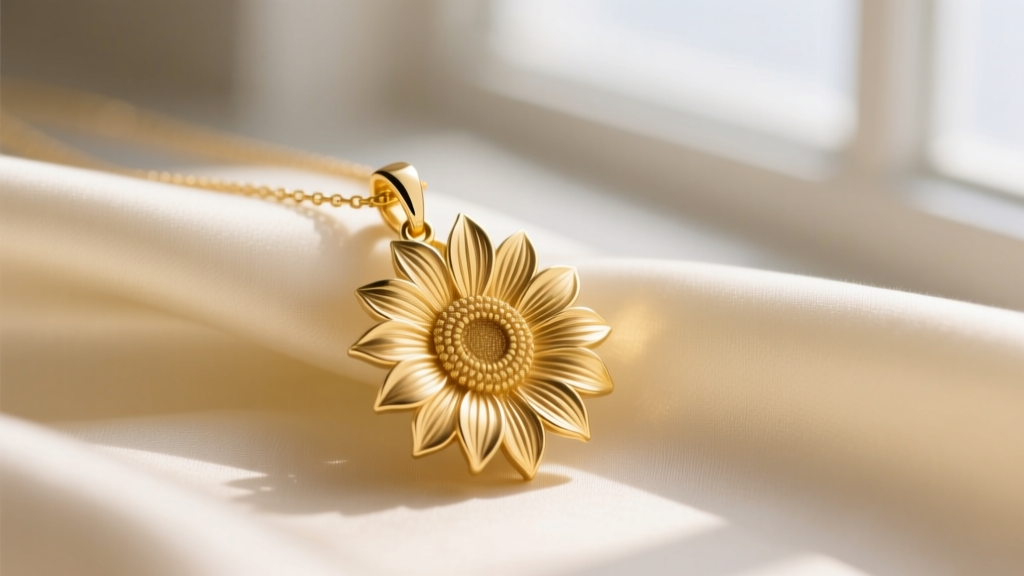
The Anatomy of a High-Quality Gold Sunflower Pendant
The botanical jewelry trend has solidified its place in the 2026 market, with the sunflower motif standing out as a universal symbol of adoration, loyalty, and warmth. However, when shopping for a sunflower necklace gold piece, the visual appeal of the design is only half the equation. The structural integrity, metallurgical composition, and craftsmanship dictate whether your pendant will become a cherished heirloom or a tarnished disappointment. As a domain expert, I break down exactly what to look for beneath the surface of the gold.
Petal Craftsmanship: Stamped vs. Cast
The petals of a sunflower pendant require precise detailing to mimic the natural, overlapping geometry of the flower. High-end jewelers typically use die-striking, a process that compresses solid gold under immense pressure. This aligns the grain structure of the metal, resulting in a denser, more durable pendant that resists denting and scratching. Conversely, mass-market pieces often rely on wax casting. While casting allows for complex 3D shapes, lower-quality castings can suffer from microscopic porosity—tiny pits on the metal's surface that weaken the structure and trap skin oils, leading to rapid tarnishing even in high-karat gold.
Centerpiece Details: Enamel, Onyx, or Gemstones?
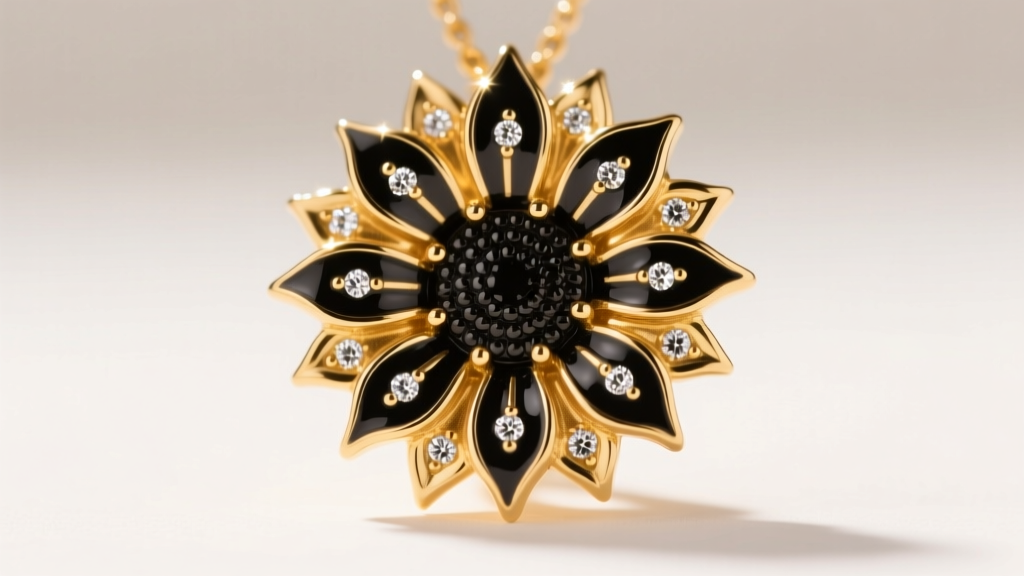
The center of the sunflower (the seed head) is where designers introduce contrast. If your chosen piece features black or brown enamel, you must verify the technique. Cold enamel is essentially an epoxy resin; it is prone to scratching, discoloration from UV exposure, and degradation when exposed to perfumes. Vitreous enamel, however, is powdered glass fired in a kiln at roughly 1400°F (760°C). It fuses permanently to the gold, offering a brilliant, scratch-resistant finish that will outlast the wearer. For a more luxurious alternative, look for centers inlaid with black onyx or pavé-set champagne diamonds, which provide organic texture without the fragility of resin.
Decoding the Gold: Karats, Plating, and Vermeil
Not all gold is created equal, and the terminology used by jewelry brands can be deliberately confusing. Understanding the exact gold composition is critical when investing in a sunflower necklace gold pendant. According to the Federal Trade Commission Jewelry Guides, strict guidelines govern how gold content can be marketed.
The Karat Conundrum: 14k vs. 18k
Pure 24k gold is entirely too soft for intricate botanical jewelry; a delicate sunflower petal made of 24k gold would bend or snap if snagged on a sweater. 18k gold (75% pure gold) offers a rich, buttery yellow hue that beautifully mimics the warmth of a real sunflower, but it remains relatively soft. 14k gold (58.5% pure gold) is alloyed with metals like copper and zinc, providing superior tensile strength and scratch resistance. For a daily-wear pendant with delicate petal edges, 14k gold is the metallurgical sweet spot.
Vermeil vs. Gold Plated: Know the Difference
If you are shopping in the demi-fine category, you will encounter "gold vermeil" and "gold plated." These are not interchangeable terms. The Gemological Institute of America (GIA) and FTC mandate that genuine vermeil must have a sterling silver base and a gold layer of at least 2.5 microns thick. Standard "gold plated" jewelry often uses a cheap brass base with a microscopic gold flash (under 0.5 microns) that will wear off within months, turning your skin green and ruining the pendant. Always demand vermeil or solid gold.
| Material Type | Base Metal | Gold Thickness | Durability | Expected Lifespan |
|---|---|---|---|---|
| Solid 14k Gold | None (Alloyed) | Solid | Excellent | Generations |
| Solid 18k Gold | None (Alloyed) | Solid | Very Good | Generations |
| Gold Vermeil | Sterling Silver | 2.5+ Microns | Good | 2 - 5 Years |
| Gold Plated | Brass / Copper | < 0.5 Microns | Poor | 3 - 6 Months |
Selecting the Right Chain for Your Sunflower Pendant
A common failure point in necklace jewelry is the chain snapping under the weight of the pendant. The chain must be engineered to support at least three times the weight of the sunflower charm.
Gauge Thickness and Link Structure
Many brands pair heavy, solid gold pendants with ultra-delicate 0.8mm cable chains to cut costs. A 0.8mm chain has a tensile breaking point of roughly 3 to 4 pounds; a sudden tug will snap it instantly. For a standard sunflower pendant weighing between 2 and 5 grams, you need a chain with a minimum gauge of 1.1mm to 1.4mm. Box chains and rope chains are highly recommended for botanical pendants because their interlocking geometric links distribute tension evenly, preventing the chain from stretching or kinking over time.
Clasp Mechanics: Lobster vs. Spring Ring
Never accept a spring ring clasp on a solid gold necklace. The internal tension spring is notoriously weak, difficult to operate with one hand, and prone to catastrophic failure. Insist on a lobster clasp or a locking carabiner clasp, which feature robust internal mechanisms and a wider surface area for secure attachment to the jump ring.

Pricing Tiers: What Should You Actually Pay in 2026?
Understanding the market value prevents you from overpaying for plated brass disguised as fine jewelry. Here is a realistic pricing framework for a sunflower necklace gold piece based on current precious metal markets and labor costs.
- Fast Fashion / Plated ($20 - $60): Brass base, gold flash. High risk of allergic reactions and rapid tarnishing. Avoid for long-term wear.
- Demi-Fine / Vermeil ($80 - $180): Sterling silver base with heavy 18k gold vermeil. Excellent for trend-driven layering, but requires careful maintenance to preserve the gold layer.
- Solid 14k Gold ($250 - $600): The entry point for genuine heirloom jewelry. Price varies based on the pendant's gram weight and whether the center features cubic zirconia or natural gemstones.
- Fine Jewelry / Solid 18k ($800 - $2,500+): Heavy gram weight, vitreous enamel or natural diamond accents, often hand-finished by master jewelers.
Styling and Layering Your Sunflower Piece
The sunflower motif is inherently warm and organic, making it highly versatile for layering. To create a cohesive 2026 stack, pair your sunflower pendant with complementary textures. If your sunflower hangs on a 1.2mm rope chain at an 18-inch length, layer it with a 16-inch solid gold herringbone or snake chain to create a contrast between the textured rope and the liquid-smooth herringbone. For necklines, the sunflower pendant sits best against a V-neck or a deep scoop neck, allowing the botanical detail to rest directly on the skin without competing with high collars or busy patterns.
Final Verdict: Avoiding Common Pitfalls
When making your final purchase, scrutinize the product specifications. If the brand does not explicitly state the base metal, the gold karat, or the chain gauge, walk away. A high-quality sunflower necklace gold pendant should be stamped with a hallmark (such as 14k, 585, or 925 for vermeil) and feature a secure lobster clasp. By prioritizing die-struck craftsmanship, vitreous enamel or solid gemstone centers, and structurally sound chains, you ensure your botanical jewelry remains as vibrant and enduring as the flower it represents.


