How to Style and Fit Your Choker Necklace With a Cross
Learn how to measure, style, and layer a choker necklace with a cross. Expert tips on chain gauges, pendant proportions, and neckline pairing.

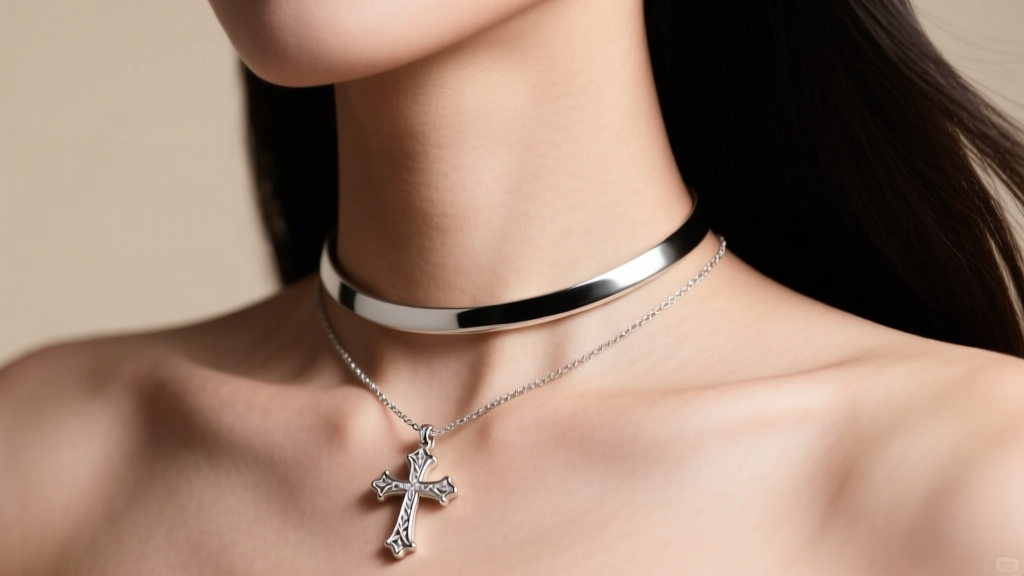
The choker necklace with a cross has evolved far beyond its 1990s grunge and subculture roots. Today, it stands as a refined, versatile staple in modern fine jewelry, bridging the gap between minimalist elegance and bold personal expression. Whether you are drawn to a delicate 925 sterling silver cable chain or a substantial 18k gold vermeil rolo design, mastering the fit, proportion, and styling of this specific piece is essential for achieving a polished look.
In this comprehensive guide, we break down the exact metallurgy, sizing frameworks, and layering techniques required to elevate your cross choker. We will explore specific gauge sizes, bail types, and the geometry of neckline pairing, ensuring your jewelry works harmoniously with your wardrobe.
The Anatomy of the Perfect Cross Choker
Before diving into styling, it is crucial to understand the structural components that dictate how a choker necklace with a cross drapes and wears over time. The interplay between the chain weave, the metal grade, and the clasp mechanism determines both the comfort and longevity of the piece.
Chain Weaves and Gauge Sizes
For chokers, the chain gauge (thickness) typically ranges from 1.0mm to 2.0mm. Selecting the right weave ensures the chain is flexible enough to sit flush against the neck without kinking.
- Cable Chain (1.0mm - 1.2mm): The classic choice. Uniform oval links provide a delicate, traditional backdrop that allows the cross pendant to take center stage.
- Rolo Chain (1.5mm - 2.0mm): Featuring interlocking round links, rolo chains offer superior durability and a slightly heavier, more modern aesthetic.
- Box Chain (1.0mm - 1.5mm): Woven square links create a smooth, continuous surface that is highly resistant to tangling and hair snagging, making it ideal for daily wear.
Metallurgy and Material Grades
When investing in gold-toned chokers, understanding the difference between plating and vermeil is critical. According to the Federal Trade Commission Jewelry Guides, a piece can only be legally classified as 'gold vermeil' if it features a sterling silver (925) base and a gold layer of at least 2.5 microns thick. Standard gold-plated jewelry often uses a brass base with a microscopic 0.5-micron gold flash, which will quickly wear away against the friction of the neck. For hypoallergenic needs, opt for 316L surgical stainless steel or Grade 23 titanium, which are entirely nickel-free and impervious to sweat-induced tarnishing.
Step 1: Measuring for the Ideal Choker Fit
A choker is designed to sit snugly at the base of the neck, just above the clavicle. A poorly sized choker will either restrict breathing or droop awkwardly, losing its defining silhouette.

Pro Tip: Never use a metal measuring tape or a rigid ruler. The neck is a dynamic, curved surface that requires a flexible cloth tailor's tape for an accurate reading.
The Measurement Protocol
- Wrap and Mark: Wrap a soft measuring tape around your mid-neck, exactly where you want the chain to rest. Keep it snug but ensure you can comfortably slip one index finger between the tape and your skin.
- Record the Base: Note the exact measurement. For most adult women, this falls between 12.5 and 14 inches.
- Add the Comfort Allowance: Add exactly 0.5 to 0.75 inches to your base measurement. If your neck measures 13.5 inches, your ideal choker length is 14 to 14.25 inches.
- Account for the Clasp: Remember that a standard 5mm lobster clasp and jump ring add approximately 0.25 inches to the total wearable length.
If you fall between standard retail sizes (e.g., 14" and 16"), always size down for a true choker look, but ensure the retailer includes a 2-inch extender chain. This allows for micro-adjustments based on daily fluctuations in skin hydration and temperature.
Step 2: Selecting the Right Cross Pendant Proportion
The most common mistake when styling a choker necklace with a cross is choosing a pendant that is disproportionately large. Because the chain sits high on the neck, a massive pendant will drag the chain downward, creating an unintended 'Y-necklace' effect and causing the clasp to slide forward.
Pendant Dimensions and Bail Types
The Gemological Institute of America (GIA) frequently notes that proportion is the cornerstone of jewelry design. For a 14-inch to 16-inch choker, the cross pendant should ideally measure between 15mm and 22mm in height. The 'bail' (the loop that connects the pendant to the chain) also plays a hidden but vital role in the overall drop length.
| Chain Gauge | Ideal Cross Height | Bail Type | Best Styling Application |
|---|---|---|---|
| 1.0mm | 12mm - 18mm | Hidden Bail | Minimalist, flush against the skin |
| 1.2mm | 15mm - 22mm | Standard Loop | Everyday casual wear, slight drop |
| 1.5mm+ | 20mm - 28mm | Wide Oval Bail | Statement grunge, layered looks |
A hidden bail is drilled directly through the top of the cross, allowing the chain to pass through seamlessly. This keeps the pendant flush and prevents it from flipping over. A standard loop bail adds 3mm to 5mm of vertical drop, which is preferable if you are wearing a thicker rolo chain that needs clearance to drape properly.
Step 3: Layering Your Choker Necklace With a Cross
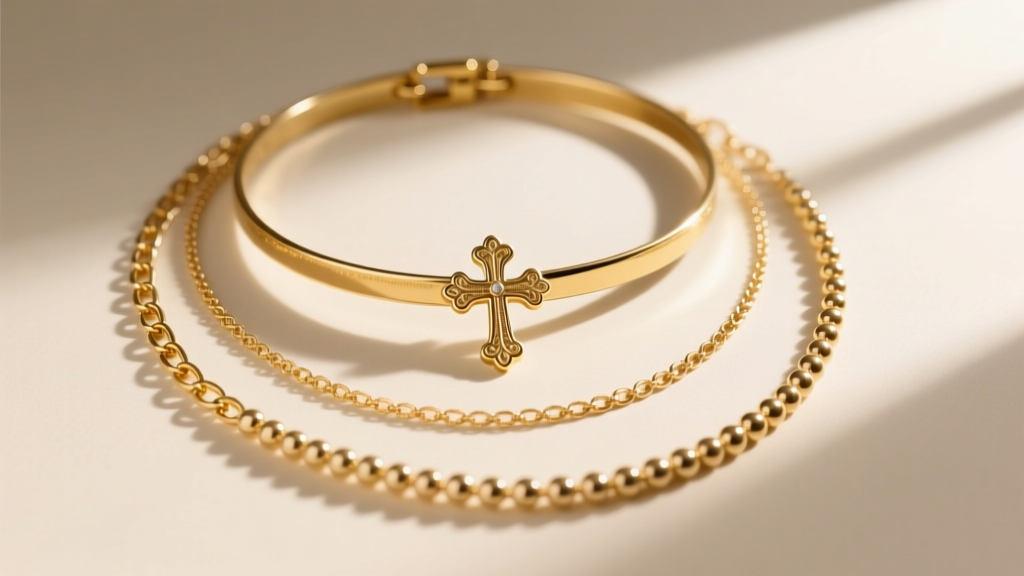
Layering transforms a simple cross choker into a curated, dimensional aesthetic. The golden rule of necklace layering is the 2-inch drop rule. Each subsequent chain must be at least 2 inches longer than the one above it to prevent the pendants from tangling and the chains from rubbing against each other, which accelerates metal wear.
The 3-Piece Layering Framework
- Layer 1 (The Anchor): Your 14-inch choker necklace with a cross. This sits at the base of the neck and draws the eye upward.
- Layer 2 (The Bridge): An 16-inch or 18-inch princess-length chain. Opt for a different texture here—such as a snake chain or a beaded chain—without a pendant, or with a very small, subtle gemstone stud. This creates visual contrast.
- Layer 3 (The Elongator): A 20-inch to 24-inch matinee chain. This layer should feature a heavier, larger pendant or a lariat drop that mimics the vertical line of the cross, drawing the eye down the torso and elongating the neck.
When mixing metals, intentionality is key. If your cross choker is mixed-metal (e.g., a silver cross with a gold chain), use it as the bridge to layer both yellow gold and white gold chains seamlessly.
Step 4: Neckline Pairing Guide
The geometry of your clothing dictates how the cross choker interacts with your overall silhouette. Here is how to pair your choker with common necklines:
V-Neck and Plunging Necklines
A V-neck creates a natural vertical line. Your choker necklace with a cross should sit entirely above the fabric line, acting as a horizontal accent that balances the deep V. Avoid layering chains that dip into the V-neck, as this competes with the garment's structure.
Crew Neck and High Collars
Wearing a choker over a tight crew neck can look restrictive. Instead, pair the choker with a slightly looser, ribbed cotton crew neck, allowing the metal to rest directly on the fabric. Alternatively, wear the choker with a button-down shirt left unbuttoned at the top two buttons to frame the pendant in bare skin.
Off-the-Shoulder and Strapless
This is the ideal canvas for a choker. With the shoulders and collarbones fully exposed, a delicate 1.0mm cable chain with a 15mm cross pendant provides an elegant, uncluttered focal point. You can afford to be slightly bolder with the pendant size here, as the expansive bare skin provides adequate negative space.
Care and Maintenance Protocol
Because chokers sit directly against the pulse points of the neck, they are highly exposed to sweat, perfumes, and body oils. Proper maintenance is non-negotiable to preserve the finish of your choker necklace with a cross.
- The 'Last On, First Off' Rule: Always put your choker on after applying skincare, perfume, and makeup. Remove it immediately upon returning home to minimize chemical exposure.
- Targeted Cleaning: For sterling silver, use a specialized microfiber polishing cloth infused with anti-tarnish agents. Avoid liquid silver dips, as they can strip the rhodium plating often used to protect high-end silver crosses.
- Storage: Store the choker laid flat or hung on a jewelry stand. Coiling a choker tightly in a jewelry box can cause permanent kinks in delicate box and cable chains, weakening the structural integrity of the links.
By understanding the precise mechanics of fit, proportion, and material science, you can confidently style a choker necklace with a cross that is not only visually striking but engineered for lifelong wear.


