How to Style and Layer a Dainty Gold Choker Necklace Perfectly
Learn how to measure, style, and layer a dainty gold choker necklace with our expert step-by-step guide for flawless neckline pairings.

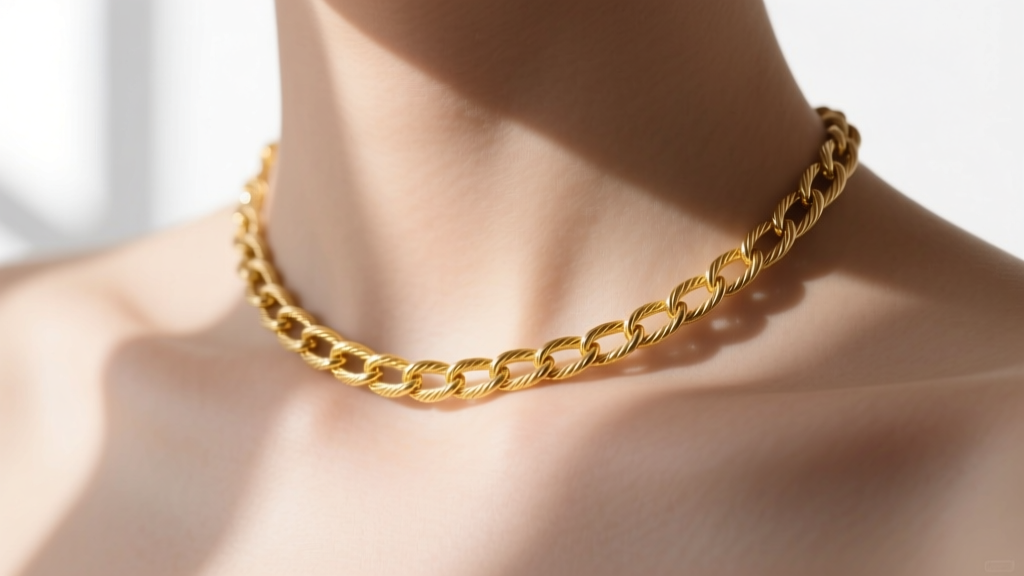
The Anatomy of a Perfect Dainty Gold Choker
The dainty gold choker necklace has transcended fleeting trends to become a permanent fixture in modern jewelry wardrobes. However, not all delicate chains are created equal. When dealing with chain widths between 0.8mm and 1.5mm, metallurgical realities dictate how the piece will wear over time. According to the Gemological Institute of America (GIA), pure 24k gold is far too soft for daily wear. For a dainty choker, 14k gold (58.3% pure gold alloyed with copper, silver, and zinc) is the superior choice. The added alloys provide crucial tensile strength, preventing the ultra-thin links from stretching, warping, or snapping under the micro-tension of daily movement.
Beyond the metal purity, the chain style dictates the choker's behavior. A cable chain offers a classic, minimalist look but can occasionally catch on fine hair. A box chain lies exceptionally flat and smooth against the skin, making it ideal for sensitive necks, while a rope chain catches the light beautifully but requires more frequent cleaning due to its intricate twists. For the ultimate dainty aesthetic, aim for a chain width of exactly 1.0mm to 1.2mm—thin enough to look delicate, but thick enough to support a lightweight micro-lobster clasp without breaking.
Step 1: Measuring for the Ideal Choker Fit
A true choker sits snugly at the base of the neck, but a poorly measured piece will either restrict your breathing or slide down to the collarbone, losing its intended silhouette. To find your exact measurement, you need a flexible tailor's measuring tape.

The Two-Finger Rule
Wrap the measuring tape around your neck exactly where you want the choker to sit. Insert two fingers between the tape and your skin. This ensures a comfortable fit that accommodates natural swelling, temperature changes, and the thickness of your clothing. Note this measurement. If your neck measures 13.5 inches, your ideal choker length is 15 inches, allowing for a comfortable drape and the inclusion of a standard 2-inch extender chain. As outlined in the Blue Nile Education Guide, standard choker lengths typically range from 14 to 16 inches, but custom sizing is often necessary for the perfect dainty fit.
Step 2: Pairing with Necklines (A Visual Framework)
The beauty of a dainty gold choker necklace lies in its versatility, but its impact changes dramatically depending on the neckline of your garment. The goal is to complement the fabric's geometry, not compete with it. Use the framework below to match your choker style to your outfit.
| Neckline Type | Best Choker Style | Styling Rationale |
|---|---|---|
| Deep V-Neck | 15-inch plain cable chain | Mirrors the V-shape without crowding the chest area. |
| Crew Neck | 14-inch choker with a 4mm drop | Sits above the fabric line, creating a distinct visual break. |
| Scoop Neck | 16-inch box chain (no pendant) | Follows the curve of the collarbone for a harmonious look. |
| Off-the-Shoulder | 15-inch layered rope chains | Fills the negative space on the upper chest elegantly. |
| Button-Down Shirt | 15-inch chain with a micro-charm | Peeks out subtly from the top unbuttoned collar. |
A dainty choker should feel like a second skin. If you are constantly adjusting it or feeling it pull against your collarbone, the length or clasp weight is fundamentally incorrect for your anatomy.
Step 3: The Art of Layering Your Choker
Layering a dainty gold choker necklace requires a strict adherence to spatial mathematics. The most common mistake in layering is placing chains too close together, which results in friction, tangling, and a cluttered aesthetic. To achieve a curated, professional look, follow the Two-Inch Rule.
The Two-Inch Rule and Weight Distribution
Never place two chains within two inches of each other. If your dainty choker sits at 15 inches, your second necklace must be at least 17 inches (the princess length), and your third should be 20 inches (the matinee length). This spacing ensures that each piece has its own dedicated visual zone.
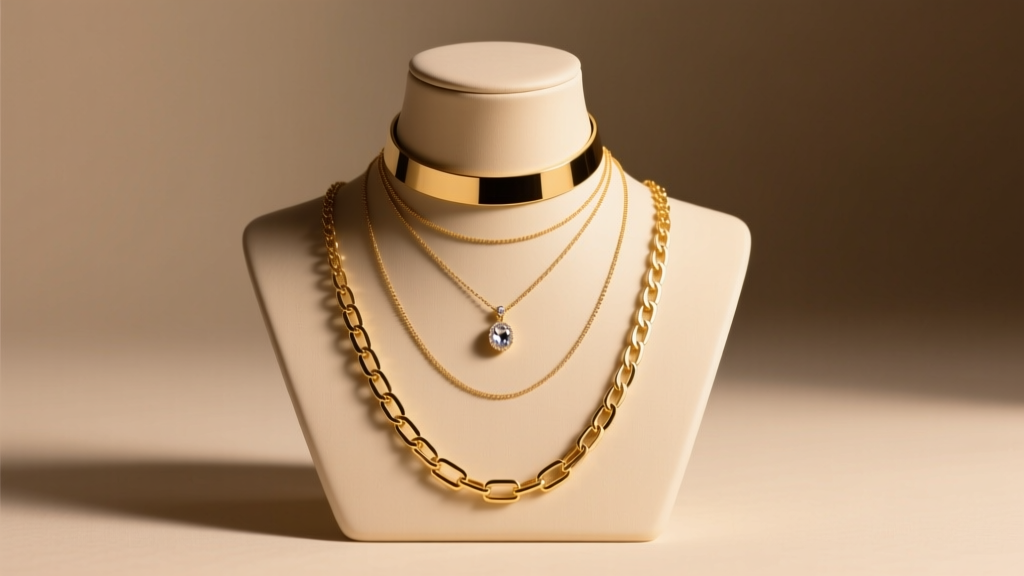
Furthermore, you must balance the visual weight. The choker, being closest to the face, should be the lightest and thinnest piece (e.g., a 0.9mm cable chain). The middle chain can carry a medium-weight pendant (e.g., a 1.5mm chain with a 5mm gemstone drop), and the longest chain should feature a heavier, more textured link pattern, such as a 2.5mm paperclip or rope chain, to anchor the entire arrangement. This graduated weight distribution prevents the chains from flipping over each other during movement.
Maintenance: Keeping Your Dainty Chain Tangle-Free
Dainty chains, particularly those under 1.2mm, are notoriously prone to micro-knotting. Because the links are so small, they can easily slip through one another when stored haphazardly. Mastering a few specific maintenance techniques will extend the life of your jewelry and save you hours of frustration.
- The Straw Trick for Travel: Before packing, thread one end of your choker through a standard plastic or silicone drinking straw and fasten the clasp. The rigid straw prevents the chain from folding onto itself, making tangles physically impossible during transit.
- The Lubrication Method for Knots: If a micro-knot forms, never pull at it. Lay the chain flat on a hard, well-lit surface. Apply a tiny pinch of baby powder or a single drop of mineral oil directly to the knot to lubricate the links. Use two fine sewing needles to gently tease the links apart from the center outward.
- Proper Storage: Never hang dainty chokers on standard jewelry trees, as gravity will stretch the delicate links over time. Store them flat in a velvet-lined box, or use a jewelry roll with individual snap closures to keep them separated from heavier pieces that could crush them.
Expert Sourcing: What to Look For When Buying
When investing in a high-quality dainty gold choker necklace, scrutinize the hardware. The clasp is the most common point of failure on delicate chains. While spring-ring clasps are standard on lightweight chains, they are notoriously difficult to operate with one hand and feature a tiny internal spring that frequently fails. Seek out jewelers who equip their dainty chains with micro-lobster clasps. These offer a much more secure locking mechanism and are significantly easier to manipulate.
Additionally, inspect the jump rings (the small circular rings connecting the chain to the clasp). On premium dainty chains, these jump rings should be soldered shut. An unsoldered jump ring on a 1.0mm chain is a structural liability; a simple snag on a sweater can pull the ring open, resulting in the loss of the necklace. By prioritizing 14k gold, soldered hardware, and precise measurements, your dainty choker will remain a flawless, enduring staple in your collection for years to come.


