Step-by-Step Guide to Styling an Eye of Horus Necklace
Learn how to style, layer, and care for your Eye of Horus necklace. Discover metal grades, chain lengths, and neckline pairings in this expert guide.

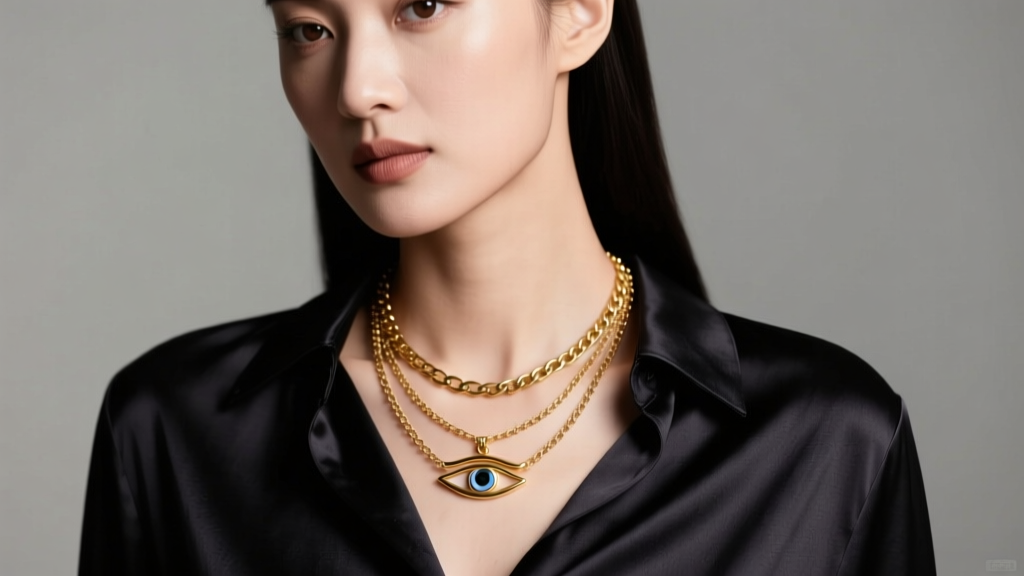
The Symbolism: Understanding the Wedjat Eye
Before diving into the aesthetics of styling, it is crucial to understand the gravity of the piece you are wearing. The Eye of Horus, historically known as the Wedjat or Udjat eye, is an ancient Egyptian symbol representing protection, royal power, and good health. Unlike the Eye of Ra (which represents the sun and destructive power), the Eye of Horus is associated with healing and restoration. According to the Metropolitan Museum of Art's archives on Egyptian amulets, the Wedjat was traditionally worn to ward off evil and ensure safe passage in the afterlife. Today, it serves as a powerful talisman and a striking geometric focal point in modern jewelry design.
"The left eye of Horus was magically restored by the god Thoth, making it a potent symbol of healing and wholeness, frequently cast in amulets for both the living and the dead."
Step 1: Selecting the Right Metal and Grade
The foundation of your necklace's longevity and visual impact lies in its metallurgy. Because the Eye of Horus features intricate, often angular detailing, the metal must be capable of holding sharp casts without blurring over time. Here is a breakdown of the most common materials used for these pendants, including their failure modes and price points.
| Metal Grade | Durability & Tarnish | Price Range (Pendant Only) | Best For |
|---|---|---|---|
| 925 Sterling Silver | Moderate. Will oxidize and tarnish when exposed to sulfur and moisture. Requires rhodium plating for a white-gold look. | $40 - $90 | Everyday wear on a budget; cooler skin undertones. |
| Gold Vermeil | High. By FTC standards, vermeil must be at least 2.5 microns of gold over sterling silver. Will eventually wear down to silver at friction points. | $110 - $220 | Those wanting the look of solid gold without the premium cost. |
| 14k Solid Gold | Exceptional. 58.5% pure gold mixed with alloys. Will not tarnish. Hypoallergenic and holds intricate detailing perfectly. | $350 - $800+ | Lifetime investment pieces; sensitive skin; shower/sleep wear. |
| Brass/Bronze | Poor for daily wear. Highly reactive to skin acidity, often leaving a green residue. Prone to deep pitting. | $15 - $35 | Costume jewelry or occasional editorial styling only. |
Expert Tip: If your pendant features a bail (the loop that attaches to the chain), ensure the jump ring on the bail is soldered shut. Unsoldered jump rings will slowly pull apart under the pendulum-like motion of a heavy amulet, leading to a lost pendant.
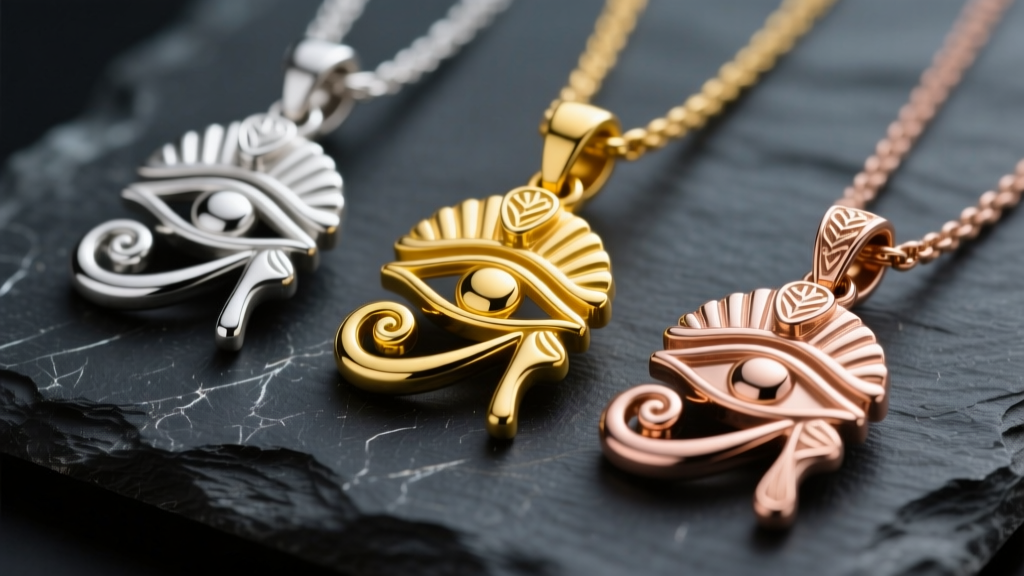
Step 2: Choosing the Ideal Chain Length and Width
An Eye of Horus pendant typically ranges from 15mm to 25mm in width. Matching the chain's gauge and style to the pendant's weight is a common point of failure for many buyers.
- 16-Inch Choker Length: Best for smaller, minimalist pendants (under 15mm). Sits tightly on the collarbone.
- 18-Inch Standard Length: The most versatile option. Rests just below the collarbone, allowing the intricate lines of the Horus eye to be easily visible.
- 20 to 24-Inch Drop Length: Ideal for larger, heavier amulets (20mm+) or those with gemstone inlays. Sits on the upper chest, drawing the eye downward.
For chain styles, avoid ultra-thereal snake chains (under 1mm), as they kink easily and cannot support a solid metal pendant. Instead, opt for a 2mm to 3mm rope chain or a box chain. Rope chains reflect light beautifully, complementing the curved lines of the eye, while box chains offer a modern, geometric contrast. Always choose a chain with a lobster clasp rather than a spring-ring clasp; lobster clasps offer superior tensile strength and won't snap open if the pendant catches on a sweater.
Step 3: The 3-Piece Layering Formula
Layering an Eye of Horus necklace requires balancing its heavy historical and visual weight with complementary, non-competing pieces. Use this exact three-step formula to achieve a curated, professional look without tangling.
Layer 1: The Anchor (16 Inches)
Start with a delicate 16-inch chain (1mm to 1.5mm width). A simple cable chain with a tiny bezel-set diamond, moissanite, or a plain gold bead works best. This layer sits high on the neck and provides a baseline of sparkle without distracting from the main amulet.
Layer 2: The Focal Point (18 to 20 Inches)
This is where your Eye of Horus pendant lives. Place it on an 18-inch or 20-inch rope chain. The 2-to-4-inch gap between the first and second layer is critical; anything less will cause the chains to twist and knot together throughout the day due to friction.
Layer 3: The Elongator (24 Inches)
Finish the stack with a 24-inch chain featuring a vertical element. A simple gold bar necklace, a raw crystal point, or a minimalist coin pendant elongates the torso and frames the Horus eye perfectly. Keep this bottom chain slightly thicker (2mm) to anchor the visual weight at the bottom of the V-shape.
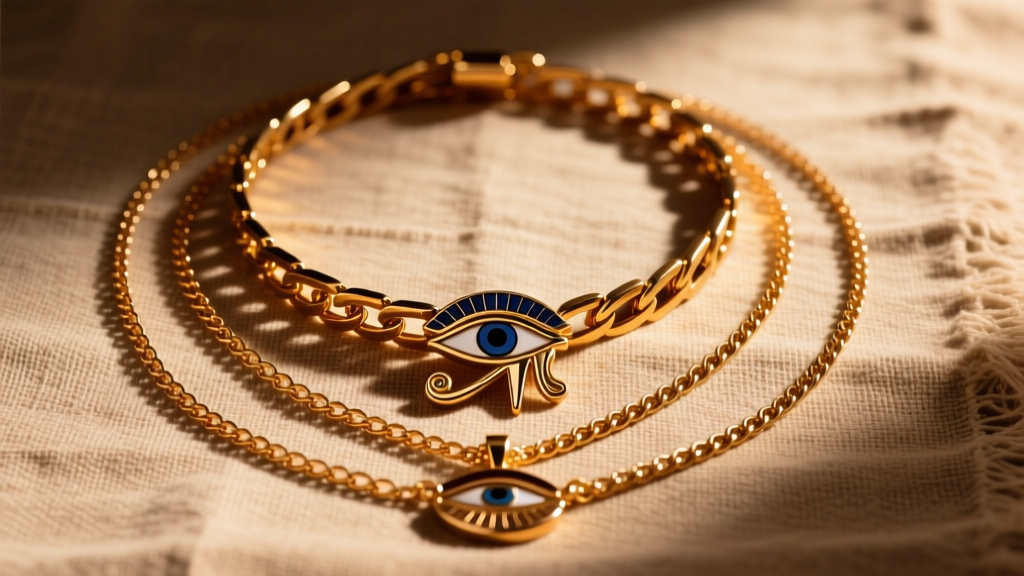
Step 4: Neckline Pairings for Maximum Impact
The geometry of your clothing dictates how the necklace will be perceived. The Eye of Horus is inherently wide and horizontal, so your necklines should either contrast or harmonize with this shape.
- Deep V-Necks: The absolute best pairing. The V-neck mimics the layering angles, allowing the 20-inch pendant to rest perfectly in the negative space of the fabric.
- Crew Necks: A standard crew neck creates a harsh horizontal line that can make a shorter necklace look choked. If wearing a crew neck, bypass the 16-inch layer and wear the Eye of Horus on a 22-inch chain so it rests below the fabric hem.
- Off-the-Shoulder / Boat Necks: These expose the collarbones and upper chest. Utilize the full 3-piece layering formula here, as the wide expanse of bare skin provides a blank canvas for the gold or silver to pop.
- Button-Down Shirts: Leave the top three buttons undone. The rigid collar frames the face, while the pendant rests against the skin, creating a sharp, tailored aesthetic.
Step 5: Cleaning and Preserving Inlaid Stones
Many high-end Eye of Horus pendants feature inlays of Lapis Lazuli, Turquoise, or Malachite to mimic ancient Egyptian craftsmanship. This introduces a critical maintenance challenge. Both turquoise and lapis lazuli are porous, relatively soft gemstones (ranking 5 to 6 on the Mohs hardness scale).
Never use ultrasonic cleaners or steam cleaners on inlaid pendants. The high-frequency vibrations will shatter the glue holding the inlay, and the heat will strip the natural oils from turquoise, causing it to crack and fade. For comprehensive gemstone maintenance, always refer to the GIA's guidelines on turquoise care and lapis lazuli cleaning protocols.
- Prepare a Mild Solution: Mix lukewarm (never hot) water with a single drop of mild, phosphate-free dish soap.
- Agitate Gently: Use an extra-soft baby toothbrush to lightly sweep over the metal ridges of the eye. Avoid scrubbing the stone inlays directly.
- Rinse with Care: Hold the pendant under a gentle stream of lukewarm water. Ensure your drain is plugged.
- Dry Thoroughly: Pat the metal dry with a microfiber cloth. Use a wooden toothpick or a blast of compressed air to remove trapped moisture from the crevices where the metal meets the stone, preventing hidden corrosion.
Final Thoughts on Your Talisman
An Eye of Horus necklace is a versatile, historically rich piece that transcends fleeting jewelry trends. By carefully selecting the appropriate metal grade, matching your chain gauge to the pendant's weight, and employing a mathematically spaced layering technique, you ensure the piece looks intentional and elegant. Treat your amulet with the respect its ancient origins demand, and it will serve as a striking, protective centerpiece in your wardrobe for decades to come.


