How to Choose, Style, and Layer a Gold Anchor Necklace
Learn how to choose, style, and layer a gold anchor necklace with our step-by-step guide. Discover chain pairings, gold purities, and expert care tips.

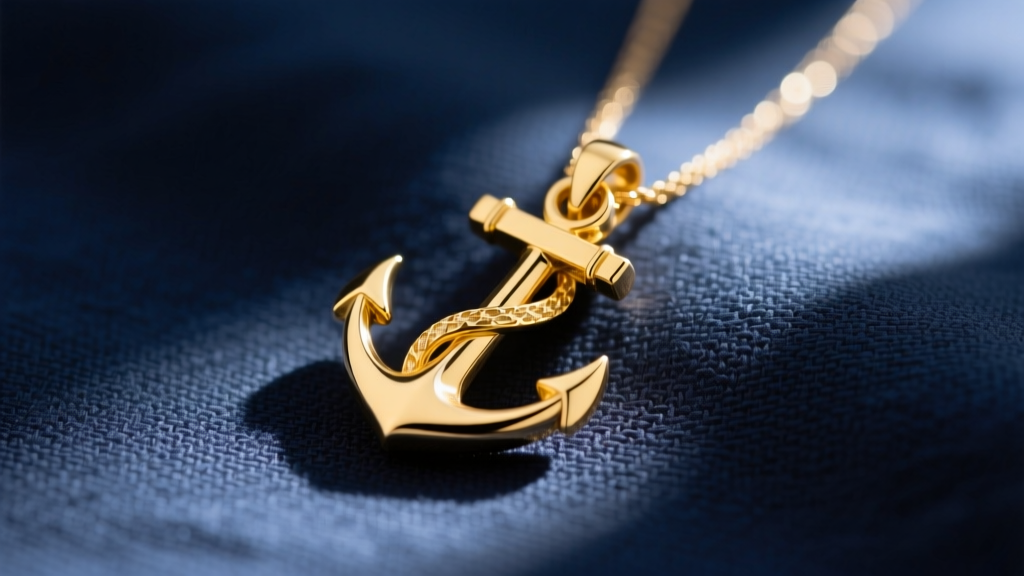
The anchor is one of the most enduring symbols in jewelry design, representing hope, steadfastness, and a connection to the sea. However, styling this nautical motif requires a careful balance to ensure it looks sophisticated rather than costumey. Whether you are a maritime enthusiast or simply appreciate the geometric symmetry of the design, mastering the art of the gold anchor necklace is essential for your everyday rotation.
Many buyers typing 'necklace anchor gold' into search engines are ultimately looking for solid, high-quality maritime jewelry that transcends seasonal trends. In this comprehensive, step-by-step guide, we will break down exactly how to select the right metal purity, pair it with the correct chain, and layer it flawlessly for a modern, elevated aesthetic.
Step 1: Decoding Gold Purity and Material Grades
The first step in choosing your piece is understanding the metallurgy. Anchor pendants feature thin, protruding elements like the flukes (the pointed tips) and the stock (the crossbar). These delicate areas are highly susceptible to bending if the metal is too soft, making gold purity a critical factor in the longevity of your jewelry.
| Material Grade | Gold Content | Durability | Best Use Case | Average Price Range |
|---|---|---|---|---|
| 14k Solid Gold | 58.5% (Stamp: 585) | High | Everyday wear, active lifestyles | $150 - $450 |
| 18k Solid Gold | 75.0% (Stamp: 750) | Medium | Special occasions, heirloom gifts | $300 - $800+ |
| Gold Vermeil | 2.5µm over 925 Silver | Medium-Low | Budget-conscious, occasional wear | $45 - $120 |
| Gold Plated | <0.5µm over Brass | Low | Fast fashion, short-term trends | $15 - $40 |
For an anchor pendant that you plan to wear daily, 14k solid gold is the undisputed champion. The alloy metals (usually copper and silver) provide the structural integrity needed to keep the anchor's shank and crown from warping if snagged on a sweater. According to the Gemological Institute of America (GIA), 14k gold offers the optimal balance between the rich color of pure gold and the tensile strength required for intricate pendant shapes.
Step 2: Selecting the Ideal Chain and Bail Proportions
A common mistake when styling thematic pendants is ignoring the proportions of the chain. The bail—the loop at the top of the anchor that the chain passes through—dictates your maximum chain width. A standard 15mm to 20mm anchor pendant typically features a bail with an inner diameter of roughly 3mm to 4mm.
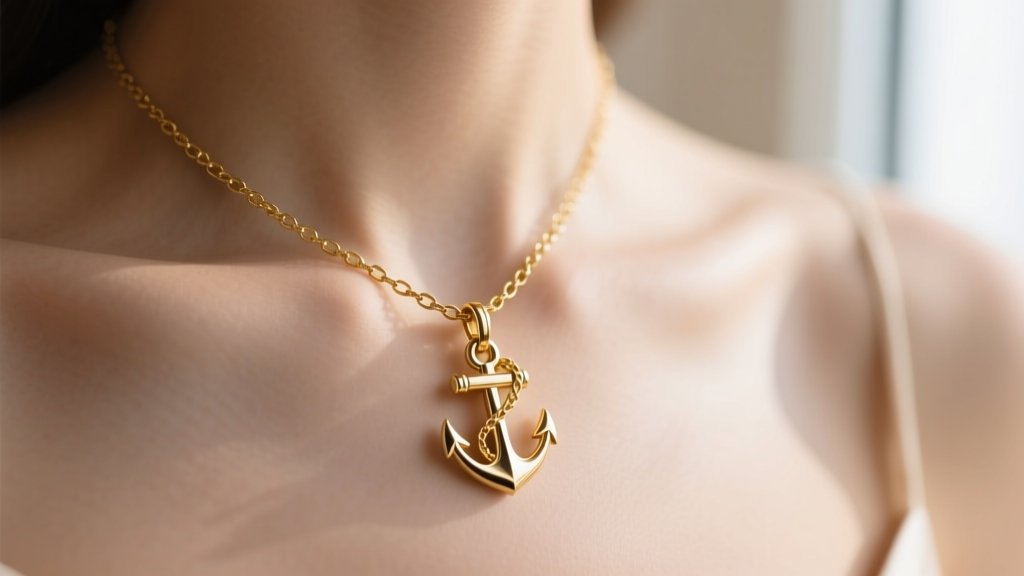
Top Chain Pairings for Nautical Motifs
- Mariner (Anchor) Chain: Featuring a horizontal bar across the center of each oval link, this chain echoes the nautical theme without being overly aggressive. Opt for a 1.5mm to 2.0mm width.
- Rope Chain: The twisted, spiraled links mimic the look of ship rigging and nautical knots. A 1.2mm rope chain adds a vintage, maritime texture that catches the light beautifully.
- Box Chain: If you want to modernize the anchor and strip away the literal nautical costume feel, a sleek, geometric 1.0mm box chain provides a sharp, contemporary contrast to the curved, organic shape of the anchor.
Step 3: The 2-Inch Rule for Layering
Layering necklaces is an art form governed by spatial geometry. To prevent your gold anchor necklace from tangling and to ensure each piece is visible, you must adhere to the 2-inch differential rule. This means each subsequent layer must be at least two inches longer than the one above it.
Pro Tip: Always put your necklaces on in order from shortest to longest. Clasp the choker first, followed by the princess length, and finally the matinee. This prevents the clasps from sliding around to the front of your neck while you fiddle with the lower layers.
A Step-by-Step Layering Blueprint
- The Base Layer (14 to 16 inches): Start with a minimalist choker. A simple 14k gold bead chain or a delicate strand of freshwater pearls (which naturally complement maritime themes) sits perfectly at the collarbone.
- The Focal Point (18 inches): This is where your gold anchor necklace lives. An 18-inch princess chain allows the anchor to rest in the upper chest area, drawing the eye and serving as the centerpiece of your stack.
- The Anchor Accent (20 to 22 inches): Finish with a longer, heavier piece to frame the V-shape of the layering. A gold lariat necklace or a simple, unadorned 22-inch cable chain adds depth and movement without competing with the anchor motif.
Step 4: Balancing the Aesthetic and Neckline Pairings
The anchor is a bold, recognizable symbol. To keep your styling grounded and elegant, avoid pairing it with other overtly nautical items like ship wheel charms, compass pendants, or sailor-style stripes. Instead, contrast the rugged maritime history of the anchor with soft, luxurious textures.
When it comes to necklines, the gold anchor necklace is incredibly versatile but thrives in specific environments:
- V-Neck and Wrap Dresses: The natural V-shape of the neckline acts as a frame, pointing directly down to the anchor pendant resting at the 18-inch mark.
- Crew Necks and Turtlenecks: If wearing a high collar, you must scale up. Move your anchor pendant to a 22-inch or 24-inch matinee chain so it rests visibly against the fabric of your shirt, rather than getting swallowed by the collar.
- Off-the-Shoulder and Scoop Necks: These expose the collarbone and upper chest, making them the perfect canvas for a tightly clustered, three-layer stack where the anchor sits in the middle.
Step 5: Cleaning and Maintaining Your Gold Anchor
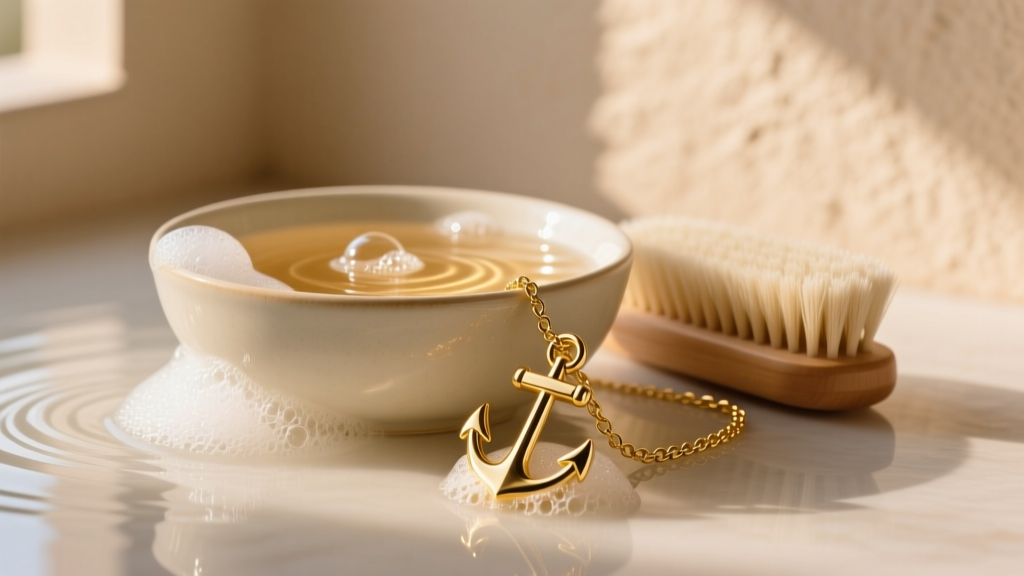
Because anchor pendants feature deep crevices—particularly where the shank meets the crown and the flukes meet the stock—they are prone to trapping lotion, perfume, and dead skin cells. Proper maintenance is crucial to keep the gold gleaming.
According to Jewelers of America, the safest and most effective way to clean solid gold jewelry at home is with a mild, phosphate-free dish soap and warm water.
The 10-Minute At-Home Cleaning Protocol
- Soak: Mix a few drops of mild dish soap (like Dawn) into a bowl of lukewarm water. Let your gold anchor necklace soak for 5 to 10 minutes to loosen trapped debris.
- Agitate: Using a soft-bristled baby toothbrush, gently brush the crevices of the anchor. Do not use a hard-bristled brush, as it can leave micro-scratches on the gold alloy.
- Rinse and Dry: Rinse thoroughly under lukewarm running water (ensure the drain is plugged!). Pat dry with a lint-free microfiber cloth.
Warning: Avoid ultrasonic cleaners if your anchor pendant features black rhodium detailing, oxidized silver accents, or enamel fill in the crevices. The high-frequency sound waves can strip these delicate finishes, leaving your anchor looking flat and unfinished.
Final Thoughts on Nautical Elegance
A gold anchor necklace is a timeless investment that bridges the gap between sentimental symbolism and high-end fashion. By prioritizing 14k solid gold for structural integrity, pairing it with a proportionate mariner or rope chain, and utilizing the 2-inch layering rule, you can transform a simple nautical charm into a masterclass of personal style. Treat the metal with care, respect the geometry of your necklines, and let the anchor serve as a steadfast centerpiece in your jewelry collection for decades to come.


