How to Layer and Style a Gold Sideways Cross Necklace Flawlessly
Learn how to choose, layer, and style a gold sideways cross necklace. Expert tips on chain lengths, karat grades, and neckline pairings.

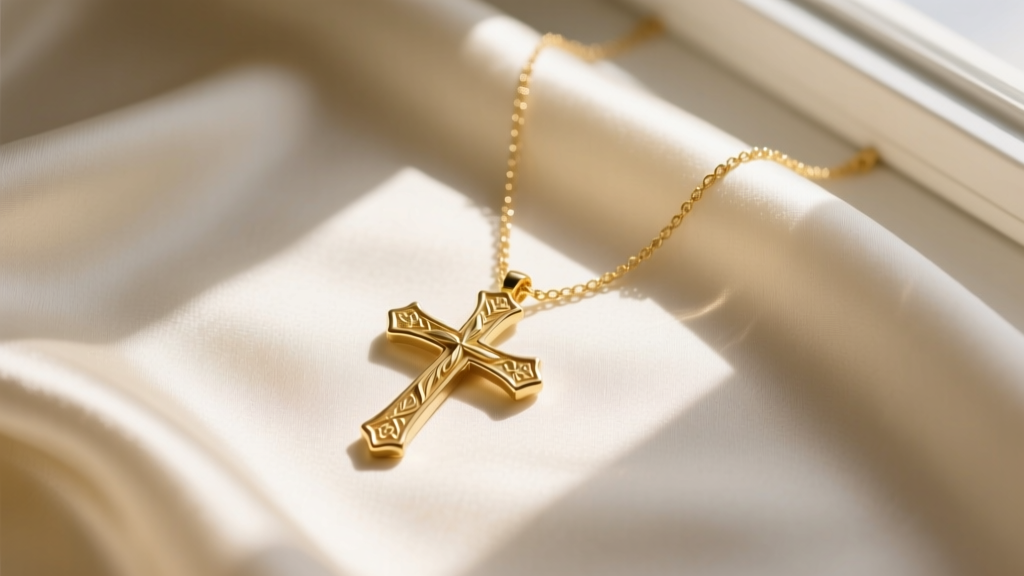
The gold sideways cross necklace has transcended its mid-2010s trend status to become a permanent fixture in the modern jewelry box. Unlike traditional vertical crucifixes, the horizontal orientation offers a minimalist, geometric aesthetic that bridges the gap between spiritual symbolism and contemporary fashion. However, styling a sideways cross requires a nuanced understanding of proportions, chain mechanics, and layering frameworks. In this comprehensive 2026 guide, we break down exactly how to select, layer, and maintain your gold sideways cross necklace for a flawless, everyday look.
The Anatomy of a Perfect Sideways Cross Pendant
Before styling, you must understand the structural engineering of a horizontal cross. Because gravity naturally pulls pendants downward, a sideways cross requires a specialized bail (the loop that connects the pendant to the chain) to maintain its horizontal alignment.
- Hidden Bails vs. Standard Loops: The highest-quality sideways crosses feature a hidden bail or a double-loop bail soldered directly to the back of the horizontal arms. This creates a "floating" illusion and prevents the pendant from flipping. Standard single-loop bails attached to the center back often result in the pendant tilting awkwardly.
- Optimal Dimensions: For a delicate, everyday aesthetic, look for pendants measuring between 12mm and 15mm in width, and 6mm to 8mm in height. Pendants wider than 20mm tend to look bulky and disrupt the flow of layered stacks.
- Edge Beveling: Premium pieces feature micro-beveled edges. Because the cross sits horizontally, light hits the top edges rather than the face. Beveling catches ambient light, giving the piece a subtle sparkle without the need for pavé diamonds.
Step-by-Step Guide to Layering Your Sideways Cross
The sideways cross is the ultimate "middle layer" pendant. Its linear geometry balances out round medallions and organic shapes. Here is the definitive 3-step framework for building a tangle-free, visually balanced stack.
Step 1: The Anchor (14 to 15 Inches)
Start with a lightweight choker or collar. A 14-inch gold snake chain or a 15-inch beaded gold chain sits high on the collarbone. This layer should feature no pendant, or a microscopic 3mm gold bead, to establish a baseline without competing with the cross.
Step 2: The Sideways Cross (16 to 17 Inches)
Your gold sideways cross necklace should sit exactly two inches below the anchor chain. A 16-inch cable chain or 17-inch box chain allows the horizontal pendant to rest perfectly in the hollow of the clavicle. This is the focal point of your stack.
Step 3: The Statement Drop (18 to 22 Inches)
Finish with a heavier, larger pendant. A 20-inch rope chain featuring a 15mm round medallion, a vintage coin, or a vertical bar pendant creates a cascading triangle effect that elongates the neck.

| Layer Position | Chain Length | Recommended Chain Type | Pendant Style | Visual Weight |
|---|---|---|---|---|
| Top (Anchor) | 14" - 15" | Snake or Herringbone | None or Micro Bead | Light (10%) |
| Middle (Focal) | 16" - 17" | Cable or Box | Sideways Cross | Medium (40%) |
| Bottom (Drop) | 18" - 22" | Rope or Curb | Medallion or Coin | Heavy (50%) |
Matching Chain Types to the Horizontal Aesthetic
The chain you choose drastically alters the vibe of your sideways cross. Because the pendant is geometric and structured, the chain should complement its clean lines.
- The Classic Cable Chain (0.9mm - 1.1mm): The most popular choice. A 14k gold cable chain in the 0.9mm to 1.1mm gauge range offers a traditional, delicate look. It is lightweight and allows the hidden bail to glide smoothly, keeping the cross perfectly horizontal.
- The Modern Box Chain (1.1mm - 1.3mm): Box chains consist of square links that create a smooth, continuous surface. They are highly resistant to kinking and offer a slightly more industrial, modern edge that pairs beautifully with sharp, beveled cross pendants.
- Chains to Avoid: Avoid thick rope chains (over 1.5mm) for the middle layer, as the heavy links will overpower a 12mm sideways cross. Additionally, avoid ultra-thin snake chains (under 0.8mm) for the cross layer; they are prone to kinking and can easily snap if the pendant catches on clothing.
How to Choose the Right Gold Karat for Daily Wear
When investing in a piece you intend to wear daily, the gold karat dictates both the color and the structural integrity of the necklace. According to the Gemological Institute of America (GIA), gold purity fundamentally changes the metal's hardness.
10K Gold (41.7% Pure Gold)
Highly durable and scratch-resistant, but the color is noticeably pale. It is the most budget-friendly option (typically $150–$250 for a complete necklace), but lacks the rich warmth associated with fine jewelry.
14K Gold (58.3% Pure Gold)
The undisputed champion for everyday sideways cross necklaces. 14k gold offers the perfect equilibrium between a warm, luxurious yellow hue and the tensile strength required to support a pendant without stretching. Expect to pay between $350 and $600 for a solid 14k piece from a reputable jeweler.
18K Gold (75% Pure Gold)
18k gold provides a deeply saturated, rich yellow color that is highly prized in luxury markets. However, it is a softer metal. If you choose an 18k chain, opt for a slightly thicker gauge (1.2mm minimum) to prevent the links from pulling apart over time. Prices generally range from $650 to over $1,200.

Neckline Pairing Playbook: From Casual to Formal
A sideways cross is incredibly versatile, but its horizontal lines interact differently with various garment necklines. Use this quick-reference playbook to ensure your jewelry enhances your outfit rather than clashing with it.
- The V-Neck: The natural downward angle of a V-neck contrasts beautifully with the horizontal line of the cross. Wear your cross on a 16-inch chain so it sits just above the apex of the V.
- The Crew Neck (T-Shirts & Sweaters): Because crew necks sit high and tight, a 16-inch chain will get swallowed by the fabric. Drop the cross to an 18-inch or 20-inch chain so it rests visibly against the cotton or wool.
- The Scoop Neck: This is the ideal canvas for layering. The wide, curved opening of a scoop neck perfectly frames a 3-piece stack, allowing the sideways cross to act as the visual bridge between the collarbone and the chest.
- The Button-Down Shirt: For a chic, effortless office look, unbutton your shirt to the mid-chest. A single 18-inch sideways cross resting against the skin, framed by the sharp collar lines, creates a sophisticated, editorial silhouette.
Pro Styling Tip: If you are wearing a patterned top or a busy floral print, let the gold sideways cross be your only necklace. The horizontal geometry will get lost in visual clutter if competing with multiple layers.
Troubleshooting Common Sideways Cross Issues
Even high-quality jewelry can present mechanical annoyances. Here is how to solve the two most common issues reported by sideways cross wearers.
Issue 1: The Pendant Keeps Flipping Upside Down
The Cause: The chain is too thick for the bail, or the bail itself is too wide, allowing the pendant to rotate freely. The Fix: Switch to a finer chain (0.9mm cable). If the bail is a standard loop rather than a hidden bail, take the piece to a jeweler to have a tiny silicone o-ring or a smaller gold jump ring added inside the bail to restrict movement.
Issue 2: The Chain Keeps Tangling in the Stack
The Cause: Your chain lengths are too close together (e.g., a 16" and a 16.5" chain). The Fix: Maintain a strict minimum 2-inch gap between layers. Furthermore, mix chain textures. A smooth herringbone anchor chain will naturally repel and slide against a textured cable cross chain, drastically reducing friction and tangling.
Care and Maintenance: Keeping the Horizontal Shine
Because sideways crosses sit flat against the skin, the back of the pendant and the hidden bail are prone to trapping body oils, lotions, and perfume residue. Over time, this buildup dulls the gold and can cause skin irritation.
According to Jewelers of America, regular, gentle cleaning is vital for maintaining the luster of gold alloys. Avoid harsh chemical dips or ultrasonic cleaners, especially if your cross features any micro-pavé diamonds, as the vibrations can loosen the settings.
The Weekly Clean: Mix a few drops of mild dish soap (like Dawn) into a bowl of lukewarm water. Submerge the necklace for 10 minutes. Use a soft-bristled baby toothbrush to gently scrub the back of the cross and the bail mechanism where grime accumulates. Rinse thoroughly under warm running water, ensuring the drain is closed, and pat dry with a microfiber cloth. Never use paper towels, as the wood fibers can cause micro-scratches on 14k and 18k gold.
By mastering the proportions, selecting the right chain gauge, and implementing a strategic layering framework, your gold sideways cross necklace will elevate your daily wardrobe with effortless, modern elegance.


