How to Style, Layer, and Secure a Toggle Chain Necklace
Master the toggle chain necklace with our step-by-step guide. Learn clasp mechanics, one-handed fastening tricks, layering rules, and troubleshooting tips.

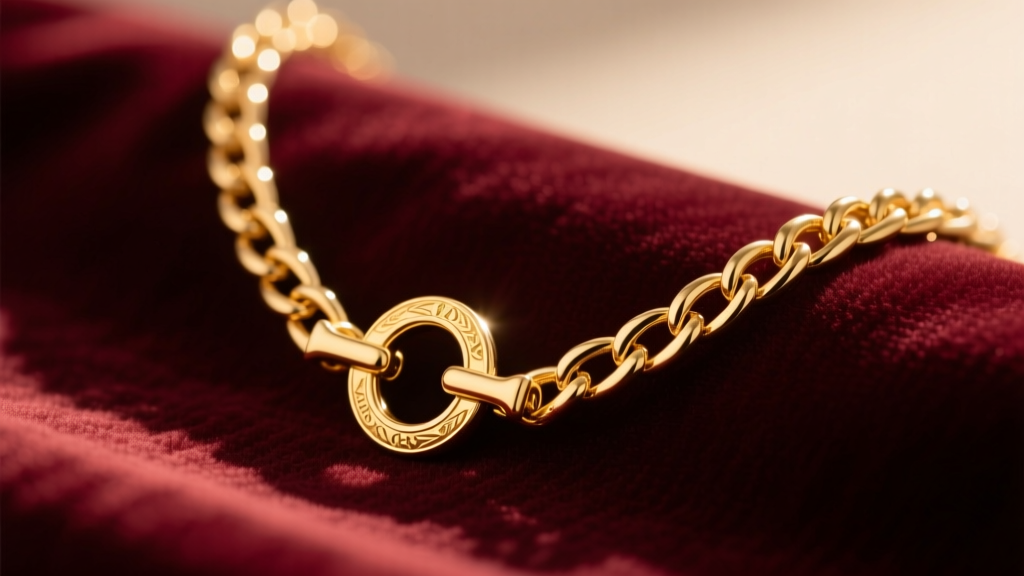
The Anatomy of a Secure Toggle Clasp
The toggle chain necklace is a staple in fine jewelry, revered for its elegant, utilitarian aesthetic. Unlike spring-ring or lobster clasps that rely on internal springs and tiny levers, the toggle clasp operates on pure physics: tension and gravity. A rigid T-bar is inserted through a circular O-ring, and the weight of the chain pulls the ring taut, locking the bar horizontally across the opening. However, this mechanical simplicity leaves zero room for manufacturing errors. If the proportions are off, the necklace will inevitably slip off.
According to master jewelers, the golden ratio for a secure toggle clasp dictates that the T-bar must be at least 1.3 times longer than the inner diameter of the O-ring. Furthermore, the chain must possess enough dead weight to maintain tension. A delicate 1mm cable chain paired with a massive 20mm O-ring will lack the gravitational pull required to keep the clasp engaged, leading to frequent wardrobe malfunctions.
| O-Ring Inner Diameter | Minimum T-Bar Length | Ideal Chain Weight | Best Chain Weave |
|---|---|---|---|
| 12mm | 16mm | 15-25 grams | Cable, Curb |
| 15mm | 20mm | 25-40 grams | Curb, Rope |
| 18mm | 24mm | 40+ grams | Wheat, Figaro |
Step-by-Step: How to Put On a Toggle Necklace One-Handed
The most common frustration with toggle chain necklaces is the physical gymnastics required to fasten them behind your neck. Because both hands are usually needed to guide the T-bar through the O-ring, putting one on solo can feel impossible. Here is the professional one-handed method used by jewelers and stylists:
- Step 1: The Anchor. Hold the T-bar end of the necklace in your dominant hand. Use your non-dominant hand to drape the chain around your neck, letting the O-ring end fall over your opposite shoulder.
- Step 2: The Helper Tool. Take a standard metal bobby pin, a paperclip, or a specialized jewelry clasp helper tool. Hook it through the O-ring.
- Step 3: The Tension Pull. Bring the helper tool around to the front of your neck, pulling the O-ring taut against the back of your neck. This stabilizes the ring and prevents it from flopping around.
- Step 4: The Threading. With your dominant hand, guide the T-bar vertically through the stabilized O-ring. Once the T-bar clears the ring entirely, release the tension and let the chain's weight snap the bar into its horizontal locking position.
How to Layer Toggle Chains Without Clasp Interference

Layering necklaces is an art form, but the bulky hardware of a toggle clasp can easily ruin a curated stack. When a toggle clasp tangles with a delicate lobster clasp or a pendant bail, it causes severe friction, leading to scratched gold, weakened jump rings, and broken chains. To layer a toggle chain necklace successfully, you must treat it as the structural anchor of your entire stack.
The 2-4-6 Rule for Layering Lengths
To prevent hardware collision, adhere to the 2-4-6 inch spacing rule. If your base layer is a 14-inch choker, your second layer should be an 18-inch chain, and your toggle chain necklace should serve as the outermost 24-inch layer. By keeping the toggle chain at least four inches longer than the nearest adjacent necklace, the heavy T-bar and O-ring will rest flat against your sternum, far away from the delicate clasps of your shorter chains. Additionally, never layer a toggle chain with a rope or snake chain of similar length; the intricate grooves of those weaves will act like a file against the smooth metal of the toggle hardware.
Troubleshooting: Why Your T-Bar Keeps Slipping (And How to Fix It)
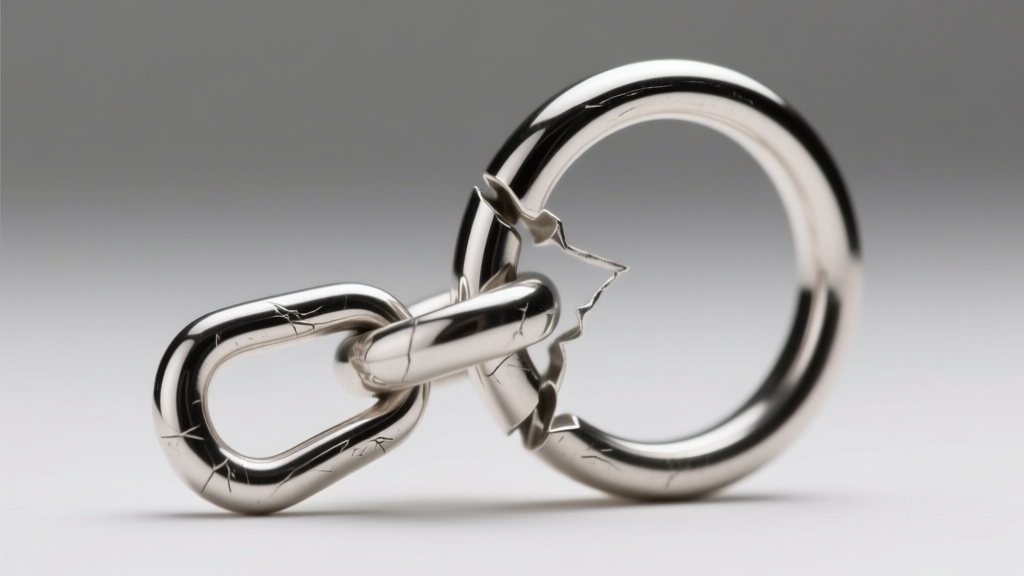
If your toggle chain necklace frequently unfastens itself, the issue is rarely bad luck; it is almost always a failure of weight distribution or metal fatigue. Here are the three primary failure modes and how to engineer a solution.
1. The Pendant Pivot: If you have slid a heavy pendant onto your toggle chain, the center of gravity shifts. When the heavy pendant swings to the side, it pulls the O-ring laterally, forcing the T-bar to rotate vertically and slip out. The Fix: Add a small, clear silicone o-ring or a leather stopper bead to the center of the chain to lock the pendant in place, maintaining even tension on both sides of the clasp.
2. Metal Fatigue and Bending: Precious metals are malleable. If you frequently pull the T-bar out at a harsh angle rather than lifting it vertically, the bar will slowly bend into a slight curve. A curved T-bar effectively shortens its own horizontal footprint, ruining the 1.3:1 safety ratio. The Fix: Lay the T-bar on a flat steel bench block and gently tap it perfectly straight with a rawhide or nylon jewelry mallet. Never use a steel hammer, which will mar the finish.
3. The Oversized Jump Ring: The jump ring connecting the T-bar to the chain must be small enough to pass freely through the O-ring. If the jump ring is too thick or wide, it gets caught inside the O-ring, preventing the T-bar from sitting flush. The Fix: Have a jeweler replace the connecting jump ring with a smaller, soldered oval jump ring that glides through the O-ring without resistance.
Material Grades and Sizing: What to Look For
When investing in a toggle chain necklace, the metal alloy dictates the longevity of the clasp. The Gemological Institute of America (GIA) notes that alloy mixtures fundamentally alter the hardness and tensile strength of precious metals. For toggle clasps, 14k gold (58.5% pure gold alloyed with copper, silver, and zinc) is vastly superior to 18k or 22k gold. High-karat gold is simply too soft; an 18k gold T-bar will bend under the daily stress of being pulled through a metal ring, while 14k gold maintains its rigid structural integrity.
If you prefer silver, opt for solid 925 sterling silver rather than silver-plated brass. The friction of the T-bar rubbing against the O-ring will quickly wear away microscopic plating layers, exposing the base metal beneath and leading to rapid oxidation and skin discoloration. For those seeking the look of high-karat gold with the durability of 14k, heavy gold vermeil (a minimum of 2.5 microns of 18k gold over a sterling silver core) is an acceptable middle ground, provided the clasp hardware itself is solid silver.
Maintenance: Cleaning the Clasp Mechanism
The crevices where the T-bar meets the O-ring are prime real estate for tarnish, lotion buildup, and dead skin cells. This grime increases friction, making the clasp difficult to fasten and accelerating metal wear. According to Blue Nile's jewelry care guidelines, ultrasonic cleaners can be highly effective for bare metal chains but are disastrous if your toggle features oxidized details or tension-set gemstones.
For routine maintenance, create a solution of warm water and a few drops of mild, phosphate-free dish soap. Submerge the clasp for five minutes, then use a soft-bristled baby toothbrush or a specialized brass jewelry brush to gently scrub the inside of the O-ring and the ends of the T-bar. Rinse thoroughly with distilled water to prevent hard water spots, and dry immediately with a microfiber cloth. Applying a microscopic drop of jewelry-safe synthetic oil to the joint where the T-bar meets its jump ring will ensure smooth articulation and prevent the metal from seizing over time.


