How to Layer a Silver 4 Leaf Clover Necklace: Step-by-Step
Learn how to flawlessly layer a silver 4 leaf clover necklace. Follow our step-by-step styling guide, chain length charts, and expert tarnish care tips.

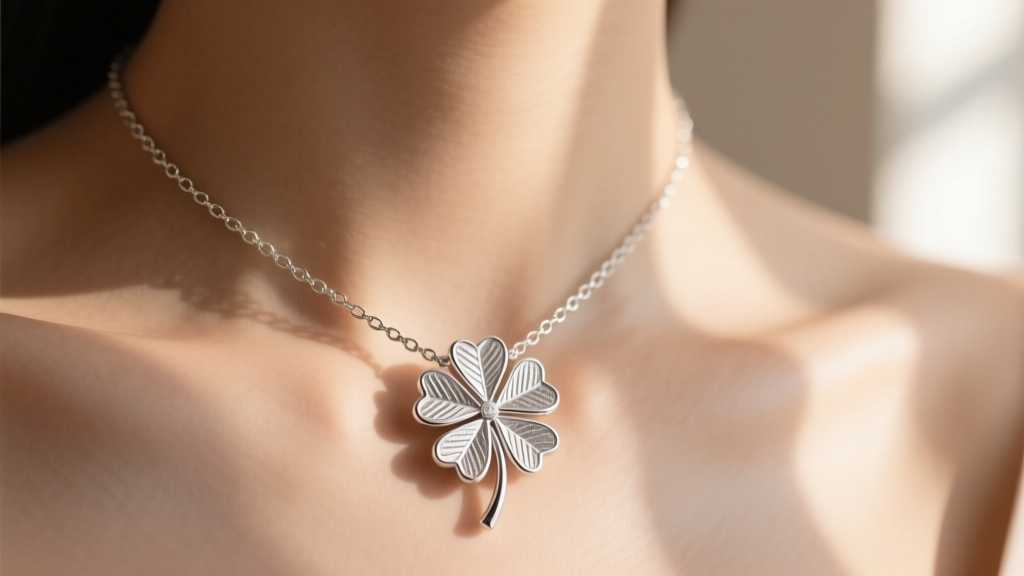
The Anatomy of a Silver 4 Leaf Clover Necklace
Before diving into layering techniques, it is crucial to understand the structural and metallurgical properties of your jewelry. A high-quality silver 4 leaf clover necklace is typically cast or stamped from 925 sterling silver, an alloy consisting of 92.5% pure silver and 7.5% copper. According to The Silver Institute, this copper addition provides the necessary tensile strength for delicate chain links and pendant bails, though it also introduces a susceptibility to oxidation. Premium pieces often feature a micro-layer of rhodium plating over the silver to delay tarnishing and provide a white-gold-like luster.
The clover motif itself usually spans 12mm to 15mm in width. When the design includes inlays—such as Mother of Pearl, malachite, or black onyx—the durability changes significantly. The Gemological Institute of America (GIA) notes that Mother of Pearl (nacre) ranks at just 2.5 to 3.0 on the Mohs hardness scale, meaning it can easily scratch or chip if the pendant swings freely and strikes harder surfaces during wear. Understanding these physical limitations is the first step in mastering how to style and protect your pieces.
Step-by-Step Guide to Layering Your Clover Pendant
Layering is an exercise in visual geometry and physical spacing. The most common failure in layered necklaces is tangling, which occurs when chains of similar lengths and weights intertwine. To prevent this, we utilize the "Two-Inch Rule," ensuring a minimum two-inch gap between the resting points of each chain.
Step 1: Establish the Base Layer (14 to 16 Inches)
Begin with a lightweight, delicate chain that sits high on the collarbone. A 14-inch or 16-inch 925 sterling silver cable or bead chain (0.5mm to 0.8mm gauge) serves as the perfect anchor. Keep this base layer simple—avoid heavy pendants here, as they will compete visually with the clover motif and add unnecessary weight to the upper neckline.
Step 2: Position the Silver 4 Leaf Clover Necklace (18 Inches)
Your silver 4 leaf clover necklace should act as the focal point of the arrangement. An 18-inch chain allows the pendant to rest precisely at the hollow of the collarbone or just below it, depending on your anatomy. Opt for a box chain or a wheat chain (0.9mm to 1.2mm gauge) for this middle layer. These chain styles offer superior structural integrity and reflect light beautifully, drawing the eye directly to the four-leaf clover centerpiece.
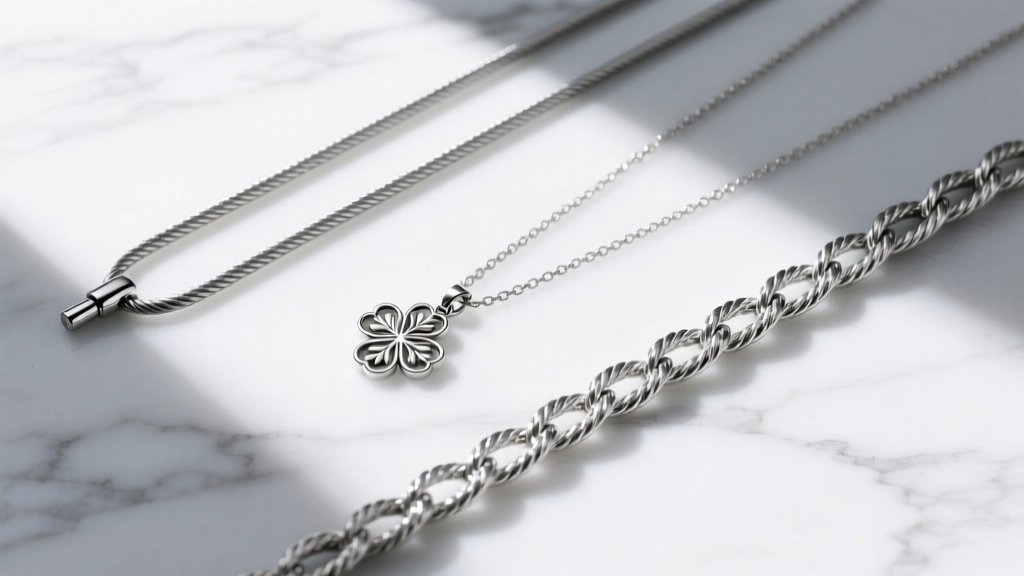
Step 3: Add an Anchor Chain (20 to 24 Inches)
To frame the clover pendant and elongate the torso, introduce a third, heavier chain that drops below the sternum. A 22-inch sterling silver rope chain or a paperclip link chain (1.5mm+ gauge) provides excellent textural contrast. If you choose to add a secondary pendant to this anchor chain, ensure it is abstract or geometric (like a simple bar or tube) so it does not clash with the organic, symmetrical shape of the clover.
Chain Length & Neckline Compatibility Chart
The effectiveness of your layered silver 4 leaf clover necklace depends heavily on the garment's neckline. Use the following framework to adjust your chain lengths based on your outfit:
| Neckline Type | Optimal Chain Lengths | Styling Strategy |
|---|---|---|
| Crew Neck | 16" + 18" + 22" | Let the 18" clover pendant rest just below the fabric hem to break up the solid color block. |
| V-Neck | 18" + 20" | Follow the V-shape. The clover sits in the center, while a 20" lariat or vertical bar mimics the plunge. |
| Off-the-Shoulder | 14" + 16" | Keep chains tight to the neck. An 18" chain will hang too low and get lost against bare skin. |
| Button-Down Shirt | 18" + 24" | Wear the 18" clover necklace inside the collar, and let a 24" chain drape over the fabric for a mixed-media look. |
How to Prevent Tangling and Clasp Failure
Tangling is not just an aesthetic annoyance; it causes mechanical wear. When two silver chains rub together continuously, the friction acts like a microscopic saw, eventually wearing through the jump rings and links. To mitigate this, ensure your chains have distinctly different link profiles (e.g., a smooth box chain paired with a twisted rope chain), as disparate textures are less likely to interlock.
Equally important is the clasp mechanism. Most mass-produced silver necklaces utilize spring-ring clasps, which contain a tiny internal steel spring prone to rusting and failing under roughly 3 to 5 pounds of lateral tension. For a layered setup that carries more cumulative weight, upgrade your silver 4 leaf clover necklace to a solid sterling silver lobster clasp. Lobster clasps can withstand up to 12 pounds of tension and feature a self-closing lever that prevents accidental unhooking when pulling garments over your head.
Step-by-Step Tarnish Removal for 925 Silver
Despite rhodium plating, the copper in 925 sterling silver will eventually react with hydrogen sulfide in the air to form silver sulfide ($Ag_2S$), the black compound we recognize as tarnish. When your clover necklace loses its luster, avoid abrasive silver dips, which can strip rhodium and damage porous gemstone inlays like turquoise or malachite.

Instead, use an electrochemical reduction method that reverses the tarnish without removing any base metal:
- Prepare the Bath: Line a glass or ceramic bowl with aluminum foil, shiny side up. The Federal Trade Commission (FTC) advises against using metal bowls, which can cause galvanic short-circuiting.
- Add the Catalyst: Pour in one tablespoon of baking soda (sodium bicarbonate) and one teaspoon of non-iodized salt.
- Activate the Reaction: Pour boiling water into the bowl to dissolve the powders. Submerge your silver 4 leaf clover necklace, ensuring the silver physically touches the aluminum foil.
- Wait and Rinse: Leave the necklace in the bath for 3 to 5 minutes. The aluminum, being more reactive than silver, will pull the sulfur atoms away from the silver sulfide, transferring the tarnish to the foil. Rinse the necklace thoroughly with distilled water and dry completely with a microfiber cloth.
Expert Sourcing and Authentication Tips
When shopping for a silver 4 leaf clover necklace, always verify the hallmark. Authentic pieces will bear a "925" stamp, often accompanied by a maker's mark. Be wary of pieces labeled simply as "Tibetan Silver" or "Alpaca," as these are typically copper-nickel-zinc alloys containing zero actual silver and can cause severe contact dermatitis. By understanding the metallurgy, mastering the geometry of layering, and utilizing proper electrochemical cleaning, your clover necklace will remain a versatile, luminous staple in your jewelry wardrobe for decades.


