Styling a Small Turquoise Cross Necklace: A Step-by-Step Guide
Learn how to authenticate, style, and care for a small turquoise cross necklace. Expert tips on layering, metals, and stone maintenance.

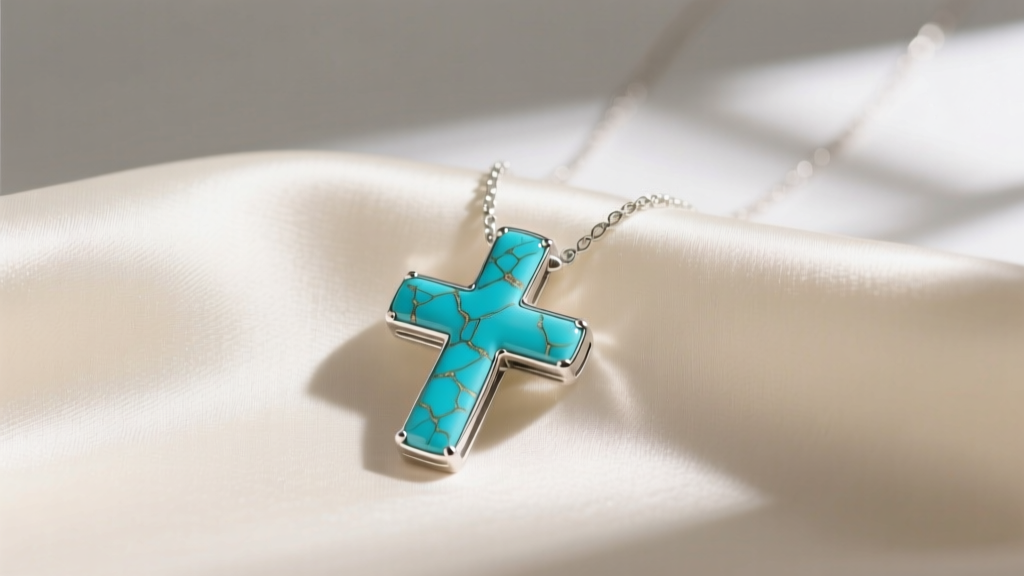
The Enduring Appeal of the Small Turquoise Cross Necklace
The small turquoise cross necklace occupies a unique space in fine jewelry, bridging the gap between spiritual symbolism, Southwestern heritage, and modern minimalist styling. Unlike larger, statement-making pieces, a petite cross pendant offers a subtle pop of color and texture that anchors an outfit without overwhelming it. However, because turquoise is a relatively soft and porous gemstone, selecting, styling, and maintaining one requires specific knowledge. This step-by-step guide will walk you through authenticating your stone, choosing the correct metal setting, mastering the art of layering, and preserving the gem's vibrant color for decades.
Step 1: Authenticating Your Turquoise Stone
Before styling your necklace, it is crucial to understand the material you are wearing. The market is flooded with dyed howlite, reconstituted turquoise dust, and synthetic imitations. According to the Gemological Institute of America (GIA), natural turquoise is a porous, opaque gemstone composed of hydrous copper aluminum phosphate, ranking between 5 and 6 on the Mohs hardness scale. Its color ranges from sky blue to greenish-yellow, heavily influenced by the presence of copper (which yields blue) and iron (which yields green).
Identifying Natural vs. Treated vs. Imitation
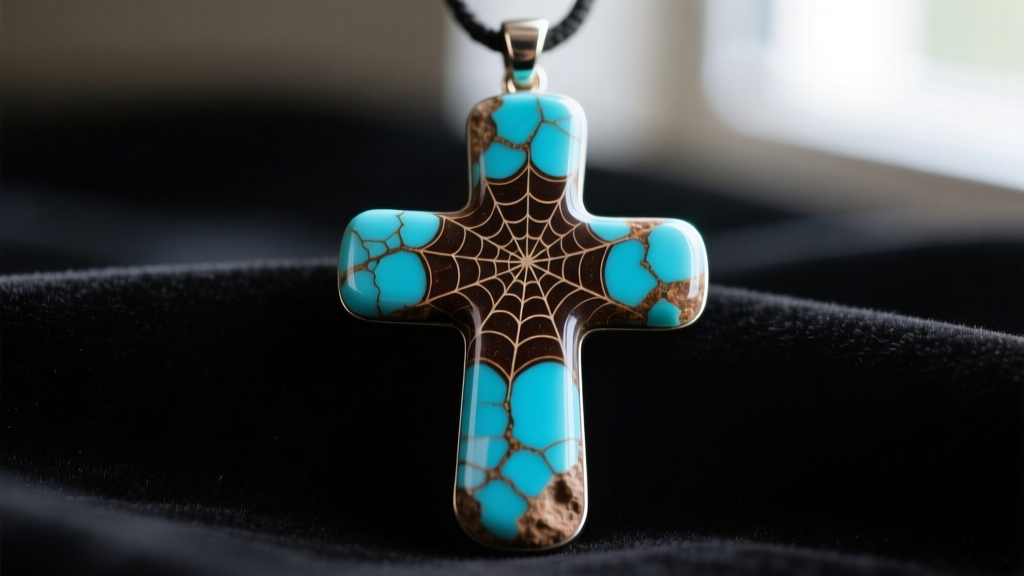
Most turquoise on the market today is "stabilized." This is an accepted industry practice where a soft, chalky turquoise is infused with a clear epoxy resin under pressure to harden it and lock in its color. Stabilization is not inherently bad—in fact, it makes a small turquoise cross necklace much more durable for daily wear. However, you must avoid "dyed" or "reconstituted" stones, which hold little to no gemological value. Look for a natural matrix (the host rock veining). Natural matrix patterns are random, jagged, and varied in thickness, whereas dyed howlite features uniform, grayish-black veins that often pool in surface cracks.
| Origin | Color Profile | Matrix Pattern | Market Value |
|---|---|---|---|
| Sleeping Beauty (AZ) | Solid, vibrant sky blue | None to minimal | High (Mine closed in 2012) |
| Kingman (AZ) | Deep blue to greenish-blue | Dark brown/black spiderweb | Medium-High |
| Persian (Iran) | Robin's egg blue | Golden-brown webbing | Premium / Rare |
| Hubei (China) | Varied blues and greens | Heavy black/brown matrix | Commercial / Accessible |
Step 2: Choosing the Right Metal and Setting
The metal and setting style dictate both the longevity and the aesthetic of your small turquoise cross necklace. Because turquoise is brittle and sensitive to impact, the structural integrity of the setting is paramount.
Bezel vs. Prong Settings
Always opt for a bezel setting for turquoise. A bezel setting features a continuous metal rim that encircles the entire girdle (edge) of the stone. This protects the fragile perimeter from chipping if the pendant strikes a hard surface. Prong settings, while allowing more light to enter faceted gems, leave the edges of a cabochon turquoise cross exposed and vulnerable to stress fractures. Furthermore, prongs can trap moisture and skin oils against the porous back of the stone, potentially altering its color over time.
Metal Pairings: Silver vs. Gold
- Oxidized Sterling Silver: The traditional choice. The darkened crevices of oxidized silver complement the natural matrix of the turquoise, giving the cross a vintage, artisanal feel.
- Polished 14k Yellow Gold: Creates a striking, high-contrast look. The warmth of yellow gold enhances the green undertones in stones like Kingman or Hubei turquoise.
- 14k Rose Gold: A modern, romantic pairing that softens the starkness of the blue stone, ideal for contemporary, minimalist styling.
Step 3: Layering and Neckline Pairing Techniques
A small turquoise cross necklace shines brightest when integrated into a thoughtful layering strategy. The goal is to create a cascading visual flow that draws the eye downward without tangling.
The 3-Point Layering Method
To achieve a balanced, professional look, use the rule of thirds with your chain lengths. Ensure at least a 2-inch to 4-inch gap between each necklace to prevent the clasps and pendants from knotting together.
- Point 1 (14" - 16"): Start with a simple, delicate gold or silver choker, or a tiny freshwater pearl strand. This frames the collarbone.
- Point 2 (18" - 20"): This is where your small turquoise cross necklace sits. An 18-inch cable chain allows the cross to rest perfectly at the hollow of the throat or just above the bust line, acting as the focal point.
- Point 3 (22" - 24"): Finish with a longer, heavier chain featuring a simple geometric pendant or a solitary diamond solitaire to anchor the bottom of the stack.

Matching Necklines to the Pendant
The scale of a "small" cross (typically 10mm to 15mm in height) requires specific necklines to remain visible. Deep V-necks and scoop necks provide the perfect canvas, allowing the pendant to rest against bare skin. Avoid high crew necks or busy, ruffled collars, which will visually swallow a petite pendant and cause the delicate chain to catch on heavy fabrics.
Step 4: Long-Term Care and Maintenance
Turquoise is highly reactive to its environment. Its porosity means it acts like a sponge, absorbing oils, lotions, and chemicals, which can cause the vibrant blue stone to turn a dull, muddy green. Proper maintenance is non-negotiable.
"Turquoise is generally a stable material, but it can be sensitive to heat and chemicals. Avoid ultrasonic and steam cleaners, and always put your turquoise jewelry on after applying cosmetics, perfumes, and hairsprays." — GIA Care and Cleaning Guide
The Daily Maintenance Routine
After wearing your small turquoise cross necklace, gently wipe the stone and the metal setting with a clean, dry microfiber cloth. This removes microscopic layers of sebum and environmental pollutants before they can penetrate the stone's pores. If the stone becomes visibly soiled, use a barely damp cloth with plain water—never soap or chemical jewelry dips—and dry it immediately. Store the necklace in a soft pouch away from direct sunlight, as prolonged UV exposure can dehydrate the stone and cause fading or surface cracking over time.
Final Thoughts on Styling
A small turquoise cross necklace is more than just an accessory; it is a wearable piece of geological history. By verifying the stone's authenticity, prioritizing protective bezel settings, mastering the 3-point layering technique, and adhering to strict, chemical-free cleaning protocols, you ensure that your pendant remains a vibrant, meaningful staple in your jewelry wardrobe for years to come.


