Step-by-Step Guide to Styling a Turquoise Opal Necklace
Learn how to style, layer, and safely clean your turquoise opal necklace with our expert gemological guide and step-by-step care instructions.

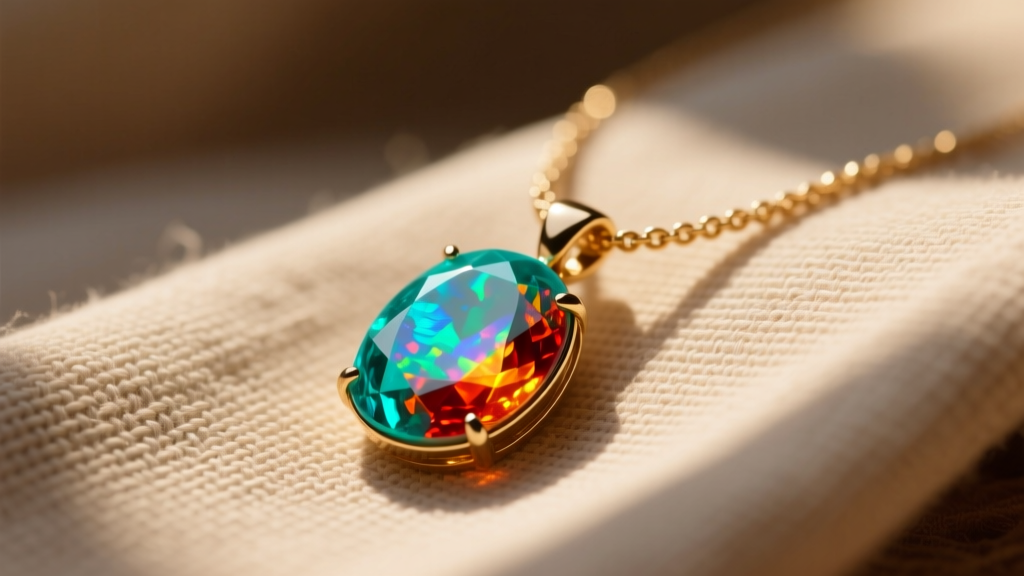
Combining the earthy, matrix-veined beauty of turquoise with the ethereal, light-diffracting play-of-color in opal creates a jewelry piece that is both visually striking and gemologically complex. A turquoise opal necklace is not your standard everyday accessory; it requires a nuanced understanding of stone hardness, porosity, and metal reactivity. Whether you are working with a single pendant featuring both stones or layering separate turquoise and opal strands, improper styling and maintenance can lead to irreversible scratching, dehydration, or chemical discoloration. This comprehensive, step-by-step guide will walk you through the precise methods for selecting hardware, layering safely, and maintaining the structural integrity of your turquoise opal necklace.
The Gemological Reality: Understanding Your Stones
Before attempting to style or clean your necklace, you must understand the physical limitations of both gemstones. Turquoise is a hydrous phosphate of copper and aluminum, while opal is a hydrated form of silica. Both are notably soft and porous compared to traditional precious gems. According to the Gemological Institute of America (GIA), turquoise ranks between 5 and 6 on the Mohs scale of hardness, and its porosity means it can easily absorb oils, lotions, and chemicals. Opal ranks slightly higher at 5.5 to 6.5, but its internal water content (ranging from 3% to 21%) makes it highly susceptible to cracking if exposed to sudden temperature changes or extreme dryness.
| Gemstone | Mohs Hardness | Porosity | Primary Vulnerability |
|---|---|---|---|
| Turquoise | 5.0 - 6.0 | High | Chemical absorption, copper discoloration |
| Opal | 5.5 - 6.5 | Variable (Hydrophane) | Dehydration, thermal shock, scratching |
| Diamond (Reference) | 10.0 | None | Chipping along cleavage planes |
Step 1: Selecting Compatible Hardware and Settings
The metal holding your turquoise and opal cabochons is just as critical as the stones themselves. Because turquoise is highly porous, it can absorb metal ions from adjacent materials. You must strictly avoid raw copper or brass chains and settings. Over time, copper ions will migrate into the turquoise, permanently altering its vibrant blue hue to a dull, muddy green. Instead, opt for 14k or 18k yellow or white gold, platinum, or heavily rhodium-plated sterling silver. Furthermore, insist on bezel settings rather than prong settings. A bezel wraps a thin rim of metal entirely around the girdle (edge) of the cabochon, protecting the soft turquoise and opal from chipping against hard surfaces during daily wear.
Step 2: The Scratch-Free Layering Technique
Layering a turquoise opal necklace requires strict spatial awareness to prevent the stones from destroying one another or being destroyed by neighboring jewelry. Never layer your turquoise or opal pendants with diamonds, sapphires, topaz, or quartz. A diamond (Mohs 10) will effortlessly carve deep, permanent scratches into an opal (Mohs 6) with minimal friction.
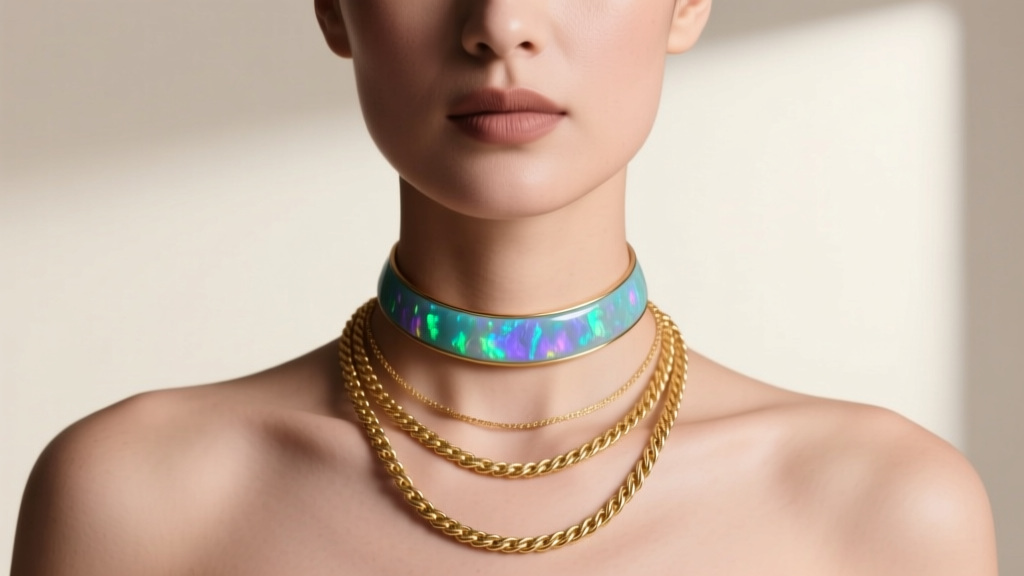
To execute a safe layering strategy, follow the 2-inch gap rule. If your turquoise opal pendant hangs on a 16-inch choker chain, your secondary necklace must be at least 18 inches long. This prevents the pendants from colliding when you bend over or move dynamically. Additionally, vary the chain textures. Pair a smooth, polished box chain holding your turquoise opal pendant with a matte or hammered rope chain for the secondary layer. This reduces the surface-area friction between the metal links themselves, preserving the high-polish finish of your gold or silver.
Step 3: Styling for Necklines and Skin Tones
The visual impact of a turquoise opal necklace shifts dramatically depending on the backdrop of your clothing and your natural skin undertones. Turquoise inherently carries warm, earthy yellow-green undertones beneath its blue surface, while opal flashes can range from cool blues and purples to warm oranges and reds.
- For V-Necklines: Utilize a Y-necklace or a lariat style where the turquoise acts as the primary focal point at the base of the V, with the opal dangling slightly lower. This elongates the neck and draws the eye downward.
- For Crew Necks: Opt for a shorter, 16-inch collar or choker style where the turquoise and opal are set horizontally in a single, wide bezel pendant. This rests perfectly above the fabric line, preventing the soft stones from snagging on cotton or wool fibers.
- Skin Tone Matching: If you have cool undertones, seek out turquoise with a tighter, darker black matrix (like Kingman turquoise) paired with white or crystal opal featuring blue/green play-of-color. For warm undertones, choose a webbed, brown-matrix turquoise (like Royston) paired with fiery Mexican opals that flash intense oranges and yellows.
Step 4: The Safe Cleaning and Storage Protocol
Cleaning a turquoise opal necklace is where most owners make catastrophic mistakes. Commercial jewelry dips, ultrasonic cleaners, and steamers are strictly forbidden. Ultrasonic vibrations can shatter the internal silica structure of an opal, while the harsh acids and thiourea in silver cleaning dips will strip the protective wax coatings off turquoise and etch the surface of the opal, leaving it permanently cloudy.
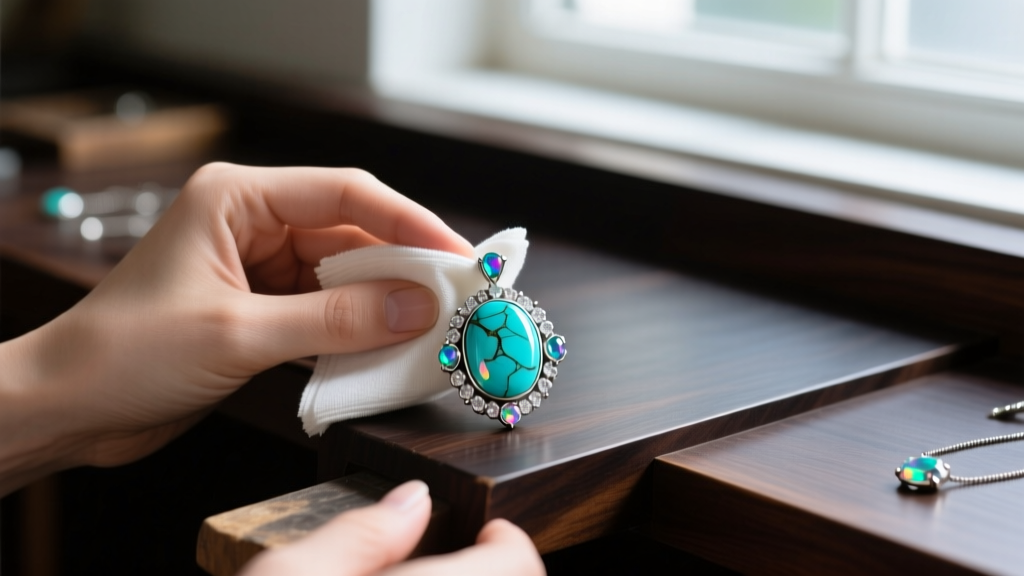
Follow this exact 4-step cleaning protocol after every few wears:
- Dry Wipe: Use a clean, untreated microfiber cloth to gently buff away surface skin oils and cosmetics. Do not apply heavy pressure.
- Damp Wipe (If Necessary): If dirt is trapped in the matrix crevices of the turquoise, slightly dampen a corner of the cloth with distilled water (never tap water, as chlorine and fluoride can react with the stone). Wipe gently and immediately dry with the unused side of the cloth.
- Air Dry: Let the necklace sit flat on a towel in a room-temperature environment for 15 minutes to ensure no moisture is trapped beneath the bezel setting.
- Proper Storage: Store the necklace in a breathable cotton pouch. Avoid airtight plastic bags, which can trap humidity and promote silver tarnish, but also avoid leaving it in direct sunlight or near heating vents, which will dehydrate the opal and cause crazing (a network of fine cracks).
By respecting the unique gemological properties of both stones and adhering to these precise styling and maintenance steps, your turquoise opal necklace will retain its structural integrity and vibrant optical phenomena for decades.