How to Choose a Black and Gold Cross Necklace: Buyer's Guide
Discover how to choose the perfect black and gold cross necklace. Explore material grades, chain pairings, and styling tips in our expert guide.


The Appeal of the Black and Gold Cross Necklace
The black and gold cross necklace occupies a unique space in modern jewelry, bridging the gap between sacred symbolism, high-end luxury, and contemporary streetwear. The stark contrast between warm, reflective gold and deep, light-absorbing black creates a visual weight that commands attention. However, not all two-tone crosses are created equal. As a buyer in 2026, navigating the market requires an understanding of metallurgy, gemstone treatments, and structural mechanics. This guide breaks down exactly what to look for when investing in a black and gold cross pendant, ensuring you purchase a piece that is both aesthetically striking and structurally enduring.
Decoding the Materials: What Makes the 'Black' and 'Gold'?
The longevity and value of your necklace depend entirely on the specific materials used to achieve the black and gold contrast. Vague product descriptions like 'black gold' or 'dark stone' are red flags. Here is the technical breakdown of what you should actually be buying.
The Gold: Purity and Alloy Composition
For a pendant that will be worn daily, 14k solid gold is the optimal choice. Composed of 58.5% pure gold and 41.5% alloy metals (like copper, zinc, and silver), 14k gold offers the tensile strength required to prevent the bail (the loop connecting the pendant to the chain) from bending or warping under the weight of a heavy cross. While 18k gold (75% pure) offers a richer, more saturated yellow hue, it is significantly softer and more prone to scratching, making it better suited for occasional wear or lighter, minimalist crosses. Avoid gold-plated brass or silver if you want a lifetime piece; the friction against the chest will eventually wear through the microscopic gold layer, exposing the base metal beneath.
The Black: Onyx, Enamel, and Rhodium
The 'black' element in these necklaces is typically achieved through one of three methods, each with vastly different durability profiles:
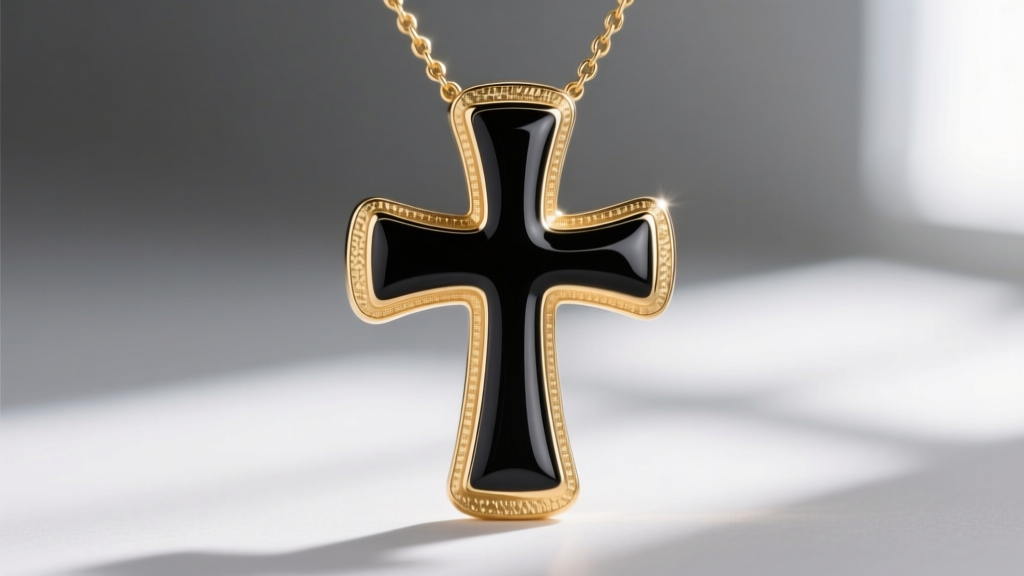
- Black Onyx: A chalcedony quartz with a Mohs hardness of 7. According to the Gemological Institute of America (GIA), most commercial black onyx is actually gray agate that has been treated with heat and carbon to achieve its uniform black color. It is highly durable, takes an exceptional polish, and is usually cut into flat cabochons for bezel settings.
- Vitreous Enamel: This is finely ground glass powder fused to the gold at temperatures exceeding 1400°F. Vitreous enamel is incredibly scratch-resistant and maintains a deep, glassy black indefinitely. It is the hallmark of fine jewelry.
- Cold Enamel (Epoxy): A resin-based alternative that cures at room temperature. It is cheaper to produce but prone to chipping, cracking, and yellowing from UV exposure over time. Always verify that a piece uses vitreous, not cold, enamel.
- Black Rhodium Plating: An electroplated finish applied over white or yellow gold. While it provides a striking gunmetal-black look, it is a surface treatment that will inevitably wear off in 6 to 18 months with daily friction, requiring professional re-plating.
Chain Selection: Matching Weight and Proportion
A common mistake buyers make is pairing a heavy, substantial black and gold cross pendant with a flimsy chain. The chain must support the pendant's weight without kinking, and the visual proportions must align. A heavy onyx cross requires a chain with structural integrity, while a delicate enamel piece pairs better with finer links.
| Chain Type | Ideal Width Range | Best Pendant Style | Durability Profile |
|---|---|---|---|
| Curb | 2.5mm - 5.0mm | Heavy, oversized streetwear crosses | High; flat interlocking links resist pulling |
| Figaro | 2.0mm - 4.0mm | Medium vintage or gothic crosses | Medium-High; pattern adds visual texture |
| Rope | 1.5mm - 3.0mm | Intricate, diamond-accented crosses | Medium; twisted links can trap dirt/oils |
| Cable | 1.0mm - 2.0mm | Minimalist, lightweight daily crosses | Low-Medium; prone to kinking if overloaded |
Sizing, Proportions, and Bail Mechanics
The bail is the unsung hero of any pendant necklace. It dictates not only how the cross hangs but also which chains you can actually wear with it. When buying a black and gold cross necklace, you must check the inner diameter of the bail.
For example, if you plan to wear the cross on a 3.0mm curb chain, the bail must have an inner clearance of at least 4.5mm. If the clearance is too tight, the chain will bunch up inside the bail, causing the pendant to sit crookedly and accelerating wear on the gold links. Furthermore, consider the pendant dimensions relative to your body type and styling goals:
- Subtle / Layering (12mm x 18mm): Ideal for tucking under unbuttoned collars or layering with longer, simpler gold chains.
- Standard / Daily Wear (20mm x 30mm): The most versatile size. Sits perfectly at the base of the throat on a 20-inch chain.
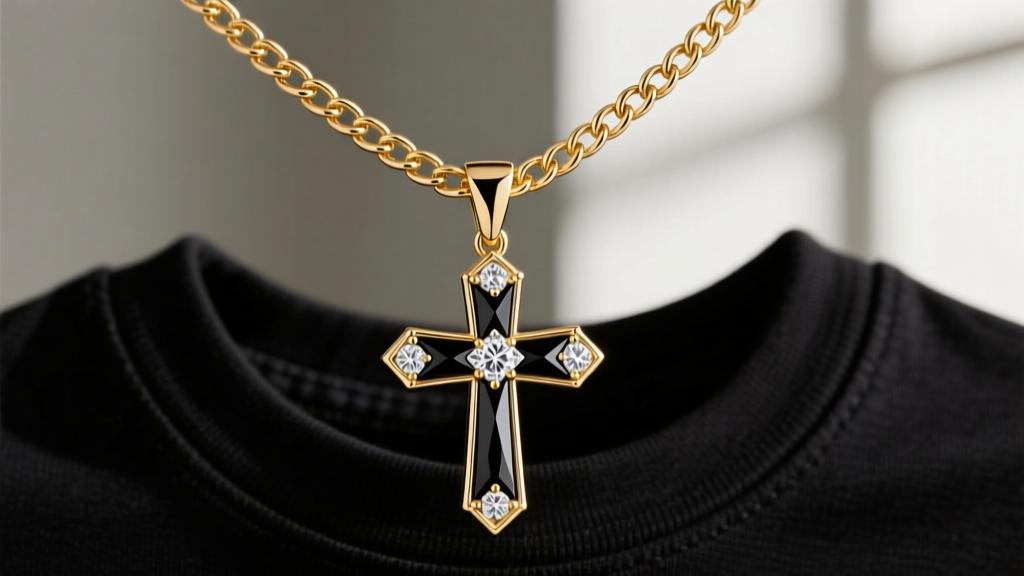
- Statement / Outerwear (35mm x 50mm+): Designed to be worn over clothing, such as black turtlenecks or streetwear hoodies, where the high contrast of the black and gold can be fully appreciated.
Price Tiers: What Should You Expect to Pay?
Understanding the market pricing for black and gold cross necklaces protects you from overpaying for inferior materials or underestimating the cost of true craftsmanship.
- Entry-Level ($80 - $250): Expect 10k or 14k gold vermeil (thick gold plating over sterling silver), cold epoxy enamel, and black cubic zirconia. Good for trend-driven fashion, but not built for decades of wear.
- Mid-Tier Fine Jewelry ($300 - $900): The sweet spot for most buyers. This tier features solid 14k gold, genuine black onyx cabochons, or fired vitreous enamel. You are paying for solid precious metals and permanent black materials.
- High-End / Designer ($1,200 - $5,000+): Features 18k gold, natural or treated black diamonds, and precision pavé settings. Brands in this tier often incorporate custom-cut onyx and hidden diamond accents on the bail or the reverse of the cross.
Care and Maintenance for Two-Tone Pieces
Maintaining the sharp contrast between the gold and the black requires specific care protocols. Never use ultrasonic cleaners on a black onyx cross. According to jewelry conservation standards, the high-frequency vibrations and heat can cause internal fracturing in the stone or leach the dyes used to treat commercial onyx, resulting in a faded, grayish appearance.
Instead, clean your necklace using a few drops of mild, phosphate-free dish soap in lukewarm water. Use a soft-bristled baby toothbrush to gently agitate the area where the gold bezel meets the black stone or enamel, as this crevice is where skin oils and lotions accumulate. Dry thoroughly with a microfiber cloth to prevent water spots on the polished gold. If your piece features black rhodium plating, store it in an anti-tarnish pouch and avoid contact with perfumes or chlorine, which will strip the plating prematurely.
Final Verdict: Making Your Purchase
A black and gold cross necklace is a powerful sartorial anchor. To ensure your investment stands the test of time, prioritize solid 14k gold for structural integrity, insist on vitreous enamel or genuine onyx for the black elements, and meticulously match your chain width to the pendant's bail clearance. By focusing on these technical specifications rather than just the visual aesthetic, you will secure a piece that remains as striking on day one thousand as it was on day one.


