2026 Trends: Styling The 925 Sterling Silver Chain Necklace
Discover 2026 trend analysis for the 925 sterling silver chain necklace. Explore link profiles, layering frameworks, and alloy innovations.

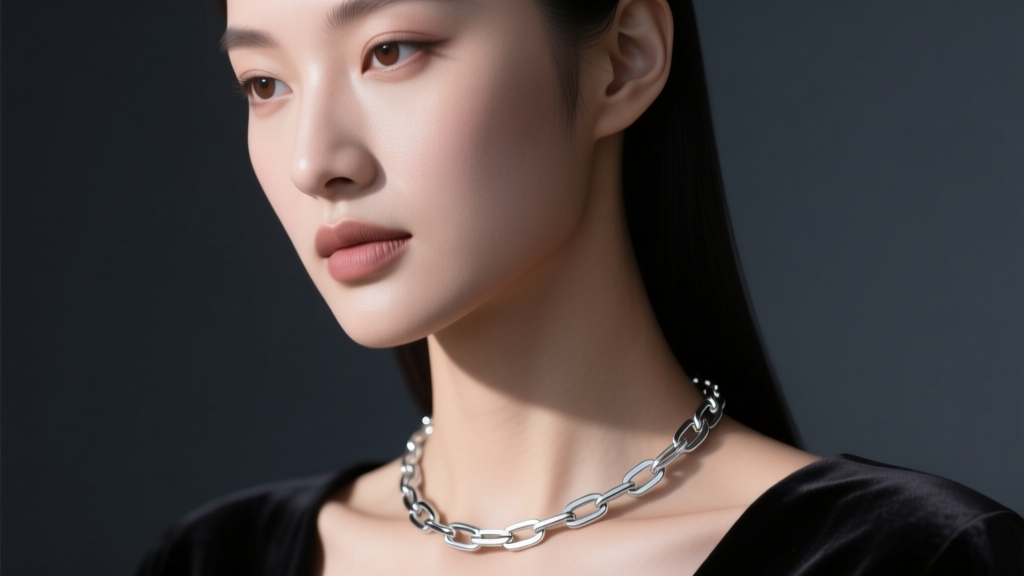
The 2026 Shift: From Minimalist to Architectural
For the better part of a decade, the jewelry market was dominated by the 'barely-there' aesthetic—ultra-fine, 1mm cable chains designed to disappear into the skin. However, as we navigate the 2026 style landscape, a definitive pivot has occurred. The modern 925 sterling silver chain necklace is no longer treated merely as a utilitarian vehicle for a pendant; it has evolved into a standalone architectural statement. Consumers and designers alike are embracing structural volume, asymmetrical link profiles, and industrial-inspired hardware.
This shift is largely driven by a desire for gender-neutral styling and versatile layering. A well-crafted 925 sterling silver chain necklace now features pronounced link dimensions, often ranging from 3mm to 6mm in width, providing a substantial drape that catches the light and anchors an outfit. The focus has moved from the clasp being hidden at the nape of the neck to being showcased as a central design element on the clavicle.
Why 925 Sterling Silver Dominates the Mid-Market
While gold vermeil and solid 14k gold continue to hold their respective market shares, 925 sterling silver has cemented its position as the undisputed king of the mid-tier luxury segment. According to hallmarking standards verified by Assay Office London, the 925 standard guarantees 92.5% pure silver alloyed with 7.5% base metals (typically copper) for structural integrity. In 2026, the accessibility of silver allows collectors to purchase multiple, high-quality chain profiles for the price of a single gold-filled piece, encouraging the 'wardrobe' approach to jewelry curation.
Chain Profile Trend Index
Not all links are created equal. The trend velocity of specific chain profiles has fluctuated wildly over the last 18 months. Below is our proprietary 2026 trend index for the most sought-after 925 sterling silver chain necklace profiles, detailing their technical specifications and styling applications.
| Profile Name | Wire Gauge / Width | 2026 Trend Velocity | Ideal Neckline Pairing |
|---|---|---|---|
| Elongated Paperclip | 14G / 4.5mm width | Surging (High Demand) | Deep V-Neck, Square Neck |
| Classic Cuban Curb | 12G / 5.0mm width | Stable (Evergreen) | Crew Neck, Off-Shoulder |
| Mariner / Anchor | 16G / 3.0mm width | Declining | Boat Neck, Halter |
| Wheat (Spiga) | 18G / 2.5mm width | Rising (Artisan Focus) | Collared Shirt, Turtleneck |
| Figaro (Mixed Link) | 14G / 4.0mm width | Stable (Vintage Revival) | Scoop Neck, Strapless |
The elongated paperclip chain, characterized by its hollow, rectangular links, offers maximum visual impact with minimal weight, making it the top seller for 20-inch and 24-inch lengths. Conversely, the traditional mariner chain is seeing a decline as consumers favor the sharper, more geometric lines of the curb and paperclip variants.
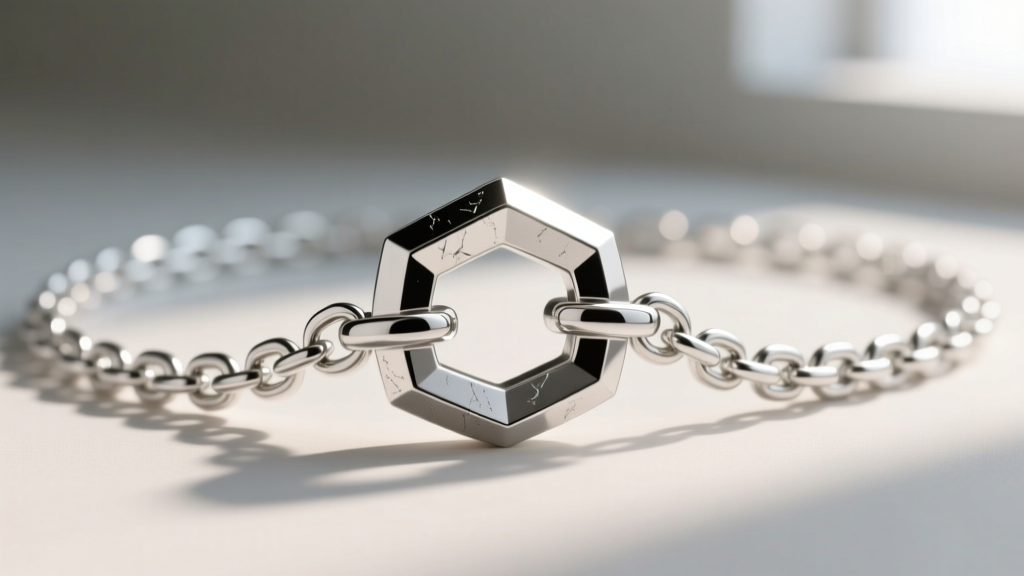
Hardware & Clasp Innovations
In previous years, the lobster clasp was the undisputed standard, hidden away at the back of the neck. The 2026 ethos completely subverts this. The clasp on a premium 925 sterling silver chain necklace is now a focal point of the design. We are seeing a massive influx of oversized T-bar toggles, geometric box clasps, and magnetic neodymium closures encased in brushed silver.
'The hardware is no longer an afterthought; it is the anchor of the piece. An 8mm spring ring or a sculptural toggle clasp worn at the center of the clavicle transforms a basic chain into a deliberate, styled accessory.' — Contemporary Jewelry Design Symposium, 2025
This innovation extends to functionality as well. Magnetic clasps, once considered cheap or insecure, are now being engineered with high-grade rare-earth magnets and secondary locking mechanisms, allowing wearers to easily put on and remove heavier 925 sterling silver chains without struggling with tiny lobster lever springs.
Layering Framework: The 3-Point Asymmetry Rule
Layering remains a dominant styling technique, but the haphazard 'pile-it-on' approach of the early 2020s has been replaced by a highly calculated methodology. We call it the 3-Point Asymmetry Rule. When styling multiple 925 sterling silver chain necklaces, the goal is to create distinct visual zones without tangling or visual clutter.
Gauge and Length Pairings
To execute this framework, you must vary both the length and the wire gauge (thickness) of each chain. Here is the exact blueprint for a flawless 2026 layering stack:
- Point 1 (The Choker Zone): 15-inch length, 1.5mm width. Opt for a flexible, woven profile like a rope or wheat chain. This sits tightly against the base of the throat and provides a delicate baseline.
- Point 2 (The Clavicle Zone): 18-inch length, 3.5mm to 4.5mm width. This is your statement piece. A solid curb or a heavy paperclip chain rests on the collarbone. This chain should feature the oversized, decorative clasp mentioned earlier.
- Point 3 (The Sternum Zone): 22-inch to 24-inch length, 2.0mm width. A mid-weight cable or Figaro chain that dips below the neckline of most garments, often terminating in a single, substantial geometric pendant or a polished silver cylinder.
By strictly adhering to a minimum 3-inch gap between lengths and alternating between woven and flat link profiles, you eliminate the friction that causes silver chains to knot and tangle.
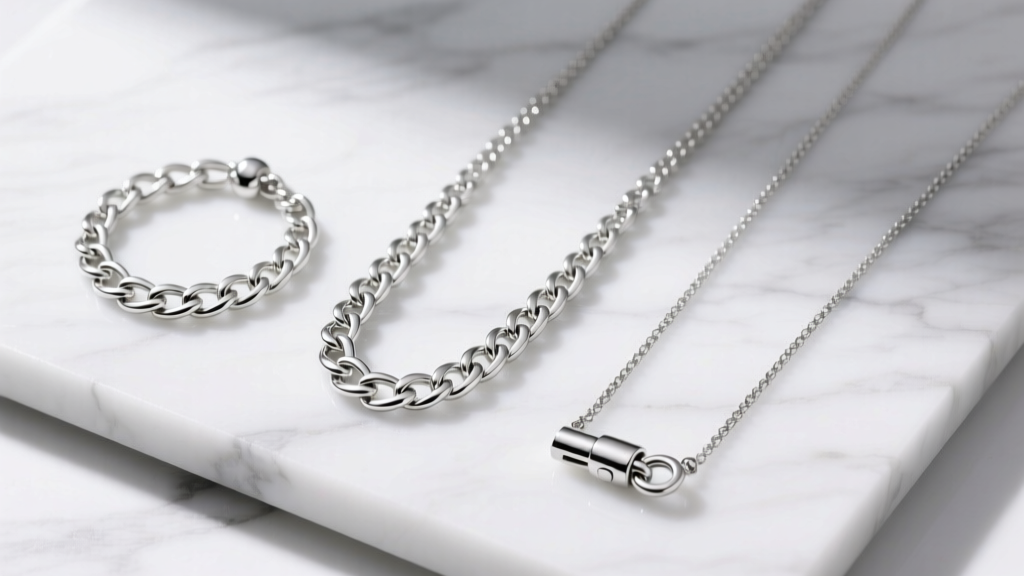
Surface Finishes: The Rise of Satin and Brushed Textures
High-polish, mirror-finish silver will always have a place in classic jewelry, but 2026 has seen a dramatic rise in alternative surface treatments. Matte, satin, and wire-brushed finishes are increasingly popular for the 925 sterling silver chain necklace, particularly in men's and gender-neutral collections.
These finishes are achieved through specialized manufacturing techniques. Sandblasting creates a uniform, velvety matte texture that diffuses light rather than reflecting it, giving the silver a softer, more organic appearance. Wire brushing, on the other hand, involves dragging fine abrasive wires across the metal to create directional micro-scratches. This not only provides a rugged, industrial aesthetic but also has the practical benefit of hiding the micro-abrasions and daily wear marks that inevitably accumulate on high-polish silver.
Tarnish Management & Alloy Upgrades
The primary drawback of traditional 925 sterling silver is its susceptibility to tarnishing, caused by the copper content reacting with sulfur and moisture in the air. However, metallurgical advancements have provided modern solutions. According to gemological and metallurgical resources like the Gemological Institute of America (GIA), the introduction of advanced alloys has significantly altered the maintenance requirements of silver jewelry.
Many premium brands are now utilizing Argentium Silver, an alloy that replaces a portion of the copper with germanium. This results in a 925 (or higher) purity stamp but offers extreme tarnish resistance and a naturally brighter, whiter luster that closely mimics platinum. For brands sticking to traditional copper-alloyed 925 silver, heavy rhodium flash plating (typically 0.05 to 0.1 microns thick) remains the industry standard for creating a protective, tarnish-proof barrier that also prevents skin discoloration.
Final Verdict
The 925 sterling silver chain necklace in 2026 is a masterclass in functional art. It has shed its reputation as a mere baseline accessory and stepped into the spotlight as a versatile, architectural staple. By paying close attention to link profiles, embracing oversized hardware, and utilizing calculated layering frameworks, you can leverage silver's unique luster and weight to build a jewelry wardrobe that is both contemporary and enduring.


