The Ultimate Beginner Guide to Styling a Bow Pearl Necklace
Discover how to choose, style, and care for a bow pearl necklace. Our beginner-friendly guide covers pearl grades, metals, and outfit pairings.

The Evolution of the Bow Pearl Necklace
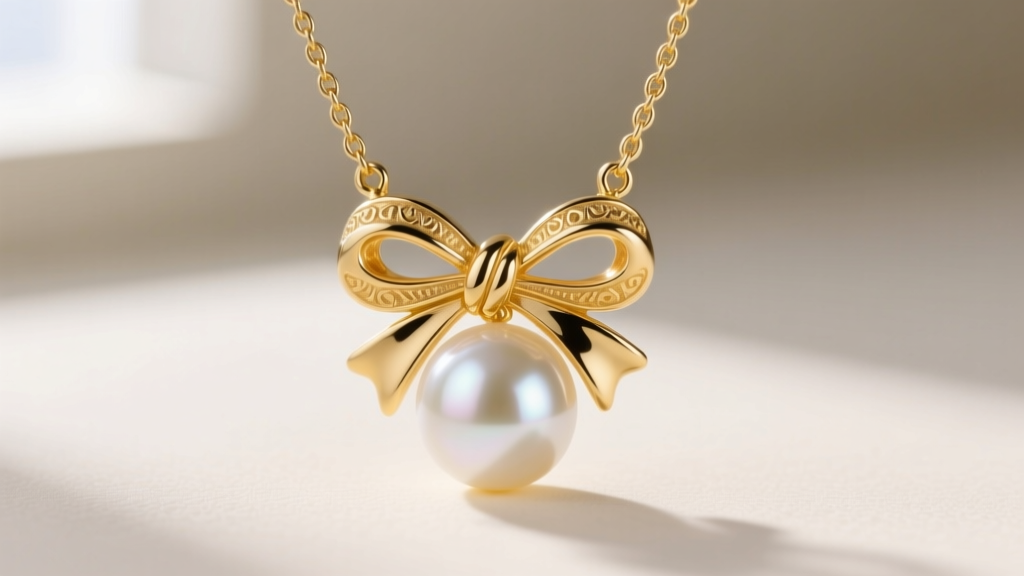
As we navigate the jewelry landscape of 2026, the bow pearl necklace has successfully transcended its historical Victorian roots and the fleeting 'coquette' aesthetic to cement itself as a permanent fixture in fine jewelry wardrobes. For beginners, navigating the intersection of delicate metalwork and organic gemstones can be daunting. A bow pearl necklace typically features a metallic or enameled bow motif that acts as a decorative bail, suspending a single pearl, or incorporates pearls directly into the ribbon loops. Understanding the anatomy, material grades, and styling nuances of this specific design is crucial for making an informed investment. This guide breaks down everything you need to know to select, wear, and maintain a high-quality bow pearl pendant.
Decoding Pearl Types for Bow Pendants
The pearl is the focal point of the necklace, and its origin dramatically affects the piece's luster, durability, and price point. According to the Gemological Institute of America (GIA), pearls are evaluated on size, shape, color, luster, surface quality, and nacre quality. For bow pendants, round or near-round pearls are predominantly used to mimic the symmetry of a tied ribbon knot.
Akoya vs. Freshwater: Which Should You Choose?
Most entry-level to mid-tier bow pearl necklaces utilize freshwater pearls. These are solid nacre, making them highly durable and resistant to chipping, though their luster is generally softer and more satiny. Akoya pearls, on the other hand, are saltwater, bead-nucleated pearls known for their sharp, mirror-like luster. An 8mm AAA-grade Akoya pearl will reflect light with pinpoint precision, creating a striking contrast against a matte gold or enamel bow.
| Pearl Type | Luster Quality | Nacre Structure | Average Price Range (8mm) |
|---|---|---|---|
| Chinese Freshwater | Soft, Satiny | Solid Nacre | $40 - $150 |
| Japanese Akoya | Sharp, Mirror-like | Bead-Nucleated (0.2-0.8mm nacre) | $250 - $800 |
| Hanadama Akoya | Extreme, Aurora Glow | Bead-Nucleated (Thick nacre) | $900 - $2,500+ |

The Anatomy of a High-Quality Bow Motif
The bow component requires precise metallurgy. Because bows feature intricate loops, tails, and sometimes microscopic pavé settings, the metal must be durable enough to hold its shape without bending during daily wear.
Metal Alloys and Construction
For everyday wear, 14k gold (58.5% pure gold mixed with copper and silver alloys) is the industry standard. It provides the necessary tensile strength to keep the delicate 'tails' of the bow from snapping. While 18k gold offers a richer, deeper yellow hue, its higher purity makes it softer and more prone to scratching and warping, especially in thin filigree bow designs.
Enamel and Pavé Accents
Many luxury bow pearl necklaces incorporate guilloché enamel—a technique where translucent glass enamel is fused over an engraved metal base, creating a mesmerizing, multi-dimensional ripple effect. If you prefer sparkle, look for bows set with melee diamonds. Ensure the diamonds are at least VS (Very Slightly Included) clarity and G-H color, as lower grades will appear cloudy and detract from the pearl's natural iridescence.
Chain Selection: Matching Weight and Drape
A common beginner mistake is pairing a heavy, ornate bow pearl pendant with an inadequate chain. The chain must support the pendant's weight while complementing its aesthetic.
- 1.2mm Rolo or Cable Chain: The ideal choice for most bow pendants. The open, round links provide flexibility and strength without overpowering the delicate bow design.
- Box Chains: Avoid these for pearl jewelry. The sharp, square edges of box chains can act like tiny files, slowly wearing down the pearl's drill hole and the metal bail over time.
- Snake Chains: While sleek, snake chains easily kink and trap skin oils and pearl dust between their tightly coiled links, making them difficult to clean and potentially harmful to organic gems.
How to Style Your Bow Pearl Necklace
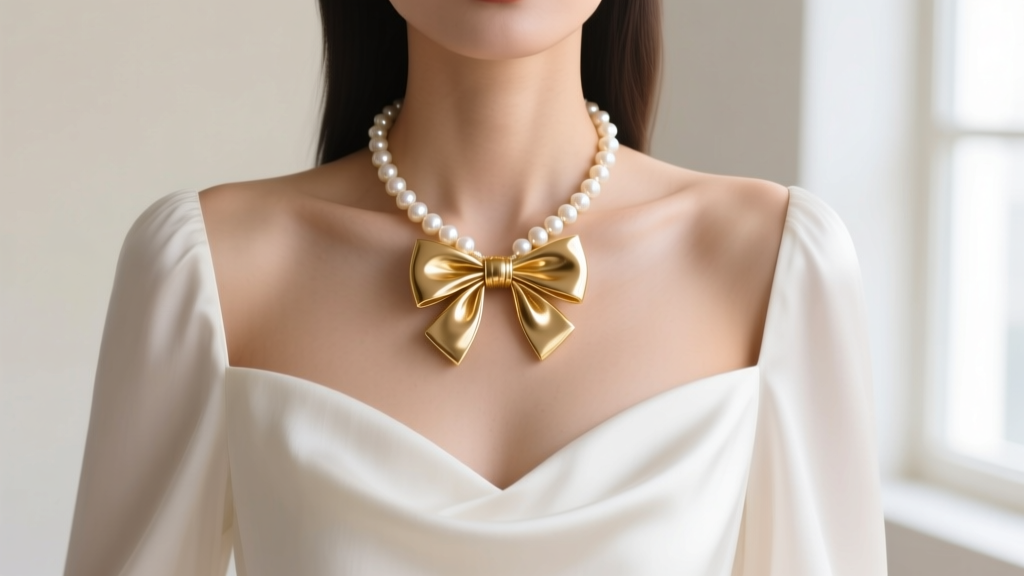
The versatility of the bow pearl necklace lies in its ability to bridge the gap between vintage romance and modern minimalism. Here is a practical framework for matching your necklace to common necklines:
The Sweetheart Neckline
Opt for a 16-inch choker length. The bow should rest precisely in the dip of the sweetheart cut, while the pearl sits just below the collarbone. This draws the eye upward and frames the face beautifully, making it perfect for bridal wear or romantic evening outings.
The Crew Neck and High Collar
Layering is essential here. Wear your 16-inch bow pearl necklace tight against the collar, and layer it with a heavier 20-inch or 22-inch plain gold chain (like a 2.5mm Figaro or Cuban link). This breaks up the severity of a high neckline and adds a contemporary, mixed-metal edge to a classic silhouette.
Essential Care and Maintenance
Pearls are organic gemstones with a Mohs hardness of just 2.5 to 3.0, making them exceptionally vulnerable to scratching and chemical damage. The GIA's pearl care guidelines emphasize the 'Last On, First Off' rule. Always put your bow pearl necklace on after applying perfume, hairspray, and cosmetics. The alcohol and acids in these products can eat away at the pearl's nacre, permanently dulling its luster and degrading the silk or nylon thread if the piece incorporates knotted elements.
Proper Storage Techniques
Never store your pearl jewelry in a plastic bag or an airtight safe deposit box for extended periods. Pearls require ambient moisture; sealing them in plastic causes the nacre to dehydrate, leading to microscopic cracking known as 'crazing.' Instead, store the necklace flat in a soft, breathable cotton pouch or a lined jewelry box, separate from harder gemstones like diamonds or sapphires that could easily scratch the pearl's surface.
Pro Tip: If your bow pearl necklace features a silk-knotted strand rather than a single pendant on a metal chain, have it professionally re-strung every 2 to 3 years. Silk stretches and degrades over time, and a snapped thread can result in the loss of your valuable pearls.
By understanding the specific material grades, structural requirements, and care protocols of the bow pearl necklace, you can confidently select a piece that will remain a timeless, elegant staple in your collection for decades to come.


