The Beginner's Guide to Styling Your First Navy Necklace
Discover how to choose, match, and style a navy necklace. This beginner-friendly guide covers materials, necklines, and color pairings for effortless elegance.

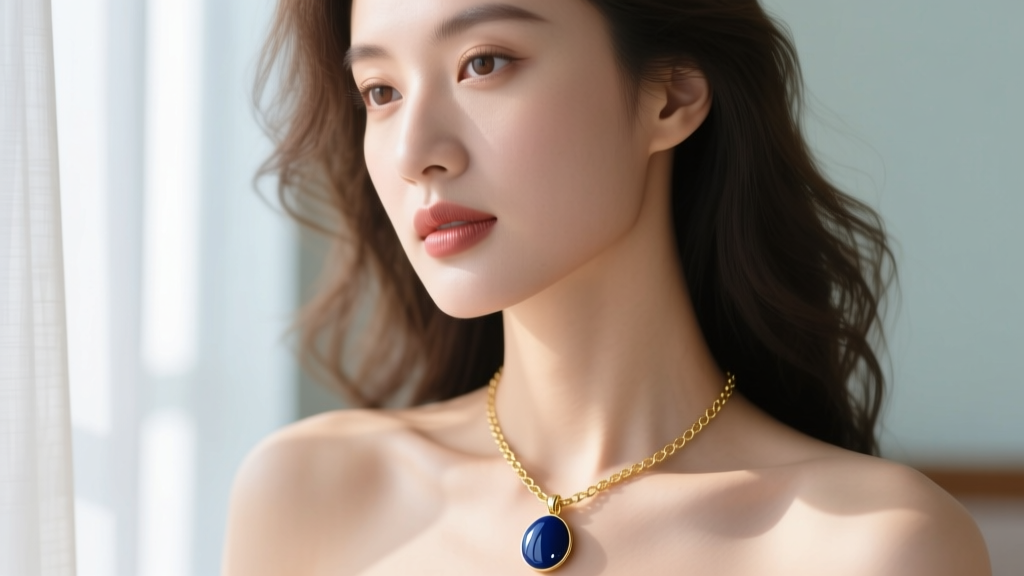
Why Navy is the Ultimate Jewelry Neutral
When building a foundational jewelry collection, most beginners default to stark black, crisp white, or standard metallics. However, the navy necklace is the unsung hero of the modern jewelry box. Navy blue operates as a 'colored neutral'—it provides the grounding, slimming, and sophisticated contrast of black, but with a softer, more approachable undertone that flatters virtually every skin tone. Whether you are stepping into the world of fine gemstones or exploring artisan-crafted fashion jewelry, understanding how to select and style a navy necklace will instantly elevate your everyday wardrobe.
In 2026, the trend of 'quiet luxury' continues to dominate, and deep, saturated blues are at the forefront of this movement. A well-chosen navy piece bridges the gap between casual daytime wear and elegant evening attire without requiring a complete wardrobe change. But with so many materials on the market—from porous organic stones to fired glass enamels—how do you choose the right one? This guide breaks down the gemology, styling mechanics, and care requirements of navy blue jewelry.
Decoding Navy Necklace Materials
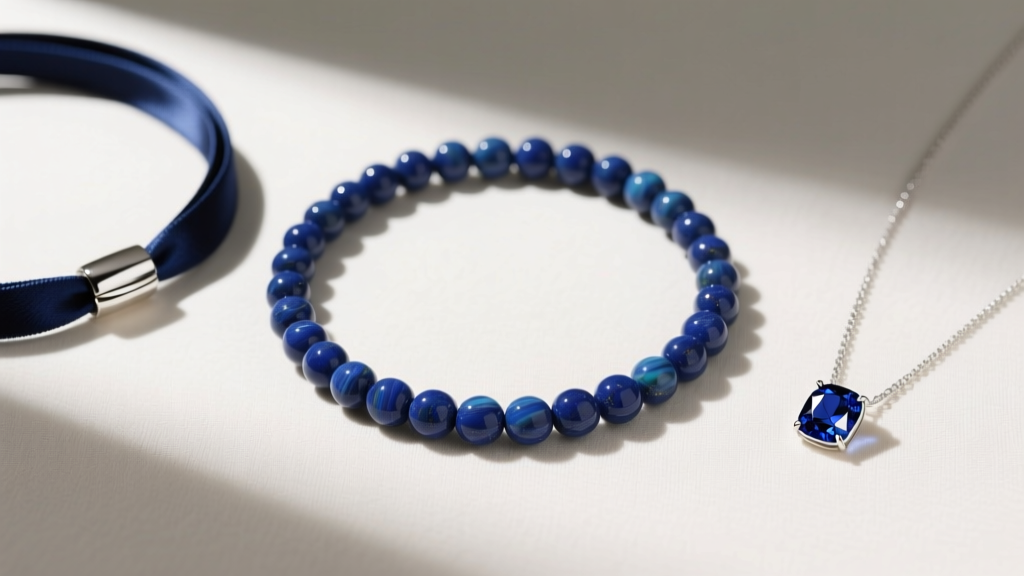
The term 'navy necklace' can refer to a wide variety of materials, each with distinct physical properties, price points, and care requirements. Understanding these differences is critical to making a smart investment.
| Material | Durability (Mohs/Structure) | Average Price Range | Best Use Case |
|---|---|---|---|
| Lapis Lazuli | Mohs 5-5.5 (Porous, sensitive to acids) | $40 - $250 | Statement pieces, bohemian styling |
| Vitreous Enamel | High (Fused glass on metal, impact-sensitive) | $120 - $600 | Minimalist pendants, everyday wear |
| Blue Sapphire | Mohs 9 (Extremely hard, excellent toughness) | $500 - $5,000+ | Fine jewelry, heirloom investments |
| Navy Silk Cord | Low (Organic protein fiber, degrades with sweat) | $25 - $85 | Holding heavy metal or stone pendants |
The Gemological Deep Dive
Lapis Lazuli: According to the Gemological Institute of America (GIA), true lapis lazuli is actually a rock composed of multiple minerals, primarily lazurite (which provides the deep blue color), calcite (white streaks), and pyrite (gold flecks). The most prized grade is 'Afghan' or 'Persian' lapis, which features a uniform, intense royal blue with minimal calcite. Beginner Warning: Cheap lapis is often dyed howlite or jasper. To test your stone, wipe it with a cotton swab dipped in nail polish remover; if the swab turns blue, the stone is dyed.
Blue Sapphire: For those with a higher budget, a navy sapphire solitaire is a lifetime investment. The GIA Sapphire Guide notes that sapphires are a 9 on the Mohs hardness scale, making them second only to diamonds in scratch resistance. When shopping for a 'navy' sapphire, look for stones with a medium-dark tone and strong saturation. If the stone is too dark, it will appear black in low light; if it is too light, it will read as a standard cornflower blue rather than a deep navy.
Vitreous Enamel: As documented by The Metropolitan Museum of Art, vitreous enamel is created by fusing powdered glass to a metal substrate at temperatures exceeding 1,400°F. For a navy necklace, the guilloché technique is particularly stunning. This involves engine-turning a geometric pattern into the silver or gold base before applying transparent navy enamel, creating a mesmerizing, three-dimensional optical illusion that cold (epoxy) enamel simply cannot replicate.
Matching Your Navy Necklace to Necklines
A beautiful pendant will look awkward if the chain length clashes with your neckline. Here is a precise framework for pairing your navy jewelry with common garment cuts.
Crew Necks and Boat Necks
High, rounded necklines require a necklace that sits entirely above the fabric line or rests boldly on top of it. Opt for a 14-inch to 16-inch navy enamel choker, or a tightly beaded 16-inch lapis lazuli collar. The goal is to frame the face without the jewelry getting lost in the folds of the collar. Avoid long pendants here, as they will create a tangled, cluttered look against the high hem.
V-Necks and Scoop Necks
These necklines create a natural geometric frame for your chest. A 20-inch to 24-inch navy necklace with a focal pendant (like a teardrop sapphire or a geometric resin piece) perfectly mirrors the V-shape of the garment. Ensure the pendant drops roughly one inch above the apex of the V-neck to maintain visual balance. If you are layering, start with a delicate 16-inch gold chain, followed by your 20-inch navy pendant, and finish with a 24-inch simple metallic link.
Turtlenecks and High Sweaters
Winter knits demand weight and length. A standard 18-inch chain will vanish into the folds of a chunky turtleneck. Instead, reach for a 28-inch to 32-inch opera-length navy silk cord. A 3mm thick navy silk cord holding a heavy bronze or silver geometric pendant provides a striking, modern contrast against cream, camel, or grey wool sweaters. The matte texture of the silk plays beautifully against the fuzzy texture of winter knits.

Color Theory: What to Wear with Navy
Treating navy as a neutral opens up a world of color-coordination possibilities. Use these stylist-approved pairings to make your navy necklace pop:
- The Complementary Contrast: Navy sits opposite orange and mustard yellow on the color wheel. Pairing a deep blue lapis necklace with a rust-colored blouse or a mustard silk camisole creates a vibrant, high-energy look that is incredibly photogenic.
- The Monochromatic Denim: Wearing a navy necklace over a chambray shirt or a dark-wash denim jacket creates a cohesive, tonal outfit. To prevent the look from falling flat, ensure there is a metallic element (like a gold chain or silver clasp) to break up the blue-on-blue texture.
- The Metallic Anchor: Navy is highly versatile with metals. Yellow gold warms up the cool undertones of the blue, creating a regal, nautical aesthetic. White gold and platinum enhance the icy, crisp nature of the navy, making it ideal for corporate or formal environments.
Caring for Deep Blue Jewelry
Proper maintenance ensures your navy necklace retains its rich saturation for years to come. Different materials require vastly different care protocols.
Expert Rule of Thumb: Always put your jewelry on after applying perfumes, hairsprays, and lotions. The alcohol and oils in cosmetics can strip the polish from organic stones and degrade silk cords over time.
For Lapis Lazuli: Never use ultrasonic cleaners, steam cleaners, or harsh chemical dips. Lapis is highly porous and can absorb liquids, which may dissolve the pyrite inclusions or cause the stone to crack. Clean it gently with a dry, untreated microfiber cloth. If it loses its luster, a jeweler can apply a safe, colorless wax to restore the shine.
For Silk Cords: Silk is an organic protein fiber that weakens when exposed to the acids in human sweat and the salts in ocean water. If you wear your navy silk cord daily, plan to have the cord replaced by a professional every 12 to 18 months to prevent catastrophic breakage and the loss of your pendant.
For Vitreous Enamel: While the glass surface is highly resistant to scratches and chemicals, it is vulnerable to blunt force. Dropping an enamel pendant on a marble countertop can cause the glass to chip or craze (develop microscopic cracks). Store your enamel navy necklaces in a soft pouch, separate from diamond or sapphire pieces that could scratch the metal settings.
Final Thoughts on Building Your Collection
A navy necklace is more than just a pop of color; it is a strategic styling tool that anchors your wardrobe. By understanding the gemological realities of stones like lapis and sapphire, respecting the structural integrity of silk and enamel, and applying basic color theory to your outfits, you can wear deep blue jewelry with absolute confidence. Start with one high-quality piece that aligns with your lifestyle—whether that is a durable sapphire solitaire for daily office wear or a bold lapis statement piece for weekend outings—and let the rich, oceanic depths of navy transform your personal style.


