Halter Top With Necklace: 2026 Styling & Trend Analysis
Discover how to style a halter top with necklace in 2026. Expert tips on chain lengths, backlaces, and body chains for flawless high-neck fashion.


The halter top is a staple of warm-weather wardrobes, festival fashion, and sleek evening wear. Yet, for jewelry enthusiasts, it presents a notorious styling paradox: the thick, high-neck strap occupies the exact real estate where a traditional necklace is meant to rest. For years, the standard fashion advice was simply to skip the necklace and opt for statement earrings instead. However, as we move through 2026, the styling paradigm has shifted dramatically. The modern approach to pairing a halter top with necklace silhouettes relies on architectural draping, unconventional placements, and hyper-specific material choices that complement rather than compete with the garment's structure.
In this comprehensive trend analysis, we break down the exact chain lengths, metal grades, and styling frameworks required to master this complex neckline pairing, ensuring your jewelry elevates your outfit without causing friction, snagging, or visual clutter.
The High-Neck Dilemma: Why Halter Tops Challenge Traditional Jewelry
To understand how to style a halter top with necklace pieces, we must first look at the anatomy of the garment. A standard halter neckline features a band that wraps around the cervical spine, creating a dense layer of fabric directly over the collarbone and nape. When you attempt to layer a standard 16-inch choker or 18-inch princess-length chain over this band, three distinct issues arise:
- Visual Competition: The hardware of the halter (buttons, ties, or thick seams) clashes with the jewelry's clasp and links, creating a cluttered focal point.
- Friction and Wear: Constant rubbing between metal links and fabric fibers degrades both the garment and the jewelry's plating.
- Proportional Imbalance: A short necklace bisects the halter's strap, visually cutting the neck and disrupting the elongating effect the halter top is designed to create.
The 2026 solution is not to force traditional lengths to work, but to entirely redefine where the necklace lives in relation to the body.
2026 Trend Forecast: The Rise of the 'Backlace' and Body Draping
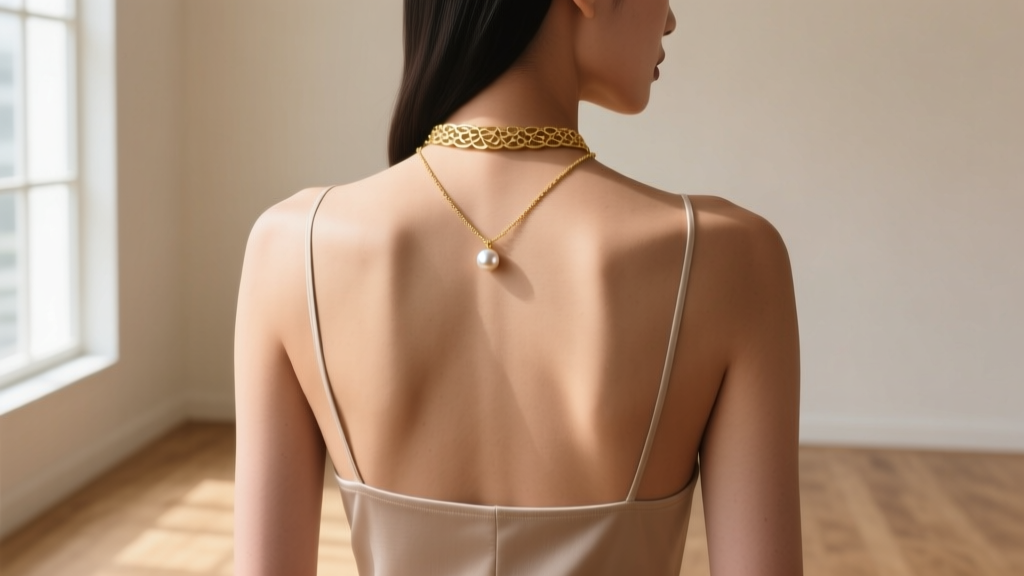
One of the most significant jewelry trends of 2026 is the mainstream adoption of the dos à dos necklace, colloquially known as the backlace. Because halter tops frequently feature dramatic open backs—ranging from deep scoops to completely bare silhouettes—they provide the perfect canvas for reverse-layering.
The Anatomy of a Halter-Friendly Backlace
A true backlace is engineered differently than a standard necklace worn backward. The clasp is replaced with a decorative element, or the chain is designed as a continuous lariat. When pairing a backlace with a halter top, opt for a 14-inch to 16-inch length with a 3-inch to 5-inch drop chain. This ensures the decorative pendant rests perfectly between the shoulder blades, completely avoiding the halter's neck tie. For silk or satin halter tops, a 1.2mm box chain in solid 14k gold provides enough weight to drape against the skin without sliding around the torso.
Front-Facing Solutions: Lengths, Weights, and Materials
If you prefer to keep your jewelry in the front, you must bypass the halter's neckband entirely. This requires utilizing longer chain lengths that drape over the bodice of the top, creating a vertical line that elongates the torso. The Y-necklace (or lariat) has emerged as the definitive front-facing solution for high-neck halters in 2026.
| Chain Length | Style Name | Halter Compatibility | Best Use Case |
|---|---|---|---|
| 14" - 16" | Choker / Collar | Poor (Clashes with neckband) | Bare-back halters (worn backwards as a backlace) |
| 18" - 20" | Princess | Poor to Fair | Deep-V halters only; avoid with high-neck knits |
| 24" - 28" | Matinee | Excellent | Draping over high-neck ribbed knit halters |
| 30" - 34" | Opera / Lariat | Excellent | Creating a vertical line over silk or satin halter tops |
The Lariat Advantage
A 30-inch lariat necklace with a 4-inch Y-drop is the ultimate cheat code for styling a halter top with necklace accessories. Because there is no back clasp to tangle in the halter's neck tie, the chain slips effortlessly over the head. The Y-drop rests flat against the sternum, anchoring the piece and preventing it from swinging awkwardly when you move.
Material Grades for Summer and Festival Wear
Halter tops are predominantly worn in high-heat environments: summer festivals, beach clubs, and outdoor events. This introduces the element of sweat, which is highly corrosive to certain jewelry metals. According to the Federal Trade Commission's Jewelry Guides, terms like 'gold plated' and 'gold vermeil' have strict definitions, but consumers often misunderstand their durability in high-sweat scenarios.
"When wearing jewelry over bare skin in a halter top during summer months, avoid brass or copper bases. The chloride in human sweat will rapidly degrade sub-micron gold plating, leading to irreversible tarnishing and potential skin discoloration."
For halter-top pairings, restrict your choices to the following material grades:
- Solid 14k or 18k Gold: As noted by the Gemological Institute of America (GIA), 14k gold offers the ideal balance of purity and alloy strength (usually mixed with silver or zinc) to withstand the friction of a halter neckline without bending.
- 316L Surgical Stainless Steel: Highly resistant to chloride corrosion. A 1.5mm 316L steel cable chain is virtually indestructible and perfect for casual cotton halter tops.
- Grade 23 Titanium (Ti-6Al-4V):strong> For heavy, oversized pendant necklaces worn over lightweight silk halters, titanium provides the necessary structural integrity while remaining light enough not to pull and distort the delicate fabric of the top.
The Choker-Halter Hybrid: When the Necklace Is the Top
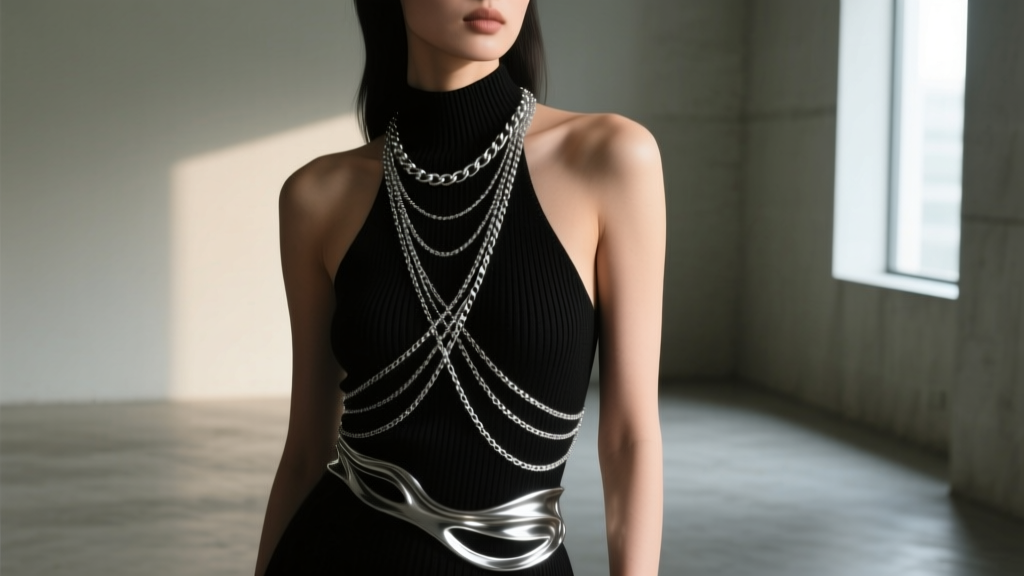
Another major 2026 trend blurring the line between apparel and adornment is the integrated choker-halter. Designers are increasingly releasing halter tops where the neckband is constructed entirely of jewelry-grade hardware—think thick, 5mm Cuban link chains or multi-strand pearl collars that serve as the structural anchor for the garment. When wearing a hybrid piece, the golden rule is zero additional necklaces. Instead, shift your jewelry focus to the torso. Layering a multi-strand silver body chain over the ribcage complements the heavy metal of the halter neckband without overcrowding the cervical area.
Expert Troubleshooting: Snagging, Sweating, and Clasp Failure
Even with the correct length and material, the physical interaction between metal and fabric can cause frustrating issues. Here is how to troubleshoot the most common problems when styling a halter top with necklace pieces:
1. The Snagging Epidemic in Ribbed Knits
Snake chains and rope chains feature micro-gaps and textured surfaces that act like velcro against ribbed knit halter tops. A single afternoon of wear can pull dozens of threads from your garment. The Fix: Exclusively use flat-profile chains, such as box chains, herringbone, or flat cable chains. Their smooth, flush surfaces glide over knitwear without catching.
2. Clasp Entanglement in Halter Ties
If your halter top ties at the nape of the neck, the tassels or strings will inevitably wrap around the lobster clasp of a long necklace, causing knots and stressing the metal jump ring. The Fix: Swap standard lobster clasps for magnetic neodymium tube clasps. Not only do they eliminate the mechanical snag point, but they also allow you to remove the necklace without having to untangle it from the halter's neck strings.
3. Fabric Distortion from Heavy Pendants
Draping a heavy 50-gram pendant over a delicate chiffon halter top will pull the neckline downward, distorting the garment's fit and potentially tearing the fabric. The Fix: Adhere to a strict weight-to-fabric ratio. For sheer or silk halters, keep the total necklace weight under 15 grams. For structured cotton or leather halters, you can safely scale up to 40 grams.
Final Verdict: Redefining the Neckline
Styling a halter top with necklace accessories in 2026 is no longer about compromise; it is about architectural innovation. By abandoning the traditional 18-inch princess chain and embracing 30-inch lariats, reverse-draped backlaces, and sweat-resistant 316L steel or solid 14k gold, you can transform a challenging neckline into a masterclass of modern layering. The key lies in respecting the garment's structure, choosing the correct chain profile to prevent snagging, and allowing the jewelry to trace the body's natural lines rather than fighting the fabric for dominance.


