Styling The Zara Green Necklace: 2026 Trend Analysis
Discover how to style the viral Zara green necklace in 2026. We analyze its materials, trend origins, and how to layer this verdant statement piece.

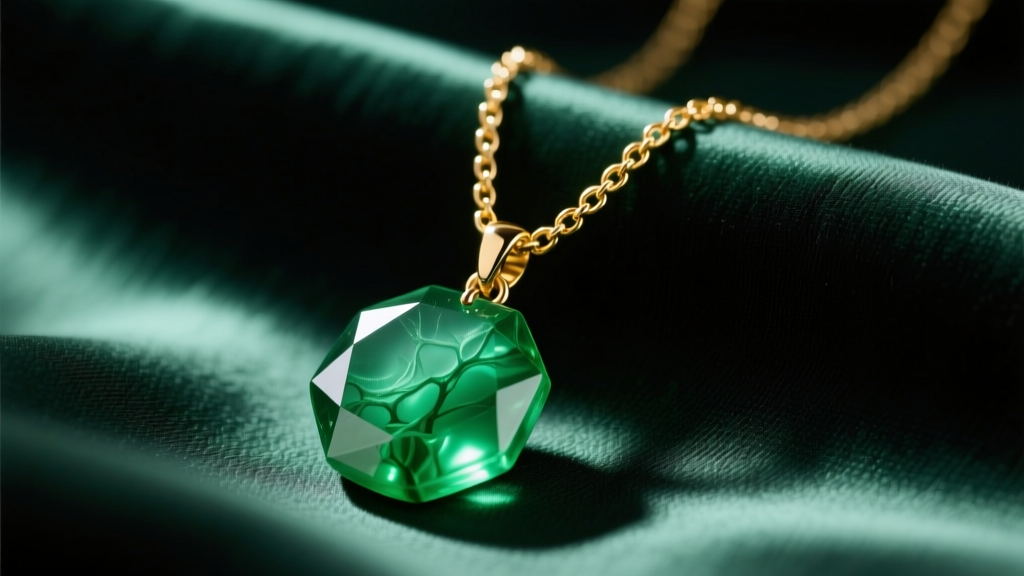
The viral explosion of the Zara green necklace across social media platforms in early 2026 has cemented verdant, botanical-inspired jewelry as a dominant force in fast-fashion accessories. But beyond the aesthetic appeal and the accessible price point, what exactly are you wearing when you clasp that chunky, gold-tone chain and vibrant green pendant around your neck? As jewelry analysts, we look past the marketing to examine the metallurgy, the trend forecasting, and the practical styling mechanics that make this specific piece a wardrobe staple for the year.
In this comprehensive style and trend analysis, we deconstruct the anatomy of the Zara green necklace, explore why deep greens are overtaking traditional neutrals in 2026, and provide actionable, expert-level advice on how to layer, style, and maintain your fashion jewelry to prevent premature tarnishing.
The Anatomy of the Zara Green Necklace: Materials and Manufacturing
To understand how a piece of jewelry will wear over time, you must first understand its core composition. The vast majority of Zara’s statement necklaces, including their viral green pendant and enamel chain styles, are not crafted from solid brass or stainless steel. Instead, they rely on Zamak, a zinc-based alloy.
Zamak Alloy and Flash Plating
Zamak (an acronym for Zink, Aluminium, Magnnesium, and Kupfer/Copper) is the industry standard for fast-fashion jewelry casting. It offers high fluidity, allowing for intricate, heavy-looking molds at a fraction of the cost of brass. However, Zamak is inherently dull and prone to oxidation. To achieve the luxurious gold-tone finish, manufacturers use a process called flash plating or electroplating, depositing an ultra-thin layer of brass or gold-tone alloy—typically measuring less than 0.5 microns—over the base metal.
The "Green" Element: Resin vs. Enamel
The striking green focal point of the necklace is rarely actual gemstone. While high-end jewelry might use genuine malachite or chrysoprase, Zara utilizes either cold enamel (an epoxy-based resin that air-dries) or acrylic resin poured into metal bezels. Epoxy resin is favored in 2026 manufacturing because it can mimic the deep, translucent, and slightly marbled visual depth of polished malachite without the weight, cost, or fragility of natural stone.
The 2026 Verdant Trend: Why Green is the New Neutral
Why has the Zara green necklace resonated so deeply with consumers this year? The answer lies in the broader macro-trends of 2026 fashion, which have pivoted heavily toward "Neo-Vintage Botanical" and "Dark Academia" aesthetics. Deep, saturated greens—specifically emerald, forest, and malachite hues—offer a psychological grounding effect that contrasts with the hyper-digital, neon-heavy trends of the early 2020s.
The resurgence of verdant tones in 2026 is less about literal nature and more about the psychological grounding that deep, saturated greens provide. A green pendant acts as an anchor piece, bringing a vintage, heirloom-like gravity to even the most modern, minimalist silhouettes.
— Jewel Style Radar Trend Forecast, Q1 2026
Historically, green jewelry has signified vitality and renewal. According to the Victoria and Albert Museum Jewelry Archives, the Victorian era saw a massive spike in green enamel and malachite jewelry as a symbol of enduring life. The 2026 Zara green necklace is a direct, democratized descendant of this historical lineage, repackaged for the modern layering enthusiast.
Material Reality Check: Fast Fashion vs. Demi-Fine vs. Fine
When evaluating the Zara green necklace as an investment in your personal style, it is crucial to compare it against other market tiers. Below is a structural breakdown of what you get at different price points for green statement jewelry.
| Attribute | Zara (Fast Fashion) | Demi-Fine (e.g., Mejuri, Hey Harper) | Fine Jewelry (Boutique/Designer) |
|---|---|---|---|
| Base Metal | Zamak (Zinc Alloy) | Sterling Silver or Solid Brass | Solid 14k or 18k Gold |
| Plating | Flash plated (<0.5 microns) | Heavy Vermeil (2.5+ microns) | N/A (Solid throughout) |
| Green Material | Epoxy Resin / Acrylic | Cubic Zirconia / Enamel | Natural Malachite / Emerald |
| Price Range | $19 - $35 | $85 - $180 | $800 - $3,500+ |
| Lifespan | 1-2 Seasons (with care) | 3-5 Years | Generational / Heirloom |
Takeaway: The Zara green necklace is an exceptional tool for trend-testing. It allows you to participate in the 2026 verdant trend and experiment with scale and layering without committing to the high capital expenditure of fine malachite jewelry.
Strategic Layering: Neckline and Gauge Pairings
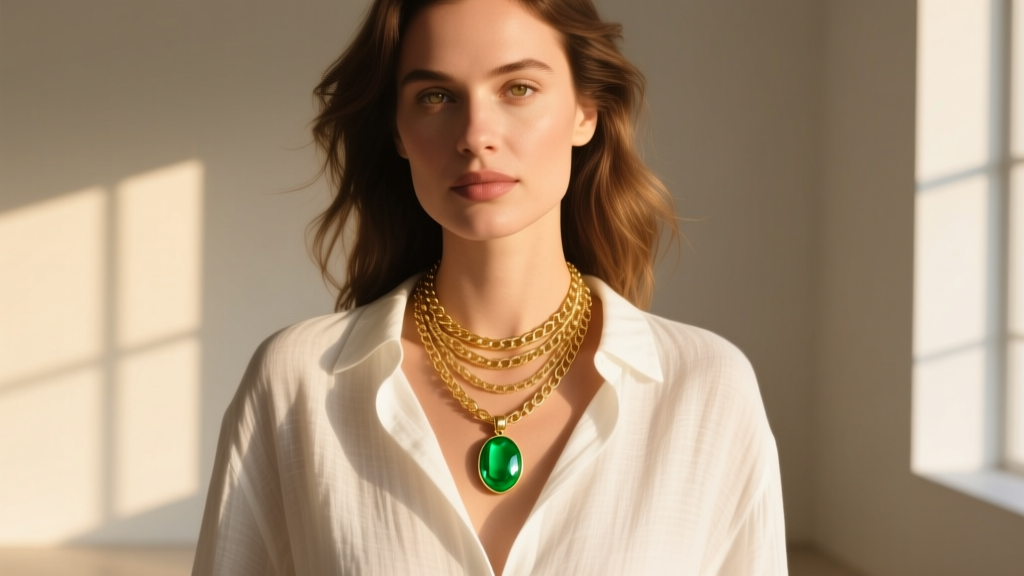
A statement pendant or chunky enameled chain can easily overwhelm an outfit if not scaled correctly. The key to styling the Zara green necklace in 2026 is mastering the Cascade Layering Method, which relies on varying chain gauges and precise length drops.
The Cascade Method
- Layer 1 (The Anchor): Start with a delicate 16-inch chain (1.0mm to 1.2mm gauge) in a matching gold tone. A simple snake chain or cable chain works best. This draws the eye to the collarbone.
- Layer 2 (The Zara Piece): The Zara green necklace typically sits at 18 to 20 inches. Let this be the visual heavyweight. The chunky links or bold resin pendant will naturally rest in the hollow of the throat or upper chest.
- Layer 3 (The Extension): Add a 24-inch textured chain (like a 3.0mm paperclip or rope chain) without a pendant. This elongates the torso and frames the green centerpiece without competing with it.
Neckline Pairings
The vibrant green hue demands contrast. Avoid busy floral prints or clashing jewel tones. Instead, pair the necklace with:
- Crisp White Poplin or Linen: The high contrast makes the green epoxy/resin look incredibly rich and gem-like.
- Black Turtlenecks (Winter): A 20-inch Zara green pendant over a tight black merino turtleneck creates a striking, neo-vintage silhouette reminiscent of 1970s Yves Saint Laurent.
- Deep V-Necks: Ensure the pendant sits exactly one inch above the fabric's hemline to maintain a clean visual triangle.
Combating the "Green Skin" Effect: Care and Maintenance
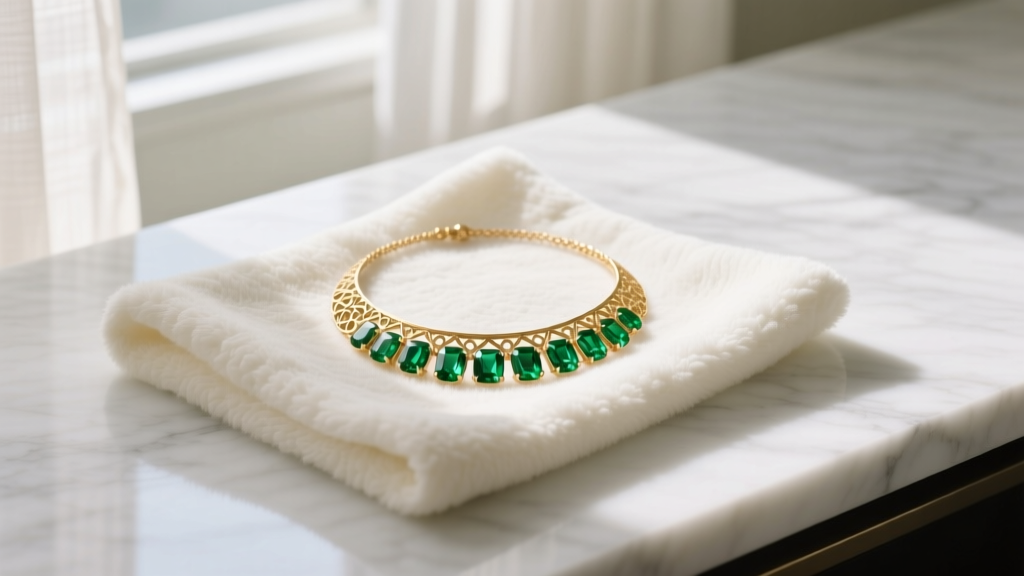
The most common complaint regarding fast-fashion jewelry is the dreaded galvanic reaction that leaves a green ring on the skin. This is not a sign of toxicity; it is simple chemistry. The copper within the Zamak alloy reacts with the lactic acid, urea, and salts in your sweat (which typically has a pH between 4.5 and 5.5), creating copper chloride—a green compound that transfers to the skin.
Expert Prevention Tactics
To extend the life of your Zara green necklace and protect your skin, implement these specific maintenance protocols:
- The Barrier Method: Before wearing the piece for the first time, paint the back of the pendant and the inner links of the chain with a thin coat of clear, fast-drying nail polish or a specialized jewelry sealant like Jewelry Shield. Reapply every 4-6 wears.
- Moisture Avoidance: Never wear epoxy-resin fashion jewelry in the shower or pool. Chlorine and hot water will accelerate the degradation of the flash plating, exposing the reactive Zamak base much faster.
- Proper Storage: Store the necklace in a sealed anti-tarnish ziplock bag with a silica gel packet. Humidity is the primary catalyst for zinc alloy oxidation.
- Cleaning: Wipe the piece down with a dry, lint-free microfiber cloth after every wear to remove skin oils. Never use liquid silver dips or ultrasonic cleaners, as these will strip the gold-tone plating and cloud the epoxy resin.
The Verdict: Is the Zara Green Necklace Worth It?
From a purely metallurgical standpoint, the Zara green necklace is a transient accessory. It is not an heirloom, and it will not survive years of daily, careless wear. However, from a style and trend analysis perspective, it is an absolute triumph for 2026. It perfectly captures the current cultural zeitgeist of botanical grounding and vintage revival, offering consumers a highly accessible entry point into statement styling. By understanding its material limitations and employing strategic layering and barrier-care techniques, you can maximize the lifespan and visual impact of this viral verdant piece.


