Custom ID Necklace Buying Guide: Metals, Chains & Engraving
Discover what to look for in a custom ID necklace. Compare metal grades, engraving techniques, and chain styles to find a piece that lasts a lifetime.

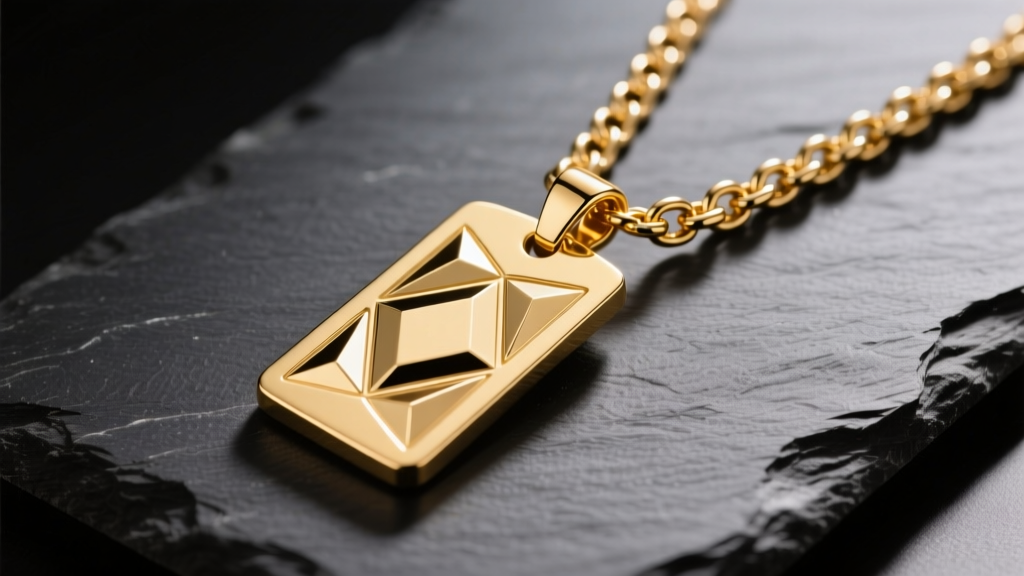
The custom ID necklace has evolved far beyond its utilitarian military and medical roots. Today, it is a staple of personalized jewelry, bridging the gap between sentimental heirloom and everyday minimalist fashion. However, the market is flooded with flimsy, mass-produced options that bend, tarnish, and lose their engravings within months. Whether you are shopping for a modern minimalist tag or a vintage-inspired curb chain with a heavy plate, understanding the structural nuances of this jewelry style is critical.
This comprehensive buying guide breaks down the exact specifications, material grades, and engraving techniques you need to evaluate before investing in a high-quality ID necklace in 2026 and beyond.
The Anatomy of a High-Quality ID Necklace
A well-constructed ID necklace relies on three structural pillars: the plate, the chain, and the clasp. The most common failure point in lower-tier necklaces is the plate thickness. Many fast-fashion retailers use 20-gauge (0.8mm) metal sheets for their ID tags. While lightweight, 20-gauge plates are highly susceptible to warping from accidental impacts or even the tension of a snagged chain.
For a piece meant to be worn daily, look for a plate thickness between 14-gauge (1.5mm) and 16-gauge (1.2mm). This weight provides a premium, substantial drape against the chest and ensures the metal will not bend during engraving or daily wear. Additionally, the jump rings connecting the plate to the chain should be soldered closed or constructed from heavy-gauge wire to prevent the tag from sliding off and getting lost.
Metal Alloys Decoded: What Actually Lasts?
The longevity of your ID necklace is entirely dependent on the base metal and its alloy composition. According to the Gemological Institute of America (GIA), understanding gold purity and alloy mixes is essential for predicting how a piece will react to skin acids and environmental moisture.
| Metal Type | Composition & Traits | Tarnish Risk | Price Tier |
|---|---|---|---|
| 316L Stainless Steel | Iron alloy with chromium & molybdenum. Hypoallergenic and highly scratch-resistant. | Very Low | $ |
| 925 Sterling Silver | 92.5% pure silver, 7.5% copper. Classic bright white luster but requires maintenance. | High | $$ |
| 14k Solid Gold | 58.3% pure gold alloyed with copper, silver, or zinc. The ultimate balance of durability and value. | None | $$$ |
| Gold Vermeil | Sterling silver base plated with at least 2.5 microns of 10k+ gold. Better than standard plating. | Moderate | $$ |
Expert Warning: Avoid standard 'gold-plated' brass or copper ID necklaces for daily wear. The base metals often contain nickel or lead, which can cause severe contact dermatitis. Furthermore, the Federal Trade Commission (FTC) Jewelry Guides strictly regulate gold plating terminology; if a piece is simply labeled 'gold tone' or 'gold plated' without specifying the micron thickness or karat, the gold layer is likely less than 0.5 microns and will rub off within weeks of friction against clothing.
Engraving Techniques: Laser vs. Diamond Drag vs. Hand
The method used to carve your initials, dates, or fingerprints into the ID plate dictates how legible the necklace will be in a decade.
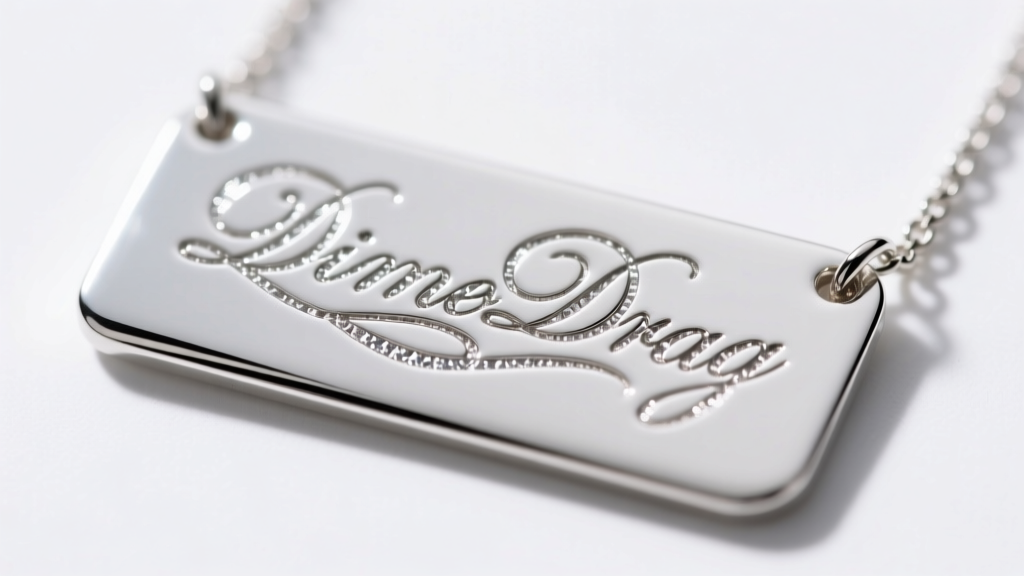
1. Laser Engraving
Laser engraving uses concentrated light to burn the surface of the metal. It is highly precise, allowing for complex fonts, tiny fingerprints, and even photographic halftones. However, laser engraving is inherently shallow. On gold and silver, the burned area often turns dark or black. Over years of friction, this shallow oxidation can polish away, leaving the engraving looking faded and illegible.
2. Diamond Drag (Rotary) Engraving
This computerized method uses a hardened diamond-tipped bit to physically carve into the metal. It removes material rather than burning it, resulting in deep, crisp lines that reflect light beautifully. Diamond drag is the industry standard for high-quality ID bracelets and necklaces because the depth ensures the text will never rub off, even if the plate is heavily polished over the years.
3. Hand Engraving (Bright Cut)
Performed by a master artisan using a pneumatic graver, hand engraving creates V-shaped trenches with mirrored walls that catch the light brilliantly. It is the most expensive option and is typically reserved for heirloom pieces. The slight organic imperfections in the cuts give the ID tag a bespoke, vintage character that machines cannot replicate.
Chain Styles and Clasp Mechanics
An ID plate is only as secure as the chain it hangs from. The weight of a solid 14-gauge plate requires a chain with high tensile strength and secure solder points.
- Curb Chains: The traditional choice for ID jewelry. The interlocking, flattened links lay flush against the skin, preventing the chain from twisting and ensuring the ID plate always faces forward. Look for curb chains that are at least 2.5mm to 3.5mm wide to support a heavy tag.
- Figaro Chains: A variation of the curb chain featuring a pattern of three short links followed by one long link. It adds visual texture and pairs exceptionally well with rectangular, vintage-style ID plates.
- Box Chains: While popular for pendants, box chains are notoriously fragile at the solder points. If you prefer the geometric look of a box chain, avoid anything thinner than 2.0mm, as the square links can easily kink and snap under the pendulum weight of an ID tag.
Clasp Specifics: Never buy a heavy ID necklace with a spring-ring clasp. The internal spring mechanism is prone to failure, and the thin wire loop can easily bend open. Insist on a solid lobster clasp with a heavy-duty jump ring, or a toggle clasp if the chain is thick enough to support the tension.
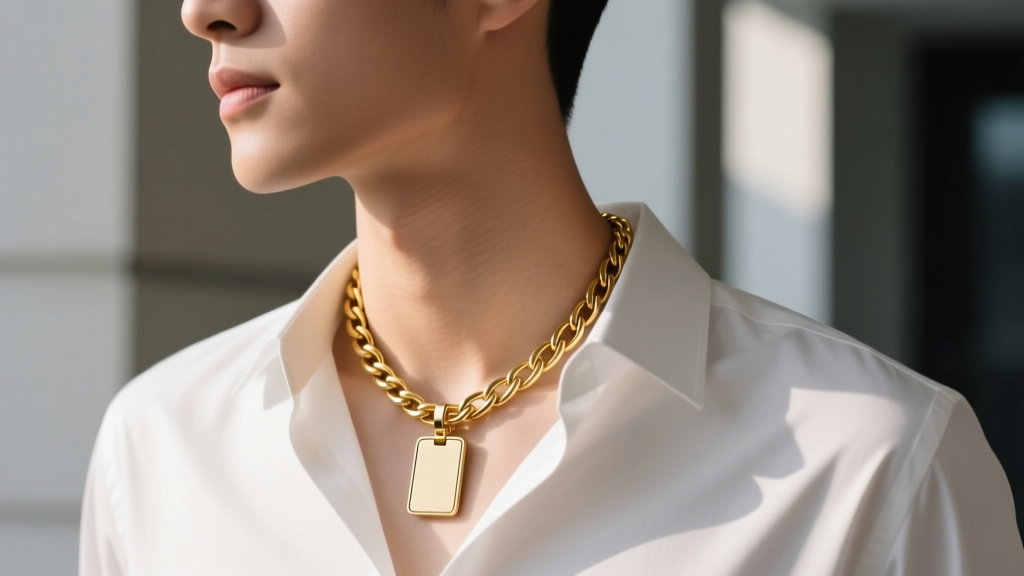
Sizing and Proportion Framework
Choosing the right chain length and plate size is crucial for achieving the desired aesthetic. A massive plate on a delicate chain looks unbalanced, while a tiny tag on a thick chain gets lost visually.
The Proportion Matrix
- Choker / Collar (14-16 inches): Best suited for small, discreet oval or circular tags (approx. 15mm x 10mm). Ideal for a subtle, layered look.
- Princess Length (18 inches): The universal standard. The pendant rests perfectly on the collarbone. Pairs best with medium rectangular plates (approx. 25mm x 15mm) or standard oval tags.
- Matinee Length (20-24 inches): Rests on the upper chest. Requires a larger, bolder plate (30mm x 20mm or larger) to maintain visual weight and prevent the necklace from looking like a thin string.
Care and Maintenance for Engraved Plates
To maintain the legibility and shine of your ID necklace, proper maintenance is required, especially for sterling silver and diamond-drag engravings. Avoid ultrasonic cleaners, as the high-frequency vibrations can sometimes stress the solder points on the chain links and jump rings.
Instead, clean your ID necklace using a soft-bristled baby toothbrush, warm water, and a few drops of mild dish soap. Gently brush inside the engraved grooves to remove accumulated skin oils, lotions, and dust that can dull the contrast of the text. For sterling silver pieces, use a treated silver polishing cloth on the flat surfaces, but avoid rubbing aggressively directly over the engraved text, as this can slowly wear down the sharp edges of the cut over decades of use.
By prioritizing plate gauge, solid metal alloys, and deep physical engraving, your custom ID necklace will transition from a simple accessory to a durable, lifelong personal artifact.


