Expert Care and Cleaning Tips for an Esmeralda Necklace
Learn expert care, cleaning, and storage tips to protect your esmeralda necklace from damage, preserve oil treatments, and maintain its vivid green hue.

The Unique Mineralogy and Vulnerability of the Esmeralda Necklace
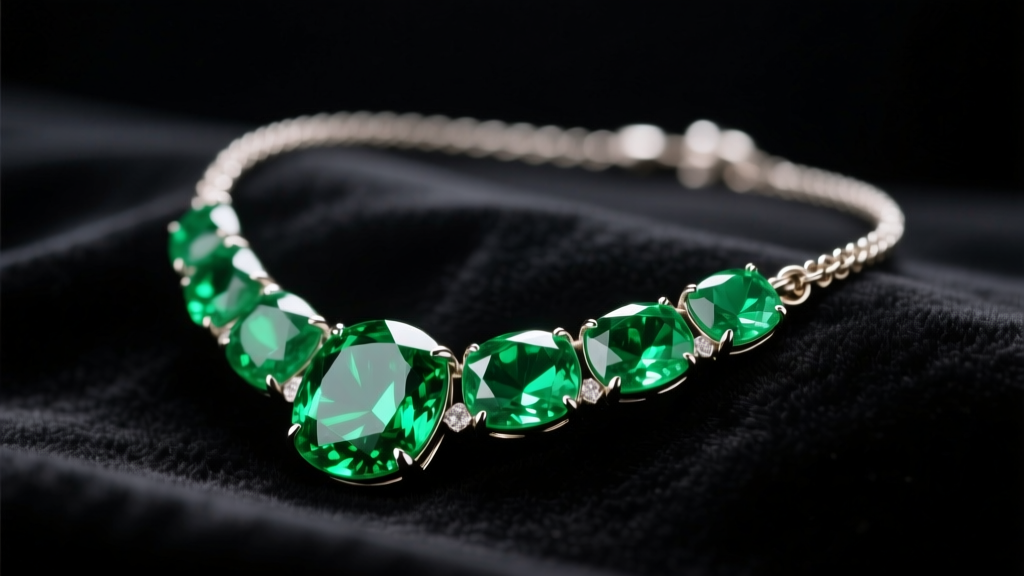
An esmeralda necklace (the romantic and historical term for an emerald necklace) is one of the most breathtaking additions to any fine jewelry collection. Prized for its lush, verdant hue caused by trace amounts of chromium and vanadium, the esmeralda is a variety of the mineral beryl. However, owning this magnificent gemstone requires a deep understanding of its physical properties. While beryl registers a respectable 7.5 to 8 on the Mohs scale of hardness, its toughness—the ability to resist breaking and chipping—is notoriously poor.
This inherent fragility is due to the "jardin" (French for garden), the natural network of internal fractures and inclusions that give each stone its unique fingerprint. To improve clarity and stability, the vast majority of esmeraldas on the market are fracture-filled. According to the Gemological Institute of America (GIA), traditional treatments involve soaking the stones in colorless cedar oil, while modern lapidaries may use synthetic resins like Opticon 1016. Understanding this treatment is the absolute foundation of proper esmeralda necklace care, as the wrong cleaning method can destroy the stone's structural integrity and optical brilliance.
The Three Enemies of Fracture-Filled Emeralds
Before reaching for any cleaning supplies, you must understand what will permanently ruin your jewelry. The following three cleaning methods are strictly prohibited for any esmeralda necklace:
- Ultrasonic Cleaners: The high-frequency vibrations used to shake dirt loose from diamond settings will easily shatter the delicate jardin of an esmeralda, causing the stone to crack or crumble entirely.
- Steam Cleaners: Heat is the enemy of fracture fillers. Steam will melt or boil out traditional cedar oil and can cause synthetic resins to expand, cloud, or leak out of the surface-reaching fractures.
- Harsh Chemicals: Solvents like acetone, alcohol, bleach, or commercial jewelry dips will strip the oils from the stone, leaving the internal fractures exposed, dry, and highly visible as white, cloudy lines.
"Never subject an esmeralda necklace to sudden temperature changes or ultrasonic vibrations. The internal stress points within the jardin make it highly susceptible to catastrophic failure under mechanical strain." — American Gem Society Laboratories
The Step-by-Step Safe Cleaning Routine
To safely remove daily accumulations of sebum, dead skin cells, and cosmetic residue from your esmeralda necklace, you must use a gentle, manual cleaning process. Follow this precise protocol to ensure the safety of both the beryl and the precious metal setting.
1. Preparation and Solution Mixing
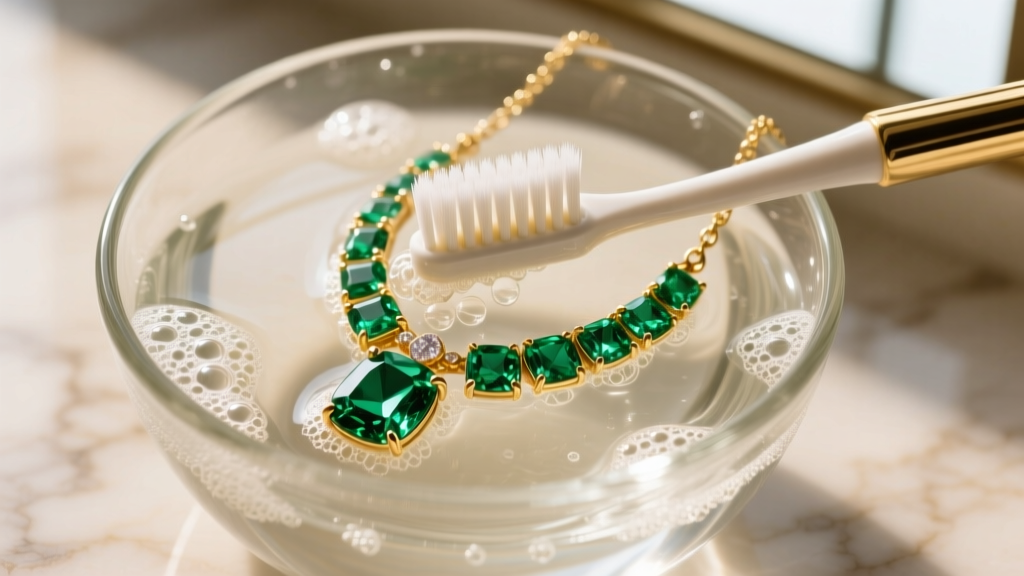
Always plug your sink drain or work over a rubber mat to prevent accidental loss. In a clean glass bowl, mix one cup of distilled water (tap water contains minerals that can leave microscopic hard-water spots on the gold and gemstone) with two drops of a pH-neutral, dye-free dish soap. Avoid soaps with added moisturizers or citrus degreasers, as these can interact with the cedar oil.
2. The Brief Soak
Submerge the esmeralda necklace in the lukewarm solution for no more than three to five minutes. Prolonged soaking, even in mild soap, can slowly begin to degrade the surface tension of older oil treatments. The goal is simply to soften surface oils and lotions.
3. Gentle Agitation
Using an extra-soft baby toothbrush (never a standard adult toothbrush, as the bristles are too stiff and can scratch the gold setting or abrade the gemstone's table), gently sweep the bristles across the back of the pendant and the chain links. Focus on the pavilion (the underside of the stone) where grease accumulates and blocks light return. Do not scrub the crown (top) of the esmeralda aggressively.
4. Rinsing and Drying
Rinse the necklace briefly under a gentle stream of lukewarm distilled water. Pat the metal chain dry with a clean, lint-free microfiber cloth. Allow the pendant to air dry completely on a soft towel before storing it, ensuring no moisture is trapped in the prong settings.
Esmeralda Necklace Maintenance Schedule
Consistency is key to preserving the optical clarity and physical safety of your jewelry. Use the following framework to maintain your piece:
| Frequency | Action Required | Tools Needed |
|---|---|---|
| Daily | Wipe down after wear to remove skin oils and perfumes. | Dry, clean microfiber cloth. |
| Monthly | Light manual cleaning of the chain and setting. | Distilled water, pH-neutral soap, baby toothbrush. |
| Annually | Professional inspection of prongs, clasps, and stone security. | Jeweler's loupe, professional gemologist assessment. |
| As Needed (3-5 Yrs) | Professional re-oiling if internal fractures turn white/cloudy. | Specialized lapidary vacuum chamber and cedar oil. |
Strategic Storage and Wear Protocols
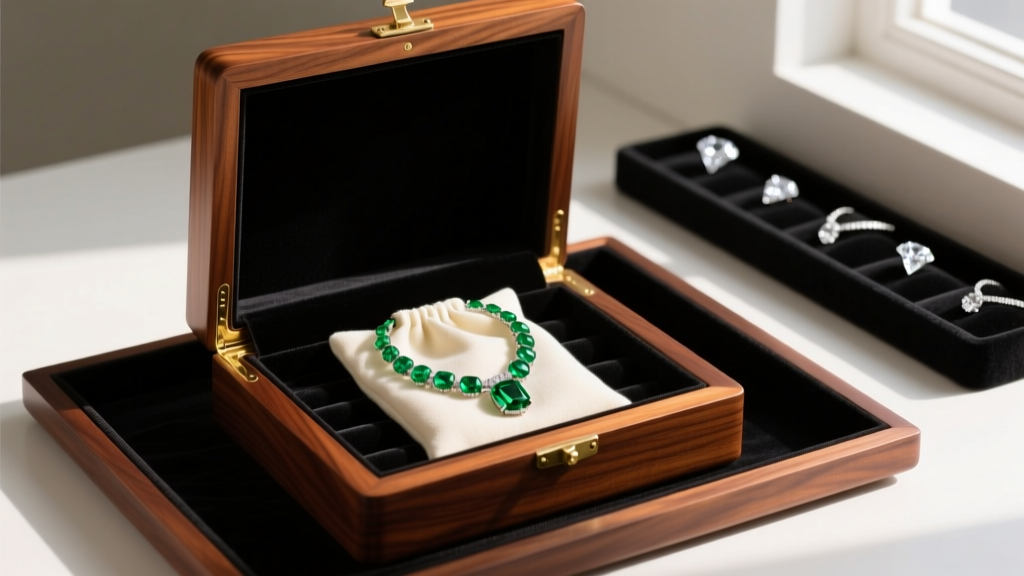
How you wear and store your esmeralda necklace is just as critical as how you clean it. Because beryl is softer than diamond, sapphire, and topaz, it must be stored in complete isolation. If tossed into a communal jewelry box, the harder gemstones will easily scratch the surface of the esmeralda or gouge the precious metal setting.
Always store the necklace in a dedicated, fabric-lined compartment or a soft microfiber pouch. When getting dressed, adhere to the golden rule of fine jewelry: Last On, First Off. Your esmeralda necklace should be the very last item you put on after applying hairspray, perfume, lotions, and makeup. It should be the first item you take off when you return home, before washing your hands or applying evening skincare products. The alcohol and volatile organic compounds (VOCs) in cosmetics and fragrances are highly effective solvents that will strip the fracture-filling oils from your stone over time.
Protecting the Setting
Whether your necklace features a classic bezel, a delicate claw prong, or a modern tension setting, the physical impacts of daily life pose a severe threat. Remove your esmeralda necklace before engaging in household chores, exercising, or gardening. A single sharp knock against a granite countertop or a metal dumbbell can cause a catastrophic fracture along the stone's natural cleavage planes.
When to Seek Professional Re-Oiling
Even with meticulous care, traditional cedar oil treatments are not permanent. Over years of wear, the oil can naturally dry out, evaporate, or be slowly depleted by environmental factors. You will know your esmeralda necklace requires professional re-oiling when the vibrant green hue begins to look slightly dull, or when the internal jardin fractures become highly visible, appearing as stark white or cloudy lines inside the stone.
Do not attempt to oil the stone yourself at home with store-bought oils, as these can contain impurities, acids, or dyes that will permanently ruin the gem. Instead, take the necklace to a certified gemologist or a master lapidary. They will safely clean the stone in a controlled environment, place it in a vacuum chamber to extract air from the microscopic fractures, and introduce high-grade, colorless optical resins or pure cedar oil under specific temperature and pressure conditions to restore the stone's original brilliance and structural stability.


