Sun And Moon Friendship Necklace: Metal Comparison
Compare metals for your sun and moon friendship necklace. Discover which materials resist tarnish, prevent allergies, and last a lifetime.

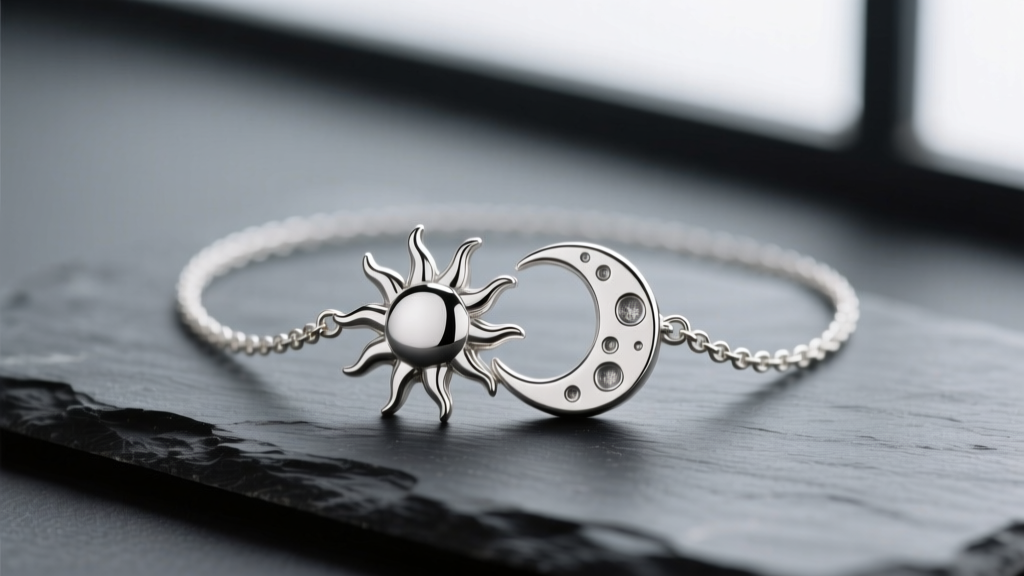
The Anatomy of a Sun and Moon Pendant
When selecting a sun and moon friendship necklace, the sentimental value of the interlocking design is only half the equation. The metallurgical properties of the pendants and chains dictate whether this token of friendship will survive daily wear or degrade into a tarnished, broken memory within months. Because sun and moon pendants are designed to fit together like puzzle pieces, the friction between the sun's rays and the moon's crescent creates unique wear patterns that demand specific material considerations.
Unlike standard solitary pendants, interlocking friendship necklaces experience constant micro-abrasions when worn together or when repeatedly assembled and disassembled. This mechanical stress, combined with environmental exposure, means that the base metal, plating thickness, and alloy composition are critical factors. According to the Gemological Institute of America (GIA), understanding the difference between pure elemental metals and their jewelry-grade alloys is the first step in predicting a piece's longevity.
Material Breakdown: What to Look For
Sterling Silver (925)
Sterling silver is the most traditional choice for friendship jewelry. By definition, it contains 92.5% pure silver and 7.5% alloy metals, usually copper. While pure silver is too soft to hold the intricate detailing of a sun's rays or a moon's craters, the copper addition provides necessary structural integrity. However, copper is highly reactive to sulfur and moisture, leading to silver sulfide formation—commonly known as tarnish. If you choose sterling silver, look for pieces that feature a rhodium flash plating. Rhodium is a platinum-group metal that provides a brilliant, tarnish-resistant barrier, though it will eventually wear away at high-friction contact points.
Surgical Stainless Steel (316L)
For a budget-friendly, highly durable option, 316L surgical stainless steel is exceptional. Unlike standard 304 stainless steel, 316L contains molybdenum, which drastically increases its resistance to chloride corrosion (such as sweat and ocean water). It is entirely nickel-free in its finalized jewelry state, making it hypoallergenic. The primary drawback is its hardness; if a jump ring breaks or a chain snaps, standard jewelers often lack the laser welding equipment required to repair steel, meaning the chain may need total replacement.
Gold Vermeil vs. Standard Gold Plated
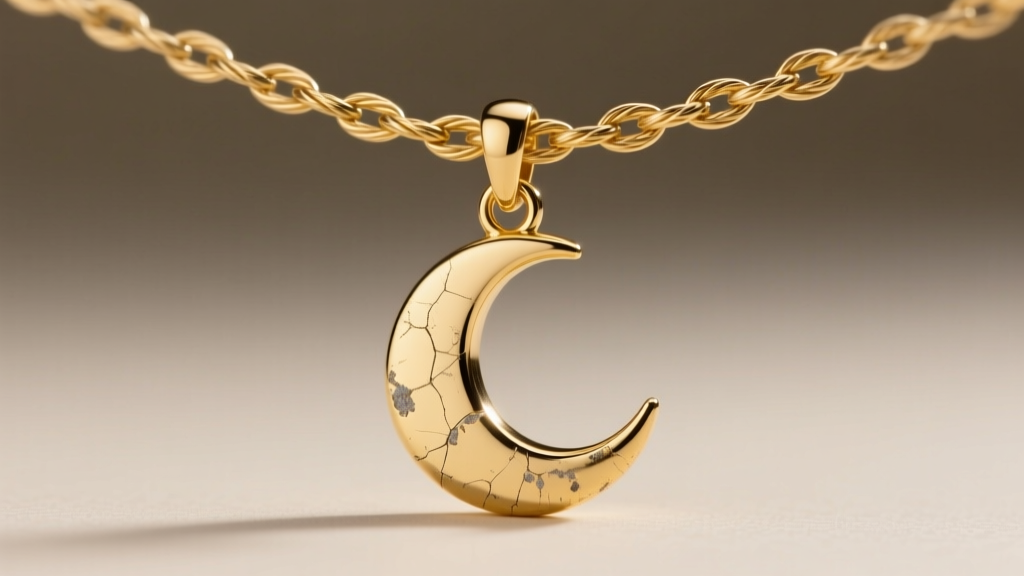
The market is flooded with gold-toned sun and moon necklaces, but the terminology matters. Standard gold plating can be as thin as 0.1 microns and is often applied over cheap brass bases. As the interlocking pendants rub together, this microscopic layer will vanish in weeks, exposing the brass and turning the wearer's skin green. Gold vermeil, regulated by the Federal Trade Commission (FTC), must feature a sterling silver base with a gold layer of at least 2.5 microns thick. While vermeil is vastly superior to standard plating, the friction of interlocking puzzle pieces will still eventually wear through the gold layer at the connection points.
Solid Gold (10k vs. 14k)
For a permanent friendship token, solid gold is the ultimate investment. 10k gold (41.7% pure gold) offers the highest scratch resistance among gold alloys, making it ideal for the abrasive nature of interlocking pendants. 14k gold (58.3% pure gold) provides a richer yellow hue and better hypoallergenic properties but is slightly softer. Solid gold will not tarnish, flake, or cause galvanic reactions, ensuring the necklace can eventually be passed down as an heirloom.
Comparative Data: Tarnish, Allergies, and Cost
Use this matrix to align your material choice with your budget and lifestyle requirements.
| Material | Tarnish Resistance | Hypoallergenic | Avg. Price Range | Best For |
|---|---|---|---|---|
| 316L Stainless Steel | Excellent | Yes | $15 - $45 | Daily wear, swimming, low budget |
| 925 Sterling Silver | Moderate (High if Rhodium) | Mostly | $40 - $120 | Traditional gifting, easy repairs |
| Gold Vermeil (2.5µm) | Good (Until wear) | Yes | $60 - $150 | Gold aesthetics on a mid-budget |
| Solid 14k Gold | Excellent | Yes | $250 - $600+ | Lifetime wear, heirloom quality |
Failure Modes: Why Interlocking Necklaces Break
Understanding how sun and moon necklaces fail allows you to inspect them properly before purchasing. The most common point of failure is not the pendant itself, but the hardware connecting it to the chain.
- Friction Wear at the Bail: The bail (the loop the chain passes through) on the moon pendant often bears the brunt of the weight. If the bail is made of soft, plated brass, the chain will act like a saw, eventually cutting through the metal.
- Unsoldered Jump Rings: The jump ring connecting the sun pendant to the chain is frequently left unsoldered in mass-produced jewelry. A slight snag on a sweater can pull the ring open, dropping the pendant. Always check if the jump ring is seamlessly welded or soldered shut.
- Galvanic Corrosion: Mixing metals is a critical error. If you pair a brass sun and moon pendant with a sterling silver chain, the introduction of sweat (an electrolyte) creates a galvanic cell. The less noble metal (brass/zinc) will rapidly corrode and degrade. Always match your chain metal to your pendant base metal.
Care Protocols by Metal Type
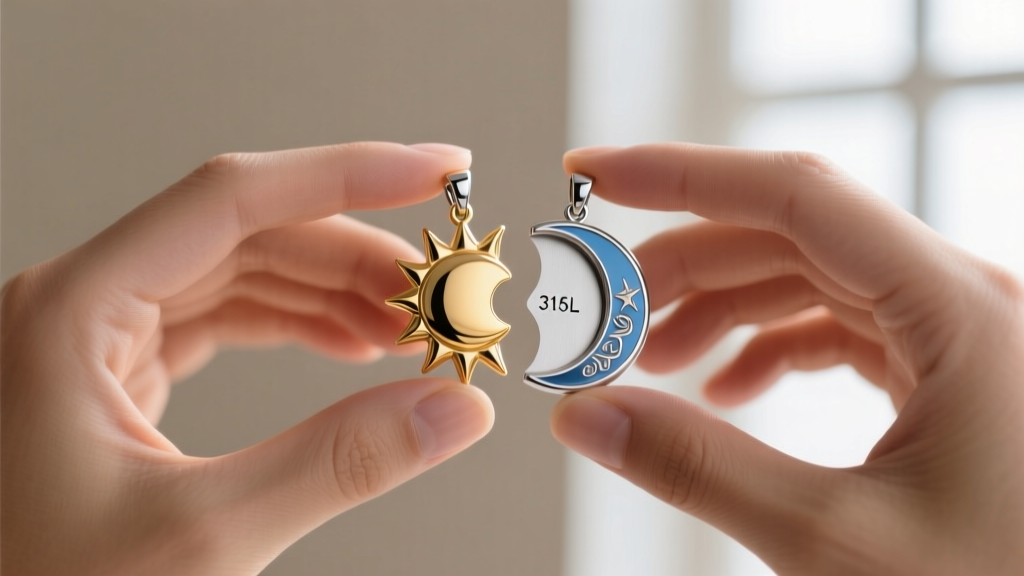
Maintenance routines must be tailored to the specific metallurgy of your necklace to prevent irreversible damage.
Cleaning Sterling Silver
Avoid harsh chemical dips, which strip away the antique oxidation intentionally placed in the crevices of the sun's rays and moon's craters for visual depth. Instead, use a mild dish soap and warm water solution with a soft-bristled baby toothbrush. Dry immediately with a microfiber cloth to prevent water spots.
Maintaining Gold Vermeil
Never use silver polishing cloths on gold vermeil. These cloths are embedded with mild abrasives designed to remove tarnish, but they will aggressively strip the 2.5-micron gold layer right off the sterling silver base. Clean vermeil only with a soft, damp cloth and mild soap.
Storing Interlocking Pieces
When not being worn, do not store the sun and moon pieces locked together in a humid environment. Trapped moisture between the interlocking joints accelerates oxidation. Store them flat in an anti-tarnish ziplock bag with a silica gel packet to absorb ambient moisture.
A sun and moon friendship necklace is a physical representation of an enduring bond. By prioritizing material integrity—opting for 316L steel for resilience, rhodium-plated silver for tradition, or solid 14k gold for permanence—you ensure the jewelry outlasts the fleeting trends of fast fashion.


