Sunflower Necklace Silver Buying Guide: What to Look For in 2026
Discover what to look for when buying a sunflower necklace in silver. Our 2026 guide covers silver grades, chain pairings, pricing, and quality markers.

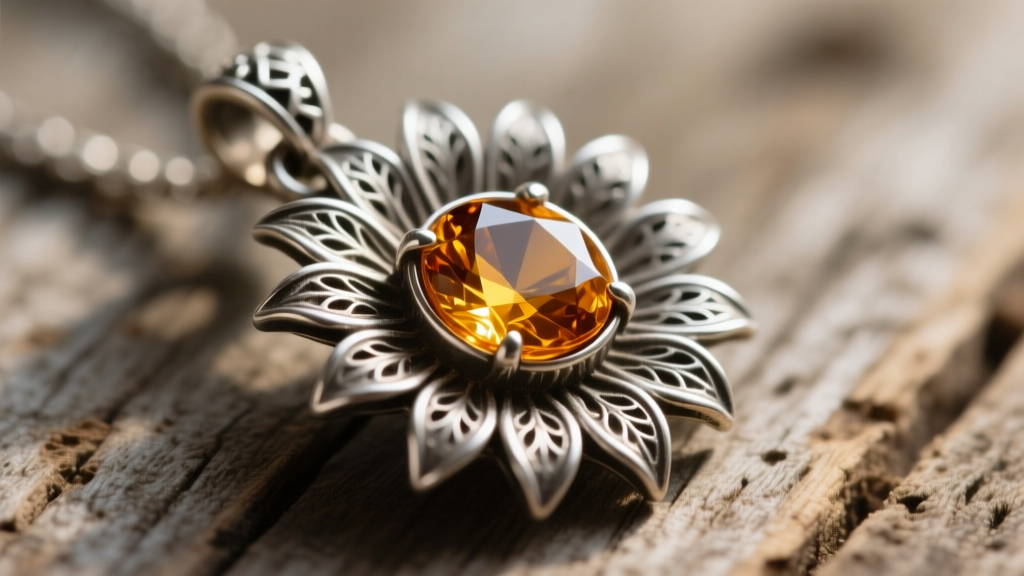
The Metallurgy of Floral Jewelry: Why Silver Excels
When searching for the perfect botanical accessory, a sunflower necklace silver piece offers a unique blend of organic warmth and metallic durability. Unlike gold, which often requires alloying that can dilute its natural luster, silver possesses a native reflectivity that mimics the bright, life-giving energy of the sunflower itself. From a metallurgical standpoint, standard sterling silver (92.5% pure silver, 7.5% copper) registers a Vickers hardness of approximately 65 HV. This specific hardness is the sweet spot for jewelry casting: it is malleable enough to capture the microscopic, fibrous veins of a sunflower petal during the lost-wax casting process, yet rigid enough to prevent the delicate petals from bending or warping during daily wear.
Furthermore, silver's unique chemical reactivity allows jewelers to apply intentional oxidation (antiquing). By darkening the recessed areas of the pendant—such as the intricate seed patterns in the flower's center—the artisan creates a striking three-dimensional contrast that makes the raised, polished petals pop. This interplay of light and shadow is something that cannot be easily replicated in higher-karat gold or platinum without significant additional cost.
Decoding Silver Alloys: 925 Sterling vs. Argentium vs. Plated
Not all silver is created equal. When evaluating a sunflower necklace silver pendant, the hallmark stamped on the bail or the back of the flower head will tell you exactly what you are buying. According to The Silver Institute, understanding these alloys is critical for long-term durability and tarnish management.
| Silver Type | Composition | Tarnish Resistance | Best For |
|---|---|---|---|
| 925 Sterling | 92.5% Ag, 7.5% Cu | Moderate (Requires upkeep) | Intricate castings, oxidized details |
| Argentium 935 | 93.5% Ag, Germanium | High (Tarnish-resistant) | High-polish pieces, low-maintenance wear |
| Silver-Plated | Brass core, thin Ag layer | Low (Wears off over time) | Budget fashion jewelry, occasional wear |
If you live in a humid climate or have naturally acidic skin chemistry, Argentium silver is a superior choice for a high-polish sunflower pendant, as the addition of germanium forms a protective transparent layer that drastically slows tarnishing. However, if you prefer a rustic, vintage look with heavy black oxidation in the petal grooves, traditional 925 Sterling is the industry standard and holds the patina exceptionally well.
Evaluating Craftsmanship: Casting vs. Stamping
The manufacturing method dictates the visual depth and structural integrity of your necklace. Mass-market botanical jewelry is often die-stamped from thin sheets of silver. While stamped pendants are lightweight and affordable, they are inherently two-dimensional. The petals will lie completely flat, and the center seeds are usually represented by simple, shallow dimples.
Conversely, high-quality artisan pieces utilize lost-wax casting. This technique allows the jeweler to sculpt a 3D wax model where the outer petals gently curl backward and the inner petals stand upright, perfectly mimicking a real sunflower in full bloom. When inspecting a piece, look for undercutting—areas where the metal folds over itself to create deep shadows. If the pendant feels substantial (typically between 5 and 12 grams for a 20mm to 30mm flower) and features varying petal heights, you are looking at a cast piece worth the investment.
The Centerpiece: Enamel vs. Gemstones
The center of the sunflower is its focal point. Budget pieces often use black or brown enamel to represent the seeds. While attractive, enamel can chip if the pendant is dropped on a hard surface. Fine jewelry iterations elevate the design by incorporating gemstones. According to the Gemological Institute of America (GIA), Citrine (Mohs hardness of 7) is the most popular choice due to its golden-yellow hue and excellent durability for daily wear. For a more luxurious, scratch-resistant option, look for yellow sapphires (Mohs 9) or a cluster of tiny brown diamonds arranged in a pavé setting to mimic the texture of seeds.
Chain Mechanics: Supporting the Pendant Weight
A common mistake buyers make is pairing a heavy, 3D cast sunflower pendant with an inadequate chain. The bail (the loop the chain passes through) on a quality silver sunflower pendant is usually sized for chains between 1.0mm and 2.0mm.
- Wheat Chains (1.2mm - 1.5mm): The absolute best choice. The woven, braided links distribute the weight of the pendant evenly, preventing the chain from snapping and complementing the organic, textured look of the flower.
- Box Chains (1.0mm - 1.5mm): Excellent strength and a modern geometric contrast to the organic floral shape. They lay flat and rarely kink.
- Snake Chains (Avoid): While sleek, snake chains are notorious for kinking and snapping when subjected to the concentrated downward pull of a heavy pendant. Avoid these for any sunflower piece weighing over 4 grams.
- Cable Chains (1.5mm+): A classic choice, but ensure the links are soldered (closed with a tiny weld) rather than just pressed shut, otherwise the weight of the pendant will eventually pull the links apart.
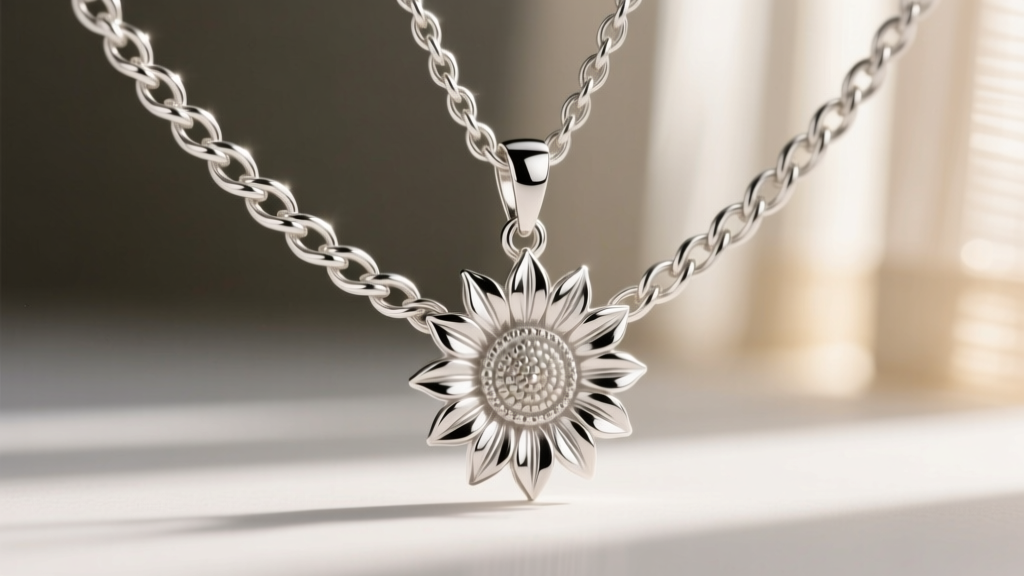
2026 Market Pricing Tiers
Understanding current market valuations will protect you from overpaying for mass-produced items disguised as artisan work. Here is what you should expect to pay for a genuine sunflower necklace silver piece in 2026:
- Mass-Market / Stamped ($25 - $50): Flat, lightweight (under 3 grams), often featuring enamel centers or no center stone. Usually comes with a basic, thin cable chain. Good for layering, but lacks heirloom durability.
- Artisan / Cast ($80 - $180): 3D lost-wax castings, intentional oxidation, weighing 6 to 12 grams. Often features genuine citrine or amber centers. Usually sold as a pendant only, or paired with a sturdy 1.2mm wheat chain.
- Fine Jewelry ($250 - $600+): Heavy castings in Argentium or high-grade sterling, featuring precision-set yellow sapphires, tsavorite garnets (for the leaves/stem), or black diamond pavé centers. Includes premium, heavy-duty chains and secure lobster clasps.
Care and Maintenance: Preserving Intentional Patina
Maintaining a botanical silver piece requires a different approach than caring for a simple silver band. The Jewelers of America strongly advises against using liquid silver dips or ultrasonic cleaners on oxidized jewelry. Liquid dips will strip the intentional black patina from the sunflower's seed center and petal grooves, leaving the piece looking flat, overly bright, and washed out.
Instead, use a treated silver polishing cloth. Gently rub only the raised, high-polish areas of the petals and the outer rim of the pendant. This removes surface tarnish and skin oils while leaving the dark oxidation safely nestled in the crevices, preserving the 3D depth of the design. Store the necklace in an anti-tarnish flannel pouch with a silica gel packet to minimize exposure to ambient humidity and sulfur compounds in the air.
Final Verdict: Choosing Your Bloom
A sunflower necklace is more than just a seasonal accessory; it is a symbol of longevity, loyalty, and warmth. By prioritizing lost-wax castings over flat stampings, selecting the appropriate silver alloy for your lifestyle, and pairing the pendant with a structurally sound wheat or box chain, you ensure that your jewelry will remain as vibrant and resilient as the flower it represents. Always verify the hallmark, inspect the bail for soldered strength, and embrace the maintenance rituals that keep your silver blooming year after year.


