The Ultimate T for Troy Necklace Buying Guide & Style Tips
Discover how to choose the perfect T for Troy necklace. Our expert buying guide covers gold troy weights, chain gauges, and pendant typography.

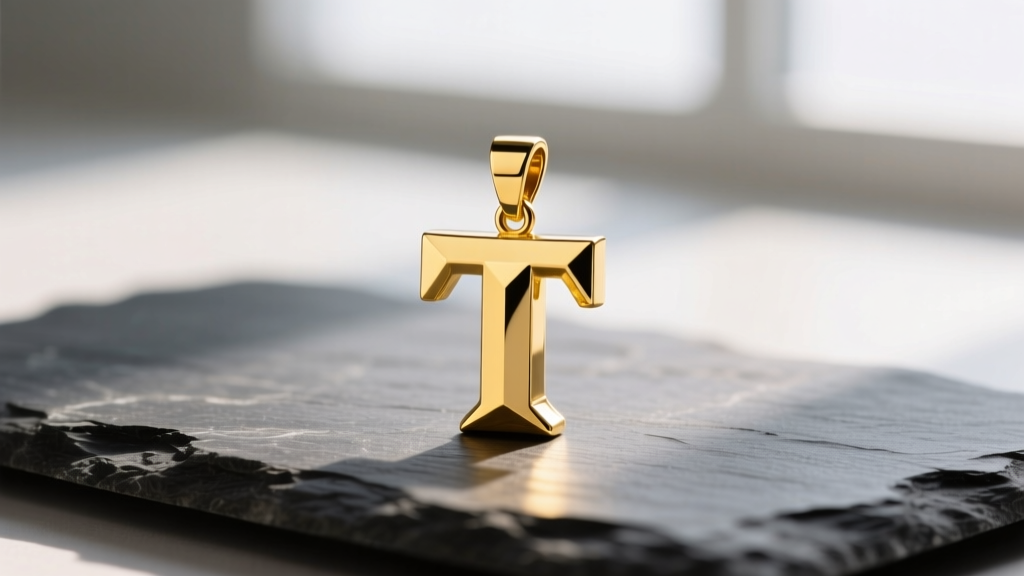
When shoppers search for a t for troy necklace, they are usually navigating two distinct but overlapping jewelry concepts: finding a personalized letter "T" pendant (often for someone named Troy, Taylor, or Thomas) and understanding the precious metal "troy" weight system used to measure solid gold and silver. Whether you are commissioning a custom initial piece or shopping for a pre-designed monogram necklace, understanding the intersection of typography, metal purity, and structural hardware is critical. In this comprehensive 2026 buying guide, we break down exactly what to look for to ensure your initial necklace is both a meaningful keepsake and a structurally sound piece of fine jewelry.
Decoding the "T": Initials, Typography, and Troy Weights
The letter "T" is one of the most structurally dynamic letters in jewelry design. Its wide top bar and central stem allow for varied diamond placements, engraving, and weight distribution. However, when evaluating the material value of your necklace, you must understand how jewelers measure precious metals. Unlike standard kitchen ounces, gold and silver are measured in troy ounces. One troy ounce equals exactly 31.103 grams.
Most standard letter "T" pendants range from 1.5 to 4.0 grams (approximately 0.04 to 0.12 troy ounces). If a jeweler advertises a "heavy solid gold T pendant," expect it to weigh between 5.0 and 8.0 grams. According to the Federal Trade Commission (FTC) Jewelry Guides, any piece marketed with a karat stamp (like 14k or 18k) must meet strict purity thresholds and bear a recognizable trademark or hallmark stamp. Always inspect the back of the pendant's bail or the lower right stem of the "T" for these microscopic laser stamps.
Metal Purity and Wearability
- 14k Gold (585): The industry standard for everyday initial necklaces. It contains 58.5% pure gold, offering an ideal balance of rich color and scratch resistance. The Gemological Institute of America (GIA) notes that 14k is optimal for pieces subject to daily friction.
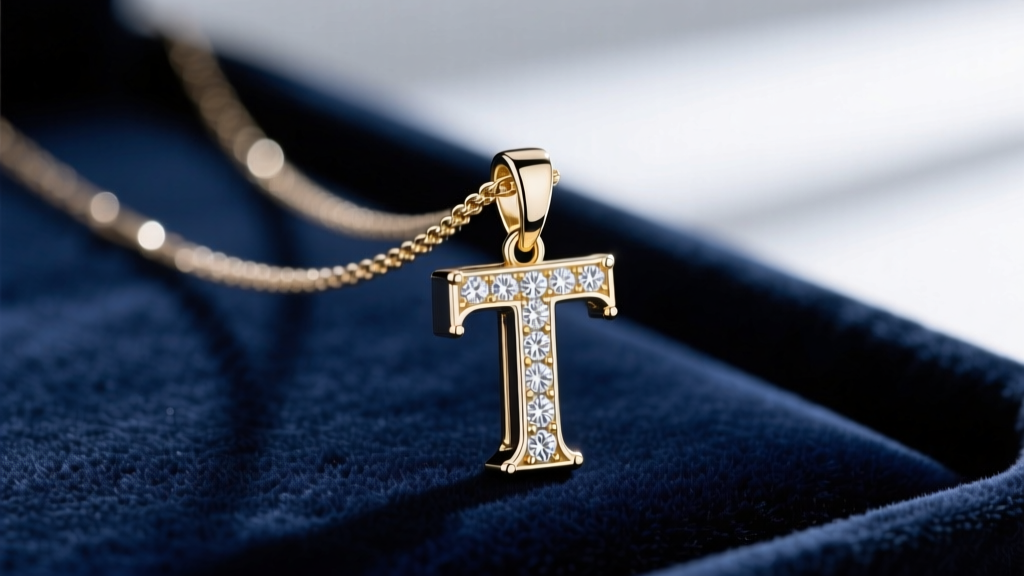
- 18k Gold (750): Contains 75% pure gold. It yields a deeper, warmer yellow hue but is slightly softer. Best for "T" pendants that feature delicate prong-set melee diamonds, as the softer metal grips the stones securely.
- Sterling Silver (925): An excellent entry-level option. Ensure the silver is rhodium-plated to prevent tarnishing, especially if the necklace will be worn against the skin's natural oils daily.
Selecting the Ideal Chain Gauge and Style
A common failure point in personalized necklaces is a mismatched chain. A heavy, solid-cast letter "T" pendant will easily snap a delicate 0.8mm chain, while a thick, heavy chain will overwhelm a minimalist, hollow-stamped initial. The chain's gauge (thickness) must be proportional to the pendant's bail (the loop at the top of the "T").
| Chain Style | Ideal Gauge (mm) | Durability | Best Pendant Weight |
|---|---|---|---|
| Box Chain | 1.0mm - 1.5mm | High | 1.5g - 3.5g |
| Cable Chain | 1.2mm - 1.8mm | Medium | 1.0g - 2.5g |
| Rope Chain | 1.5mm - 2.5mm | Very High | 3.0g - 6.0g |
| Franco Chain | 1.5mm - 2.0mm | Very High | 2.5g - 5.0g |
For a classic "T for Troy" initial piece, a 1.2mm Box Chain is widely considered the gold standard. It provides a smooth, geometric surface that complements the sharp angles of a block-letter "T", while offering enough tensile strength to support a 3-gram pendant without kinking.
Bail Mechanics and Jump Ring Sizing
The bail is the unsung hero of any pendant necklace. When buying a "T" necklace, pay close attention to how the pendant connects to the chain. There are two primary bail types used for initial jewelry:
- The Standard Loop Bail: A simple soldered ring at the top center of the "T". This requires a chain with a small end-tag (the jump ring connecting the chain to the clasp). If you are buying a thick 2.0mm rope chain, the standard loop bail might be too small to slide over the chain's end-tag. Always verify the inner diameter of the bail; it should be at least 0.5mm wider than your chain's gauge.
- The Hidden Bail: A loop soldered to the back of the letter "T", allowing the chain to pass through while making the pendant appear as though it is floating. This is highly popular for script or diamond-encrusted "T" pendants, as it preserves the unbroken silhouette of the letter from the front.
Font Profiles: Matching the "T" to the Wearer
The typography of your initial pendant dictates its overall aesthetic. In 2026, custom laser-cutting and 3D CAD modeling allow for highly specific font profiles. Here is how to choose the right silhouette:
- Block / Sans-Serif: Features uniform line thickness and sharp 90-degree corners. This style is modern, minimalist, and highly durable. Because there are no thin, tapering edges, block "T" pendants are less prone to bending if caught on clothing.
- Serif: Features small decorative "feet" at the ends of the letter strokes. This offers a vintage, collegiate, or heirloom aesthetic. Serif pendants often require slightly more metal weight to ensure the delicate serifs do not snap off during daily wear.
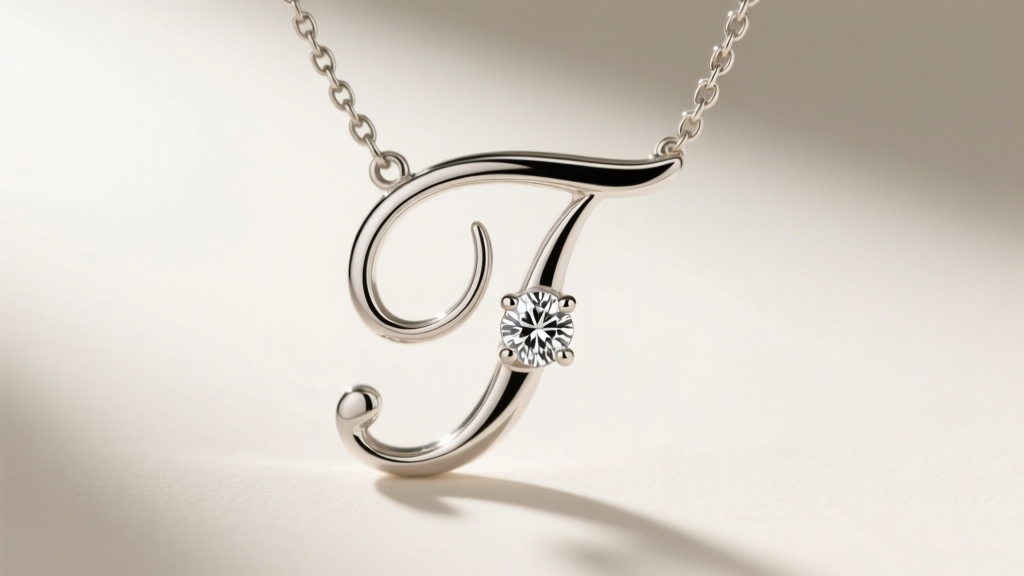
- Script / Cursive: A flowing, continuous-line design. Script "T" pendants often feature a sweeping bottom tail that curls back upward. When buying a script "T", ensure the inner loops are fully soldered and closed, rather than just resting against each other, to prevent the pendant from warping over time.
Pricing Breakdown: What You Should Expect to Pay
Pricing for a high-quality letter "T" necklace fluctuates based on the daily spot price of gold and silver, as well as the complexity of the casting. Below is a general pricing matrix for a standard 2.5-gram pendant paired with an 18-inch chain, based on early 2026 market averages:
- Sterling Silver (925): $45 - $95 (Includes rhodium plating and a sturdy lobster clasp).
- 10k Solid Gold: $180 - $250 (A budget-friendly solid gold option, though slightly less warm in color).
- 14k Solid Gold: $280 - $450 (The sweet spot for fine jewelry; pricing varies heavily between hollow-cast and solid-cast pendants).
- 18k Solid Gold with Melee Diamonds: $650 - $1,200+ (Pricing scales with the carat weight and clarity of the pave-set diamonds on the top bar of the "T").
Warning: If you see a "solid 14k gold" initial necklace priced under $150, it is almost certainly gold-plated over a brass or silver core, or the pendant is extremely thin and hollow-stamped, making it prone to denting.
Final Inspection Checklist Before You Buy
Before finalizing your purchase, whether from a boutique jeweler or an online artisan, run through this quick E-E-A-T (Expertise, Experience, Authoritativeness, and Trustworthiness) inspection checklist to guarantee quality:
- Verify the Hallmark: Use a jeweler's loupe or request a macro photo to confirm the 585, 750, or 925 stamp, alongside the maker's mark.
- Check the Clasp: Insist on a lobster claw clasp rather than a spring-ring clasp. Lobster clasps offer superior spring tension and are far less likely to accidentally unhook when the pendant swings.
- Inspect the Solder Points: Look closely at the jump rings on the chain and the bail on the pendant. The seams should be completely closed and smoothly soldered, with no visible gaps or dark oxidation lines.
- Evaluate the Edge Finishing: Run your finger along the edges of the letter "T" (or ask the jeweler to verify). The edges should be slightly beveled or "comfort-fit" rather than razor-sharp, which can scratch the skin or catch on delicate fabrics.
- Confirm the Return/Resizing Policy: Chain length is highly personal. Ensure the retailer offers complimentary resizing or exchange within 30 days, as an 18-inch chain may sit too low for certain necklines, while a 16-inch choker length may feel restrictive.
By paying close attention to troy weight measurements, chain gauge compatibility, and typography, you can secure a "T for Troy" necklace that is not only deeply personal but engineered to last a lifetime.


