Peacock Pearl Necklace Guide: Tahitian vs Freshwater Properties
Discover the material differences in a peacock pearl necklace. Compare Tahitian nacre, dyed freshwater alternatives, pricing, and luster properties.

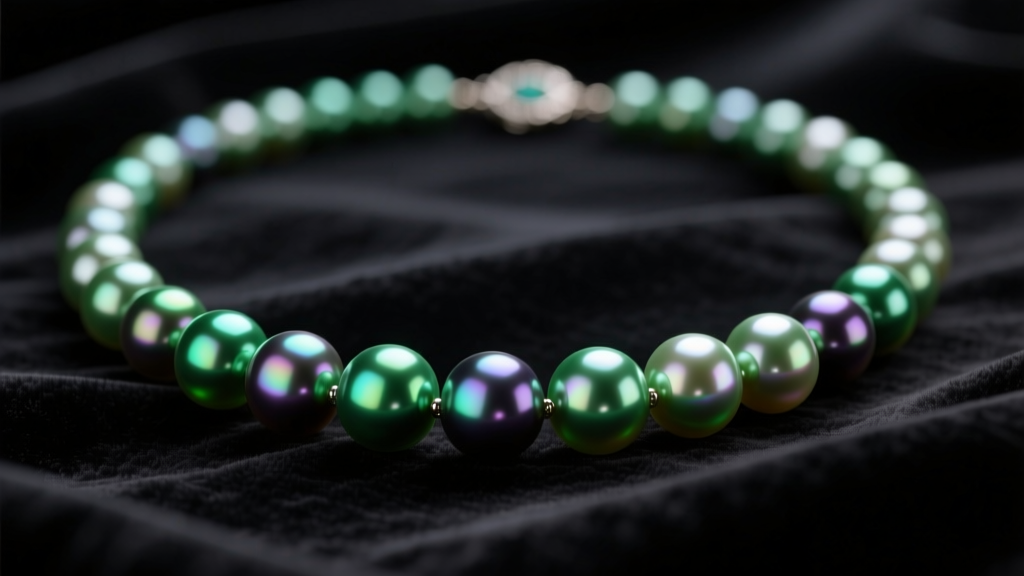
The quest for the perfect peacock pearl necklace often leads buyers into a complex market filled with natural marvels, treated alternatives, and outright imitations. The term "peacock" in the pearl trade does not refer to a specific species of oyster, but rather to a highly coveted overtone—a mesmerizing play of colors that shifts between aubergine, deep green, and rose pink across the surface of a dark pearl. Understanding the material properties, nacre thickness, and gemological origins of these pearls is essential for making an informed investment in 2026.
The Science of the Peacock Overtone: What Defines the Color?
To evaluate a peacock pearl necklace, one must first understand the gemological mechanics of its color. The "body color" of a pearl is determined by the pigments within the conchiolin (the organic protein that binds the pearl's structure). The "overtone," however, is an optical phenomenon caused by the diffraction and interference of light as it passes through the microscopic aragonite platelets (calcium carbonate crystals) that make up the nacre.
In genuine Tahitian pearls, the peacock overtone occurs naturally when a dark gray or charcoal body color is overlaid with specific thicknesses of aragonite platelets, creating constructive interference for green and pink light wavelengths. According to the Gemological Institute of America (GIA), this natural orient is a hallmark of high-quality saltwater nacre and cannot be perfectly replicated by surface dyes.
Material Breakdown: Tahitian vs. Freshwater vs. Imitation
When shopping for a peacock pearl necklace, you will encounter three primary material categories. Each possesses distinct physical properties, durability profiles, and market values.
1. Genuine Tahitian Peacock Pearls (Pinctada margaritifera)
Authentic peacock pearls are cultivated in the black-lipped oyster (Pinctada margaritifera), primarily in the lagoons of French Polynesia. These pearls are bead-nucleated, meaning a spherical shell bead is inserted into the oyster's gonad, followed by a piece of mantle tissue. The oyster then secretes nacre over the bead for 18 to 24 months. By law, French Polynesia mandates a minimum nacre thickness of 0.8mm for export, ensuring structural integrity and deep, mirror-like luster. Genuine peacock strands typically range from 8mm to 14mm in diameter.
2. Dyed Freshwater "Peacock" Pearls (Hyriopsis cumingii)
Because natural dark pearls are rare and expensive, the market is flooded with freshwater pearls treated to mimic the peacock overtone. Cultivated in the triangle shell mussel (Hyriopsis cumingii), these pearls are typically tissue-nucleated, resulting in a pearl that is solid nacre all the way through. However, their natural colors are white, peach, or lavender. To achieve a "peacock" look, they undergo silver nitrate dyeing or gamma irradiation. While the nacre is thick, the color is artificially concentrated, often pooling in the drill holes or blemishes, which a trained gemologist can easily spot under 10x magnification.
3. Imitation and Coated Glass Alternatives
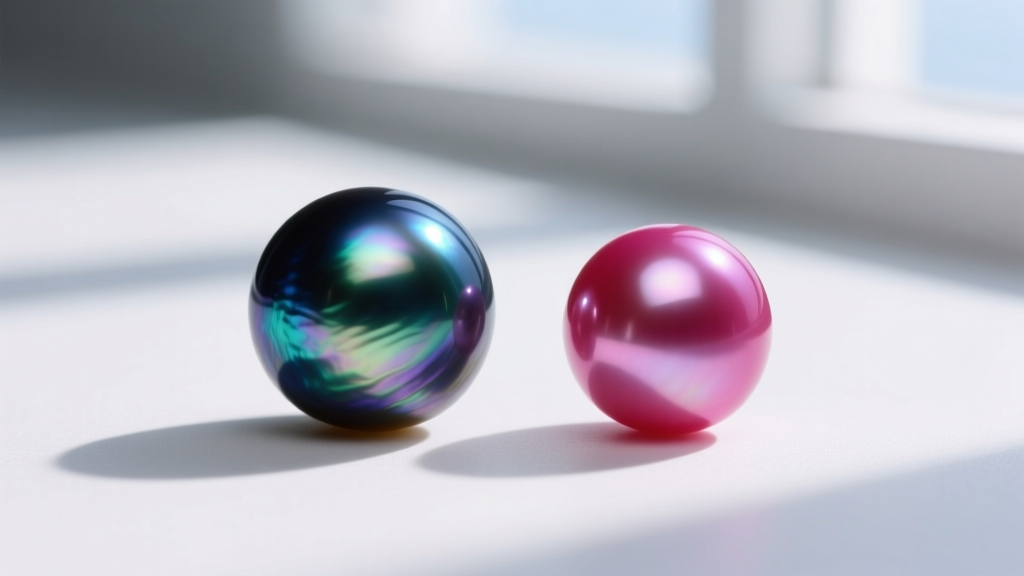
At the bottom of the material spectrum are imitation pearls, such as Mallorca pearls. These consist of a glass or plastic bead coated with "essence d'orient," a synthetic or fish-scale-derived guanine suspension. While they can be painted to mimic the green and purple flashes of a peacock pearl, they lack the crystalline structure of nacre. They feel unnaturally smooth (lacking the "gritty" friction of real pearls when rubbed against the teeth) and are highly susceptible to peeling and chemical degradation from skin acids.
Comparative Properties & Pricing Matrix
The following table outlines the critical material differences you must consider when evaluating a peacock pearl necklace in today's market.
| Property | Tahitian (Natural Peacock) | Dyed Freshwater | Imitation (Glass/Guanine) |
|---|---|---|---|
| Origin / Species | Pinctada margaritifera (Saltwater) | Hyriopsis cumingii (Freshwater) | Manufactured Glass/Plastic |
| Nacre Structure | Bead-nucleated (0.8mm+ nacre) | Tissue-nucleated (Solid nacre) | Surface coating only |
| Overtone Source | Natural light interference | Chemical dye / Irradiation | Surface paint / Coating |
| Mohs Hardness | 2.5 - 3.0 | 2.5 - 3.0 | 5.0 - 6.0 (Glass core) |
| Price (16" Strand) | $2,500 - $15,000+ | $150 - $600 | $50 - $150 |
Evaluating Nacre Thickness and Luster Grades
When investing in a genuine Tahitian peacock pearl necklace, nacre thickness is the single most important determinant of longevity and value. A pearl with thin nacre (under 0.5mm) will exhibit a dull, chalky luster and is prone to "peeling," where the outer layers of aragonite flake away from the nucleus due to temperature changes or physical impact.
High-quality peacock pearls exhibit a "mirror-like" luster. When you look at the surface, you should be able to see a sharp, distinct reflection of the light source. The GIA Pearl Description guidelines note that superior luster is directly correlated with the tightness and uniformity of the aragonite platelets. Furthermore, the peacock overtone is most visible in pearls with high luster; dull pearls simply cannot refract light effectively enough to display the complex green and aubergine flashes.
Stringing Materials and Clasp Hardware for Heavy Pearl Strands
The material properties of the necklace extend beyond the pearls themselves. A matched 16-inch strand of 10mm Tahitian peacock pearls can weigh over 45 grams, placing significant tensile stress on the stringing material.
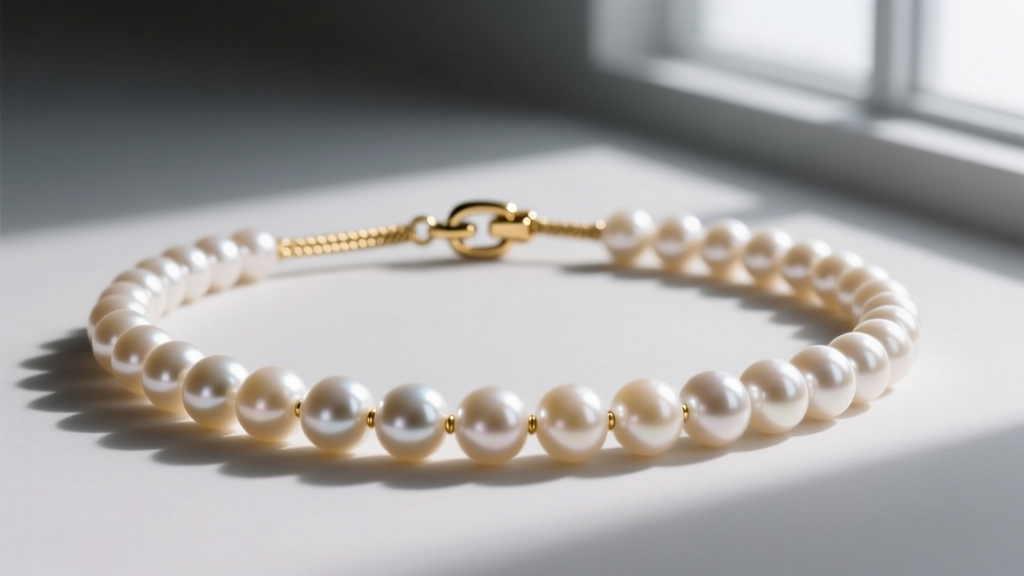
- Thread Selection: Traditional Japanese silk (such as Griffin brand) remains the gold standard. For 8mm to 9mm pearls, a Size F or G silk thread is required. Silk provides the necessary flexibility for the necklace to drape correctly and knot securely.
- Failure Modes: Silk degrades over time when exposed to sweat, perfumes, and UV light. A heavy Tahitian strand should be professionally restrung every 2 to 3 years to prevent catastrophic thread failure.
- Hardware Protection: The friction of the pearls against the metal clasp will eventually saw through a silk thread. A proper peacock pearl necklace must feature "French wire" (also known as gimp)—a fine, coiled tube of 14k or 18k gold or silver that acts as a protective sleeve over the silk at the clasp connection point.
- Clasp Mechanics: Due to the weight and value of the strand, a simple spring-ring clasp is insufficient. A secure ball clasp with a figure-8 safety catch is mandatory to prevent loss in the event the primary latch snags on clothing.
Care, Maintenance, and Long-Term Durability
Both Tahitian and freshwater pearls rank between 2.5 and 3.0 on the Mohs scale of mineral hardness, making them highly susceptible to scratching from everyday dust (which contains quartz, hardness 7.0) and contact with other jewelry. Furthermore, the calcium carbonate structure is highly reactive to acids.
"Pearls are organic gems that require specific environmental conditions to maintain their luster. Exposure to chlorinated water, acidic perspiration, and volatile organic compounds found in cosmetics will permanently etch the nacre surface, destroying the delicate peacock overtone." — FTC Jewelry Industry Guidelines
To preserve the material integrity of your peacock pearl necklace, always follow the "last on, first off" rule. Apply all perfumes, hairsprays, and lotions at least 15 minutes before putting on the pearls. After wearing, wipe the strand gently with a damp, lint-free microfiber cloth to remove skin oils before storing it in a soft pouch. Never store pearls in an airtight plastic bag or a safety deposit box for extended periods; the nacre requires trace amounts of ambient humidity to prevent the conchiolin from drying out and cracking.
By understanding the profound material differences between natural Tahitian nacre, treated freshwater alternatives, and the structural requirements of the stringing hardware, you can confidently select a peacock pearl necklace that offers both breathtaking optical properties and generational durability.