Expert Guide to Buying and Authenticating a Silver Coral Necklace
Discover expert tips on authenticating, grading, and caring for a genuine silver coral necklace. Learn about coral species, silver alloys, and pricing.
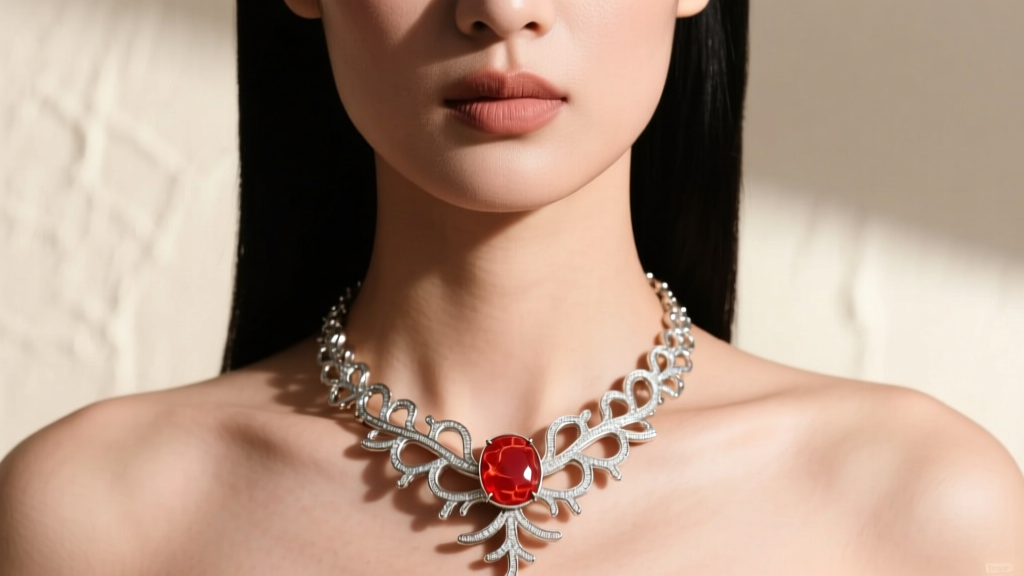
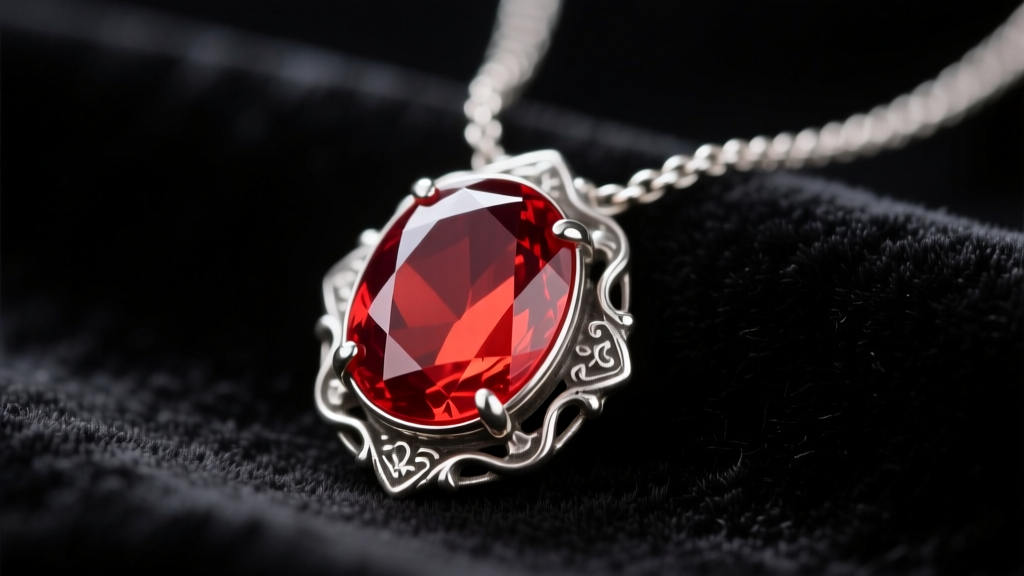
The Metallurgy of the Chain and Setting: 925 vs. 960 Silver
When evaluating a silver coral necklace, the untrained eye focuses solely on the vibrant organic gemstone. However, as a gemologist and jewelry appraiser, I always begin with the metallurgy of the silver setting and chain. The interaction between the silver alloy and the porous calcium carbonate structure of the coral dictates the piece's longevity and maintenance requirements.
Standard sterling silver (925) contains 92.5% silver and 7.5% copper. The copper content makes it highly susceptible to sulfide tarnishing. When consumers attempt to clean tarnished 925 silver using commercial liquid 'silver dips,' they inadvertently expose the coral to thiourea and harsh acids. These chemicals will instantly etch, dull, and permanently damage the polished surface of the coral. According to the Gemological Institute of America (GIA), organic gemstones require strictly mechanical, non-chemical cleaning methods.
For high-end coral jewelry, I strongly recommend seeking out settings crafted from Argentium silver (935 or 960). Argentium replaces a portion of the copper with germanium, creating a highly tarnish-resistant alloy. Because it does not require chemical dipping to maintain its luster, Argentium silver completely eliminates the risk of accidental chemical exposure to the coral during routine maintenance, making it the superior, modern choice for organic gemstone settings.
Gemological Breakdown: Grading Coral Species
The term 'coral' encompasses several distinct species, each with unique color profiles, market values, and structural densities. A genuine silver coral necklace will typically feature one of three primary precious coral species. Understanding these distinctions is critical for accurate appraisal and authentication.
| Species / Trade Name | Color Range | Mohs Hardness | Market Value (Cabochon) |
|---|---|---|---|
| Corallium rubrum (Mediterranean) | Light salmon to deep oxblood red | 3.5 | $15 - $75 / carat |
| Corallium japonicum (Aka) | Deep, uniform 'bullseye' red with white core | 3.5 - 4.0 | $100 - $400+ / carat |
| Pleurocorallium elatius (Momo) | Peach, pink, salmon, and Cerasuolo (angel skin) | 3.5 | $30 - $150 / carat |
Aka coral from the waters off Japan and Taiwan commands the highest premium due to its intense, glassy red saturation. However, because Aka branches are relatively thin, they are rarely cut into large, flawless cabochons. If you encounter a massive, flawless, deep-red coral cabochon in a silver pendant, approach with extreme skepticism; it is statistically likely to be dyed howlite or reconstructed coral powder.
Authenticating Genuine Coral vs. Imitations
The market is saturated with silver coral necklaces featuring imitation stones. To authenticate a piece without resorting to destructive testing, you must rely on optical and structural analysis.
Visual and Magnification Analysis
Under 10x magnification, genuine precious coral exhibits a distinct 'wood-grain' effect—longitudinal striations that run parallel to the growth direction of the polyp colony. When viewed in cross-section, you will see radial, concentric growth rings, much like the rings of a tree. Imitations like glass will reveal spherical gas bubbles and swirl marks, while dyed magnesite or howlite will show dye concentrating heavily in the natural crevices and grain boundaries of the host rock.
The Acetone Swab Test
To test for surface dyes (commonly used on white coral or bone to mimic Mediterranean red), dampen a cotton swab with pure acetone and gently rub an inconspicuous area of the stone, such as the back of the cabochon or the drill hole of a bead. If the swab picks up red or pink pigment, the stone is dyed. Genuine precious coral's color is intrinsic and will not bleed onto an acetone swab.
Structural Engineering: Bezel vs. Prong Settings
Coral possesses a Mohs hardness of merely 3.5 to 4.0 and lacks cleavage, meaning it does not split along defined planes but is highly brittle and prone to chipping upon impact. This physical property strictly dictates how it must be set in a silver necklace.
I advise avoiding prong settings for coral entirely. The localized pressure exerted by silver prongs pushing against the girdle of the cabochon often creates micro-fractures. Over time, thermal expansion and contraction of the silver will widen these fractures, leading to catastrophic stone failure. Furthermore, prongs leave the edges of the coral exposed to daily wear and accidental impacts.
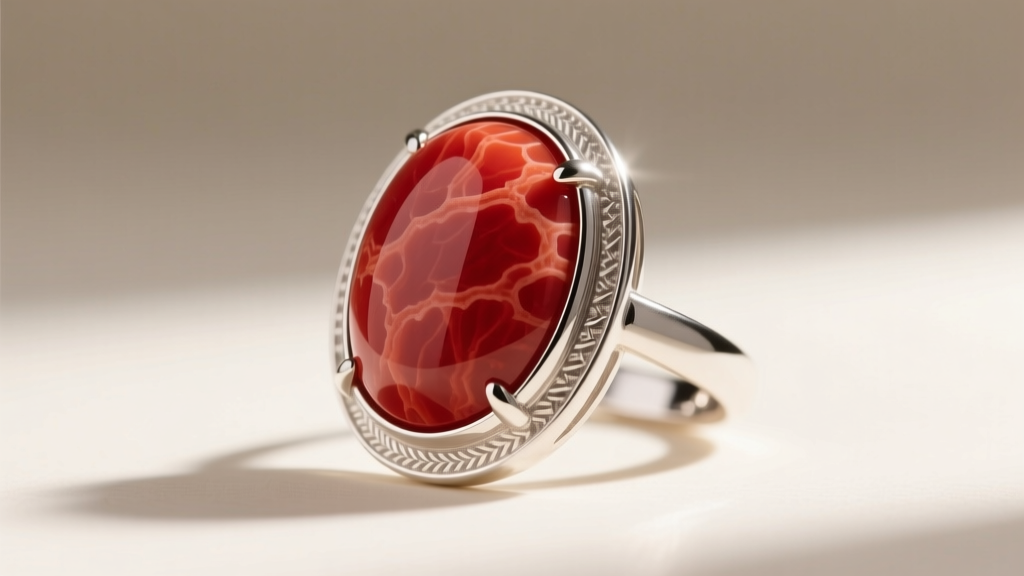
The only acceptable setting for a high-value silver coral necklace is a full, heavy bezel. A skilled silversmith will use a cold-setting technique, carefully burnishing the silver over the sloped edges of the coral without applying downward pressure. In some cases, a two-part jeweler's epoxy is used to secure the cabochon within a shallow bezel cup, ensuring the metal never physically squeezes the fragile organic material.
Market Valuation and Pricing Framework
Pricing a silver coral necklace requires decoupling the value of the silver hardware from the value of the organic gemstone. In 2026, the spot price of silver fluctuates, but the craftsmanship and coral quality dictate the true retail cost.
- Entry-Level ($50 - $150): Features small, heavily included Mediterranean coral chips or dyed bamboo coral beads strung on a lightweight 925 silver chain. The silver value is minimal, and the coral lacks gem-grade saturation.
- Mid-Tier ($200 - $600): Includes well-cut Momo or Mediterranean coral cabochons (5 to 15 carats) set in solid 925 or Argentium silver bezels. The color is uniform, and the polish is mirror-like without visible pitting.
- Investment Grade ($800 - $3,000+): Showcases rare, large-carat Aka coral or flawless 'Angel Skin' pink coral, set in heavy, artisan-crafted Argentium silver or mixed-metal designs. These pieces often come with gemological laboratory reports verifying the species and lack of treatment.
CITES Regulations and Ethical Sourcing
As an expert in the field, I must address the environmental and legal realities of purchasing coral. Precious corals are slow-growing marine organisms, and over-harvesting has severely depleted natural beds. Many coral species are regulated under the Convention on International Trade in Endangered Species (CITES). You can review specific species protections via the CITES species database.
When purchasing a newly manufactured silver coral necklace, always request documentation proving the coral was harvested legally under CITES export permits. Alternatively, the most ethical and environmentally sound approach is to purchase antique or vintage coral jewelry (pre-1947), which is generally exempt from modern CITES restrictions and repurposes existing materials without harming current marine ecosystems.
By understanding the metallurgy, gemological markers, and structural requirements of a silver coral necklace, you transition from a casual shopper to an informed collector, ensuring your investment is both authentic and built to last generations.


