Troubleshooting Your Tannis Root Necklace: Odor, Decay, and Allergies
Is your tannis root necklace causing skin rashes or smelling like decay? Learn how to troubleshoot botanical relic pendants and fix metal allergies.

The Botanical Reality Behind the Fiction
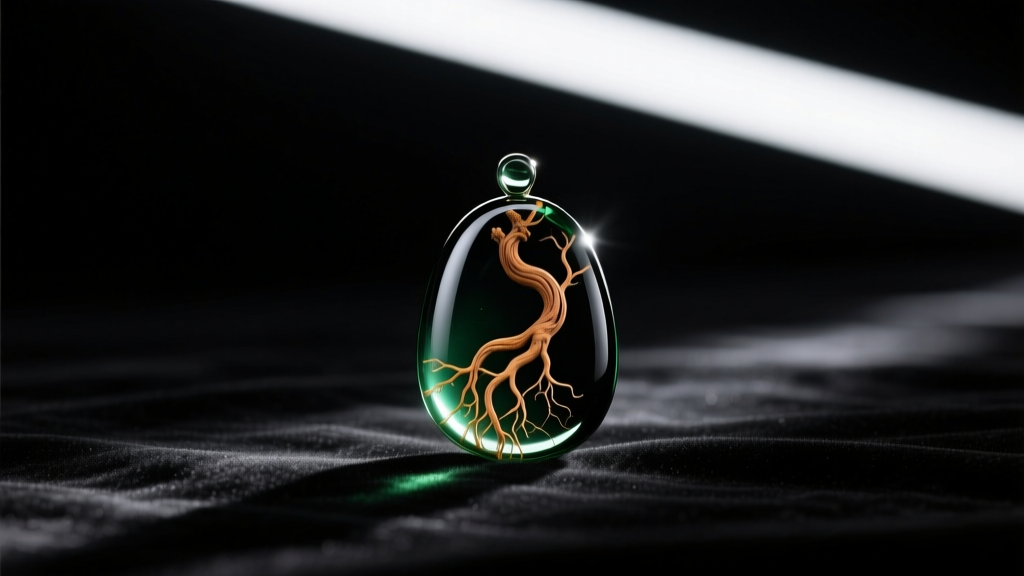
When horror fans and collectors of macabre jewelry search for a tannis root necklace, they are usually chasing a piece of cinematic history. In Ira Levin’s 1967 novel Rosemary’s Baby and Roman Polanski’s subsequent 1968 film, the 'tannis root' pendant is a foul-smelling, sinister charm given to the protagonist to mask the scent of a Satanic coven. But because tannis root is entirely fictional, the modern jewelry market has filled the gap by crafting botanical relic pendants using real, pungent roots.
'It's a charm... Tannis root. It has a strange smell, but it's good for the health.'
If you own a replica or a custom-made tannis root necklace, you are likely dealing with Valeriana officinalis (Valerian root) or Mandragora officinarum (Mandrake). While these make incredible, conversation-starting gothic pendants, they introduce a unique set of troubleshooting challenges. Organic inclusions trapped in glass or resin behave very differently than gemstones. From mysterious odors and internal mold to severe contact dermatitis caused by cheap prop-grade metals, maintaining a botanical relic necklace requires specific horological and botanical knowledge. Below, we break down the most common issues plaguing tannis root pendants and how to fix them.
Troubleshooting Issue 1: The 'Curse' of Trapped Moisture and Mold
The most famous trait of the fictional tannis root is its terrible odor. In the real world, Valerian root naturally contains isovaleric acid, which emits a strong, earthy scent often compared to damp soil or sweaty socks. However, if your pendant smells sharply of ammonia, rot, or mildew, you do not have a curse—you have a moisture problem.
Why Botanical Pendants Rot
Many mass-produced occult necklaces seal dried roots inside glass cabochons or epoxy resin without properly desiccating the organic material first. If the moisture content of the root was above 10% at the time of encasement, the trapped humidity creates a micro-greenhouse. Over time, this leads to the growth of Aspergillus or Penicillium mold spores inside the pendant.
The Fix: Desiccation and UV Sealing
- For Resin Pendants: If you are casting your own replacement tannis root pendant, you must bake the root specimen in a food dehydrator at 95°F (35°C) for 24 hours prior to encasement. Once dried, seal the root in a thin layer of UV-curing jewelry resin before placing it in the final bezel to create a moisture barrier.
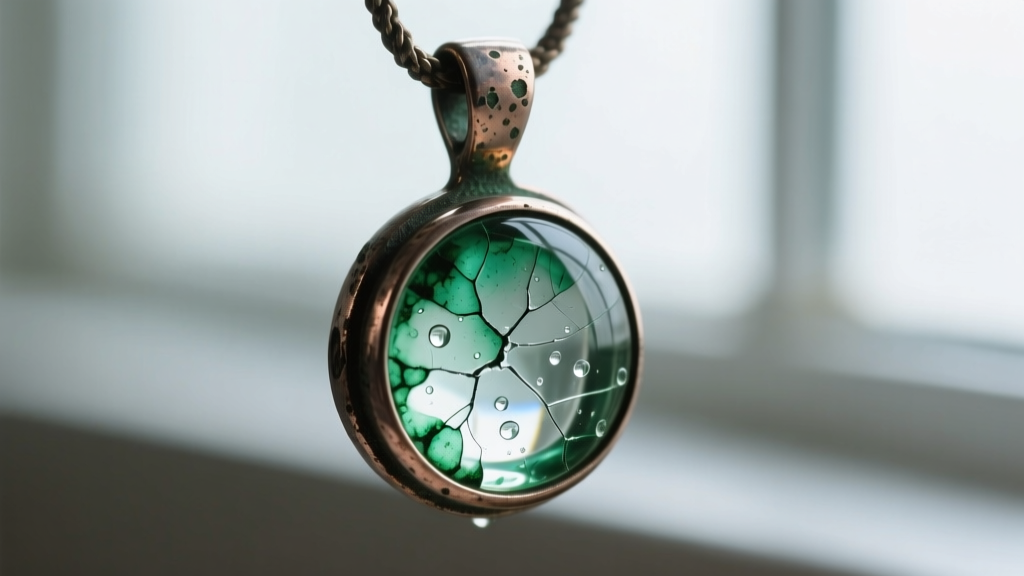
- For Glass Relic Lockets: If your glass locket is showing condensation, you must open it immediately. Remove the root, let it air-dry in a low-humidity environment, and place a micro-packet of silica gel inside the locket cavity before snapping the glass bezel shut.
Troubleshooting Issue 2: Contact Dermatitis from Prop-Grade Metals
Because the tannis root necklace originates from horror memorabilia, many replicas on the market are manufactured as cheap Halloween props rather than fine jewelry. These pendants are frequently cast from Zamak (pot metal) and plated with a thin layer of nickel to achieve an 'antiqued silver' look. Prolonged skin contact with these materials is a primary culprit behind the 'cursed' rashes wearers often report.
According to the Mayo Clinic, nickel allergy affects roughly 10% to 20% of the population, presenting as an itchy, red rash exactly where the metal touches the skin. The sweat on your chest acts as an electrolyte, breaking down the cheap plating and leaching nickel ions directly into your epidermis.
Metal Casing Grades & Skin Reactions
| Metal Grade | Composition | Allergy Risk | Best Use Case |
|---|---|---|---|
| Zamak (Pot Metal) | Zinc, Aluminum, Copper, Magnesium | High (often nickel-plated) | Display only, not daily wear |
| 925 Sterling Silver | 92.5% Silver, 7.5% Copper | Low (unless copper-sensitive) | Custom bezels, heirloom relics |
| ASTM F136 Titanium | Ti-6Al-4V ELI (Implant Grade) | None (Biocompatible) | Severe allergy sufferers, permanent wear |
| Brass/Bronze | Copper/Zinc or Copper/Tin | Moderate (can cause green skin) | Antiqued finishes, sealed with wax |
The Fix: Upgrading the Casing
If you love the root specimen but hate the rash, you have two options. The temporary fix is to paint the back of the pendant and the bail with three coats of clear, hypoallergenic nail polish or a specialized jewelry shield coating, reapplying every few months. The permanent fix is to take the glass relic or root specimen to a local jeweler and have them fabricate a custom bezel cup in 925 sterling silver or implant-grade titanium. A custom silver bezel for a standard 25mm x 18mm oval cabochon typically costs between $80 and $150, transforming a toxic prop into a safe, lifelong heirloom.
Troubleshooting Issue 3: Bail Friction and Chain Snapping
Botanical relic pendants are surprisingly heavy. The combination of a thick glass cabochon, a metal bezel, and the dense root inside can easily push the pendant's weight over 15 grams. Many wearers experience the frustrating issue of their necklace chain snapping or the bail (the loop the chain passes through) wearing through the jump ring.
Gauge Sizing and Hardware Upgrades
The failure point is almost always the jump ring connecting the pendant to the chain. Standard fashion jewelry uses 22-gauge or 24-gauge jump rings, which are far too thin to support a heavy glass locket. The constant friction of the metal bail rubbing against a thin jump ring acts like a saw, slowly cutting through the wire.
- Upgrade the Jump Ring: Replace the connector with an 18-gauge or 16-gauge jump ring made of hardening sterling silver or stainless steel. Ensure the jump ring is 'split' or soldered shut so it cannot pull apart under the pendant's weight.
- Choose the Right Chain: Avoid delicate cable or box chains. For a heavy tannis root pendant, opt for a 2.5mm to 3.5mm Wheat chain or a Figaro chain. These weaves distribute weight laterally and possess a much higher tensile strength than standard cable links.
- Bail Protection: If the pendant has a fixed metal loop rather than a hinged bail, wrap the loop in a tiny piece of clear heat-shrink tubing or have a jeweler solder a sterling silver 'tube bail' over it to prevent friction wear on your chain.
Troubleshooting Issue 4: Cloudy Glass and Resin Yellowing
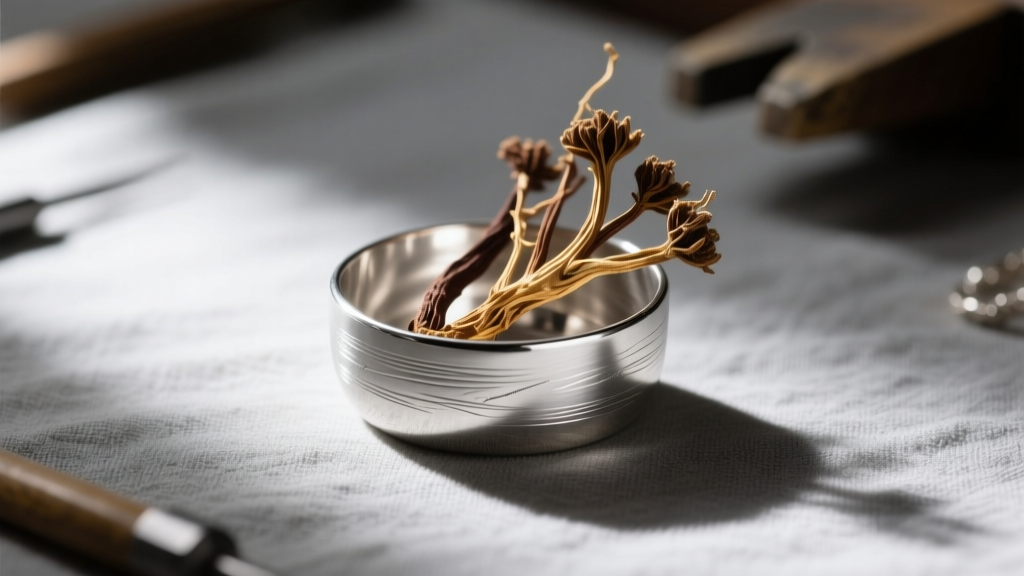
Over time, the viewing window of your tannis root necklace may become cloudy, obscuring the intricate, twisted textures of the root inside. This is particularly common if the pendant was sealed with cheap epoxy resin rather than jeweler's grade UV resin or a glass cabochon.
Why the Window Clouds
Epoxy resins are highly susceptible to UV degradation. Prolonged exposure to sunlight breaks down the polymer chains, causing the resin to yellow and develop a micro-crazed (cracked) appearance on the surface. Furthermore, skin oils, lotions, and perfumes can create a stubborn, waxy film on glass surfaces that standard jewelry wipes cannot remove.
The Fix: Proper Cleaning and Polishing
According to guidelines from the Gemological Institute of America (GIA), organic and porous materials require gentle care, but the glass or resin covering them can be cleaned safely if you avoid harsh chemicals.
- For Glass Cabochons: Mix a drop of mild, ammonia-free dish soap with lukewarm water. Use a microfiber cloth to gently buff the glass. Never use ultrasonic cleaners on relic pendants, as the high-frequency vibrations can shatter the glass or shake the delicate root specimen apart inside the cavity.
- For Yellowed Resin: If your resin window has yellowed, the damage is usually permanent and structural. However, you can improve clarity by wet-sanding the top layer of resin with 2000-grit sandpaper and polishing it with a plastic-safe buffing compound like Novus No. 2. If the yellowing is deep, the best solution is to have a jeweler carefully pop the bezel open, extract the root, and re-cast it in a UV-stable, optically clear jewelry resin.
Final Verdict on Wearing Cursed Relics
The tannis root necklace remains one of the most iconic pieces of horror-inspired jewelry, bridging the gap between cinematic lore and real-world botanical fascination. However, treating a prop-grade replica like fine jewelry is a recipe for skin rashes, moldy inclusions, and broken chains. By understanding the botanical nature of Valerian and Mandrake roots, upgrading your hardware to 18-gauge jump rings, and re-housing your specimen in biocompatible metals like ASTM F136 titanium or 925 silver, you can safely wear your macabre masterpiece every day. You will keep the aesthetic of the curse, without any of the actual side effects.


