The Science of a Tarnished Necklace: Alloy Grades and Restoration
Discover the metallurgical causes of a tarnished necklace. Learn about alloy grades, silver sulfide reactions, and advanced electrochemical restoration.

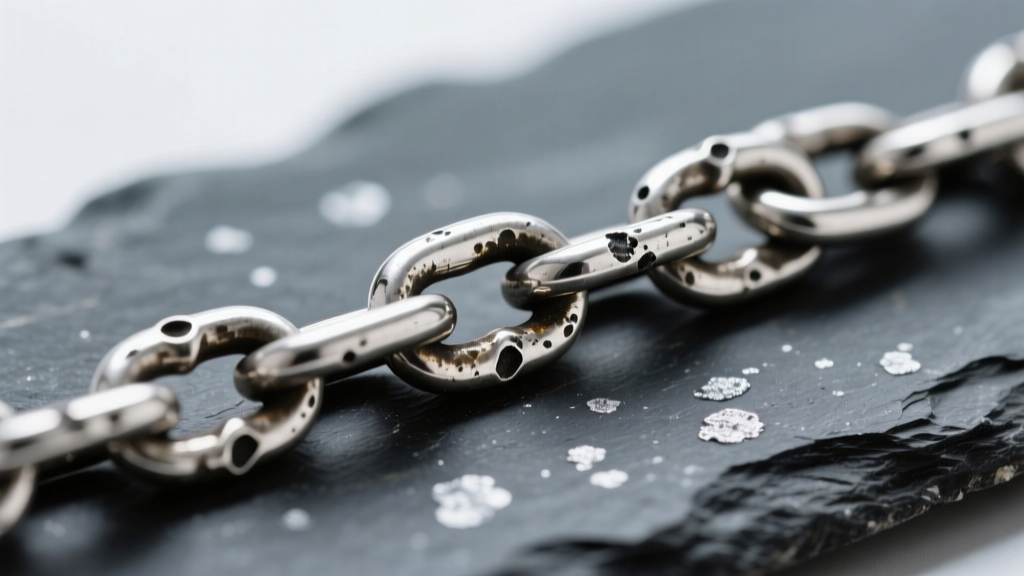
When you pull a favorite piece from your jewelry box only to find a dull, blackened chain, you are not looking at dirt or neglect. You are witnessing a real-time electrochemical reaction. Understanding why a tarnished necklace occurs requires looking past basic jewelry care and into the realm of metallurgy and surface chemistry. As a domain expert in jewelry materials, I see countless pieces ruined by well-meaning but chemically abrasive cleaning methods. This guide bypasses the generic home remedies and dives deep into the specific alloy compositions, oxidation states, and advanced restoration frameworks required to properly treat and prevent metallic degradation.
The Electrochemistry of Tarnish: Why Metals React
The most common misconception in jewelry care is that silver 'oxidizes' in normal atmospheric conditions. Pure silver is actually highly resistant to oxygen. The black crust on a tarnished necklace is primarily silver sulfide ($Ag_2S$). According to materials science data outlined by Corrosionpedia, tarnish is a specific type of corrosion that occurs when silver reacts with hydrogen sulfide ($H_2S$) gas present in the atmosphere, which originates from industrial pollution, volcanic activity, and even certain foods like eggs and onions.
In standard 925 sterling silver, the 7.5% copper alloy is also highly reactive. Copper reacts with oxygen and moisture to form copper oxide ($CuO$) and copper carbonate, which manifest as dark brown or greenish hues. Therefore, when you see a heavily tarnished sterling chain, you are actually looking at a dual-layer corrosion profile: a surface layer of silver sulfide masking an under-layer of copper oxidation.
Sterling Silver (925) vs. Argentium (935/960)
To understand susceptibility, we must compare standard sterling with modern Argentium alloys. Argentium silver replaces a portion of the copper with germanium. When exposed to oxygen, germanium forms a transparent, self-healing oxide layer ($GeO_2$) on the microscopic surface of the metal. This physical barrier actively blocks hydrogen sulfide molecules from reaching the silver atoms, reducing the tarnish rate by up to 95% compared to standard 925 alloys.
Material Grade Breakdown and Tarnish Susceptibility
Not all necklaces react to the environment equally. The table below maps the exact metallurgical profiles and their corresponding failure modes.
| Alloy / Material | Composition | Primary Corrosion Mechanism | Susceptibility Rate |
|---|---|---|---|
| 925 Sterling Silver | 92.5% Ag, 7.5% Cu | Ag2S (Silver Sulfide) & CuO (Copper Oxide) | High (Weeks to Months) |
| 935 Argentium | 93.5% Ag, Cu, Germanium | Blocked by GeO2 passivation layer | Very Low (Years) |
| 14k Gold-Filled | 5% 14k Au, 95% Brass Core | Galvanic corrosion if outer layer is breached | Low (Decades, if intact) |
| Vermeil | 2.5 microns Au over 925 Ag | Porous gold allows Ag2S migration to surface | Moderate (Months) |
| Surgical Steel (316L) | Fe, Cr, Ni, Mo | Chromium oxide passivation prevents sulfides | Negligible |
Advanced Restoration: Beyond Baking Soda and Foil
The internet is flooded with the 'aluminum foil and baking soda' trick. While chemically sound in theory, the execution often damages delicate jewelry. Let us break down the actual science of electrochemical reduction and chemical dips.
Electrochemical Reduction (The Safe Method)
This method reverses the silver sulfide back into pure silver without removing any host metal. Aluminum has a much lower standard electrode potential (-1.66V) than silver (+0.80V). When submerged in a hot, highly alkaline electrolyte solution (washing soda / sodium carbonate), the aluminum acts as a sacrificial anode. It donates electrons to the silver sulfide, breaking the sulfur-silver bond.
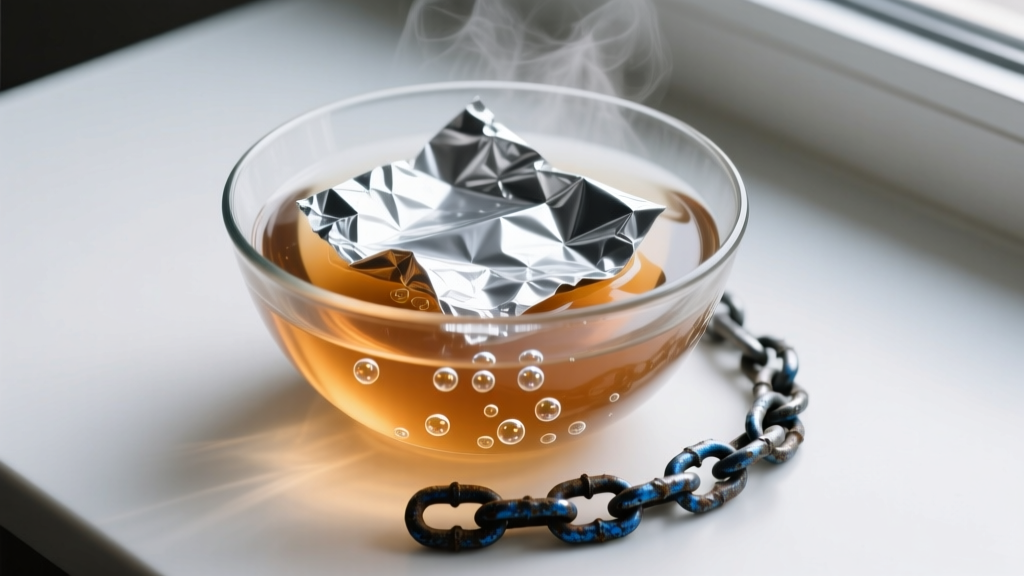
Expert Warning: Never use this method on necklaces with porous gemstones (opal, turquoise, pearls, or emeralds). The hot alkaline bath will permanently destroy the crystalline structure and hydration levels of these stones.
The byproduct of this reaction is hydrogen sulfide gas, which is why the process smells distinctly of rotten eggs. To execute this safely: use a glass vessel, line the bottom with heavy-duty aluminum foil (shiny side up), add 1 tablespoon of pure sodium carbonate (not baking soda, which is too weak) per liter of boiling water, and submerge the chain for exactly 3 to 5 minutes. Rinse immediately in distilled water.
Chemical Dips (The Destructive Method)
Commercial liquid silver dips rely on thiourea and strong acids. While they instantly strip a tarnished necklace of its black coating, they do so by dissolving the surface layer of the metal. According to research indexed by ScienceDirect, acid baths leave the silver microscopically pitted and porous. This increased surface area actually accelerates future tarnishing, creating a vicious cycle where the necklace requires increasingly frequent and destructive chemical baths.
Micro-Abrasion and Polishing: Restoring the Luster
After electrochemical reduction, the silver is chemically pure but visually matte. To restore the mirror finish, you must use controlled micro-abrasion. Forget toothpaste; hydrated silica particles in toothpaste range from 5 to 15 microns in size. Silver is exceptionally soft (2.5 to 3 on the Mohs scale), and coarse abrasives will leave deep, permanent micro-scratches that trap dirt and moisture.
Professional jewelers use a two-step polishing process:
- Cutting (Tripoli): A mild abrasive compound (typically pumice or diatomaceous earth suspended in wax) used on a hard muslin wheel to level out microscopic scratches and remove stubborn copper oxide spots.
- Coloring (Jeweler's Rouge): Iron oxide ($Fe_2O_3$) particles that are less than 1 micron in size. Applied with a soft flannel wheel, this burnishes the silver at a microscopic level, aligning the surface crystals to reflect light uniformly without removing any measurable weight from the chain.
Preventative Metallurgy and Storage Environments
Preventing a tarnished necklace from forming in the first place requires controlling the atmospheric environment around the metal. Standard plastic ziplock bags are actually detrimental; many cheap plastics emit sulfur compounds as they degrade, accelerating the very reaction you are trying to prevent.
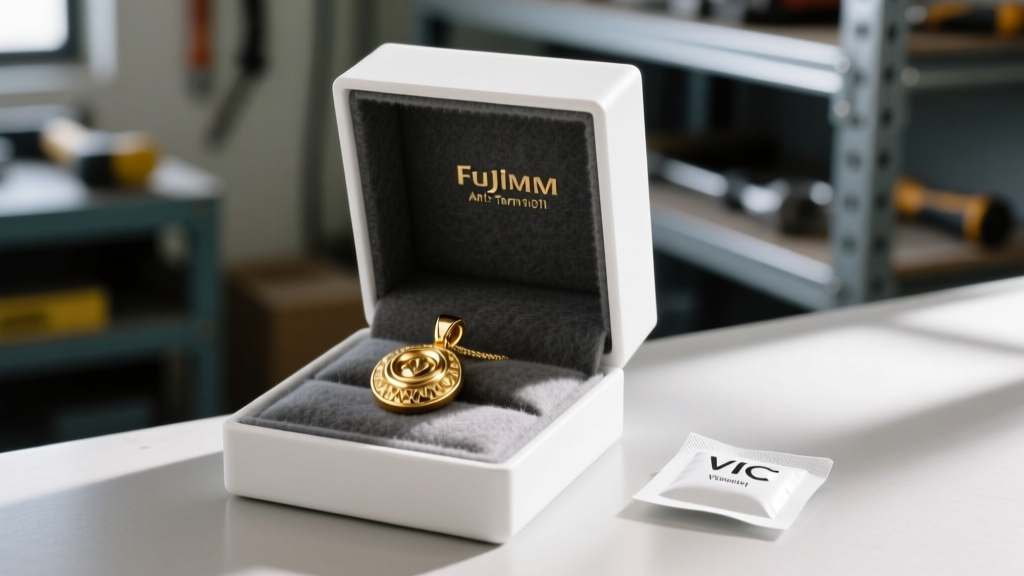
Vapor Corrosion Inhibitors (VCIs)
The gold standard in archival jewelry storage is the use of Vapor Corrosion Inhibitors. VCI strips contain specialized organic salts that sublimate at room temperature, filling the enclosed air space with a protective gas. When these gas molecules contact the silver or copper atoms, they form a mono-molecular barrier that is only a few angstroms thick. This barrier is completely invisible and does not alter the electrical conductivity or optical properties of the metal, but it physically prevents $H_2S$ and $O_2$ molecules from bonding to the surface. For high-value pieces, storing them in an airtight acrylic box with a 3M anti-tarnish strip and silica gel desiccant (to drop relative humidity below 40%) will halt corrosion almost indefinitely.
Expert Troubleshooting: When Tarnish is Actually Plating Loss
Sometimes, what appears to be a tarnished necklace is actually a catastrophic failure of the plating layer. If your gold-colored necklace is developing dark, brassy patches that do not respond to standard gold polishing, you are likely dealing with a gold-plated or gold-vermeil piece where the outer layer has worn away.
The Gemological Institute of America (GIA) notes that gold plating on silver or brass cores is measured in microns. Standard fashion jewelry plating is often less than 0.5 microns thick. When friction from the skin and clothing wears through this microscopic layer, the underlying brass or copper core is exposed to the air. This exposed core oxidizes rapidly, creating dark, stubborn spots that look like tarnish but are actually bare base metal. No amount of silver polishing cloth or chemical dip will fix this; the only metallurgical solution is to have the piece professionally stripped and re-plated by an electroplating specialist.
By understanding the exact chemical and physical properties of your jewelry, you can move beyond guesswork and apply precise, scientifically backed methods to preserve your collection for decades.


