Teardrop Necklace Pendant Value: 2026 Pricing & Metals
Discover the true value of a teardrop necklace pendant in 2026. Compare prices, metal grades, and gemstone options to maximize your jewelry budget.

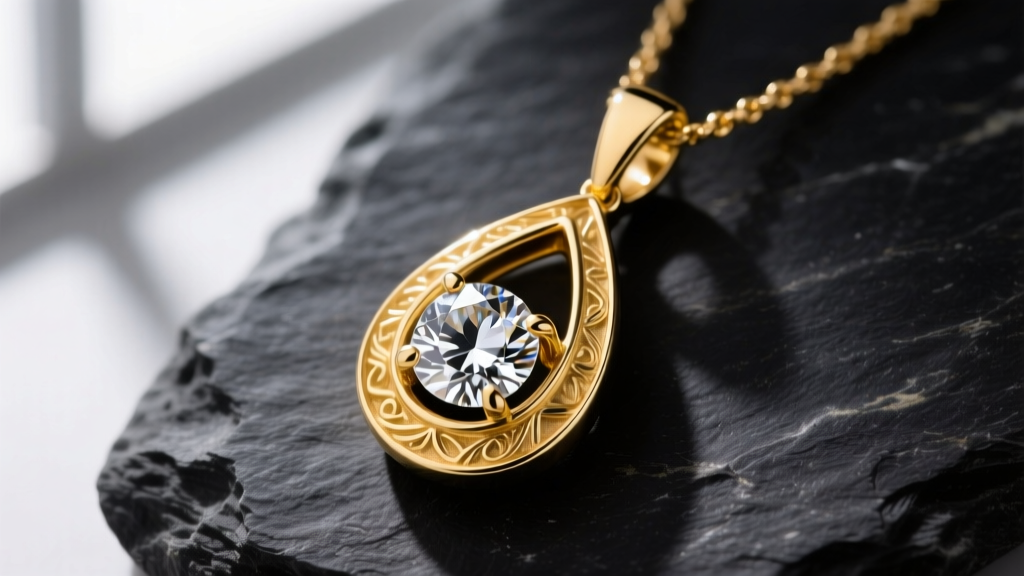
When shopping for a teardrop necklace pendant, the line between an heirloom-quality investment and an overpriced fashion accessory is often blurred by deceptive marketing and confusing material grades. The teardrop shape—gemologically known as the pear cut—is a brilliant hybrid of the round and marquise shapes, offering a unique silhouette that elongates the neckline. However, its asymmetrical geometry and delicate pointed tip make it uniquely challenging to set, meaning budget buyers often end up paying for poor craftsmanship disguised as luxury.
In this 2026 value assessment, we strip away the retail markup to analyze the true cost of materials, the structural requirements for pear-cut settings, and the exact price brackets where you get the highest return on your jewelry budget. Whether you are eyeing a lab-grown diamond, a moissanite, or a high-leaded crystal, understanding the anatomy of value is your first line of defense against buyer’s remorse.
The Anatomy of a Teardrop Pendant: What You Are Actually Paying For
Before assessing the price tag, you must evaluate the cut quality of the stone itself. According to the Gemological Institute of America (GIA), the ideal length-to-width ratio for a pear-shaped gemstone sits between 1.45 and 1.75. A ratio below 1.45 results in a stubby, overly wide teardrop that lacks elegance, while a ratio above 1.75 creates a needle-like shape that is highly prone to chipping at the tip.
Furthermore, teardrop pendants are susceptible to the ‘bowtie effect’—a dark, shadowy band that stretches across the width of the stone’s center. This occurs when light leaks out of the bottom of the gem due to poor facet alignment. In budget-tier pendants (typically under $150), manufacturers often use poorly calibrated commercial-grade stones with severe bowties. When assessing value, always request a macro-video of the pendant in motion. If the center of the teardrop flashes dark grey or black as it moves, the light performance is compromised, and the pendant is not worth a premium price, regardless of the carat weight.
Gemstone Value Matrix: From Crystal to Lab-Grown Diamonds
The center stone dictates up to 80% of a teardrop pendant’s cost. In 2026, the market is saturated with diamond simulants and lab-grown alternatives, making it crucial to understand the price-to-durability ratio of each material. Below is a comparative matrix of the most common teardrop gemstones, analyzing their true market value against their physical properties.
| Material | Avg. Price (1ct equiv.) | Mohs Hardness | Refractive Index (Brilliance) | Value Verdict |
|---|---|---|---|---|
| Leaded Glass / Crystal | $15 - $40 | 5.5 - 6.0 | 1.50 - 1.70 | Low (Scratches easily, lacks depth) |
| Cubic Zirconia (CZ) | $20 - $60 | 8.0 - 8.5 | 2.15 - 2.18 | Medium-Low (Clouds over time) |
| Moissanite | $150 - $350 | 9.25 | 2.65 - 2.69 | High (Exceptional fire, lifetime durability) |
| Lab-Grown Diamond | $250 - $600 | 10.0 | 2.42 | Very High (Identical to natural, massive savings) |
| Natural Diamond | $2,500 - $8,000+ | 10.0 | 2.42 | Situational (Paying for rarity, not optics) |
The Value Sweet Spot: For a teardrop necklace pendant intended for daily wear, moissanite and lab-grown diamonds offer the highest functional value. CZ, while initially brilliant, is porous and will absorb skin oils and lotions, turning cloudy within 12 to 18 months of daily wear. Moissanite’s higher refractive index gives it a fiery rainbow dispersion that beautifully masks the bowtie effect common in pear cuts.
Precious Metal Settings: Where Budgets Bleed (and How to Stop It)
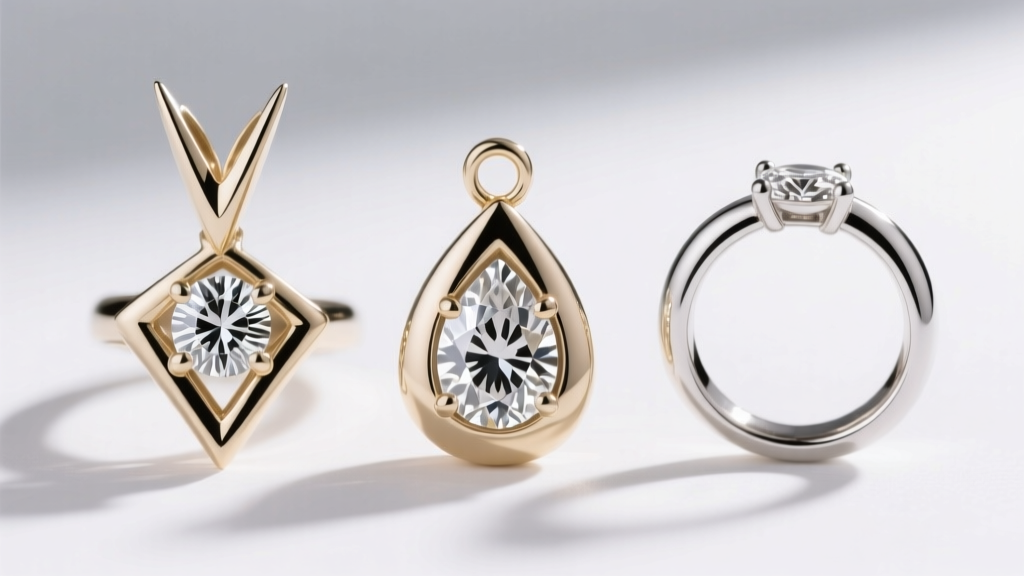
The metal setting is where retailers often hide inflated margins. A common trap is the ‘gold vermeil’ or ‘gold-filled’ teardrop pendant. While the Federal Trade Commission (FTC) regulates these terms, consumers often mistake them for solid gold. Vermeil is merely a thick layer of gold over sterling silver. Because the teardrop shape requires a highly specific, delicate prong at its pointed tip, vermeil settings frequently wear down at the friction points, leading to catastrophic stone loss.
14k Solid Gold (58.5% pure gold) remains the undisputed champion of value for pear-cut pendants. Pure 24k gold is far too malleable, and even 18k gold (75% pure) can be too soft to securely grip the sharp tip of a teardrop over decades of wear. 14k gold offers a tensile strength of roughly 350-400 MPa, providing the rigid structural integrity required to maintain prong tension without bending. If a retailer is charging a premium for an 18k gold setting on a teardrop pendant under 0.75 carats, you are paying for a softer, less secure metal that offers no visual advantage over 14k.
Red Flags & Failure Modes in Budget Teardrop Pendants
When evaluating pendants in the sub-$200 market, be hyper-vigilant for the following manufacturing shortcuts that compromise the structural integrity of the teardrop shape:
- The Missing V-Prong: The pointed tip of a pear-cut stone is its most vulnerable edge. High-quality settings use a specialized ‘V-prong’ that wraps entirely around the point to protect it from micro-impacts. Budget pendants often use a standard round prong over the tip to save on casting costs. A single drop onto a bathroom counter will chip the stone’s girdle.
- Glued Bails: The bail (the loop the chain passes through) should be soldered or cast as one piece with the pendant basket. Budget manufacturers often use industrial jewelry glue to attach the bail to the back of the teardrop setting. Heat and humidity will degrade this adhesive within two years.
- Hollowed-Out Baskets: To reduce the gram-weight of precious metals, some brands hollow out the back of the pendant setting. While this lowers the upfront cost, it creates a pocket that traps moisture, lotion, and dead skin, accelerating tarnish and making the pendant impossible to clean properly.
Hidden Costs: Chain Pairings and Bail Hardware
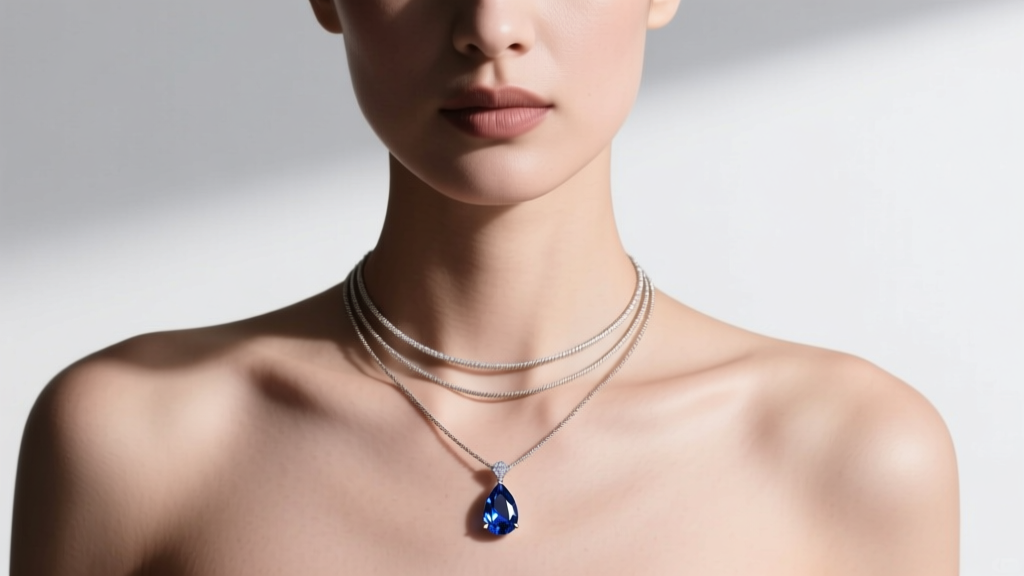
A teardrop pendant is heavily bottom-weighted. The geometry of the pear shape naturally pulls the chain downward, creating tension at the bail. If you purchase a pendant and pair it with an ultra-think 0.5mm box chain, the chain will kink and eventually snap under the pendulum-like motion of the teardrop.
For optimal value and longevity, pair teardrop pendants weighing over 1.5 grams with a 0.8mm to 1.2mm solid cable or rope chain. Furthermore, ensure the pendant features a ‘hidden bail’ or a tapered tube bail. Standard loop bails cause the teardrop to sit too high and flip upside down, ruining the visual elongation of the neckline.
2026 Market Pricing Tiers: Allocating Your Budget Wisely
To finalize your value assessment, use these 2026 market brackets to determine if a teardrop necklace pendant is fairly priced:
Tier 1: The Fashion Budget ($40 - $120)
Materials: Sterling silver or brass base with heavy gold plating; Cubic Zirconia or crystal center stones. Value Assessment: Acceptable only for occasional, trend-driven wear. Expect a lifespan of 1-3 years before plating wears off or the CZ clouds. Do not pay over $80 for this tier, regardless of brand marketing.
Tier 2: The Everyday Heirloom ($250 - $750)
Materials: Solid 14k yellow, white, or rose gold; Moissanite, lab-grown sapphire, or sub-0.50ct lab-grown diamond. Value Assessment: This is the highest value bracket. You are paying for permanent materials that will not tarnish, degrade, or lose their optical brilliance. A 14k gold and moissanite teardrop in this range should feature a V-prong and a solid, soldered bail.
Tier 3: The Premium Investment ($1,200 - $4,500+)
Materials: 14k/18k Gold or Platinum; 1.00ct to 2.50ct Lab-Grown or Natural Diamonds. Value Assessment: At this tier, value is dictated by the 4Cs (Cut, Color, Clarity, Carat). According to Jewelers of America, always demand a grading report from a reputable lab (like GIA or IGI) for any teardrop diamond over 0.75 carats. If a brand cannot provide a certificate verifying the length-to-width ratio and cut grade, walk away.
Expert Takeaway: The true value of a teardrop necklace pendant is not found in the carat weight alone, but in the precision of the cut and the structural security of the V-prong. Prioritize 14k solid gold and lab-grown alternatives to maximize your budget without sacrificing lifetime durability.


