How to Style a Chunky Diamond Necklace: 2026 Trend Guide
Discover how to style the chunky diamond necklace trend in 2026. Expert tips on carat weights, settings, layering, and neckline pairings.

The 2026 Shift: From Quiet Luxury to Bold Heirlooms
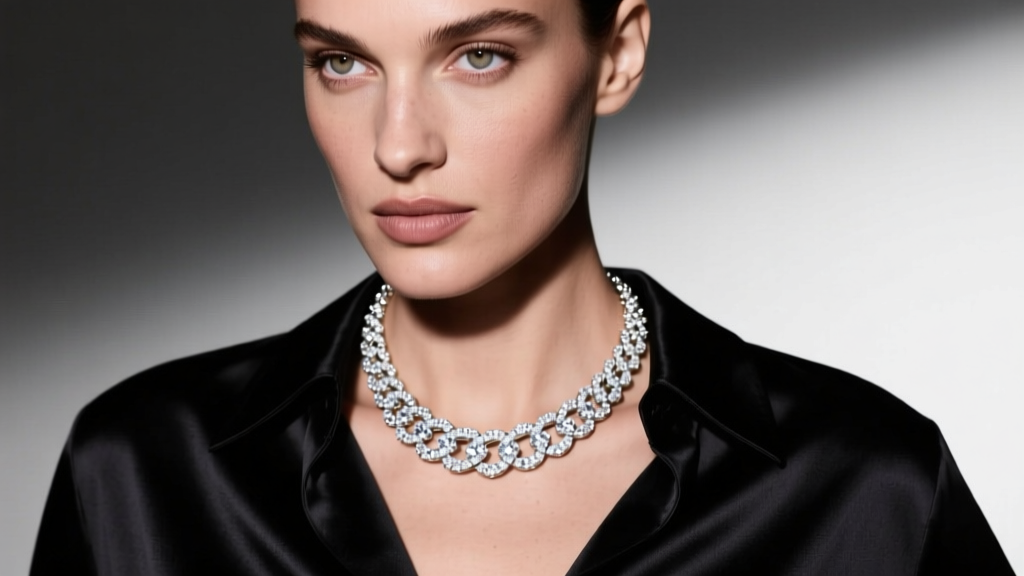
The pendulum of fine jewelry trends has officially swung. After several years dominated by the "quiet luxury" movement—characterized by barely-there chains and microscopic solitaires—2026 marks the definitive return of unapologetic volume. The chunky diamond necklace has emerged as the ultimate status piece, bridging the gap between vintage glamour and modern architectural design. We are no longer just talking about standard 3-carat tennis necklaces; today's statement pieces range from 15 to over 50 Total Carat Weight (TCW), featuring oversized links, graduated bezels, and heavy-gauge chains that demand attention.
This shift is driven by a desire for "bold heirlooms"—pieces that possess physical weight and undeniable presence. However, styling and purchasing a necklace of this magnitude requires a deep understanding of jewelry engineering, gemology, and wardrobe architecture. Wearing a 40-gram diamond collar is vastly different from draping a delicate 18-inch chain, and mastering the aesthetic requires precise styling techniques.
Anatomy of a Statement Piece: Carat, Cut, and Metallurgy
To qualify as "chunky" in the current market, a diamond necklace typically starts at 15 TCW, with the most coveted collector pieces hovering between 25 and 45 TCW. At this scale, the individual stones (melee or graduated centers) usually measure between 4mm and 8mm in diameter. This size increase introduces specific gemological challenges. According to the Gemological Institute of America (GIA), as diamond surface area increases, poor cut proportions become glaringly obvious. For stones over 4mm, you must demand "Excellent" or "Ideal" cut grades. Poorly cut large melee frequently exhibits the "fish-eye" effect—a dull, glassy ring in the center of the stone that completely kills scintillation and makes the necklace look flat under ambient lighting.
The Metallurgy of Weight: 18k White Gold vs. Platinum
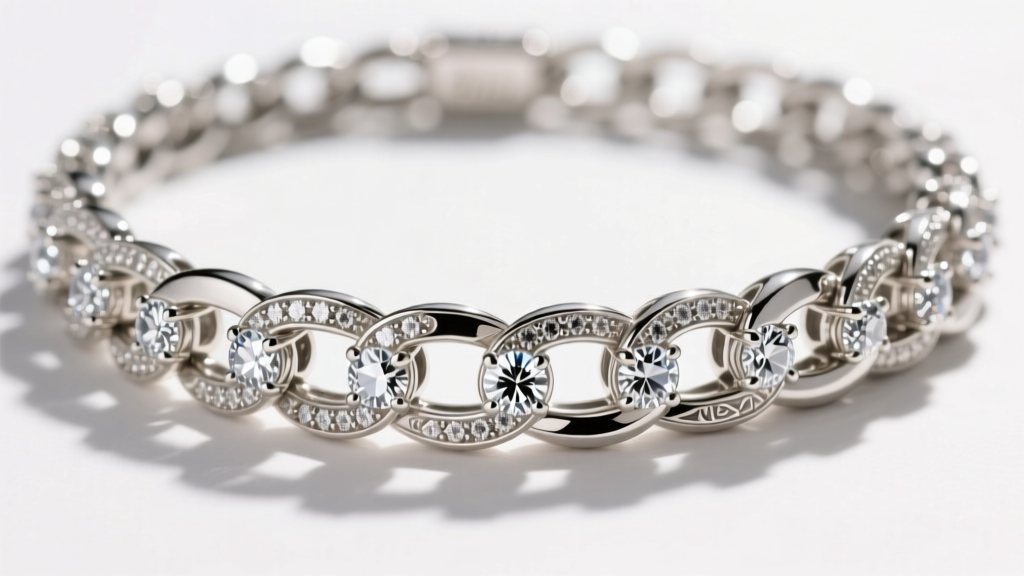
When dealing with heavy links and 30+ carats of diamonds, the choice of metal is not just about color; it is about structural integrity and neck fatigue. Platinum (PT950) is incredibly dense. A 25 TCW link necklace cast in solid platinum can easily exceed 65 grams, which translates to physical discomfort after a few hours of wear. Conversely, 18k white gold (alloyed with palladium or nickel for rigidity) offers a superior strength-to-weight ratio. The same design in 18k white gold will weigh roughly 40 to 45 grams, providing the necessary tensile strength to support heavy diamond links without acting like a literal anchor on your collarbone.
| Setting Style | Metal Weight | Security Level | Best For |
|---|---|---|---|
| Four-Prong | Low | Moderate | Maximum light return, classic tennis styles |
| Bezel | High | Exceptional | Active wear, modern chunky links, snag-free |
| Channel | Medium | High | Vintage aesthetics, uniform sparkle, protected girdles |
Neckline Architecture: Pairing Your Necklace with Wardrobe Staples
A chunky diamond necklace acts as a visual anchor. If paired with the wrong neckline, it can look cluttered or overwhelm the wearer's frame. The key is to allow the jewelry to occupy its own dedicated negative space.
- The Deep Plunge (V-Neck): Opt for an 18-inch or 20-inch graduated tennis necklace. The graduated stones (smaller at the clasp, largest at the center drop) will perfectly mirror the geometry of the V-neckline, elongating the torso.
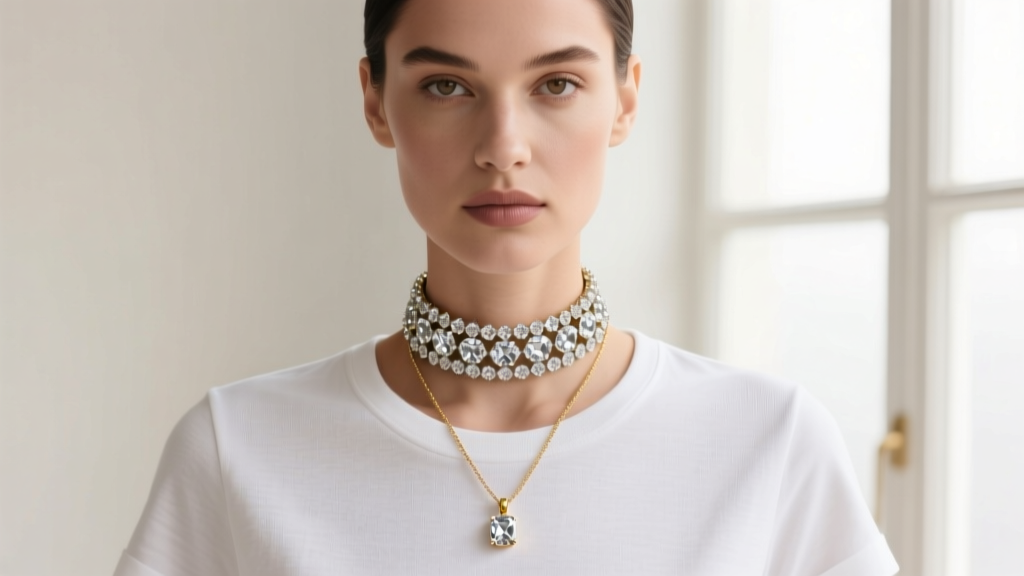
- The Crew Neck / T-Shirt: This is where the 16-inch choker-style chunky link necklace shines. Resting high on the collarbone, it creates a stark, high-fashion contrast against casual cotton. Ensure the links are flexible enough to contour to the hollow of the neck rather than sitting rigidly on top of the fabric.
- Off-the-Shoulder / Strapless: A rigid or semi-rigid diamond collar (14 to 15 inches) works best here. Because the shoulders are entirely bare, a structured collar provides an architectural frame for the face without getting lost in folds of fabric.
- The Button-Down (Unbuttoned): Layer a 22-inch chunky chain with a visible box clasp over a crisp white poplin shirt. The contrast between the sharp, matte cotton and the high-refractive-index diamonds is a staple of 2026 editorial styling.
Layering Frameworks: Mixing Weights and Textures
While a massive diamond necklace can easily stand alone, the 2026 trend cycle heavily favors intentional, asymmetrical layering. The goal is to mix heavy carat weights with contrasting textures to avoid looking like a walking chandelier.
The 3-Point Layering Rule
To successfully layer a chunky diamond piece, adhere to the 3-Point Rule, ensuring a minimum 2-inch drop difference between each layer:
- The Anchor (15-16 inches): Your chunky diamond choker or heavy link collar. This sits at the base of the throat.
- The Bridge (18 inches): A medium-weight, non-diamond chain. Think a 4mm Cuban link in yellow gold or a woven wheat chain. The contrasting metal color (e.g., yellow gold against white gold diamonds) breaks up the visual monotony.
- The Pendulum (22-24 inches): A delicate chain featuring a single, substantial pendant (like a raw uncut gemstone or a heavy gold signet). This draws the eye downward and balances the heavy sparkle at the collarbone.
Investment & Pricing: Lab-Grown vs. Natural in the Current Market
The pricing landscape for high-carat diamond necklaces has bifurcated dramatically. The Natural Diamonds Council notes that while natural stones retain their status as rare geological assets, lab-grown diamonds have unlocked the ability for consumers to achieve the "chunky" aesthetic at a fraction of the historical cost.
For a 25 TCW tennis necklace featuring VS1 clarity and F color stones:
- Lab-Grown Diamonds: Expect to pay between $12,000 and $18,000, depending on the precision of the cut and the brand's retail markup. This market has matured, and top-tier lab stones now exhibit identical optical properties to mined stones.
- Natural Earth-Mined Diamonds: The price jumps exponentially to between $85,000 and $140,000. You are paying for geological rarity and long-term asset retention.
When buying chunky lab-grown pieces, ensure the setting is still crafted from solid 18k gold or platinum. Many mass-market jewelers cut costs by pairing expensive lab diamonds with hollow-tube chains or silver-plated brass, which will inevitably snap under the weight of 25 carats.
Maintenance and Clasp Security for Heavy Links
The most common failure point in any heavy necklace is the clasp. A standard lobster clasp or spring-ring is rated for roughly 10 to 15 grams of tension before the internal spring mechanism fatigues and fails. A chunky 25 TCW necklace can easily weigh 45 to 60 grams. If you are wearing a heavy piece with a lobster clasp, you are one sudden movement away from a catastrophic loss.
The Mandatory Hardware: Any chunky diamond necklace must feature a hidden Box Clasp with a primary locking tongue, flanked by dual figure-8 wire safety catches. The box clasp distributes the tensile load across a wider surface area, while the figure-8 safeties act as redundant backups if the primary tongue is accidentally depressed against your neck or clothing.
Cleaning Protocols: Avoid ultrasonic cleaners for chunky link necklaces unless you are certain the stones are not fracture-filled or treated. The high-frequency vibrations can loosen the prongs on heavy links, especially if the necklace is tossed loosely into the steel tank. Instead, use a soft-bristled baby toothbrush, warm water, and a few drops of degreasing dish soap, gently working the bristles into the gallery wire beneath each stone to remove trapped lotions and sebum that dull the diamond's brilliance.


