The Anatomy of a Necklace of Hearts: Metallurgy & Mechanics
Explore the metallurgy, casting techniques, and structural mechanics behind a durable necklace of hearts. Expert insights on alloys and chain gauges.

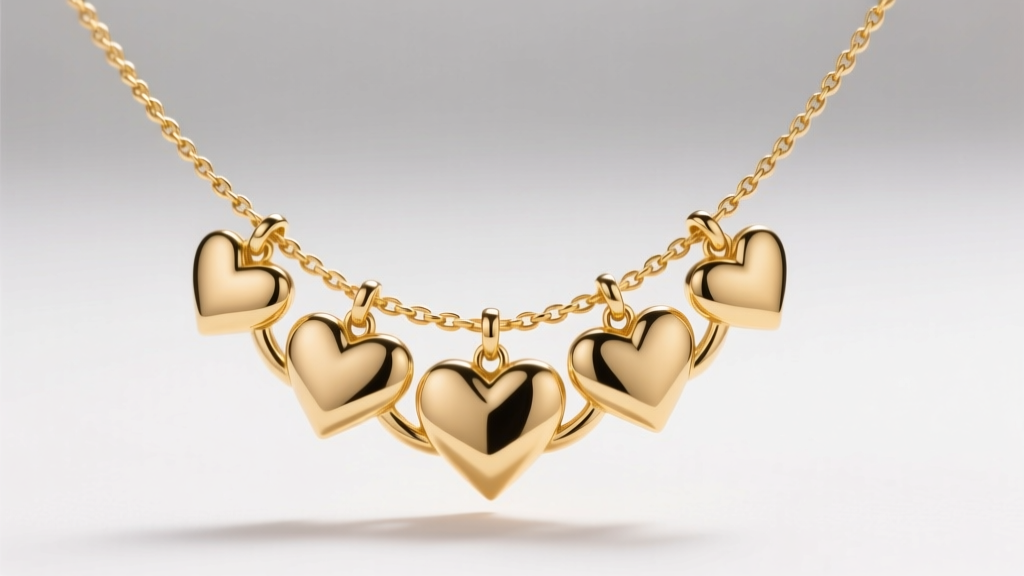
The Engineering Behind the Necklace of Hearts
When evaluating a necklace of hearts, most consumers focus purely on the aesthetic arrangement of the charms, the symbolism of the motif, or the brilliance of any accent gemstones. However, from a master jeweler's perspective, a multi-heart or interlocking heart necklace is a complex exercise in structural engineering, weight distribution, and metallurgical science. Unlike a single, static pendant, a necklace featuring multiple heart elements introduces dynamic stress points, variable friction zones, and cumulative tensile loads that can quickly compromise inferior craftsmanship.
As of 2026, advancements in CAD-driven wax milling and vacuum-assisted casting have revolutionized how these intricate pieces are produced, yet the fundamental physics of jewelry wear remain unchanged. This deep dive explores the technical anatomy of the necklace of hearts, breaking down the alloy compositions, manufacturing methodologies, and load-bearing mechanics required to ensure these sentimental pieces survive decades of daily wear without structural failure.
Metallurgical Selection: Hardness vs. Malleability
The structural integrity of any heart pendant begins at the atomic level. Pure gold (24k) is far too malleable for jewelry that experiences the kinetic friction of a necklace of hearts; the interlocking loops and delicate bottom points of the heart shapes would warp and bend under minimal pressure. Therefore, alloying is strictly necessary to increase the Vickers Hardness (HV) and yield strength of the metal.
According to metallurgical data provided by the Gemological Institute of America (GIA), the ratio of copper, silver, and zinc mixed with pure gold dictates not only the color but the mechanical durability of the piece. For a necklace of hearts featuring interlocking elements or heavy multi-charm arrangements, 14k gold is often technically superior to 18k gold due to its higher copper content, which significantly increases tensile strength and resistance to deformation.
| Alloy Composition | Vickers Hardness (HV) | Yield Strength (MPa) | Best Application in Heart Necklaces |
|---|---|---|---|
| 14k Yellow Gold (58.5% Au) | 120 - 140 | 350 - 420 | Interlocking hearts, multi-charm chains, daily wear |
| 18k Yellow Gold (75% Au) | 90 - 115 | 220 - 280 | Solitaire heart pendants, lightweight stationary charms |
| Platinum 950/Ruthenium | 130 - 150 | 450 - 550 | Heirloom pieces, micro-pavé heart halos, high-friction bails |
| Sterling Silver (92.5% Ag) | 60 - 75 | 150 - 180 | Fashion jewelry, occasional wear (requires rhodium plating) |
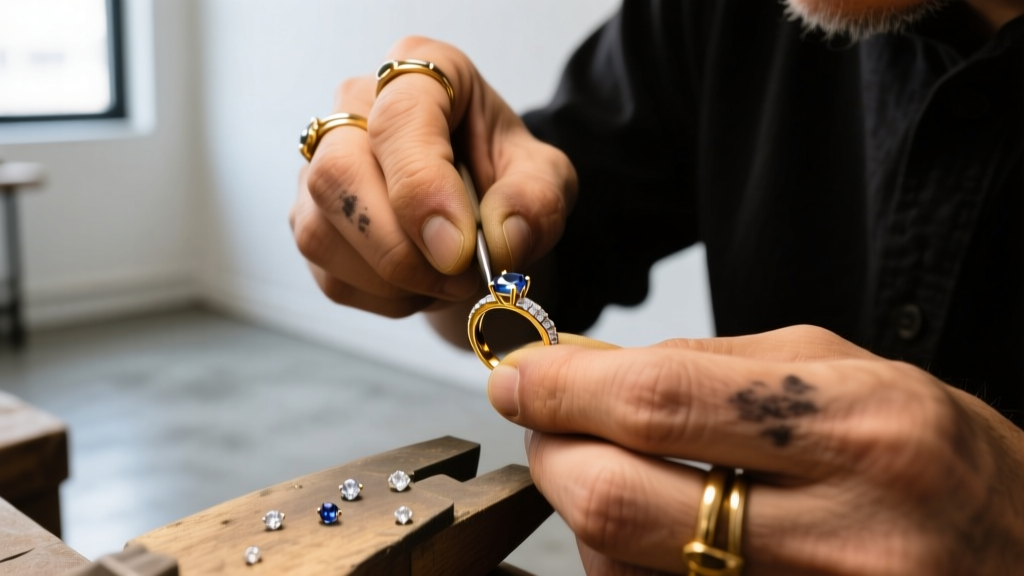
Manufacturing Methods: Die Stamping vs. Lost-Wax Casting
The methodology used to form the heart pendants drastically affects their internal density and long-term durability. There are two primary manufacturing routes for a necklace of hearts: die stamping and lost-wax casting.
Die Stamping and Work-Hardening
For thin, flat, or slightly domed heart charms, die stamping is the superior technical choice. A high-tonnage press forces a hardened steel die into a sheet of precious metal. This process compresses the grain structure of the metal, resulting in work-hardening. Stamped heart pendants are exceptionally dense, free of internal voids, and highly resistant to denting. The edges are sheared and polished, resulting in a structurally uniform piece that can withstand the repetitive impacts of daily wear.
The Porosity Problem in Cast Hearts
For three-dimensional, hollow, or intricately sculpted heart pendants, lost-wax casting is required. However, casting introduces the risk of shrinkage porosity. The classic heart shape presents a unique thermal challenge during the cooling phase: the bottom point of the heart acts as a thermal hotspot, while the upper cleft cools at a different rate. If the sprue (the channel through which molten metal flows) is not perfectly calculated, microscopic air bubbles become trapped inside the bottom point of the heart.
"Porosity in cast pendants is the leading cause of catastrophic bail failure. A microscopic void near the jump ring hole reduces the effective load-bearing cross-section of the metal by up to 40%, leading to sudden shear fractures." — Manufacturing guidelines from the Jewelers of America.
To mitigate this in modern necklace of hearts designs, manufacturers utilize vacuum-assisted casting and carefully position the sprue base at the top cleft of the heart, allowing the molten metal to flow downward and pack tightly into the bottom point under centrifugal or vacuum pressure.
Chain Gauge and Load-Bearing Mechanics
A common failure point in a necklace of hearts is not the pendant itself, but the chain supporting it. A single heart pendant might weigh 2 to 4 grams, easily supported by a delicate 0.8mm cable chain. However, a multi-heart necklace featuring five to seven charms can easily exceed 15 to 20 grams. This cumulative weight introduces severe localized tensile stress, particularly at the links immediately adjacent to the clasp and the links where the charms are soldered.
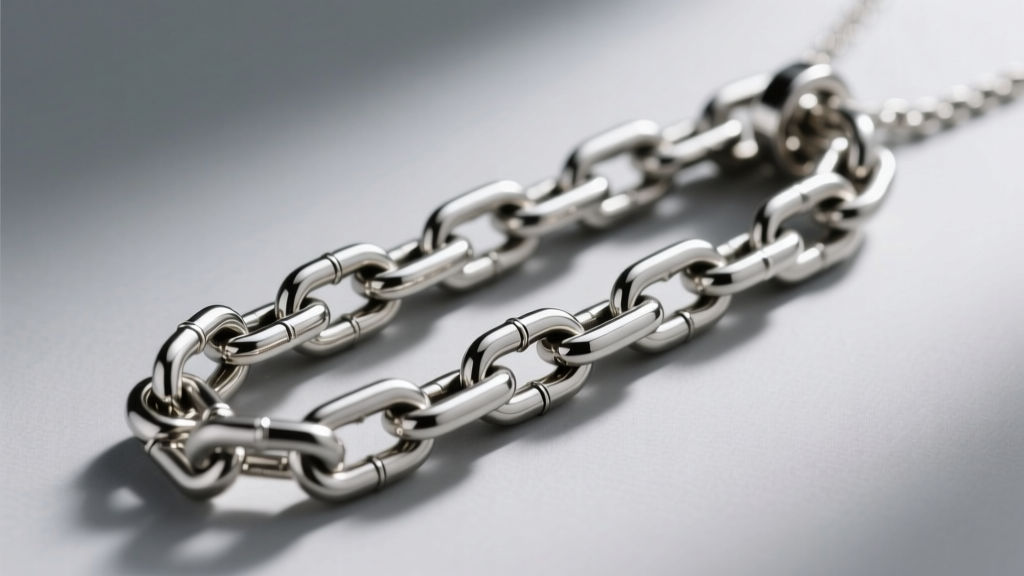
When selecting or designing a chain for a multi-heart configuration, jewelers must calculate the yield strength of the chain links. Cable chains, while classic, have a single soldered joint per link. If that solder joint is subjected to the lateral pull of a heavy, swinging heart charm, it will eventually fatigue and snap. For a necklace of hearts, structural experts recommend the following chain architectures:
- Box Chains (1.2mm - 1.5mm): The interlocking square links distribute weight across four distinct contact points per link, eliminating single-point solder failures and providing excellent lateral rigidity.
- Wheat Chains (1.0mm - 1.3mm): Woven in a continuous, multi-directional pattern, wheat chains offer superior flexibility and a high tensile break-point, making them ideal for heavy, clustered heart charms.
- Rope Chains (1.5mm+): The twisted geometry provides immense structural redundancy, though the textured surface can cause accelerated friction wear on the bails of the heart pendants.
Bail Engineering and Friction Wear
The bail—the loop that connects the heart pendant to the chain—is the most critical mechanical joint in the entire assembly. In a necklace of hearts, where multiple pendants slide and collide along the chain, the interior of the bail is subjected to constant micro-abrasion. Over a period of three to five years, this friction can literally saw through a poorly engineered bail.
To combat this, high-end manufacturers utilize hardened steel inserts or platinum-lined bails for 14k and 18k gold heart pendants. Alternatively, the bail itself is cast in a higher-karat, harder alloy (such as a specialized palladium-white gold) and then soldered onto the yellow or rose gold heart body. Furthermore, the geometry of the bail must allow for a full range of motion; a bail that is too tight will bind against the chain links, transferring kinetic stress directly to the solder joint connecting the bail to the heart's top cleft, eventually causing the pendant to snap off entirely.
Maintenance and Structural Troubleshooting
Even the most meticulously engineered necklace of hearts requires proactive maintenance to ensure longevity. Owners and jewelers should perform a bi-annual structural audit focusing on three specific failure modes:
- Bail Thinning: Inspect the interior curve of the bail under a 10x loupe. If the metal has worn down by more than 20% of its original thickness, the bail must be re-tipped or replaced before catastrophic failure occurs.
- Jump Ring Gap Migration: The jump rings connecting the hearts to the chain can slowly twist open due to the rotational drag of the pendants. Ensure all jump rings are soldered shut or utilize heavy-gauge split rings.
- Micro-Fractures at the Cleft: The top indentation of the heart shape is a natural stress concentrator. Check this area for hairline cracks, especially on cast pendants that have been subjected to accidental impacts or snagging on clothing.
By understanding the intricate metallurgy, precise casting requirements, and load-bearing physics involved, consumers and jewelers alike can appreciate the true complexity of the necklace of hearts. It is not merely a decorative accessory, but a triumph of micro-engineering designed to endure the rigors of daily life while preserving its profound sentimental value.


