How to Choose a Necklace With Pink Gemstones: Expert Guide
Discover the gemological traits, durability ratings, and setting techniques for a necklace with pink gems like morganite, sapphire, and tourmaline.

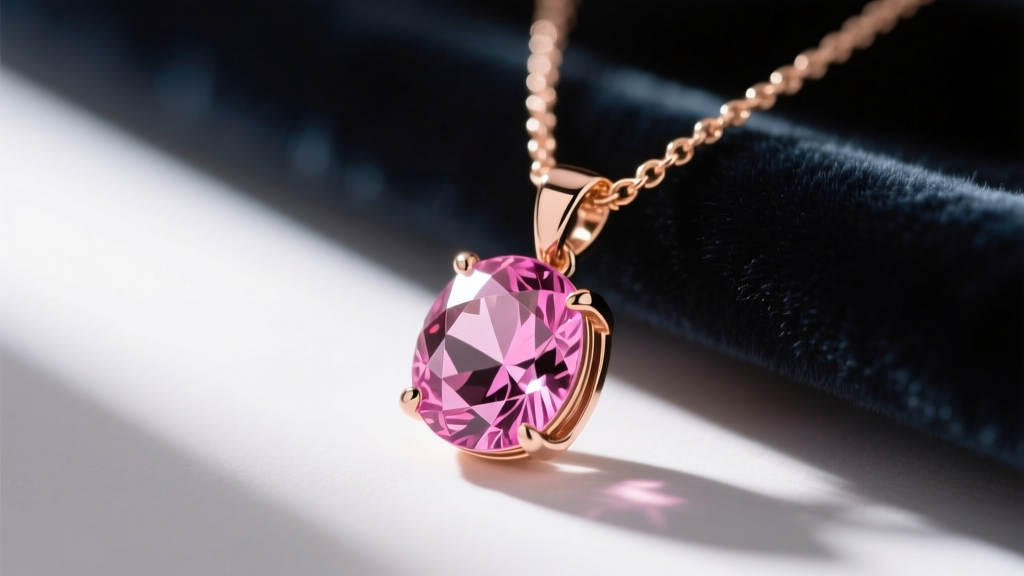
The Gemological Spectrum of Pink Stones
When sourcing a necklace with pink gemstones, the aesthetic appeal of the color is only the surface-level consideration. For jewelry professionals and serious collectors, the structural integrity, optical properties, and treatment history of the stone dictate both the setting requirements and the long-term viability of the piece. The pink gemstone market is dominated by four primary minerals, each presenting unique gemological challenges that must be addressed during the manufacturing and setting phases.
According to the Gemological Institute of America (GIA), understanding the specific gravity and refractive index of these stones is critical for identifying synthetics and detecting lattice diffusion treatments, which are prevalent in the modern corundum market.
| Gemstone | Mineral Family | Mohs Hardness | Refractive Index | Cleavage / Parting | Ultrasonic Safe? |
|---|---|---|---|---|---|
| Pink Sapphire | Corundum | 9.0 | 1.762 - 1.770 | None / Parting | Yes (with caveats) |
| Morganite | Beryl | 7.5 - 8.0 | 1.577 - 1.583 | None / Poor | No |
| Rubellite | Tourmaline | 7.0 - 7.5 | 1.624 - 1.644 | None / Poor | No |
| Rhodochrosite | Carbonate | 3.5 - 4.0 | 1.597 - 1.817 | Perfect | No |
Technical Setting Requirements for Pink Pendants
The transition from a loose stone to a secure pendant requires precise metallurgical and mechanical engineering. The setting must account for the stone's cleavage planes, brittleness, and thermal sensitivity.
Prong vs. Bezel: Protecting Softer Stones
For a necklace with pink morganite or rubellite tourmaline, standard four-prong settings are often insufficient due to the high risk of impact damage at the girdle. Morganite, while possessing a respectable Mohs hardness of 7.5 to 8, is notoriously brittle. Lapidaries often cut morganite with deep pavilions to maximize color saturation, resulting in a thick girdle that is difficult to secure with standard V-prongs.
Expert jewelers recommend a modified bezel or a six-prong basket setting for morganite pendants exceeding 3 carats. The metal tolerance between the gemstone girdle and the setting seat must be kept under 0.05mm to prevent rotational shifting, which can lead to catastrophic chipping if the pendant swings and strikes a hard surface.
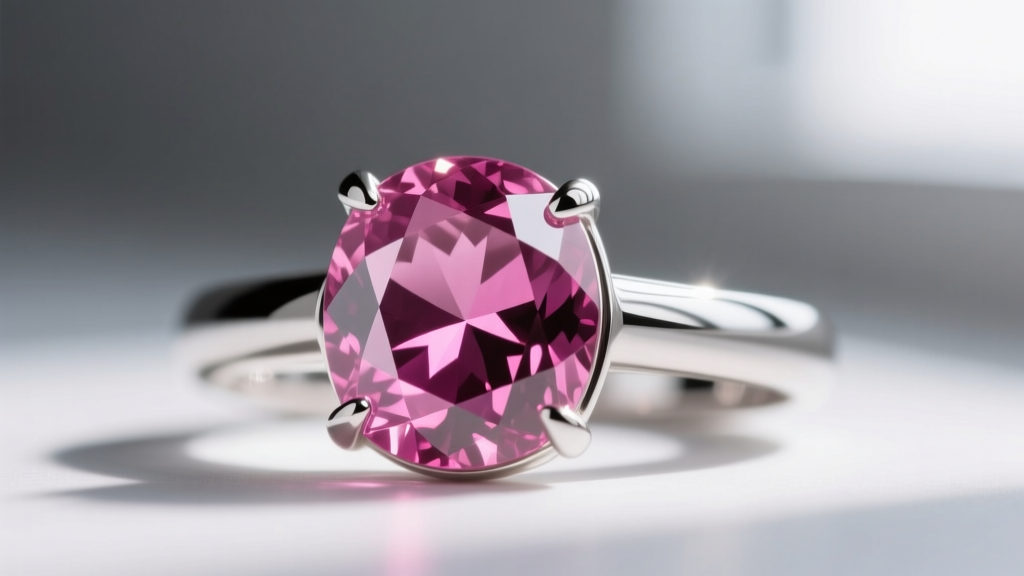
Metallurgical Pairings: Rose Gold vs. Platinum
The choice of alloy significantly impacts the optical performance of pink gemstones. 14k and 18k rose gold (alloyed with copper and a small percentage of silver) naturally amplify the warm, peachy-pink hues of morganite. However, copper oxidation over time can slightly alter the metal's surface reflectivity. Platinum, conversely, offers a neutral, high-reflectivity backdrop that is ideal for the cool, neon-pink saturation of unheated Burmese or Mahenge pink sapphires. From a structural standpoint, platinum's tensile strength and malleability make it the superior choice for securing highly included rubellite tourmaline, as the prongs can be burnished tightly without the risk of work-hardening and snapping, a common failure mode in high-karat gold alloys.
Chain Engineering: Gauge and Clasp Mechanics
A pendant is only as secure as the chain suspending it. When designing or purchasing a necklace with pink gems, the weight of the pendant must be mathematically matched to the tensile strength of the chain gauge and the spring tension of the clasp.
Weight-to-Gauge Ratios
Pink gemstones, particularly beryls and tourmalines, are frequently cut into large, statement-sized cabochons or elongated emerald cuts that can easily exceed 15 grams in total pendant weight. Utilizing a standard 0.8mm cable chain for a 15-gram pendant will result in metal fatigue and eventual chain failure at the solder points near the clasp.
- 0.8mm - 1.0mm Gauge: Tensile strength of 3-5 lbs. Suitable only for delicate pendants weighing under 4 grams (e.g., small diamond-accented pink sapphire drops).
- 1.2mm - 1.5mm Gauge: Tensile strength of 8-12 lbs. The minimum recommended thickness for medium-to-large morganite or tourmaline pendants weighing between 5 and 12 grams.
- 2.0mm+ Gauge (e.g., Miami Cuban or Wheat): Tensile strength exceeding 20 lbs. Required for heavy, solid rhodochrosite or massive rubellite statement pieces.
Clasp Tension and Security
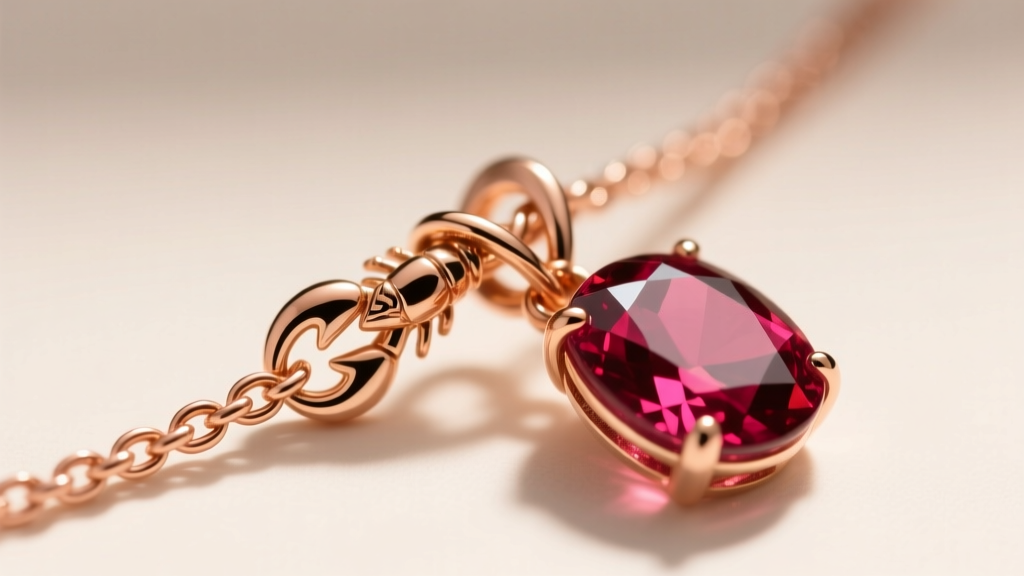
Standard spring ring clasps offer approximately 1.5 lbs of spring tension, which is inadequate for heavy pendants; the ring can easily catch on clothing and pull open. For any pink gemstone pendant over 5 grams, a forged lobster clasp with a minimum internal spring tension of 3.5 lbs is mandatory. For ultra-high-value unheated pink sapphires, a secondary security chain (a 0.5mm micro-cable linking the two sides of the primary clasp) should be integrated to prevent total loss if the primary clasp mechanism fails.
Color Grading and Metameric Variables
Evaluating the color of a pink gemstone requires strict control over lighting variables. Pink is a highly metameric color, meaning its appearance shifts dramatically depending on the spectral power distribution of the light source.
'When grading pink corundum or tourmaline, reliance on standard retail jewelry lighting (often 3000K-4000K warm LEDs) will artificially enhance red and orange secondary hues, masking undesirable brown or gray modifiers. Accurate grading requires a 5000K-5500K daylight equivalent light source with a Color Rendering Index (CRI) of 95 or higher.' — Lotus Gemology
Furthermore, buyers must be wary of beryllium lattice diffusion in pink sapphires. This treatment introduces beryllium into the crystal lattice during high-heat processing to artificially induce or enhance pink and orange hues. Because beryllium diffusion penetrates the entire stone, standard visual inspection cannot detect it; advanced LA-ICP-MS (Laser Ablation Inductively Coupled Plasma Mass Spectrometry) testing by a top-tier laboratory is required. Always demand a full origin and treatment report from GIA, AGS, or SSEF when purchasing a high-carat pink sapphire necklace.
Maintenance and Ultrasonic Failure Modes
The post-purchase maintenance of a necklace with pink stones requires strict adherence to mineral-specific cleaning protocols. The most common cause of catastrophic gemstone failure in jewelry repair shops is the improper use of ultrasonic cleaners.
Rubellite Tourmaline: Tourmaline forms in highly volatile, liquid-rich environments, resulting in abundant liquid and gas inclusions. The high-frequency cavitation bubbles generated by an ultrasonic cleaner will aggressively expand and contract these internal fluids, almost guaranteed to fracture the stone along its internal stress lines. Rubellite must only be cleaned with a soft brush, lukewarm water, and a pH-neutral surfactant.
Morganite: While beryl is less inclusion-heavy than tourmaline, morganite is sensitive to thermal shock. The localized heat generated by ultrasonic cavitation can cause internal fracturing, particularly in stones that have been previously fracture-filled with optically matched resins to improve apparent clarity.
Rhodochrosite: As a manganese carbonate, rhodochrosite is highly reactive to weak acids. It should never be exposed to commercial jewelry dips, which often contain mild acidic compounds to strip oxidation from silver or gold alloys. Even prolonged exposure to the natural acidity of human sweat can degrade the polish of a rhodochrosite cabochon over time, necessitating professional repolishing every few years to maintain its vitreous luster.
By prioritizing gemological data, structural engineering, and precise maintenance protocols over mere aesthetic trends, collectors and jewelers can ensure that a necklace with pink gemstones remains both structurally sound and optically brilliant for generations.


