Yellow Rose Necklace Guide: Gemstones, Metals & Settings
Explore the technical details of crafting a yellow rose necklace. Compare yellow sapphire, citrine, and diamond options, plus metal alloys and settings.

The Anatomy of a Yellow Rose Necklace
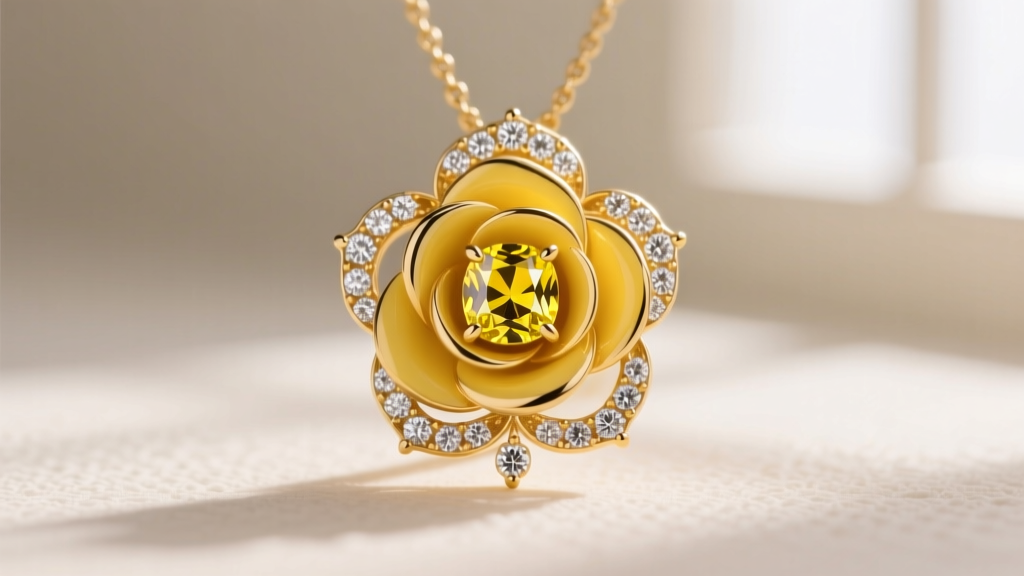
Designing a high-quality yellow rose necklace requires a meticulous balance of structural engineering, advanced metallurgy, and precise gemological selection. Unlike simple geometric pendants, the floral motif of a rose demands complex three-dimensional layering to simulate the organic curvature of overlapping petals. In modern jewelry manufacturing, this is typically achieved through high-resolution 3D resin printing for the initial wax model, followed by lost-wax casting. The tolerances for petal thickness must be strictly maintained between 0.4mm and 0.6mm; anything thinner risks porosity and structural failure during the casting quench, while anything thicker results in a bulky, unnatural silhouette. This technical deep dive explores the exact material specifications, gemstone optics, and fabrication protocols required to produce a master-level yellow rose necklace.
Gemstone Selection: Refractive Index and Hardness
The center stone of a yellow rose necklace dictates both the optical performance and the long-term durability of the piece. When sourcing yellow gemstones, jewelers must evaluate the Mohs hardness scale, the refractive index (RI), and the specific trace elements responsible for the coloration. According to the Gemological Institute of America (GIA), the three most prominent yellow gemstones used in fine jewelry are yellow sapphire, yellow diamond, and citrine, each presenting unique technical challenges.
Yellow Sapphire (Corundum)
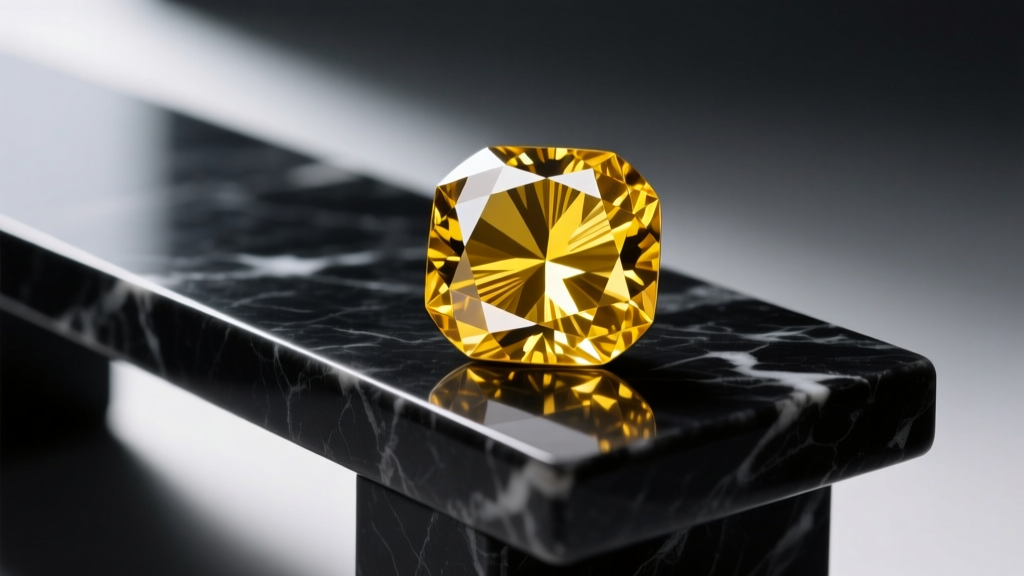
Yellow sapphire (Al2O3) is the industry standard for high-end floral pendants due to its exceptional Mohs hardness of 9 and an RI of 1.76-1.77, which provides excellent brilliance. The yellow coloration is primarily caused by trace amounts of iron (Fe) and color centers. From a manufacturing perspective, untreated, natural yellow sapphires are rare and often exhibit color zoning. Consequently, most commercial stones undergo thermal enhancement. Traditional heat treatment (1700°C to 1800°C) dissolves rutile silk and homogenizes color. However, buyers must be wary of beryllium lattice diffusion, a process that introduces beryllium atoms into the crystal lattice to create a superficial yellow or orange layer. This treatment drastically reduces the wholesale value and must be disclosed by reputable gemological laboratories.
Yellow Diamond
For ultra-premium yellow rose necklace designs, yellow diamonds offer unparalleled optical dispersion (0.044) and an RI of 2.42. The yellow hue in diamonds is caused by nitrogen atoms substituting for carbon in the crystal lattice. Type Ib diamonds, which contain isolated nitrogen atoms, produce the highly saturated 'canary' yellow colors that command premium pricing. Conversely, Type Ia diamonds contain aggregated nitrogen, resulting in lighter, less saturated hues. As noted in the GIA Yellow Diamond Guide, the cut proportions must be specifically calibrated to maximize the face-up color saturation, often requiring deeper pavilions than standard brilliant cuts.
Citrine (Quartz)
Citrine is an accessible alternative with a Mohs hardness of 7 and an RI of 1.54-1.55. Natural citrine is colored by ferric iron (Fe3+) and is typically pale. The vast majority of citrine on the market is actually heat-treated amethyst, where thermal processing at roughly 470°C oxidizes the iron impurities to produce a yellow-to-orange hue. While suitable for fashion jewelry, its lower hardness makes it susceptible to micro-abrasions over time, requiring protective bezel settings in a rose pendant design.
Comparative Gemstone Data Table
| Gemstone | Mohs Hardness | Refractive Index | Specific Gravity | Typical Price/Carat (VVS/VS) |
|---|---|---|---|---|
| Yellow Diamond | 10 | 2.42 | 3.52 | $3,000 - $15,000+ |
| Yellow Sapphire | 9 | 1.76 - 1.77 | 4.00 | $150 - $800 |
| Citrine | 7 | 1.54 - 1.55 | 2.65 | $10 - $30 |
Metallurgy: Choosing the Right Gold Alloy
The metal alloy used for the rose petals and pendant bail significantly impacts both the casting fidelity and the long-term wearability of the necklace. 18-karat yellow gold (75% pure gold, 25% alloy—typically a mix of copper and silver) is the preferred choice for luxury pieces. The higher copper content provides a rich, warm undertone that complements yellow gemstones, while the silver balances the alloy to prevent excessive reddening. However, 18k gold has a Vickers hardness (HV) of approximately 115, making it relatively soft.
For a yellow rose necklace that requires delicate, thin petals, 18k gold exhibits superior castability. Its lower melting point and excellent fluidity allow it to capture the microscopic details of the 3D-printed resin model during the lost-wax process. The investment powder (calcium sulfate hemihydrate) must be subjected to a precise burnout cycle, holding at 732°C (1350°F) for two hours to completely eliminate wax residue and prevent carbon inclusions in the final casting.
Conversely, 14-karat yellow gold (58.3% pure gold) boasts a higher Vickers hardness of roughly 135 HV. While more durable for the structural components like the bail and the prongs holding the center stone, its higher melting point and reduced fluidity can result in incomplete fills in the thinnest sections of the rose petals. Master jewelers often solve this by casting the main body of the rose in 18k gold for optimal detail, while hand-fabricating the prongs and structural supports in 14k gold or platinum to ensure the gemstone remains secure against impact.
Advanced Techniques: Enamel and Plique-à-Jour
For designers seeking to create a yellow rose necklace without relying solely on a massive center stone, vitreous enamel offers a spectacular alternative. The plique-à-jour technique creates a stained-glass effect, allowing light to pass through translucent yellow enamel to illuminate the rose petals from within. This requires a high-fire enamel (fusing at approximately 760°C to 800°C) applied to a pure gold or fine silver framework, as standard karat gold alloys will oxidize and discolor the enamel during the kiln firing process.
Alternatively, champlevé enamel involves carving recessed cells into a thick 14k or 18k gold base and filling them with opaque or translucent yellow enamel. This technique is highly durable and resistant to chipping, making it ideal for everyday-wear floral pendants. The enamel must be carefully stoned flat with carborundum and polished with cerium oxide to achieve a glass-like finish that seamlessly integrates with the surrounding gold petals.
Structural Integrity: Settings and Chain Gauges
The setting mechanism must secure the gemstone without obscuring the floral motif. For a yellow rose necklace, a custom bezel setting shaped like a blooming calyx (the sepals of a flower) is both aesthetically cohesive and structurally superior to traditional prongs. A bezel setting distributes pressure evenly around the girdle of the stone, protecting the vulnerable edges of a yellow sapphire or citrine from chipping.
If prongs are necessary for maximum light return, jewelers should utilize claw prongs rather than round prongs, as they take up less surface area and can be subtly integrated into the petal design. The chain supporting the pendant must be matched to the weight of the casting. A solid 18k yellow gold rose pendant weighing between 4 and 8 grams requires a minimum chain thickness of 1.2mm to 1.5mm. A cable or rope chain with soldered jump rings is essential to prevent the links from pulling apart under dynamic stress. The clasp should be a forged lobster clasp with a hardened steel internal spring, ensuring a secure mechanical lock that will not degrade over years of daily articulation.
Maintenance and Ultrasonic Cleaning Protocols
Proper maintenance of a yellow rose necklace depends entirely on the materials utilized. Yellow sapphires and diamonds can generally withstand ultrasonic cleaning, provided they are not fracture-filled or heavily included. However, the high-frequency vibrations of an ultrasonic cleaner can loosen the prongs or damage the delicate gold petals if the casting is exceptionally thin. Steam cleaning is a safer alternative for corundum and diamond, effectively removing sebum and cosmetic buildup from beneath the setting.
Citrine and enamel components require strictly manual cleaning. Citrine's lower hardness makes it susceptible to micro-scratches from abrasive ultrasonic cavitation, while thermal shock from a steam cleaner can cause vitreous enamel to craze or fracture. For these variations, a soft bristle brush, lukewarm water, and a mild, non-detergent soap are the only recommended cleaning agents. By adhering to these precise material specifications and maintenance protocols, a yellow rose necklace will retain its structural integrity and optical brilliance for generations.
Conclusion
Crafting the perfect yellow rose necklace is an exercise in applied physics, chemistry, and artistry. From selecting a Type Ib yellow diamond or a beryllium-free yellow sapphire, to calculating the exact burnout temperatures for 18-karat gold casting, every technical decision impacts the final wearable art. Understanding these deep-level material properties ensures that both jewelers and consumers can appreciate the true engineering marvel behind a masterfully executed floral pendant.