10mm Pearl Necklace Buying Guide: What to Look For
Discover what to look for when buying a 10mm pearl necklace. Compare Edison, Tahitian, and South Sea types, pricing tiers, and quality grades.

The 10mm Threshold: Entering the Statement Pearl Category
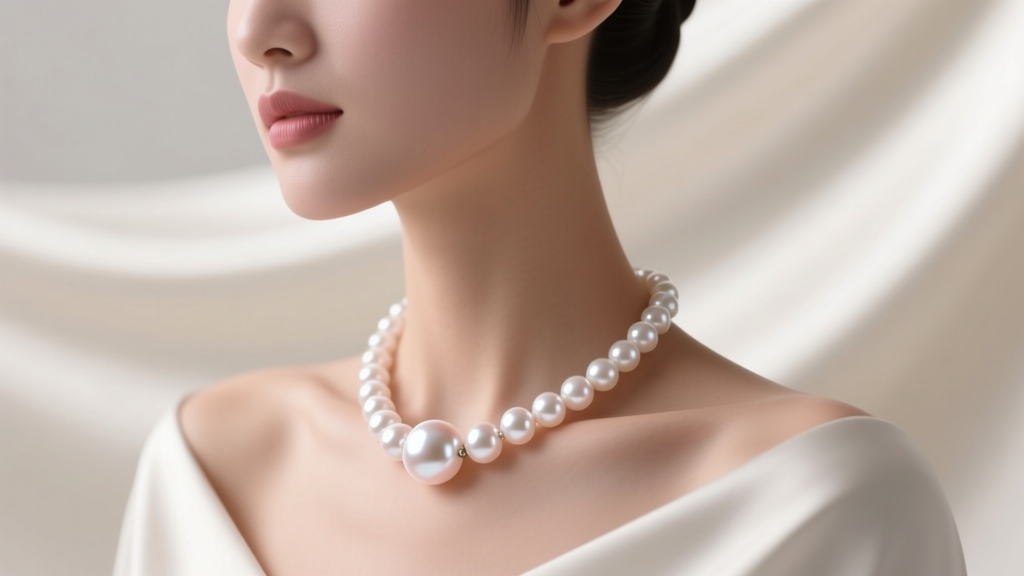
In the world of fine jewelry, the leap from a 7mm or 8mm strand to a true 10mm pearl necklace is not just a matter of size—it is a shift into the statement category. While smaller pearls offer delicate, traditional elegance, a 10mm pearl commands attention, catching light across a broader surface area and carrying a physical weight that demands structural integrity in its stringing and hardware. As we navigate the 2026 jewelry market, buyers have more options than ever, but the proliferation of nucleated freshwater pearls and advanced treatment methods means that knowing exactly what to look for is critical. This guide breaks down the gemological realities, pricing matrices, and hardware requirements for investing in a 10mm pearl strand.
Pearl Types: Which 10mm Pearl is Right for You?
Not all pearls grow to 10mm with the same frequency or biological process. Understanding the origin of your pearl dictates its value, durability, and visual characteristics.
The Akoya 10mm Myth
Let us address a common market misconception first: the 10mm Akoya pearl. The Gemological Institute of America (GIA) notes that Akoya oysters (Pinctada fucata martensii) are relatively small mollusks. While they produce unparalleled mirror-like luster, they rarely produce pearls larger than 9.5mm. If a retailer is offering a "10mm Akoya" necklace at a mid-tier price point, you are likely looking at a mislabeled freshwater pearl or a heavily padded measurement. True 10mm+ Akoyas are exceedingly rare, auction-grade collector items.
Freshwater Edison Pearls
Edison pearls revolutionized the freshwater market. By implanting a single round bead nucleus (similar to saltwater techniques) into a freshwater mussel, farmers can reliably produce 10mm to 14mm pearls with solid, thick nacre. They offer incredible luster and vibrant natural colors (including deep purples and metallic bronzes) at a fraction of the cost of saltwater equivalents. For a 10mm strand, Edison pearls are the smartest value proposition for daily wear.
Tahitian Black Pearls
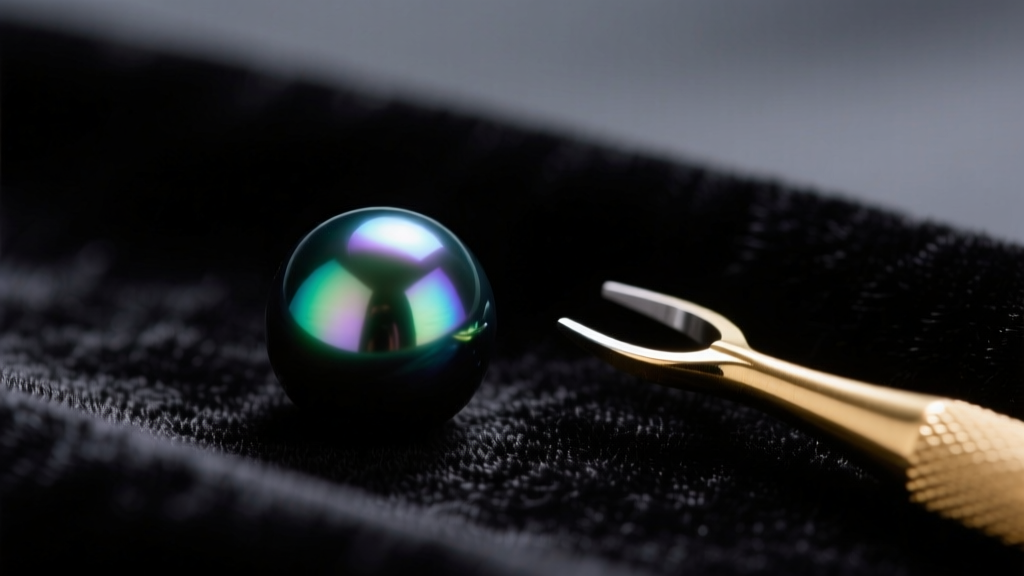
Produced by the Pinctada margaritifera oyster, Tahitian pearls naturally grow to larger sizes. A 10mm Tahitian is considered a premium, highly wearable size. The larger surface area perfectly showcases their signature peacock, aubergine, and pistachio overtones.
White and Golden South Sea Pearls
South Sea pearls are the luxury heavyweight champions. While they frequently reach 15mm or larger, a 10mm White South Sea strand represents an entry point into this elite category. They possess a unique, satiny luster due to their massive aragonite platelets, offering a soft, glowing elegance rather than the sharp, glassy reflection of an Akoya.
The 5-Point Quality Checklist for 10mm Pearls
When evaluating a 10mm necklace, surface area amplifies both beauty and flaws. Use this framework to assess quality:
- Nacre Thickness: For bead-nucleated pearls (South Sea, Tahitian), the nacre must be at least 1.5mm thick. On a 10mm pearl, thin nacre (under 0.8mm) will appear chalky, and the bead nucleus may actually be visible through the surface as a dull shadow.
- Luster and Orient: At 10mm, you should be able to see a crisp, high-definition reflection of your own eye in the pearl's surface. Blurry or hazy reflections indicate poor nacre crystallization.
- Surface Blemishes: A 10mm pearl has roughly 314 square millimeters of surface area. "Clean" does not mean flawless under 10x magnification, but there should be no visible pits, cracks, or chalky spots to the naked eye at a conversational distance of 18 inches.
- Shape and Matching: Perfect roundness is rare. Look for a strand that is "near-round" to the naked eye. More importantly, the pearls must be matched in drill-hole placement so the strand drapes in a perfect, unbroken curve without twisting.
- Drill Hole Integrity: The drill holes on a 10mm pearl should be clean and measure between 0.8mm and 1.0mm. Jagged exit holes will act like microscopic saws, eventually fraying and snapping the silk thread.
2026 Pricing Matrix: What Should You Actually Pay?
Pricing in the pearl market fluctuates based on harvest yields and global demand. The table below outlines the expected retail pricing for an 18-inch princess-length 10mm necklace in the current market, categorized by quality grades recognized by the Cultured Pearl Association of America (CPAA).
| Pearl Type | Gem / AAA Grade (Top 1%) | AA+ Grade (Premium Retail) | AA / B Grade (Commercial) |
|---|---|---|---|
| Freshwater Edison | $400 - $750 | $150 - $350 | $60 - $120 |
| Tahitian (Dark) | $2,500 - $4,500 | $900 - $1,800 | $400 - $700 |
| White South Sea | $5,000 - $8,500+ | $1,800 - $3,500 | $800 - $1,400 |
Hardware and Stringing: The Physics of a Heavy Strand
A standard 18-inch strand of 10mm pearls contains approximately 45 pearls. Depending on the type and density, this strand can weigh between 55 and 70 grams. This is a substantial piece of jewelry, and standard stringing techniques used for 6mm pearls will fail catastrophically over time.
Thread Sizing and Knotting
Standard Size D silk thread is entirely insufficient for 10mm pearls. A reputable jeweler will use Size F (0.35mm) or Size G (0.40mm) pure silk, or a high-tensile synthetic alternative like PowerPro braided line. Furthermore, every single pearl must be individually knotted. The knots on a 10mm strand should be tight, uniform, and sized appropriately so the heavy pearls do not slide and abrade the drill holes.
Clasp Selection
Do not accept a simple spring-ring or lightweight lobster clasp on a 60-gram necklace. The constant tension will bend the metal and compromise the jump ring. You must look for:
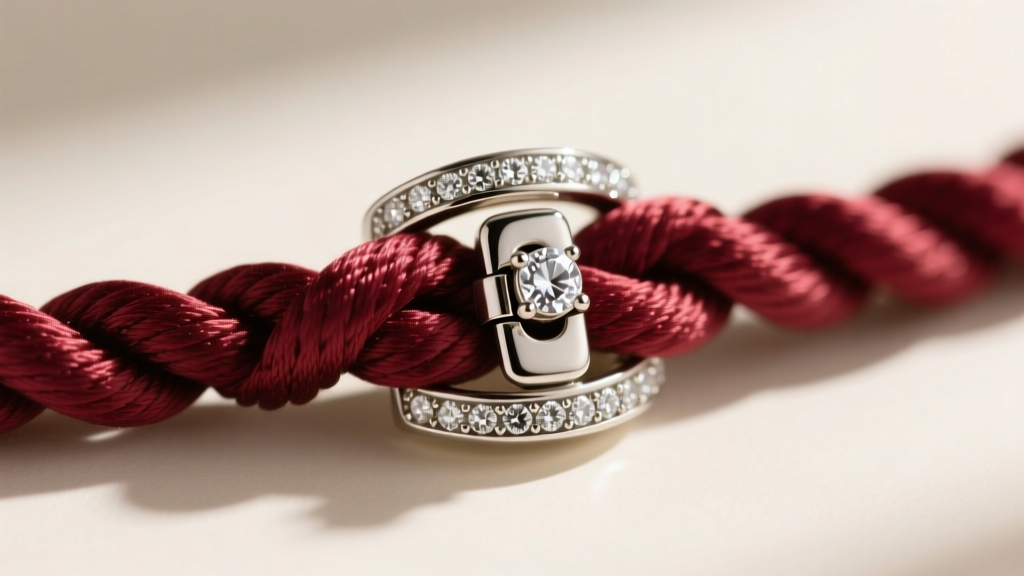
- Box Clasps with Figure-8 Safeties: The gold standard for heavy strands. The internal tongue clicks securely into place, and the external wire safety catches prevent total loss if the tongue loosens.
- French Wire (Gimp): Ensure the jeweler has used a tiny coil of fine metal wire (French wire) where the silk loops through the clasp. This prevents the heavy pearls from pulling the silk directly against the sharp metal edge of the clasp ring.
- Ball Clasps: Aesthetically pleasing and highly secure, provided they feature an internal magnetic or screw-lock mechanism paired with a safety latch.
Care and Maintenance for Large Pearls
Expert Storage Tip: Never store a 10mm pearl necklace hanging on a jewelry tree. The 60+ gram weight will slowly stretch the silk thread over time, causing the pearls to gap and the knots to loosen. Always store the strand flat in a soft, breathable cotton pouch, away from airtight plastic bags which can dehydrate the nacre and cause crazing (surface cracking).
To maintain the luster of your 10mm pearls, wipe them down with a damp, lint-free microfiber cloth after every wear to remove body oils and acidic perspiration. Have the strand professionally re-knotted every 3 to 5 years, or immediately if you notice the pearls shifting and creating gaps between the knots when laid flat on a table. Investing in a 10mm pearl necklace is an investment in heirloom-quality luxury; treating the structural hardware with the same respect as the gems themselves ensures it will last for generations.


