Thali Necklace Material Guide: Gold Purity, Beads & Durability
Compare thali necklace materials including 22k vs 24k gold, black bead types, and chain durability. Find the best metals for daily wear.

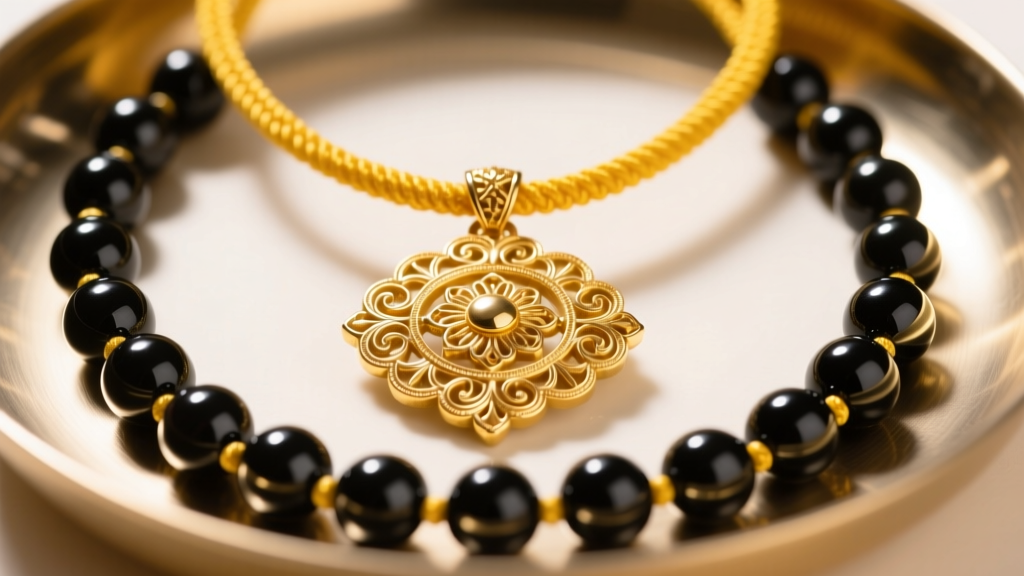
The thali necklace (regionally referred to as a Mangalsutra, Thirumangalyam, or Thali Kodi) is a cornerstone of South Asian bridal jewelry, symbolizing marital status and cultural heritage. While its emotional and spiritual significance is paramount, the physical longevity of a thali necklace depends entirely on its material composition. Because these pieces are designed for continuous, daily wear—often enduring decades of exposure to sweat, cosmetics, and friction—understanding the metallurgical and gemological properties of its components is critical for both jewelers and consumers.
In this comprehensive material guide, we deconstruct the anatomy of the thali necklace, comparing gold purities, black bead alternatives, and stringing mediums to help you make an informed, durable choice.
The Central Pendant (Thali Kodi): Gold Purity & Alloys
The focal point of the thali necklace is the central pendant, traditionally crafted in yellow gold. However, not all gold is created equal when it comes to the structural demands of daily wear. The purity of the gold dictates its hardness, tarnish resistance, and ability to hold intricate structural elements like prongs or loops.
24K Gold (99.9% Purity)
While 24-karat gold holds the highest intrinsic value and a distinct, rich orange-yellow hue, it is metallurgically unsuited for the central thali pendant. With a Vickers hardness of roughly 25 HV, 24K gold is exceptionally malleable. If used for a thali pendant, the bail (the loop connecting the pendant to the chain) will quickly warp under the weight of the beads, and any intricate filigree work will bend or crush against the collarbone.
22K Gold (91.6% Purity)
The industry standard for high-end Indian jewelry, 22K gold (often stamped with the BIS 916 hallmark by the Bureau of Indian Standards) offers the ideal compromise between traditional purity and structural integrity. Alloyed with roughly 4.2% silver and 4.2% copper, 22K gold achieves a hardness of approximately 90-110 HV. This provides enough tensile strength to support the weight of heavy black bead strands while retaining the highly coveted warm yellow color and hypoallergenic properties necessary for sensitive skin.
18K Gold (75% Purity)
For modern, diamond-studded thali pendants, 18K gold is the superior choice. The higher alloy content (usually a mix of copper, zinc, and silver) increases the hardness to roughly 120-150 HV, ensuring that diamond prongs remain secure. According to the World Gold Council, 18K gold is the global benchmark for fine jewelry requiring gemstone setting, though it lacks the deep yellow saturation preferred in strict traditional designs.
| Purity | Hardness (HV) | Best Use Case | Durability Risk |
|---|---|---|---|
| 24K (99.9%) | ~25 HV | Investment coins, ceremonial display | Severe bending, bail tearing |
| 22K (91.6%) | ~100 HV | Traditional solid gold pendants | Mild scratching over decades |
| 18K (75.0%) | ~135 HV | Diamond/gemstone set modern pendants | Prong wear if not rhodium plated |
The Black Beads: Glass, Onyx, and Spinel Properties
Black beads are integral to the thali necklace, traditionally believed to ward off the evil eye and absorb negative energy. However, the material used to create these beads drastically affects the necklace's weight, drape, and lifespan.
Traditional Black Glass
Historically, thali beads were made from opaque black glass. While affordable and lightweight, glass beads rank only 5.5 on the Mohs hardness scale. They are highly susceptible to chipping when they strike hard surfaces (like granite countertops) and can develop a cloudy, scratched surface after years of friction against the gold spacers. Furthermore, poorly manufactured glass beads may contain microscopic air bubbles, leading to sudden structural failure.
Black Onyx (Chalcedony)
Black onyx is a dyed variety of chalcedony quartz, ranking 6.5 to 7 on the Mohs scale. It provides a deep, uniform black color and a heavier, more luxurious drape than glass. According to the GIA Gem Encyclopedia, onyx is highly durable and resistant to everyday chemicals. However, because it is heavier, a long thali strand made entirely of 4mm onyx beads can weigh upwards of 40 grams, which may cause neck strain or accelerate the wear of the stringing material.
Black Spinel
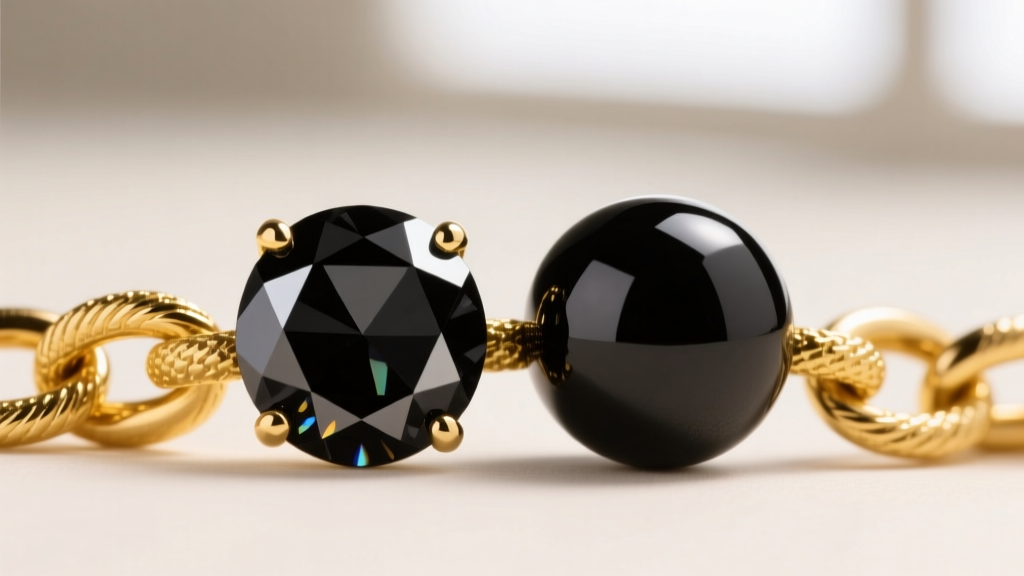
For heirloom-quality thali necklaces, natural black spinel is the premier choice. Ranking 8 on the Mohs scale, spinel is significantly harder than onyx and possesses a higher refractive index, giving the beads a subtle, brilliant luster rather than a flat, matte black appearance. Spinel beads are typically faceted, catching the light beautifully alongside the gold pendant. While they command a premium price (often 3x to 5x the cost of onyx), their resistance to scratching and chipping makes them a lifelong investment.
Stringing Materials: Thread vs. Wire vs. Chain
The failure point of 90% of thali necklaces is not the gold or the beads, but the stringing medium. The transition from traditional threads to modern wire has revolutionized the maintenance of these pieces.
Cotton and Silk Thread
The traditional manjal kairu (yellow thread dyed with turmeric) or black cotton cord holds deep cultural significance. However, organic fibers are highly porous. They absorb sweat, perfume, and body oils, leading to bacterial growth, odor, and eventual rotting. A thali necklace strung on cotton thread worn daily must be professionally restrung every 12 to 18 months to prevent catastrophic snapping.
Nylon-Coated Stainless Steel Wire
Modern jewelers frequently use multi-strand stainless steel wire coated in nylon (commonly in 0.015" to 0.024" gauges). This material offers immense tensile strength and will not rot or stretch. However, wire lacks the fluid drape of silk thread, making the necklace feel stiffer. Additionally, if the wire is crimped too tightly against the gold beads without protective wire guardians, the metal edge can eventually shear the wire over years of friction.
Solid Gold Chains
Many contemporary thali necklaces abandon beads entirely in favor of a solid 22K gold chain (such as a box chain or wheat chain). While highly durable, chains are prone to kinking if stored improperly. A 1.5mm to 2.0mm gauge box chain is recommended to support the weight of a 5-gram pendant without stretching the links.
Modern Material Shifts: Platinum and Titanium
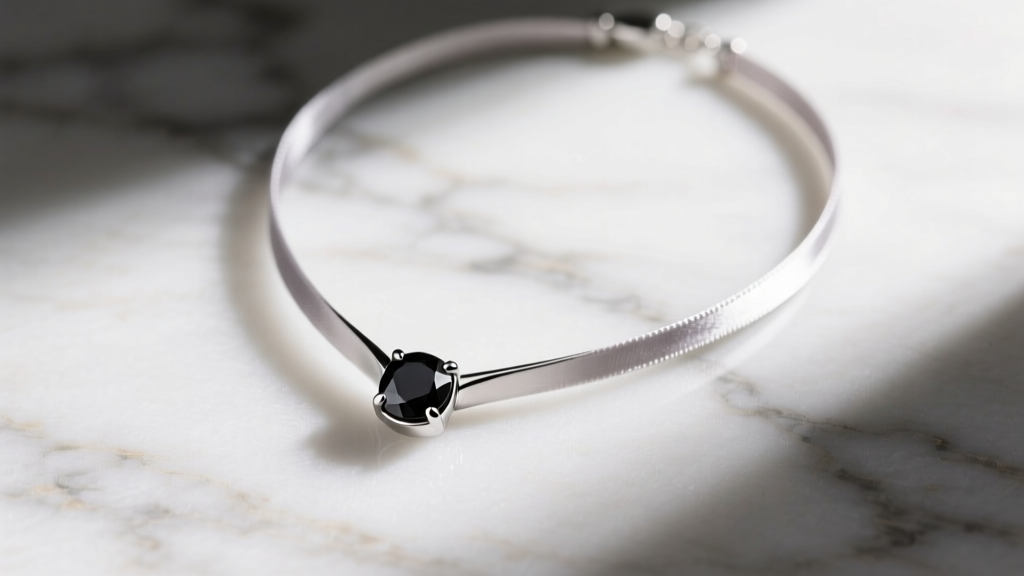
As younger generations seek alternatives to traditional yellow gold, material experimentation in thali jewelry has expanded. Platinum (PT950) is increasingly used for modern, minimalist thali pendants. Platinum's density and natural white luster make it an exceptional choice for securing black diamonds or colorless solitaires. Unlike white gold, which requires periodic rhodium plating, platinum will never fade or reveal a yellow undertone.
Titanium, while rare in traditional contexts, is emerging in avant-garde thali designs due to its extreme strength-to-weight ratio and hypoallergenic properties. However, titanium cannot be resized or easily soldered by traditional jewelers, making repairs nearly impossible if the piece breaks.
Care, Tarnish, and Maintenance by Material
To maximize the lifespan of your thali necklace, maintenance routines must be tailored to its specific material makeup.
- 22K Gold Pendants: Clean monthly with a mild, phosphate-free dish soap and a soft baby toothbrush. Avoid ultrasonic cleaners if the pendant features soft gemstones like pearls or emeralds.
- Black Onyx/Spinel Beads: Wipe down with a damp microfiber cloth after exposure to heavy perspiration. Do not use harsh chemical jewelry dips, as they can degrade the polishing compounds used on the stones.
- Threaded Strands: Never sleep or shower in a thread-strung thali necklace. Moisture trapped between the beads and the thread accelerates fiber degradation.
Expert Troubleshooting Tip: If your black bead thali necklace feels stiff or the beads are not laying flat against the collarbone, the stringing material has likely stretched or the knots between the beads have loosened. Take it to a jeweler for a 'knot-and-restring' service using pre-stretched French silk wire to restore the original fluid drape.
Ultimately, selecting the right materials for a thali necklace requires balancing cultural authenticity with the practical demands of your lifestyle. By prioritizing 22K gold for traditional pendants, upgrading to black spinel for lifelong durability, and choosing the appropriate stringing medium, you ensure this profound symbol of marriage remains intact for generations.


