The Necklace de Maupassant: Troubleshooting Paste vs Real Diamonds
Learn how to avoid a 'Necklace de Maupassant' disaster. Expert troubleshooting guide to identifying paste, glass, and real diamond necklaces.

The Ultimate Jewelry Cautionary Tale
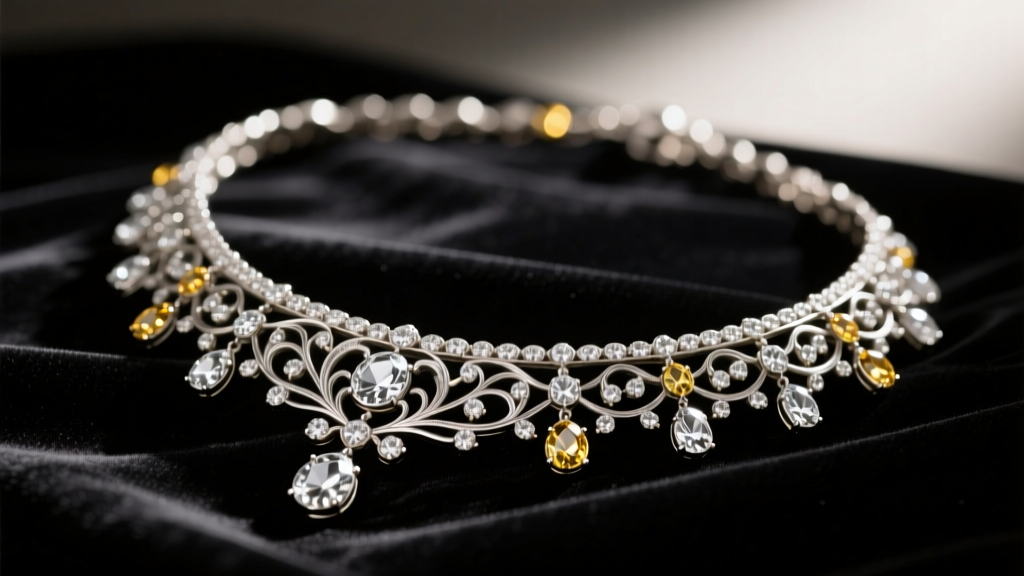
In Guy de Maupassant’s classic 1884 short story La Parure (The Necklace), the protagonist Mathilde Loisel borrows what she believes to be a dazzling diamond riviere necklace for a high-society ball. After losing it, she and her husband spend ten grueling years in poverty to replace the 36,000-franc jewel, only to eventually discover the original was made of paste (costume glass) worth a mere 500 francs. This literary tragedy highlights a very real, highly expensive problem in the jewelry world: the catastrophic misidentification of diamond simulants.
While today's consumers have access to advanced gemological tools, the 'Maupassant Problem' persists. Antique estates, inherited jewelry boxes, and unverified secondary market purchases are rife with high-quality strass glass, cubic zirconia, and synthetic moissanite masquerading as natural diamonds. Troubleshooting the authenticity of a diamond necklace requires moving beyond superficial sparkle and conducting a rigorous, multi-step physical and optical analysis. Whether you are an estate buyer, an antique collector, or simply verifying an inherited piece, understanding the failure modes of simulants is critical to protecting your financial investment.
Troubleshooting the 'Maupassant Problem': Visual and Physical Clues
Before deploying electronic testers, a trained eye can identify paste and glass simulants through structural and physical wear patterns. Because glass and early simulants lack the extreme hardness of a carbon crystal lattice, they degrade in highly specific ways over time.
Facet Junction Wear and Abrasion
Natural and lab-grown diamonds rank as a 10 on the Mohs hardness scale. Consequently, the facet junctions (the sharp edges where two flat polished planes meet) on a diamond remain razor-sharp for centuries. In contrast, 19th-century leaded 'strass' glass ranks around 5 to 6 on the Mohs scale, and modern cubic zirconia (CZ) ranks at 8.5.
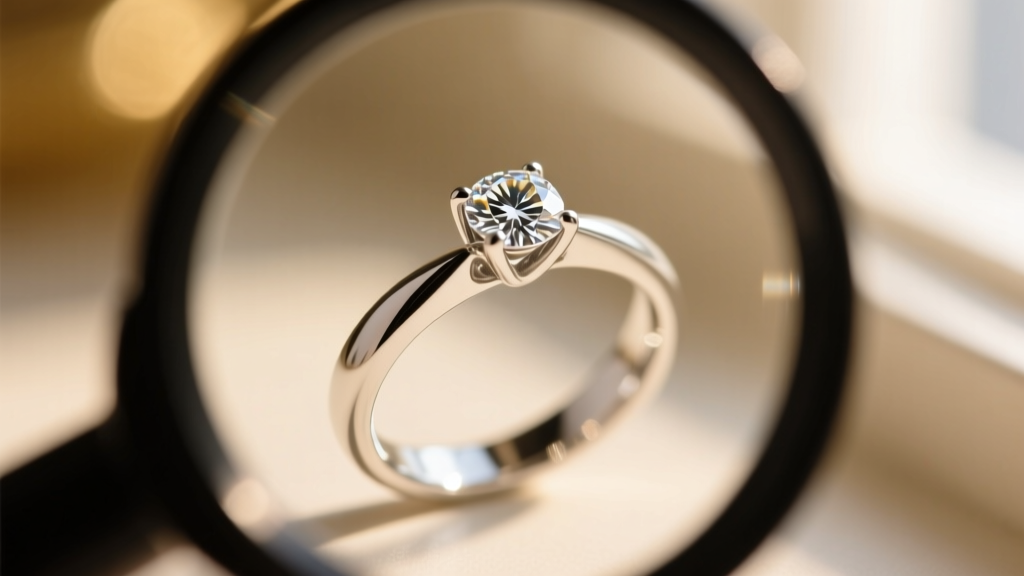
When examining a vintage necklace with a 10x triplet loupe, look closely at the facet edges. If the edges appear rounded, abraded, or 'fuzzy,' the stone is almost certainly a simulant. Glass paste is particularly prone to chipping at the girdle (the outer edge of the stone) and scratching on the crown facets from years of friction against clothing and storage boxes.
Foil Backing and Closed-Back Settings
In the Georgian and Victorian eras, gem cutters struggled to maximize the brilliance of glass paste. To compensate, jewelers employed 'foiling'—placing a thin sheet of silver or colored metallic foil behind the stone to reflect light back through the crown. To protect this delicate foil from moisture and tarnish, the stones were set in completely closed-back bezels.
If you are examining an antique pendant or choker and notice the back of the setting is entirely sealed with metal, you should immediately suspect paste or foil-backed quartz. Natural diamonds are almost exclusively set in open-back mountings (with open galleries or prongs) to allow light to enter the pavilion and maximize the stone's natural refractive index and dispersion.
Material Comparison: Diamond, Paste, and Modern Simulants
Understanding the gemological data behind the sparkle is essential for troubleshooting unidentified necklace stones. The table below outlines the critical diagnostic metrics used by gemologists to separate natural diamonds from historical and modern imposters.
| Material | Mohs Hardness | Refractive Index (RI) | Specific Gravity | Thermal Conductivity |
|---|---|---|---|---|
| Natural Diamond | 10 | 2.42 | 3.52 | Exceptionally High |
| Antique Paste (Strass) | 5 - 6 | 1.50 - 1.70 | 2.50 - 3.20 | Very Low |
| Cubic Zirconia (CZ) | 8 - 8.5 | 2.15 - 2.18 | 5.60 - 6.00 | Low |
| Synthetic Moissanite | 9.25 | 2.65 - 2.69 | 3.22 | High (Mimics Diamond) |
| White Sapphire | 9 | 1.76 - 1.77 | 3.95 - 4.03 | Moderate |
As noted in GIA's comprehensive guide to diamond simulants, specific gravity is a massive giveaway for unmounted stones; a CZ will feel noticeably heavier than a diamond of the exact same millimeter dimensions. However, because necklace stones are already mounted in metal, specific gravity testing is often impractical, forcing appraisers to rely on optical and thermal diagnostics.
Modern Diagnostic Troubleshooting: Beyond the Loupe
When visual inspection yields ambiguous results—particularly with high-quality antique reproductions or modern moissanite—gemologists deploy advanced diagnostic tools. Here is the standard troubleshooting protocol for verifying a diamond necklace.
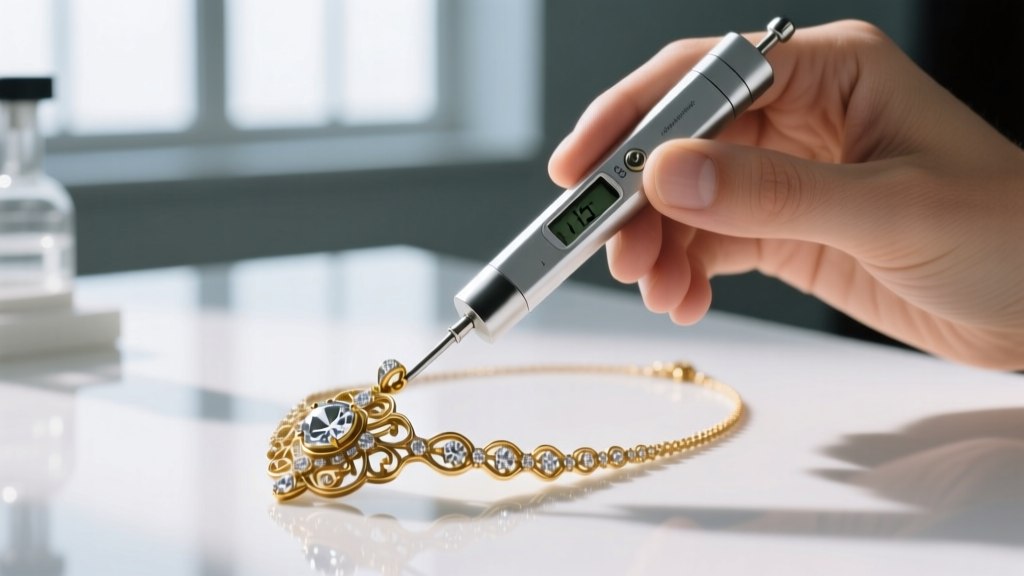
- Thermal Conductivity Testing: Diamonds are unparalleled conductors of heat. A standard handheld diamond tester applies a heated metal tip to the stone's surface. If the heat dissipates rapidly, the device registers a 'diamond' result. Glass and paste will fail this test immediately. However, synthetic moissanite also conducts heat well, meaning a basic thermal tester will yield a false positive for moissanite.
- Electrical Conductivity Testing: To troubleshoot the moissanite false-positive, gemologists use a dual-tester that measures electrical conductivity. Moissanite is slightly electrically conductive, whereas natural and lab-grown diamonds are electrical insulators (with the rare exception of Type IIb boron-doped blue diamonds).
- UV Fluorescence Analysis: Under long-wave ultraviolet light, approximately 25% to 35% of natural diamonds exhibit fluorescence, typically glowing blue. Antique paste glass and CZ generally show inert or chalky reactions. If a multi-stone diamond riviere necklace shows identical, uniform fluorescence across every single stone, it is a red flag; natural diamond necklaces are usually assembled from stones with varying fluorescence intensities.
The Appraisal and Insurance Trap
The ultimate lesson of Maupassant's literary masterpiece is the danger of assuming value without verification. In the modern jewelry market, this translates to the critical need for independent, lab-graded documentation. Verbal appraisals from the original retail store or undocumented estate sales are insufficient for insurance purposes.
If you acquire a high-value diamond necklace, troubleshooting its provenance and insurability requires the following steps:
- Demand a Lab Report: Any central solitaire pendant or primary diamond over 0.50 carats should be accompanied by a grading report from a top-tier, independent laboratory such as the GIA (Gemological Institute of America) or AGS (American Gem Society).
- Check the Laser Inscription: Modern GIA-graded diamonds feature a microscopic laser inscription on the girdle that matches the report number. Use a gemological microscope to verify this inscription matches the paperwork.
- Verify the Mounting Hallmarks: A genuine high-carat diamond necklace will typically be mounted in platinum (PT950) or 18k gold (750). If the clasp or setting bears a '925' (sterling silver) or gold-plated stamp, the stones are almost certainly simulants, as jewelers rarely set high-value diamonds in soft or base metals due to prong failure risks.
Final Takeaways for Collectors and Borrowers
The 'Necklace de Maupassant' scenario is entirely avoidable in the 21st century. By combining historical knowledge of jewelry construction—such as recognizing closed-back foil settings and facet abrasion—with modern thermal and electrical testing, you can definitively separate natural diamonds from historical paste and modern simulants. Never rely solely on the naked eye or the assurances of a previous owner. When dealing with diamond necklaces, rigorous gemological troubleshooting is the only safeguard against a decade of unnecessary financial regret.


