The Necklace Guy de Maupassant: Paste vs Real Diamond Care
Learn jewelry care lessons from The Necklace by Guy de Maupassant. Discover how to identify, clean, and maintain paste simulants versus real diamond necklaces.

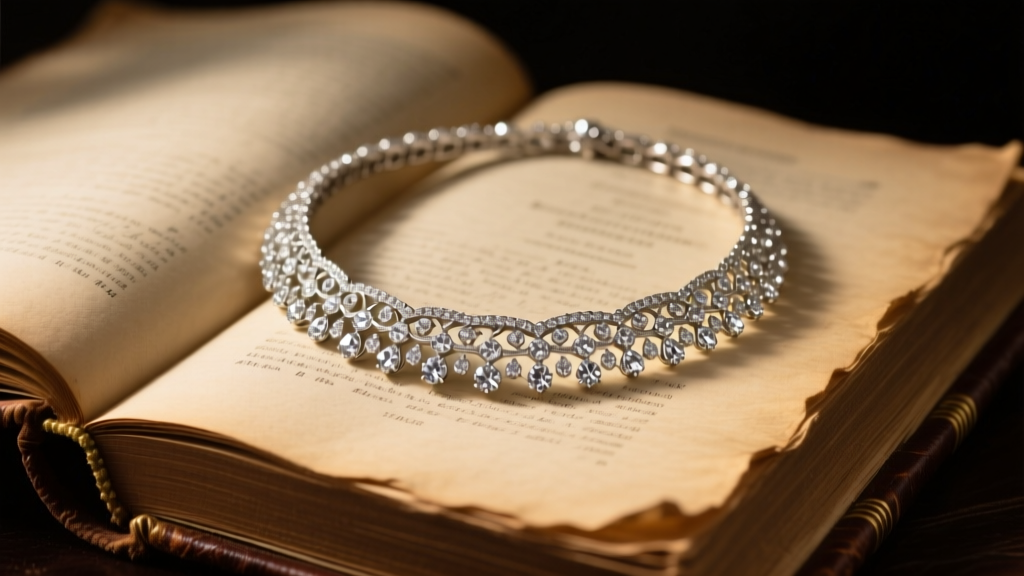
The Gemological Tragedy of Mathilde Loisel
When studying the tragic literary masterpiece The Necklace by Guy de Maupassant, most readers focus on the overarching themes of vanity, pride, and the cruel irony of fate. However, as a jewelry historian and gemologist, I read the story of Mathilde Loisel and see a glaring, fatal error in gemological identification and jewelry maintenance. Mathilde borrows what she believes to be a diamond necklace from her wealthy friend, Madame Forestier, loses it, and spends ten grueling years in poverty to replace it with a real diamond equivalent costing 40,000 francs. The devastating twist? The original was merely "paste"—a high-lead glass simulant worth a fraction of the price.
In 2026, with portable Raman spectrometers and advanced gemological testing readily available, the tragedy of the necklace guy de maupassant serves as a profound cautionary tale for modern jewelry collectors. It highlights a critical gap in knowledge: the inability to distinguish between natural diamonds and antique paste, and more importantly, the vastly different care and cleaning protocols each material demands. Treating a delicate, foil-backed paste necklace with the aggressive cleaning methods meant for natural diamonds will destroy the piece instantly.
The Science of Deception: Paste vs. Natural Diamond
To understand how to care for these pieces, we must first understand their chemical and physical properties. "Paste" in the context of 19th-century French jewelry refers to high-lead glass, often pioneered by Georges Frédéric Strass. The addition of lead oxide increased the glass's refractive index (RI) to roughly 1.7 to 1.9, mimicking the brilliance of a diamond (RI 2.42). To enhance the sparkle, jewelers applied a delicate metallic foil backing to the glass stones.
Natural diamonds, conversely, are pure carbon crystallized under extreme heat and pressure. They rank at a perfect 10 on the Mohs hardness scale, making them virtually impervious to scratching. Paste glass, however, ranks between 5 and 6 on the Mohs scale. It is highly susceptible to abrasion, scratching, and chemical degradation. According to the Gemological Institute of America (GIA), understanding the physical limitations of diamond simulants is the first step in proper preservation and handling.
How to Clean Antique Paste and Rhinestone Necklaces
If Mathilde Loisel had attempted to clean Madame Forestier’s necklace before returning it, she might have noticed the telltale signs of paste. But if she had used standard diamond cleaning methods, she would have ruined the piece. Antique paste and early rhinestones require an incredibly gentle, moisture-free approach.
The Danger of Moisture and Ultrasonics
Never, under any circumstances, submerge a foil-backed paste necklace in water or place it in an ultrasonic cleaner. The metallic foil backing (often silver or gold leaf) is sealed with a delicate water-soluble glue. Exposure to water, steam, or the high-frequency cavitation of an ultrasonic bath will cause the foil to detach, oxidize, or turn black, instantly robbing the "diamond" of its brilliance. Furthermore, the brass or silver prong settings on antique paste are often brittle; the vibrations of an ultrasonic cleaner will shatter the lead glass.
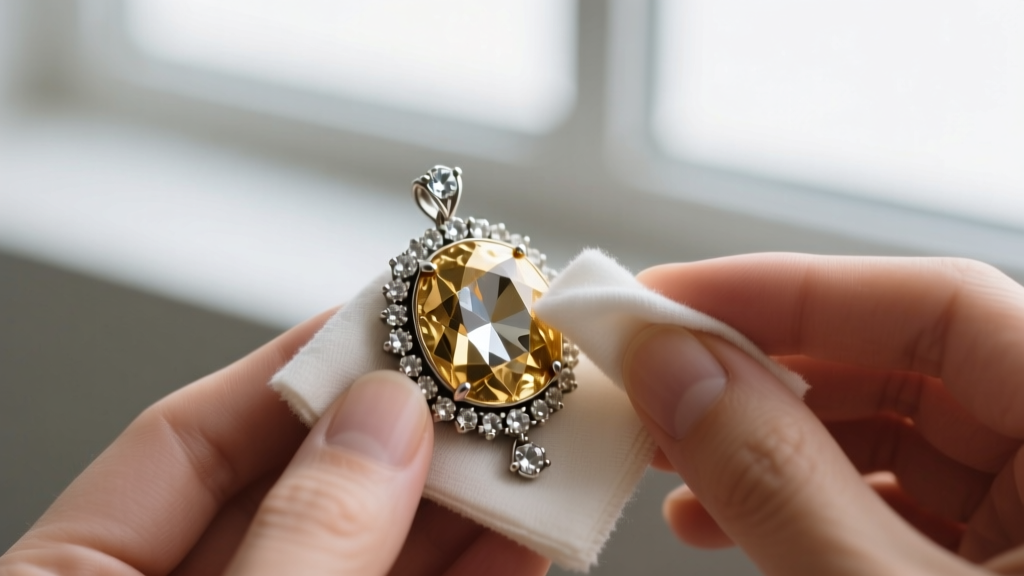
The Dry-Clean Method
- Dust Removal: Use a clean, dry, ultra-soft baby hair brush or a specialized cosmetic brush to gently sweep away dust from the settings and the table of the glass stones.
- Surface Smudges: For fingerprints and sebum, use a dry microfiber cloth. Gently buff the surface of the stone without applying pressure to the prongs.
- Verdigris Management: If the brass settings have developed green oxidation (verdigris), do not use liquid copper cleaners. Instead, use a dry wooden toothpick to meticulously flake away the oxidation without scratching the adjacent glass.
Maintaining Real Diamonds: The 40,000 Franc Standard
Caring for a natural diamond necklace—the kind Mathilde spent a decade toiling to repay—is an entirely different discipline. Diamonds are oleophilic, meaning they attract and hold onto oils, lotions, and sebum from the skin. This grease buildup significantly dulls their refractive brilliance, making them look cloudy and lifeless.
The Ammonia Degreasing Protocol
Because diamonds rank 10 on the Mohs scale, they can withstand rigorous cleaning. The gold standard for diamond maintenance is a mild ammonia-based solution. Mix one part household ammonia to six parts warm distilled water. Add a single drop of mild, phosphate-free dish soap (like Dawn) to act as a surfactant.
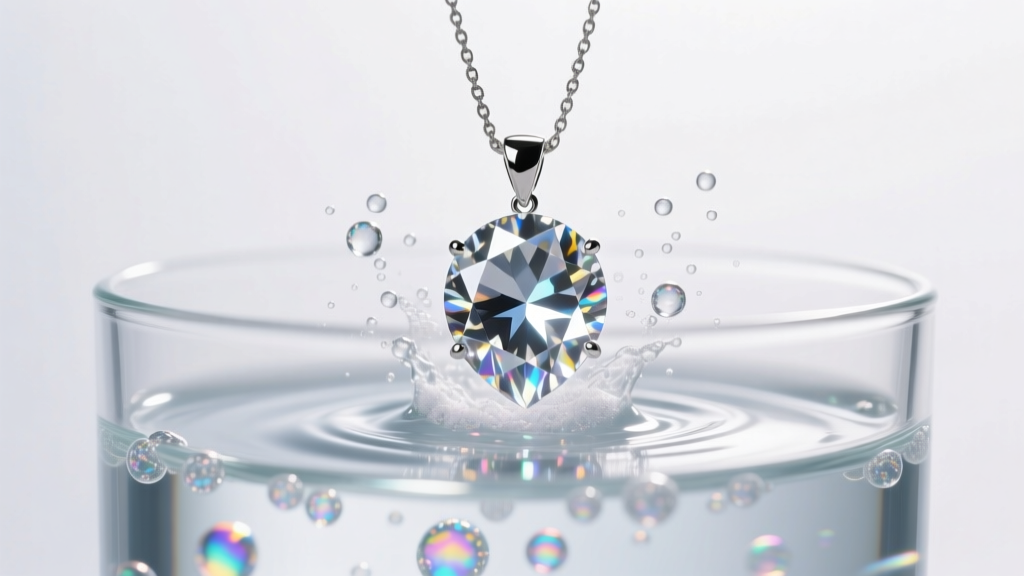
- Soak: Submerge the diamond necklace in the solution for 15 to 20 minutes. The ammonia will break down the molecular bonds of the sebum and cosmetic buildup.
- Agitate: Use a soft-bristled baby toothbrush to gently scrub the pavilion (the underside) of the diamond, where the majority of grease and dead skin cells accumulate.
- Rinse and Dry: Rinse thoroughly under warm running water, ensuring the drain is securely plugged. Pat dry with a lint-free microfiber cloth or use a hairdryer on the "cool" setting to prevent water spots on the gold or platinum chain.
Care & Cleaning Comparison Matrix
To prevent a literary tragedy from occurring in your own jewelry box, refer to this quick-reference matrix before applying any cleaning agent to a borrowed or inherited necklace.
| Feature / Material | Antique Paste / Lead Glass | Modern Cubic Zirconia (CZ) | Natural Diamond |
|---|---|---|---|
| Mohs Hardness | 5.0 - 6.0 | 8.0 - 8.5 | 10.0 |
| Ultrasonic Safe? | NEVER (Shatters glass, destroys foil) | Risky (Can loosen adhesive settings) | Yes (Unless fracture-filled) |
| Steam Cleaner Safe? | NEVER (Melts backing glue) | No (Thermal shock risk) | Yes |
| Chemical Tolerance | Extremely Low (Dry clean only) | Mild Soap Only | High (Ammonia safe) |
| Primary Cleaning Tool | Dry microfiber & soft cosmetic brush | Warm water & mild dish soap | Ammonia solution & soft bristle brush |
The 2026 Appraisal Rule: Never Assume
The ultimate lesson of the necklace guy de maupassant is the danger of assumption. Mathilde assumed the necklace was real because of the wealth of its owner; she never sought an appraisal before purchasing a replacement. Today, the Victoria and Albert Museum's conservation guidelines heavily emphasize that antique simulants hold immense historical and aesthetic value in their own right. A pristine 1880s French paste riviere necklace can fetch thousands of dollars at auction, provided it has not been ruined by improper, diamond-grade cleaning methods.
If you inherit, borrow, or purchase a vintage diamond necklace, your very first step before applying a single drop of soap or water must be professional verification. In 2026, any certified gemologist can use a handheld diamond tester or a loupe to check for the telltale rounded facet edges and internal gas bubbles of lead glass. Protect your investment, respect the history of the materials, and remember that true luxury lies not just in the carat weight, but in the meticulous, informed care of the pieces we wear.


