The Necklace Guy Maupassant Lesson: Spotting Fake Diamonds
Avoid Mathilde Loisel's fate. Learn how to spot fake diamonds, troubleshoot gemstone authenticity, and insure your pendants with our expert guide.

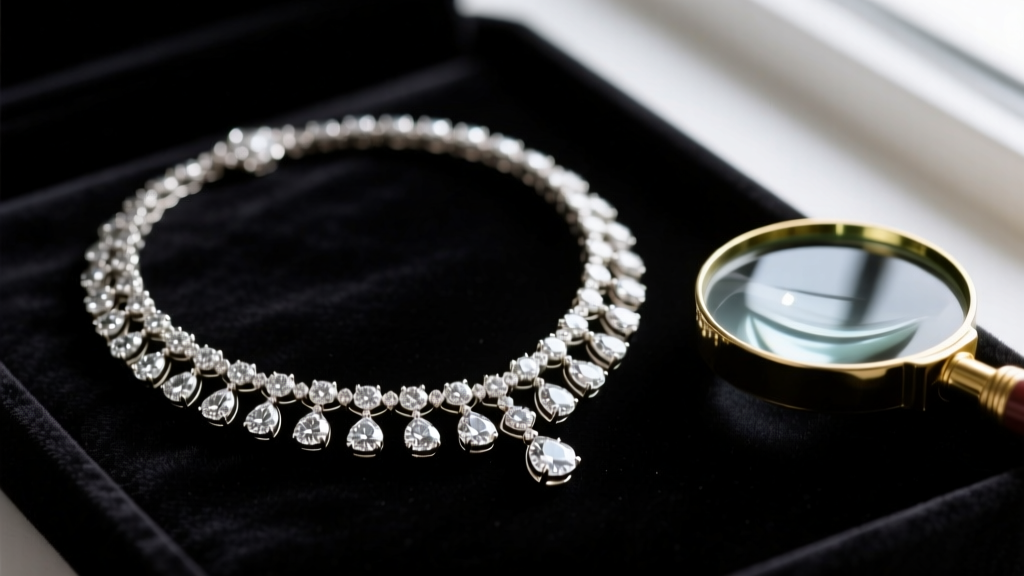
Many remember the necklace Guy Maupassant fictionalized in his tragic 1884 short story, La Parure. Mathilde Loisel borrows what she believes is a 36,000-franc diamond riviere, loses it, and spends a decade in crushing poverty to replace it—only to discover the original was mere paste, worth 500 francs. While the literary classic serves as a critique of vanity and pride, for modern jewelry enthusiasts, it remains the ultimate cautionary tale about gemstone authenticity, appraisal failures, and the devastating financial consequences of assuming a stone's identity without verification.
In the 2026 jewelry market, the 'paste' problem is vastly more complex than it was in the 19th century. Today's simulants and lab-created stones can easily fool the naked eye and even outdated testing equipment. Whether you are troubleshooting a suspect heirloom pendant, verifying a vintage estate purchase, or trying to avoid a catastrophic insurance oversight, understanding how to authenticate your necklaces is critical. Here is your expert guide to avoiding Mathilde Loisel’s fate.
The Modern 'Paste' Dilemma: Simulants vs. Lab-Grown
In Maupassant’s era, 'paste' referred to leaded glass cut to mimic diamond brilliance. Today, the market is flooded with highly advanced alternatives that require specific troubleshooting protocols to identify. It is vital to distinguish between simulants (stones that look like diamonds but have different chemical and physical properties) and lab-grown diamonds (which are chemically, physically, and optically identical to mined diamonds).
- Cubic Zirconia (CZ): The most common simulant. It is softer (8-8.5 on the Mohs scale) and possesses a higher dispersion rate, giving it an artificial 'rainbow' sparkle that lacks the crisp, white light return of a true diamond.
- Moissanite: A silicon carbide crystal that is much harder (9.25 on the Mohs scale) and exhibits double refraction. This means light splits into two rays as it passes through the stone, creating a 'disco-ball' fire effect.
- White Sapphire: A natural or lab-created corundum that lacks the brilliance and fire of a diamond, often appearing milky or flat in direct lighting.
- Lab-Grown Diamonds: Created via CVD (Chemical Vapor Deposition) or HPHT (High Pressure High Temperature). These are real diamonds and will pass all traditional diamond tests, requiring advanced spectroscopy to differentiate from natural stones.
At-Home Troubleshooting: Initial Authenticity Checks
If you inherit a pendant or purchase an estate necklace and suspect the center stone might be a simulant, you can perform several non-destructive tests at home before seeking professional verification.
The Fog Test (Thermal Conductivity)
Diamonds are exceptional heat conductors. Hold the pendant close to your mouth and exhale a short puff of air onto the stone, as if fogging a mirror. A real diamond will dissipate the heat instantly, and the fog will clear in less than a second. If the stone remains foggy for two to three seconds, it is likely CZ or glass, which are thermal insulators.
The Read-Through Test (Refractive Index)
This test works best on loose stones or pendants with open-back settings. Place the stone table-down on a piece of paper with printed text. Because diamonds have a high refractive index (2.42), they bend light so severely that you will not be able to read the letters through the stone. If you can clearly read the text or see dark, smudged lines, the stone is likely glass or CZ, which have lower refractive indices and allow light to pass straight through.
The 10x Loupe Inspection
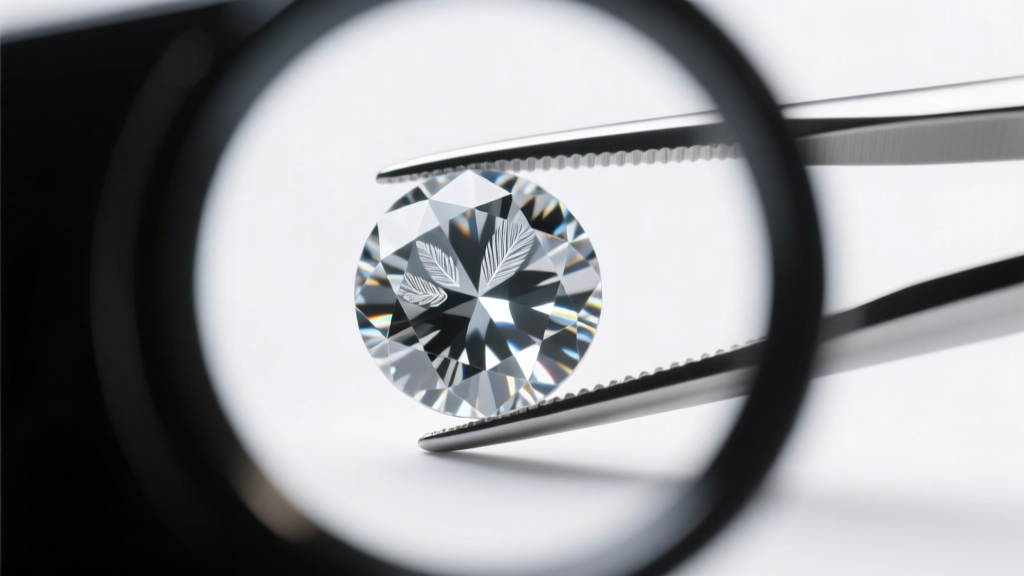
Purchase a high-quality 10x triplet loupe. Natural diamonds almost always contain microscopic imperfections called inclusions (tiny crystals, feathers, or clouds). Conversely, CZ and glass are often entirely flawless or contain perfectly round gas bubbles. If you inspect a moissanite, look closely at the facet junctions; due to its double refraction, the lines will appear doubled or blurry when viewed through the side of the stone.
Professional Verification: Tools and Certifications
At-home tests are useful for ruling out cheap glass and CZ, but they cannot reliably distinguish between natural diamonds, lab-grown diamonds, and moissanite. For definitive troubleshooting, professional gemological tools are required.
Basic thermal conductivity testers will beep for both diamonds and moissanite because both stones conduct heat efficiently. To solve this, modern jewelers use combined thermal and electrical conductivity testers, such as the Presidium Multi-Tester III. While diamonds are generally electrical insulators, moissanite is electrically conductive. This dual-testing mechanism immediately separates the two.
For definitive proof of a stone's origin and specifications, always rely on a grading report from a top-tier laboratory. According to the Gemological Institute of America (GIA), advanced spectroscopic analysis is the only way to conclusively separate natural diamonds from CVD or HPHT lab-grown diamonds by analyzing their specific crystal growth patterns and nitrogen aggregation.
Gemstone Property Comparison Chart
| Material | Mohs Hardness | Refractive Index | Dispersion (Fire) | Electrical Conductivity |
|---|---|---|---|---|
| Natural Diamond | 10 | 2.42 | 0.044 | No (Usually) |
| Moissanite | 9.25 | 2.65 - 2.69 | 0.104 | Yes |
| Cubic Zirconia | 8.0 - 8.5 | 2.15 - 2.18 | 0.058 | No |
| White Sapphire | 9.0 | 1.76 - 1.77 | 0.018 | No |
The Insurance Trap: Avoiding a 10-Year Debt
Mathilde Loisel’s ultimate downfall wasn't just losing the necklace; it was replacing it without understanding the original's true value, and failing to have insurance. In 2026, jewelry insurance is highly sophisticated, but policyholders still make critical errors regarding valuation.
When insuring a high-value diamond pendant or chain necklace, you must understand the difference between Replacement Value and Agreed Value. A standard homeowner's policy rider often uses 'actual cash value' or vague replacement terms, which can lead to disputes if you need to replace a natural diamond with a lab-grown equivalent due to market shifts. Companies like Jewelers Mutual specialize in 'Agreed Value' policies, where you and the insurer agree on the exact payout amount based on a current, professional appraisal at the time the policy is bound.

Troubleshooting Tip: Never use a store's 'sales receipt' as an appraisal document for insurance. A receipt only proves what you paid, which is often heavily marked up. You need an independent appraisal from a certified gemologist (CG) or a Graduate Gemologist (GG) that details the exact carat weight, color, clarity, cut proportions, and metal weight of the setting.
What to Do If Your Heirloom is 'Paste'
Discovering that a cherished family heirloom necklace is actually a simulant can be emotionally devastating. However, from a jewelry troubleshooting perspective, all is not lost.
- Value the Setting: Even if the center stone is CZ or glass, the pendant or chain may be crafted from solid 14k or 18k gold, or platinum. The melt value and craftsmanship of the metal setting often hold significant intrinsic worth.
- Historical Significance: Vintage paste jewelry from the Art Deco or Victorian eras is highly collectible in its own right. Antique glass and early synthetic spinels set in original silver or gold mountings are sought after by antique jewelry collectors.
- Repurposing: Consider having a jeweler remove the simulant and reset a modern, ethically sourced lab-grown diamond into the vintage mounting. This preserves the historical integrity and sentimental value of the piece while upgrading its material durability and brilliance for everyday wear.
Ultimately, the lesson of Maupassant’s tragic protagonist is one of verification and transparency. Whether you are buying a delicate layering chain, a heavy gold pendant, or a diamond solitaire, always demand proof of authenticity, utilize proper testing protocols, and protect your investment with specialized insurance. By doing so, you ensure your jewelry remains a source of joy, rather than a decade-long burden.