The Necklace Overview: Assessing Solid Gold vs Vermeil Value
Discover the ultimate necklace overview comparing solid gold, vermeil, and plated chains. Learn cost-per-wear, material grades, and true jewelry value.

The Metallurgical Reality Behind the Price Tag
When jewelry buyers search for the necklace overview of a specific brand or collection, they are usually presented with marketing jargon rather than metallurgical facts. The modern jewelry market is saturated with terms like "waterproof gold," "demi-fine," and "bonded," making it increasingly difficult to assess true value. As a domain expert in jewelry materials, I approach necklace valuation not through the lens of brand prestige, but through material science, galvanic corrosion rates, and long-term cost-per-wear (CPW) metrics.
This guide serves as the necklace overview you actually need: a hard-data assessment of solid gold, gold vermeil, and advanced plated alternatives. Whether you are investing in a foundational 18-inch cable chain or a statement pendant, understanding the exact micron thickness and base metal composition is the only way to protect your budget.
Decoding the Contenders: Solid, Vermeil, and Plated
To accurately assess value, we must first break down the atomic and structural realities of the three primary gold necklace categories available on the market today.
Solid 14k and 18k Gold: The Benchmark
Solid gold remains the undisputed benchmark for generational value. However, pure 24k gold is too malleable for necklace chains, which require high tensile strength to support pendants and resist stretching. According to the Gemological Institute of America (GIA), alloying gold with copper, silver, and zinc is necessary for structural integrity.
- 14k Gold (58.5% Gold): The optimal choice for everyday chains. The higher alloy content (41.5%) provides exceptional yield strength, making it highly resistant to the micro-stretching that plagues thin cable and rope chains. Retail pricing for a standard 1.2mm 18-inch 14k cable chain typically ranges from $250 to $400, depending on the spot price of gold.
- 18k Gold (75% Gold): Prized for its rich, warm hue and hypoallergenic properties. However, 18k gold is noticeably softer. An 18k chain under 1.5mm in thickness is prone to permanent deformation if subjected to sudden tensile stress (e.g., getting caught on clothing). Expect to pay a 40-60% premium over 14k equivalents.
Gold Vermeil: The Strategic Middle Ground
Gold vermeil (pronounced ver-may) is frequently misunderstood. It is not merely "thick plating." By definition, vermeil requires a base of .925 sterling silver, heavily plated with gold. The US Federal Trade Commission (FTC) mandates a minimum gold thickness of 2.5 microns, while UK and EU standards, as outlined by The Assay Office London, often accept 1.0 micron for hallmarking purposes.
The value proposition of vermeil lies in its base metal. If the gold layer eventually wears through after years of friction, the underlying sterling silver will not turn your skin green or cause severe contact dermatitis. It will simply tarnish, which can be polished. A high-quality 2.5-micron vermeil chain retails between $90 and $180, offering the aesthetic of solid gold at a fraction of the upfront capital.
Standard Flash Plating vs. 2026 PVD Alternatives
Standard gold-plated necklaces utilize a brass or copper base metal with a microscopic gold layer (usually 0.1 to 0.5 microns) applied via electroplating. This is the lowest tier of value. The primary failure mode is galvanic corrosion; once the porous gold layer breaches, the brass base reacts with the acidity in human sweat, resulting in copper chloride—the compound responsible for the dreaded "green neck" effect.
However, the market has seen a massive shift toward Physical Vapor Deposition (PVD) coatings on 316L stainless steel bases. PVD utilizes titanium nitride (TiN) in a vacuum chamber to bond a gold-colored layer at the molecular level. While not actual gold, PVD stainless steel necklaces ($40-$80) offer immense scratch resistance and will never oxidize or turn skin green, making them a high-value utility option for active lifestyles.
The Necklace Overview: Value Comparison Matrix
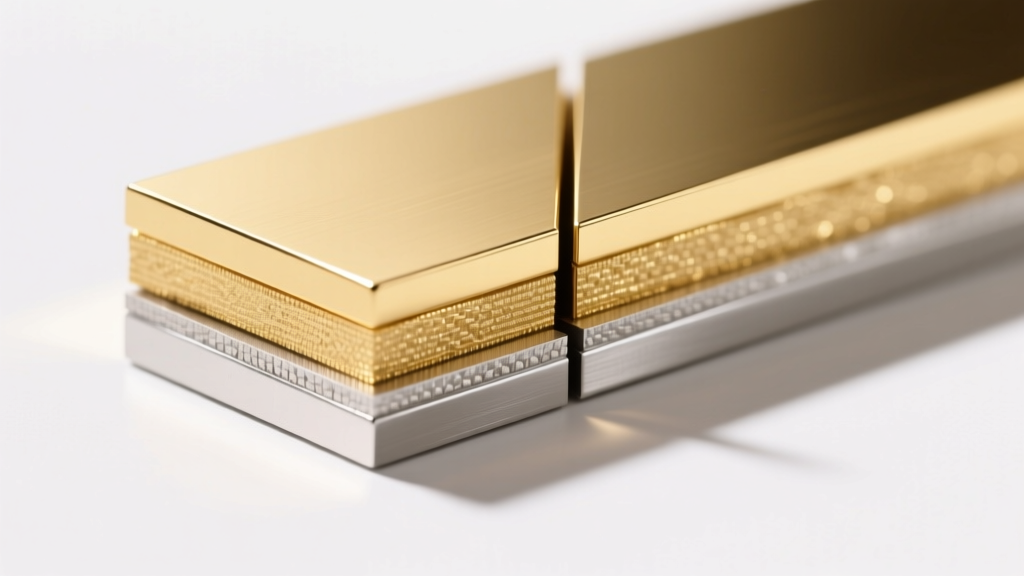
Visualizing the structural differences is critical for making an informed purchasing decision. The table below synthesizes the core data points for a standard 18-inch, 1.5mm cable chain across the primary material categories.
| Material Type | Base Metal | Gold Layer Thickness | Avg. Retail Price | Daily-Wear Lifespan | Primary Failure Mode |
|---|---|---|---|---|---|
| Solid 14k Gold | N/A (Homogenous Alloy) | N/A | $300 - $450 | Lifetime (50+ years) | Clasp spring failure; extreme tensile snapping |
| Heavy Vermeil | .925 Sterling Silver | 2.5 Microns | $120 - $180 | 2 - 4 Years | Friction wear at the clasp; silver sulfide tarnishing |
| Standard Plated | Brass / Copper Alloy | 0.1 - 0.5 Microns | $25 - $50 | 3 - 6 Months | Galvanic corrosion; copper oxidation (green skin) |
| PVD Coated | 316L Stainless Steel | N/A (Titanium Nitride) | $40 - $80 | 3 - 5 Years | Deep impact scratching revealing steel core |
Calculating Cost-Per-Wear (CPW) for Necklaces
Budget assessment in jewelry should never rely on the sticker price alone. The true metric of value is Cost-Per-Wear (CPW). Let us apply a CPW formula to a necklace worn daily (365 days a year) over a 3-year period (1,095 wears).
The Sweat and pH Factor
Human sweat has a pH ranging from 4.5 to 7.0, containing urea, lactic acid, and sodium chloride. When assessing a vermeil or plated necklace, you must factor in your personal biology and environment. High-acidity sweat will degrade a 0.5-micron flash-plated brass chain in a matter of weeks, driving the CPW up because the item becomes unwearable almost immediately.
Conversely, a $400 solid 14k gold chain worn 1,095 times yields a CPW of just $0.36 per wear. A $120 vermeil chain that degrades after 14 months (425 wears) yields a CPW of $0.28 per wear. While vermeil appears cheaper on paper, the replacement cycle required to maintain a pristine appearance often makes solid 14k gold the mathematically superior investment for foundational pieces like everyday cable chains and hoop pendants.

Strategic Budget Allocation for Your Collection
So, how do you allocate your jewelry budget based on this data? The most financially sound strategy is a tiered approach based on the physical location and purpose of the necklace.
The Golden Rule of Necklace Valuation: Invest in solid gold for high-friction, foundational layers. Reserve vermeil and PVD alternatives for low-friction, trend-driven statement pieces.
Where to Spend (Solid 14k Gold)
Allocate the majority of your budget to chains that sit directly against the collarbone (14" to 16" lengths) and pendants that rest on the skin. The friction from clothing, combined with constant exposure to skin oils and sweat, will obliterate standard plating in months. A 14k solid gold figaro or rolo chain will survive decades of this abuse and can be professionally polished to remove micro-scratches.
Where to Save (Vermeil & PVD)
For longer, dramatic pieces (24" to 30" opera or rope lengths) that rest over clothing, the friction and sweat exposure are drastically reduced. This is where heavy gold vermeil shines. You can acquire a massive, vintage-inspired vermeil pendant for $150 that would cost upwards of $2,500 to cast in solid 14k gold. Similarly, PVD stainless steel is the ultimate budget hack for gym chains or beachwear, where salt water and chlorine would instantly compromise traditional electroplated jewelry.
Ultimately, this necklace overview proves that value is not defined by the lowest initial price tag, but by the intersection of metallurgical durability, wear frequency, and long-term aesthetic retention. By understanding the exact micron counts and base metal compositions, you can build a necklace collection that is both financially prudent and visually enduring.


