The Necklace Summary Guy de Maupassant: Real vs Paste Diamonds
Explore our beginner-friendly summary of Guy de Maupassant's The Necklace, paired with a gemologist's guide to spotting real vs. paste diamonds.

The Literary Phenomenon: A Quick Summary
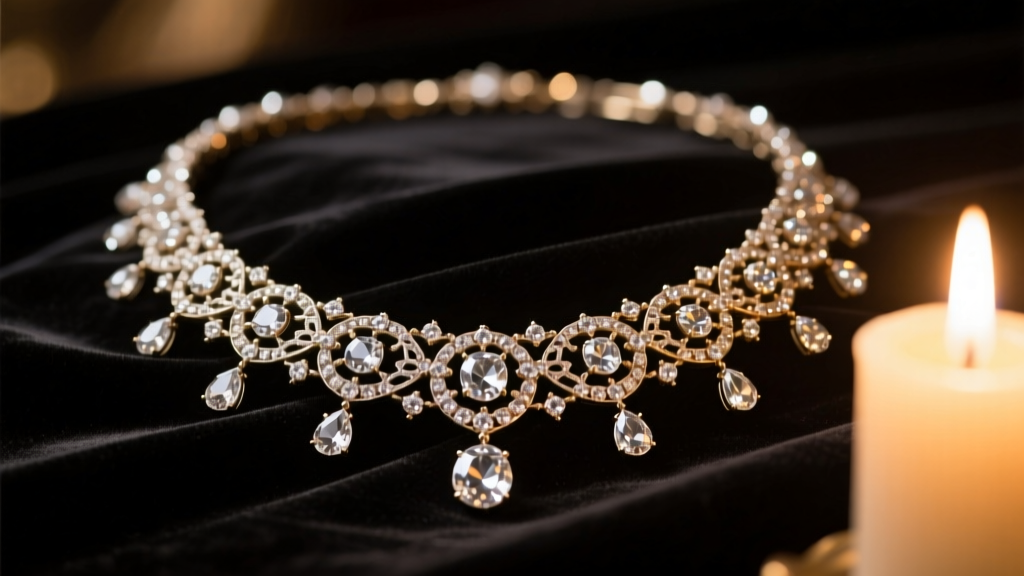
For students and literature enthusiasts searching for the necklace summary guy de maupassant, the core narrative is a masterclass in irony and societal critique. Published in 1884, "The Necklace" ("La Parure") follows Mathilde Loisel, a woman deeply dissatisfied with her middle-class life in Paris. When invited to a high-society ball, she borrows what she believes to be a stunning diamond rivière necklace from her wealthy friend, Madame Forestier.
After losing the necklace at the ball, Mathilde and her husband plunge into crushing debt to purchase a replacement for 36,000 francs. They spend ten grueling years working menial jobs to pay off the loans. In the story’s famous twist ending, Mathilde finally confesses the truth to Madame Forestier, only to be told: "Oh, my poor Mathilde! Mine was paste. It was worth at most five hundred francs!"
"What would have happened if she had never lost those jewels? Who knows? Who knows? How strange and changing life is!" — Guy de Maupassant, Britannica
While English teachers focus on the themes of vanity and pride, as jewelry experts at Jewel Style Radar, we look at this story through a gemological lens. How could Mathilde be so easily fooled? And more importantly, how can a modern jewelry buyer in 2026 avoid making a 36,000-franc mistake?
The Gemological Twist: What Exactly is "Paste"?
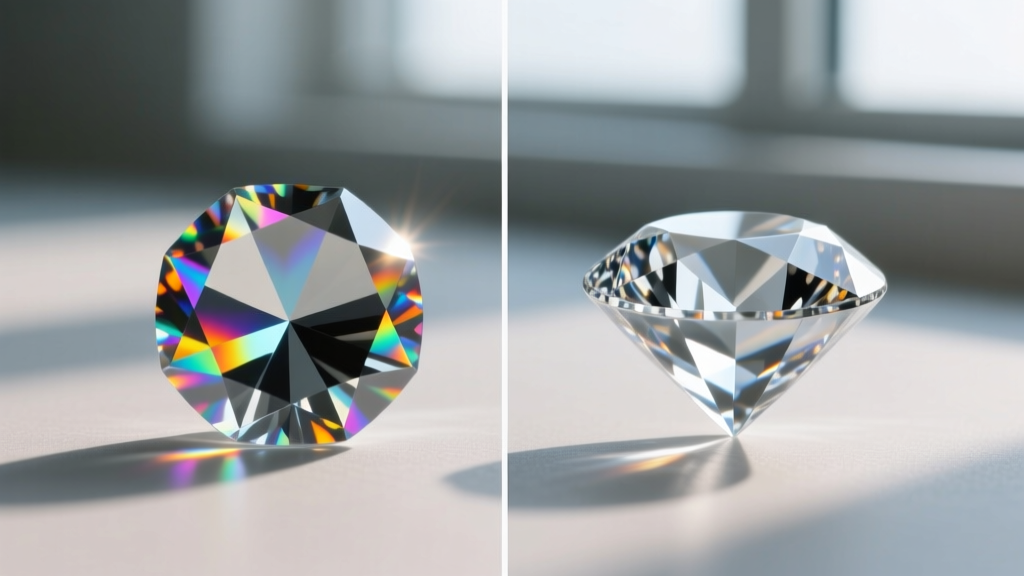
In the late 19th century, the term "paste" did not mean cheap plastic or modern cubic zirconia. It referred to a specific type of high-lead glass, often called strass, named after the 18th-century jeweler Georges Frédéric Strass. Strass discovered that adding lead oxide to glass dramatically increased its refractive index (RI) and dispersion, giving it a fiery sparkle that closely mimicked natural diamonds under the warm, dim candlelight of Parisian ballrooms.
The Science of Strass Glass vs. Natural Diamond
Mathilde’s inability to distinguish between the two was entirely plausible for 1884. Without modern gemological tools, visual inspection in low light was highly deceptive. However, the physical properties of paste and diamond are vastly different. According to the GIA Gem Encyclopedia, natural diamond is the hardest known natural material, while paste is relatively soft and prone to abrasion.
| Material | Mohs Hardness | Refractive Index (RI) | Visual Characteristics | Typical 2026 Market Value |
|---|---|---|---|---|
| Natural Diamond | 10 | 2.42 | Brilliant, sharp facet junctions, high dispersion | $1,500 - $15,000+ per carat |
| 19th-Century Paste (Strass) | 5 - 6 | 1.70 - 1.85 | Softer sparkle, rounded facet edges, internal bubbles | $100 - $800 (Antique value) |
| Modern Cubic Zirconia (CZ) | 8 - 8.5 | 2.15 - 2.18 | High brilliance, lacks natural inclusions, flawless | $1 - $20 per carat |
| Moissanite | 9.25 | 2.65 - 2.69 | Intense rainbow "disco ball" fire, double refraction | $300 - $600 per carat |
The Economics of Deception: 1884 vs. 2026 Valuations
To truly understand the tragedy of Mathilde Loisel, we must translate 19th-century French francs into modern purchasing power. In 1884, France was on the gold standard, with one franc representing roughly 0.29 grams of pure gold.
The 36,000-Franc Replacement
The replacement necklace cost 36,000 francs, equating to roughly 10,440 grams of gold. At modern gold prices, the raw material equivalence is staggering, but as a diamond jewelry piece, a high-quality antique diamond rivière necklace of that carat weight and clarity would easily command $150,000 to $300,000 at auction today. Mathilde essentially bought a high-tier, natural diamond tennis necklace to replace a piece of costume jewelry.
The 500-Franc Original
Madame Forestier’s valuation of 500 francs (approx. 145 grams of gold) translates to roughly $9,000 to $12,000 in today’s luxury market. This aligns perfectly with the pricing of high-end designer costume jewelry or a modest semi-precious gemstone necklace (like a sapphire or tourmaline pendant) from a heritage brand. It was a beautiful, well-crafted accessory, but it held no intrinsic gemological wealth.
Modern Authentication: How to Avoid Mathilde's Fate
If Mathilde had access to a 2026 gemologist’s toolkit, her ten years of hardship could have been avoided with a five-minute inspection. Today, the gap between natural diamonds and simulants is bridged by advanced technology and strict certification standards.
Three Steps to Verify Diamond Authenticity
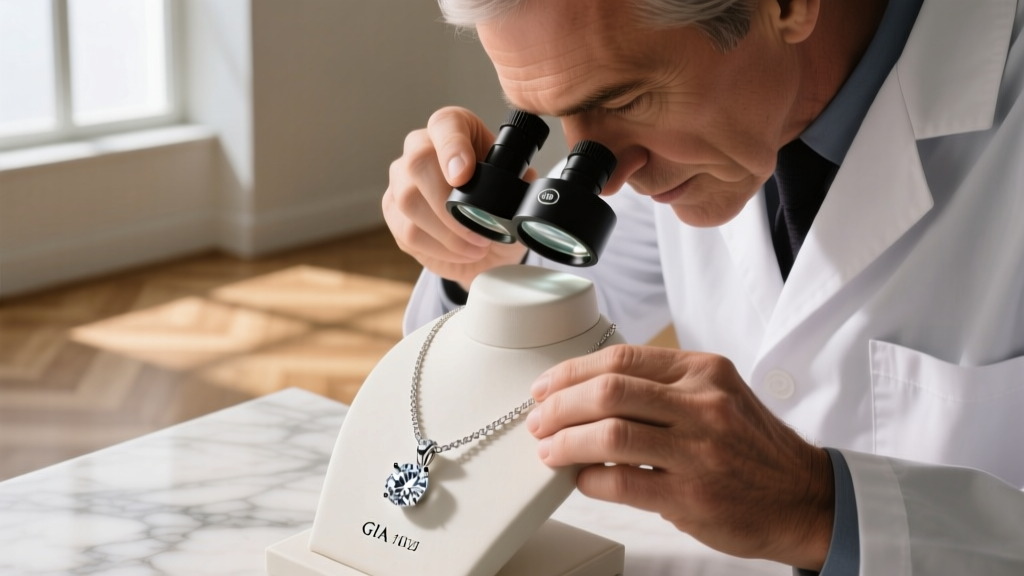
- The 10x Loupe Test: Natural diamonds feature sharp, crisp facet junctions due to their extreme hardness (Mohs 10). Paste and CZ often show microscopic chipping or rounded edges along the facets. Furthermore, a loupe will reveal internal characteristics; paste glass may contain tiny spherical gas bubbles, whereas natural diamonds contain crystalline inclusions or feathers.
- Thermal and Electrical Conductivity: Modern jewelers use dual-testers (like the Presidium Multi-Tester III). Diamonds are exceptional heat conductors, while paste glass and CZ are thermal insulators. This test takes less than three seconds and instantly separates natural diamonds from glass simulants.
- Verify the Certification: Never purchase a high-value diamond necklace without a grading report from a top-tier laboratory like the GIA or AGS. In 2026, most certified diamonds feature a microscopic laser inscription on the girdle that matches the digital report, ensuring the stone in the pendant is exactly the one graded in the lab.
Final Thoughts: The Ultimate Irony of Jewelry Value
Guy de Maupassant’s "The Necklace" remains a vital read not just for its literary brilliance, but for its accidental lesson in jewelry appraisal. The story highlights the dangerous intersection of social pressure, assumption, and a lack of material knowledge. Mathilde assumed value based on the social status of the owner, rather than the physical properties of the object.
Whether you are borrowing a vintage piece for a gala, investing in a diamond pendant, or simply studying 19th-century literature, the lesson remains the same: true value is verified, not assumed. Always look closely, ask for certification, and never let the sparkle of a ballroom blind you to the science of the stone.


