The Short Story of the Necklace: A Beginner's Style Guide
Discover the short story of the necklace, from ancient amulets to modern layering. Learn chain anatomy, clasp types, and exact length rules.

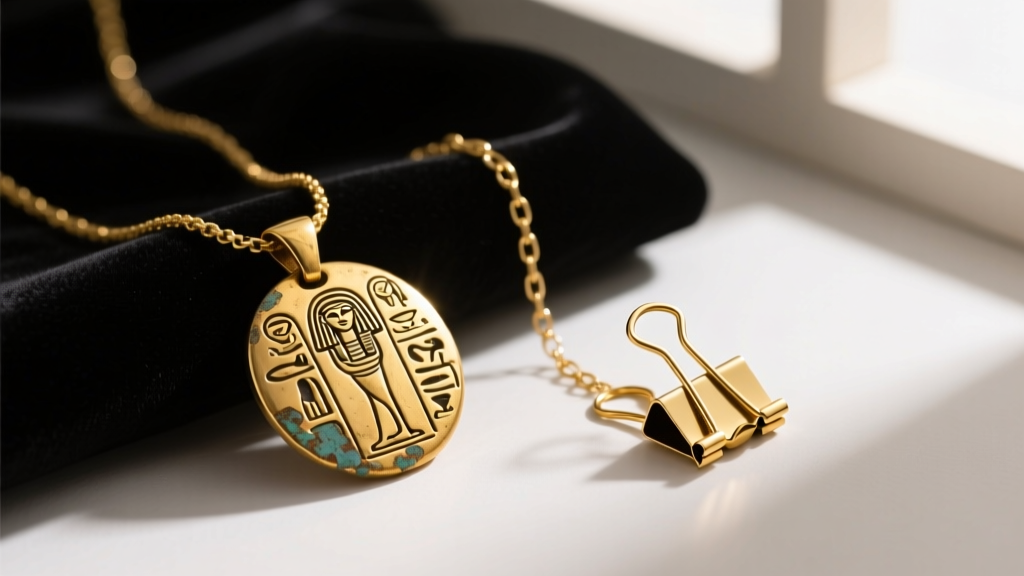
Every piece of jewelry tells a tale, but none quite like the necklace. Sitting directly over the heart and framing the face, necklaces have served as protective talismans, status symbols, and ultimate style anchors for millennia. If you have ever felt overwhelmed by the sheer variety of chain links, clasp types, and metal grades at the jewelry counter, you are not alone. Understanding the short story of the necklace is not just about appreciating history; it is about learning the structural anatomy of these pieces so you can make confident, high-quality purchases that last a lifetime.
In this beginner-friendly explainer, we will decode the evolution of necklaces, break down the exact millimeter gauges you need to know, and provide a foolproof framework for styling and layering. Let us turn the page to chapter one.
Prologue: From Amulets to Adornments
To understand modern necklace construction, we must look at where it all began. According to the Metropolitan Museum of Art, ancient Egyptians wore the usekh collar—a broad, multi-stranded necklace made of faience beads, semi-precious stones, and gold that was believed to offer protection in the afterlife. Fast forward to the Renaissance, and the carcanet emerged: a heavy, gem-encrusted gold chain worn tightly around the neck to signify immense wealth and nobility.
What does this mean for you today? The core purpose of the necklace has always been to draw the eye and convey meaning. However, the materials have evolved from heavy, rigid gold and porous stones to lightweight, durable alloys and precision-cut gemstones. The modern necklace is an engineering marvel of microscopic links and tension-tested clasps, designed for everyday wear rather than just royal courts.
Chapter 1: The Anatomy of a Modern Necklace
A necklace is only as strong as its weakest link—literally. When shopping, beginners often focus entirely on the pendant, ignoring the chain and clasp. Here is the technical breakdown of what actually holds your jewelry together.
Chain Link Profiles
- Cable Chain: The most traditional link, featuring uniform oval or round rings. Best in 1.0mm to 1.5mm gauges for delicate pendants. Prone to tangling if layered with similar chains.
- Curb Chain: Links are twisted and flattened so they lie flush against the skin. Highly durable. A 2.5mm to 4.0mm Cuban curb is a staple for standalone statement pieces.
- Rolo Chain: Made of thick, round links. Exceptionally strong and resistant to kinking. Ideal for holding heavier pendants (over 5 grams).
- Box Chain: Square links connected to form a smooth, continuous tube. Very modern, but if a link breaks, the entire chain can unravel quickly.
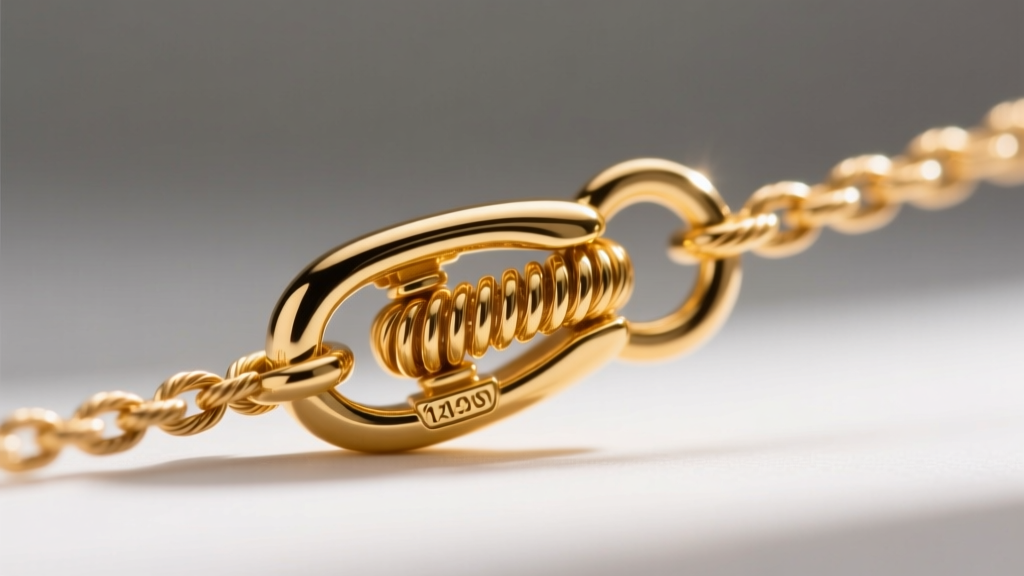
The Clasp Hierarchy
Never underestimate the clasp. It is the primary failure point of any necklace.
- Spring Ring (The Budget Option): A small, circular clasp with a tiny internal spring. They are cheap to produce but notorious for snapping or rusting. Avoid these on any piece worth over $100.
- Lobster Claw (The Industry Standard): Shaped like a lobster's claw, these feature a robust, replaceable spring mechanism. Look for 10mm to 14mm sizes for optimal security and ease of use.
- Toggle Clasp (The Heavy Duty Option): A T-bar that slips through a circular ring. It requires the weight of a heavy chain to keep the bar pulled taut. If used on a lightweight chain, it will slip open and you will lose your necklace.
Chapter 2: The Length Lexicon
The difference between a chic layering piece and a tangled mess often comes down to a single inch. The jewelry industry adheres to strict length categories, each designed to interact with specific necklines. Use this data table as your permanent cheat sheet.
| Style Name | Length (Inches / cm) | Best Neckline Pairing | Styling Vibe |
|---|---|---|---|
| Collar | 12" - 13" (30-33cm) | Open V-neck, Off-shoulder | Bold, Victorian, High-fashion |
| Choker | 14" - 16" (35-40cm) | Crew neck, Scoop neck | Edgy, Classic, Everyday staple |
| Princess | 17" - 19" (43-48cm) | Any (Universal length) | Elegant, Professional, Pendant-focused |
| Matinee | 20" - 24" (50-60cm) | High necklines, Turtlenecks | Sophisticated, Business casual |
| Opera | 28" - 36" (71-91cm) | Plunging necklines, Evening wear | Dramatic, Vintage, Layering base |
| Lariat | 40"+ (100cm+) | Deep V, Wrap dresses | Bohemian, Fluid, Adjustable |
Chapter 3: Material Evolution & What to Buy Today
The Gemological Institute of America (GIA) notes that pure 24k gold is far too soft for jewelry making; it would bend and warp under the tension of a clasp. Therefore, understanding metal alloys is critical for beginners navigating the modern market.
Solid Gold vs. Vermeil vs. Plated
14k Solid Gold: Composed of 58.5% pure gold and 41.5% alloy metals (like copper and silver). It will never tarnish, can be worn in the shower, and holds its resale value. Expect to pay $150–$400 for a basic 18-inch 1.2mm chain.
Gold Vermeil (Pronounced ver-MAY): This is not standard gold plating. By FTC guidelines, vermeil must have a thick base of 925 Sterling Silver coated with a minimum of 2.5 microns of 10k, 14k, or 18k gold. It is an excellent mid-tier option ($60–$120) but will eventually wear down to the silver base after 2 to 5 years of daily wear.
Gold Plated / PVD Coated: Usually a brass or stainless steel base with a microscopic flash of gold (under 0.5 microns). While PVD (Physical Vapor Deposition) coatings on stainless steel are highly scratch-resistant, traditional flash plating will rub off in months. Avoid these if you have sensitive skin, as the exposed brass will oxidize and turn your neck green.
Epilogue: How to Layer Like a Pro
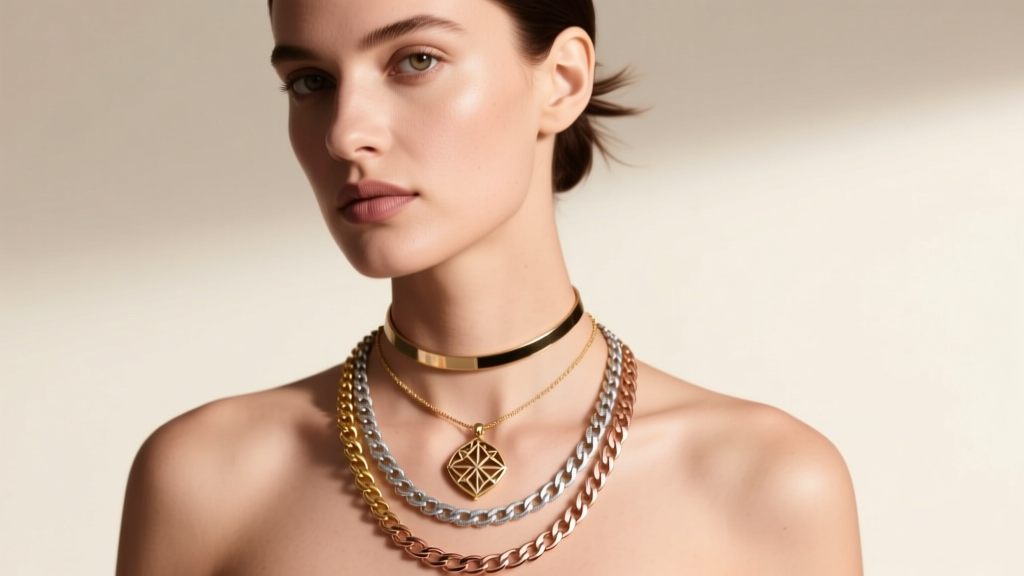
Layering is where the short story of the necklace transitions into your own personal narrative. The biggest mistake beginners make is wearing chains of the same length and link type, which guarantees they will tangle into an unbreakable knot within minutes.
The 2-Inch Separation Rule
Always maintain a minimum of 2 inches between layered necklaces. A perfect beginner stack starts with a 15-inch choker, an 18-inch princess chain holding a small pendant, and a 22-inch matinee chain. This creates a cascading visual triangle that flatters the collarbone.
Mix Your Gauges and Textures
To prevent tangling, mix the physical structure of the chains. Pair a smooth, 1.0mm snake chain with a textured, 2.5mm rolo chain. The differing surface friction and link sizes prevent the chains from catching on one another. Furthermore, do not be afraid to mix metals; intertwining 14k yellow gold with oxidized sterling silver creates a curated, vintage aesthetic that looks intentionally styled rather than accidentally mismatched.
Troubleshooting Common Necklace Failures
Even the best jewelry requires maintenance. Here is how to solve the three most common necklace issues:
Pro-Tip: If your sterling silver chain keeps knotting, lay it flat on a glass surface, sprinkle it with baby powder to reduce friction, and use two fine sewing needles to gently work the knot apart from the center outward.
- The Green Neck Syndrome: This is a chemical reaction between the copper in 925 silver (or brass bases) and the acidity in your sweat. It is not toxic, but it is annoying. Wipe the chain with rubbing alcohol and apply a micro-thin coat of clear nail polish to the links that touch your skin.
- Clasp Slipping to the Front: If your pendant is heavier than your chain, the center of gravity will constantly pull the clasp to the front of your neck. Fix this by having a jeweler add a small 2mm gold jump ring to the back of the clasp as a counterweight, or simply upgrade to a heavier chain.
- Tarnished Silver: 925 silver tarnishes due to sulfur in the air. Do not use harsh chemical dips, which strip the metal. Instead, use a treated silver polishing cloth (like a Sunshine cloth) to gently restore the luster without removing intentional oxidation in the chain's crevices.
By understanding the history, anatomy, and material science behind your jewelry, you elevate yourself from a casual shopper to a curated collector. The short story of the necklace is still being written—and now, you have the tools to author your next chapter with absolute confidence.


