How to Measure the Length of a Necklace: The Ultimate Fit Guide
Learn exactly how to measure the length of a necklace for a perfect fit. Discover pro jeweler tips on drape, clasp allowance, and neckline matching.

The Hidden Flaw in Standard Necklace Sizing
Buying a necklace online often feels like a gamble. You order what is listed as an 18-inch princess chain, only to find it sits tightly against your collarbone like a choker. This discrepancy rarely stems from manufacturer error; instead, it highlights a fundamental misunderstanding of wearable length versus total physical length. When learning how to measure the length of a necklace, most consumers simply drape a string around their neck. However, professional jewelers know that a necklace's final drape is dictated by chain gauge, clasp thickness, pendant weight, and individual neck circumference.
According to manufacturing standards cited by Rio Grande, a leading jewelry supply authority, the "length" of a chain usually includes the clasp and jump rings. A standard 12mm lobster clasp and a 4mm jump ring add 16mm (over half an inch) to the total measurement. If you have a thicker neck or broad shoulders, this lost half-inch, combined with the rigid drape of certain chain styles, will drastically alter where the necklace rests on your chest. This guide will teach you the precise, jeweler-approved methods for measuring, predicting drape, and matching necklace lengths to specific necklines.
Step-by-Step: How to Measure the Length of a Necklace Accurately
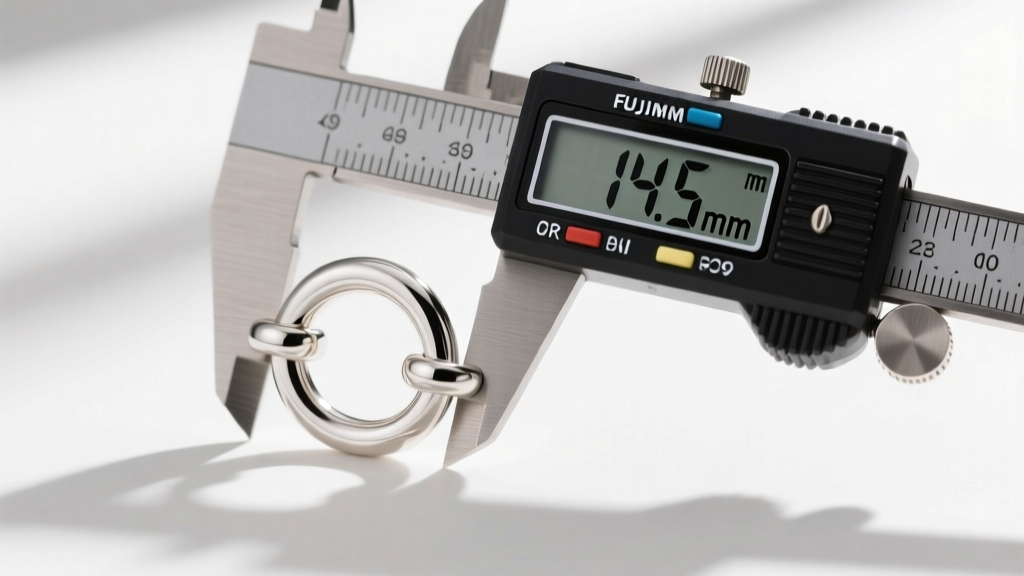
To achieve a flawless fit, you must abandon metal carpenter tapes and rigid rulers. Metal tapes do not account for the natural curve of the human neck or the fluid drape of precious metals. Instead, gather a flexible fiberglass tailor's measuring tape and, if possible, a set of digital calipers for measuring hardware.
1. The Flat-Surface End-to-End Method
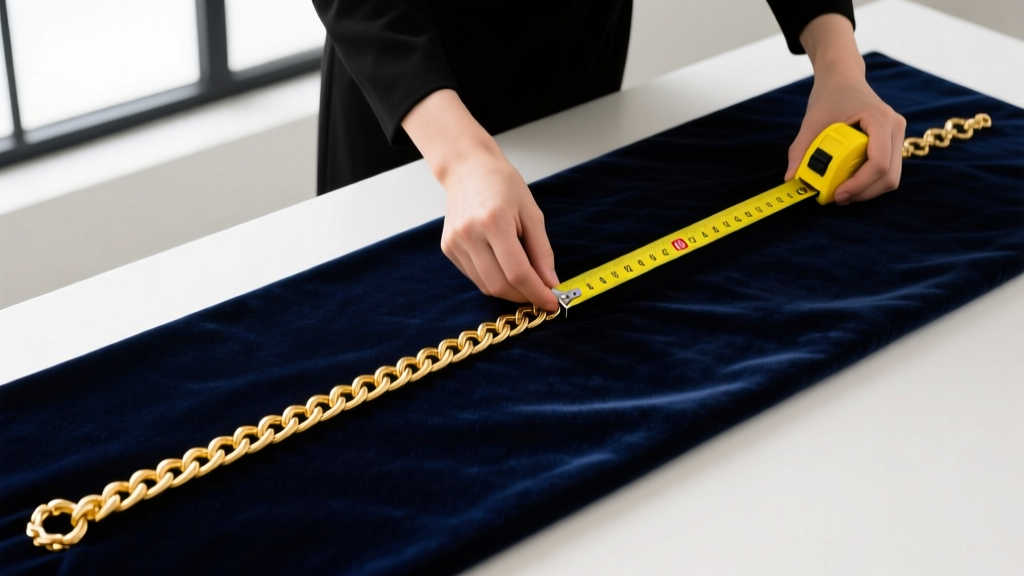
Unclasp the necklace and lay it completely flat on a non-snag surface like a velvet jeweler's pad or a smooth glass table. Ensure there are no twists in the links, particularly if you are measuring a box or herringbone chain. Pull the chain taut, but do not stretch it. Place the zero mark of your fiberglass tape at the very end of the clasp (not the jump ring) and measure straight to the outer edge of the opposite jump ring. This is the manufacturer's total length.
2. Calculating the Wearable Drop
To understand how the necklace will actually sit on your body, you must calculate the inner circumference. Subtract the width of the clasp hardware from the total length. For example, if your chain measures 18 inches total, but features a heavy 18mm magnetic barrel clasp, your actual wearable chain length is only 17.3 inches. This is the number you must compare against your own neck and chest measurements.
3. The String-and-Mirror Test for Anatomy
Wrap a piece of non-stretchy cotton string or a tailor's tape around your neck. Stand in front of a mirror and adjust the string until it rests exactly where you want the necklace to fall. Pinch the string at the base of your throat, remove it, and measure the distance between your pinch points. Multiply this number by two, and add 1.5 inches to account for the back-of-neck drape. This is your ideal target length.
The Physics of Drape: Chain Gauge and Stiffness
Not all 18-inch chains are created equal. The structural integrity and flexibility of the chain links dictate how far down the chest the necklace will fall. A highly fluid chain will form a deep "U" or "V" shape, while a stiff chain will form a wide, shallow arc, sitting higher on the collarbone. When figuring out how to measure the length of a necklace for a specific look, you must apply a drape multiplier based on the chain style.
- High Fluidity (Cable, Rolo, Rope, Snake): These chains bend easily in all directions. An 18-inch cable chain will drape approximately 1.5 to 2 inches lower than a stiff chain of the same length. They are ideal for holding heavy pendants, as the links will naturally adjust to the weight.
- Medium Fluidity (Box, Wheat, Figaro): These offer a balance of structure and movement. A 20-gauge (0.8mm) box chain will hold its shape slightly but still conform to the chest. Add 0.5 inches to your target measurement if you prefer a deeper drape.
- Low Fluidity (Herringbone, Omega, Wide Cuban): These chains are inherently rigid. An 18-inch 5mm Cuban link or a flat herringbone chain will sit much higher on the chest. According to gemological and jewelry design principles taught by the Gemological Institute of America (GIA), rigid chains require an additional 1.5 to 2 inches in length to achieve the same visual drop as a fluid cable chain.
Neckline and Anatomy Matching Matrix
Choosing the right length isn't just about anatomy; it's about framing the garments you wear. Use this professional styling matrix to match your measured necklace length to your wardrobe.
| Necklace Length | Industry Classification | Ideal Necklines | Pendant Weight Limit (1.5mm Chain) |
|---|---|---|---|
| 14" - 16" | Collar / Choker | Boatneck, Off-shoulder, V-neck | Max 3 grams |
| 18" | Princess | Scoop neck, Crew neck, Sweetheart | 5 - 8 grams |
| 20" - 24" | Matinee | Button-down shirts, Turtlenecks | 10 - 15 grams |
| 28" - 36" | Opera / Rope | Deep plunge, Evening gowns, Tunics | N/A (Usually worn alone) |
Pro Tips for Adjusting and Customizing Fit
If you have already purchased a necklace and the measurement is slightly off, you do not necessarily need to return it. Professional jewelers use several micro-adjustment techniques to customize the drape without altering the primary chain links.

When to Use Extender Chains
A sterling silver or gold-filled extender chain is a small, 2-inch length of cable chain (usually 1.5mm to 2mm wide) attached to the clasp side via a 5mm open jump ring. Extenders cost between $5 and $15 and allow you to adjust the necklace in 4mm increments. This is the ultimate solution for gifts, as it guarantees the recipient can modify the fit to their exact neck circumference.
The Pendant Drop Factor
Never forget that a pendant changes the geometry of the chain. A heavy 15-gram gemstone pendant will pull a delicate 22-gauge chain into a sharp "V" shape, effectively adding 1.5 inches of visual length to the center drop. If you are buying a chain specifically to hold a heavy pendant, purchase a chain that is 1 inch shorter than your final desired resting point to compensate for the gravitational pull.
Common Measurement Mistakes to Avoid
Even experienced buyers fall victim to a few persistent measurement myths. Avoid these critical errors to ensure your jewelry investment fits perfectly every time.
"A necklace measured while hanging on a jewelry bust will always yield inaccurate results. Gravity pulls the chain taut, masking the natural stiffness of the links and the bulk of the clasp hardware. Always measure flat."
- Ignoring the Clasp Bulk: Failing to account for oversized decorative clasps (like toggle bars or large magnetic tubes) which can consume up to an inch of the chain's total listed length.
- Using Stretchy Sewing Thread: Cotton thread or cheap sewing tape can stretch under tension, leading to measurements that are a quarter-inch to a half-inch too long.
- Assuming Standard Neck Sizes: The "average" 15-inch neck circumference used by mass-market jewelry brands does not account for athletic builds, broader shoulders, or natural weight fluctuations. Always measure your own anatomy.
- Overlooking Chain Thickness: A 6mm thick chain takes up more physical space wrapping around the curve of the neck than a 1mm chain. For every 2mm of chain width over 3mm, add an extra 0.5 inches to your target length to maintain the same visual drop.
Mastering how to measure the length of a necklace transforms jewelry shopping from a game of chance into a precise, tailored experience. By accounting for hardware, understanding chain fluidity, and respecting the physics of metal drape, you can curate a collection that sits flawlessly against your skin and perfectly complements your personal style.


